SOLD! The Talking Skull Automation Fetched (Scroll Down to See)

A Willman talking skull automaton, created circa 1930, shown sitting on the convincing false book that houses its mechanics.


Update: The Willmann talking skull automaton sold for $13,200.

What you see: A Willmann talking skull automaton, made circa 1930 in Germany by designer John Willmann. Potter & Potter Auctions estimates it at $6,000 to $9,000.

The expert: Gabe Fajuri, president of Potter & Potter.

So, how far back does the talking skull routine go in magic? How old is it? It’s over 100 years old. There are catalogs from the 1870s showing talking skulls in them. There are many different ways the trick can be accomplished. This is one very elaborate method.

A willman talking skull automaton, created circa 1930, shown sitting on the convincing false book that houses its mechanics.

How do magicians tend to use a talking skull in their acts? It’s actually a conversation between the performer and the audience, carried on with a disembodied skull. The skull is introduced with whatever patter the magician chooses to use. Then the skull is put on display and the magician or the audience asks the skull a question–“What card did I choose?” Its jaw will click the answer out as if it were alive.

Was John Willmann known for creating top-of-the-line automata around 1930, when he made this talking skull automaton? Yes. John Willmann was probably the.. I’m not sure if “famous” is the right word, but he was the most prolific builder of illusions and stage effects of this period [in Europe]. He was kind of known as the master craftsman from pocket tricks to automata and everything in between.

The faux book component of the Willmann talking skull automaton, shown alone. It conceals the clockwork that makes the skull's jaw tap.

The lot notes describe the Willmann talking skull automaton as “perhaps the most elaborate talking skull ever constructed.” What makes it so? The fact that it uses a real human skull, and the way it artfully conceals [its clockwork] in the faux book. Without revealing too much, most have a very simple mechanism to animate the skull. This is so elaborate as to almost be ridiculous. We’ve sold many examples of the talking skull. We’ve never sold one as complicated or as fanciful as this. This is truly an automaton.

But isn’t it risky for a magician to depend on an elaborate device to make a trick work? I would agree with that. You better make sure you wound it up.

What advantage does the Willmann talking skull automaton give to a magician that a simpler version of the trick does not? It requires no secret assistants to operate, which many other methods do. And a magician does not need to touch it or be near it. He could sit in the front row and carry on a conversation. The McElroy talking skull sells very well and has literally no mechanism. It’s literally a skull made out of composite material. The Willmann thing is the antithesis of that. It’s a robot.

The lot notes describe the book as “a true masterpiece of Willmann’s mechanical abilities.” What makes it a masterpiece? It combines the aesthetics and mechanics into a shining example of what he was capable of. He literally had a small factory in Germany to make these things. It’s a combination of art and science. And you know it’s a real human skull.

The Willman talking skull automaton, incorporated a genuine human skull.

Do we know where Willmann would have gotten a genuine human skull? A medical school.

When I saw it was German and circa 1930s I freaked out a little and checked to make sure the timing didn’t overlap with the concentration camps. His career was over and done with by the time the war began. I believe the factory was bombed out. And the talking skull could date earlier than the date in the catalog. It’s hard to say.

How did the clockwork inside the book make the skull’s jaw tap? It activated a mechanism that popped out of the book clandestinely, and that’s what moves the jaw.

Clockwork mechanisms, hidden inside a faux book, made the jaw of the Willmann talking skull automaton move.

Is all the clockwork I see in the photographs actually needed to make the jaw tap, or is some of it for show? No. Nobody was supposed to ever see this. Nobody was supposed to know it’s in there. The book is supposed to look like a book. I’m not a mechanic. I don’t know that every last piece is required. But there’s no reason to put in anything that’s extraneous.

Does the clockwork make any noise? It’s pretty quiet. And you [the magician] are going to be talking, and the audience is going to be interacting. There are others [other clockwork-driven devices] in the catalog–an old joke is you need to play a Sousa march to cover it up.

So the magician’s patter and the ambient audience noise is enough to cloak the sounds the clockwork makes? If it’s even that loud. Magicians use silent clockwork mechanisms.

John Willmann went all-out when designing the deluxe version of his talking skull automata. He included several hand-lettered pages inside the fake book that hid the clockwork that moved the skull's jawbone.

I understand that the fake book contains several leaves, aka pages. Willmann didn’t have to bother with that, but he did. How does the time and effort he lavished on making the book pages show the high craftsmanship that he achieved? It gives you another layer of deception. If you try to “prove” it’s a real book, you can show the hand-lettered leaves. You can “prove,” if you so desire, it’s an ancient book of spells by leafing through it. The cheaper way [of making a talking skull illusion] is a fake book that you can’t open up. He went the extra mile.

Was this Willmann talking skull automaton a one-off, or did he offer it in a catalog? I’m sure he made them one at a time when he received orders. I’ve seen two. That doesn’t mean that others don’t exist.

Paperwork, written in German, that accompanies the Willmann talking skull automaton. It describes the workings of the trick and references a less deluxe version of the automaton.

Is the Willmann talking skull automaton shown in one of his catalogs? I’ve looked through John Willmann catalogs, but I wasn’t looking specifically for this item. It wouldn’t surprise me [if it was in there]. Paperwork that comes with it–it’s all in German–some of it describes the effect, and some of it references a slightly lower-grade version at a lower price.

How many other talking skull devices have you seen that include a genuine human skull? One.

Is that one a Willmann talking skull automaton? No, but I have it here. It was in the same collection. It’s quite different in the way it works, its composition and its method. We’ll offer it next year in the second part of the sale.

Is the automaton fully functional? Yeah. Did I have a conversation in German with it? No, but it is fully functional.

When it’s fully wound up, how long does it operate? I did not time it.

A Willman talking skull automaton, created circa 1930, shown sitting on the convincing false book that houses its mechanics.

What is the Willmann talking skull automaton like in person? It’s creepy. It’s a real human skull, that talks to you.

Why will this Willmann talking skull automaton stick in your memory? It’s rarity, its aesthetics, its ingenuity. We’ve handled a lot of weird things. This ranks right up there.

How to bid: The Willmann talking skull automaton is lot 281 in The Magic Collection of Rüdiger Deutsch: Part I, taking place at Potter & Potter on October 26, 2019.

How to subscribe to The Hot BidClick the trio of dots at the upper right of this page. You can also follow The Hot Bid on Instagram and follow the author on Twitter.

Follow Potter & Potter on Instagram and Twitter.

Image is courtesy of Potter & Potter. 

Gabe Fajuri has appeared on The Hot Bid many times. He’s talked about a magician automaton that appeared in the 1972 film Sleuth, a rare book from the creator of the Pepper’s Ghost illusion,  a Will & Finck brass sleeve holdout–a device for cheating at cards–which sold for $9,000a Snap Wyatt sideshow banner advertising a headless girl, a record-setting stage-worn magician’s tuxedo; a genuine 19th century gambler’s case that later sold for $6,765; a scarce 19th century poster of a tattooed man that fetched $8,610; a 1908 poster for the magician Chung Ling Soo that sold for $9,225; a Golden Girls letterman jacket that belonged to actress Rue McClanahan; and a 1912 Houdini poster that set the world record for any magic poster at auction.

Would you like to hire Sheila Gibson Stoodley for writing or editing work? Click the word “Menu” at the upper right for contact details.

SOLD! The Kennedy Wedding Photos, Including an Unpublished Shot of Jacqueline Bouvier in Her Bridal Gown, Commanded (Scroll Down to See)

Update: The Kennedy wedding photographs sold for $3,750.

What you see: A previously unpublished shot of Jacqueline Bouvier at Hammersmith Farm on her wedding day in 1953. It’s one of three black-and-white photos and a few negatives depicting the wedding of Bouvier and John F. Kennedy in Newport, Rhode Island. John McInnis Auctioneers estimates them at $500 to $1,000.

The expert: Dan Meader, gallery director for John McInnis Auctioneers.

Could we start by talking about the importance of Hammersmith Farm to Jacqueline Bouvier during her life? Did its presence near Newport convince Jacqueline and Jack to have their wedding in Newport? Hammersmith Farm was extremely important to Jackie. She explains her love of the farm in her own words in an inscription in The Architectural Heritage of Newport Rhode Island: “For Uncle Hugh [her stepfather, Hugh Auchincloss] on his seventieth birthday–a book about the place you brought us to–but the most beautiful house there for me will forever be Hammersmith Farm. That is my beloved architectural heritage of Newport — and thank you for it — with all love, Jackie, August 28, 1967.” She absolutely loved the place so much, and Jack loved it too. It was more removed and less stressful for him. It was on the ocean, the gardens were spectacular, and they could go to the America’s Cup [yacht race].

Was Hammersmith Farm John F. Kennedy’s introduction to Newport? He had connections there, but it gave him his true love for Newport.

Do we know who shot these Kennedy wedding photos? It was Bachrach, a very famous photography studio.

So the images in the lot were not taken by someone who lived at Hammersmith Farm? No, these were professional photos, not snapshots.

A collection of photos and negatives from the 1953 wedding of Jacqueline Bouvier and John F. Kennedy in Newport, Rhode Island.

How were they discovered? They were moved directly from Hammersmith Farm, where Jackie lived, her mother lived, her brother lived. They were stored on the property. Colleen Townsend Pilat was an assistant to Yusha, the brother, and helped clear out the property after he died. She was bequeathed all these things. When I got them, it was a mishmash of Jackie’s wedding, [her sister] Lee Radziwill, and her sister Janet, all mixed in. I had to pull them out. I had to figure out who the people were and who the weddings were. Lots of weddings were done on the property.

So these Jack and Jackie wedding images were one of three sets of wedding images in the same pile? Yes. Lee’s first wedding, which took place just a few months earlier than Jackie’s, and Janet’s wedding. It was almost a two-year project, doing all the research and the curating of it. I had to figure out what was what. It was really… fun. [Laughs] It was a challenge.

How big a deal was the wedding in 1953? Clearly it’s regional news, because Jack Kennedy is a sitting Massachusetts senator. Did it make national news? Positively. It was covered throughout the United States and to a degree, overseas. In an earlier lot, there’s a press release for the wedding. The release was modeled after [the one written for] Eunice [Kennedy’s] wedding. Joe Kennedy rules the roost on everything. Eunice’s was a big wedding, but this would be the biggest one. Joe had his eye on a specific thing–his son being president. Joe was Jack’s press agent. You could say he was behind the scenes on everything. Jack had his own thoughts, but he had an overseer on everything.

The photo of Jackie, solo, in her wedding dress has never been published before. How did this photo managed to go unpublished before now? I think the shot of Jackie with her veil billowing was chosen over this. I’ve had other issues of these pictures [the two outdoors shots] and they’re all well-known. These particular ones have not been. I haven’t seen those particular versions.

Where on the grounds of Hammersmith Farm were the outdoor shots taken? Near an equestrian area? At the front lawn, I believe. If you turn your head to the left, you’d see the ocean. At that point, [the family] was raising Guernsey cows and they had horses as well.

A group shot of the wedding party for John F. Kennedy and Jacqueline Bouvier shot in September 1953 at Hammersmith Farm.

And the group shot shows the bridesmaids, the bridesmatron, and the groomsmen? Yes. This particular group shot shows Jackie looking down at a dog.

In reading up on the wedding, it sounds like Jackie didn’t get much of what she wanted from her “special day”–that Joe Kennedy stuck his nose in and was very controlling. How did things unfurl? [Laughs] He oversaw… it was just the kind of guy he was. She knew when she got into [it] there were limitations on what would happen.

I understand she wanted a much smaller wedding and reception than she had, but anywhere from 700 to 800 were at the church, and more than 1200 were at the reception at Hammersmith Farm. That would be Joe [his doing]. The biggest thing for Jackie was her father, Black Jack. He was supposed to give her away.

From what I’ve read, allegedly, Jackie’s mom, who was Black Jack’s ex, tempted him into getting drunk in hopes that would make him fail to show up… It was very disappointing for her. She loved her father. Her stepfather, who she called Uncle Hugh [stepped in and did the honors.] She loved him too, but I think she wanted her birth father there. It was probably a big issue in her mind. I haven’t heard of anything else being out of place.

I haven’t been inside the church, but I have been in that area of Newport, and it’s… pretty congested. How did the church physically accommodate all those people? If you’ve seen some of the photos, there are throngs of people on the street, ten to 15 deep. They weren’t all in the church. In the auction, [there are lots with typewritten documents of] the procession for the church, where the bridal party was staying, who was going in which car. It’s very interesting. They had everything right down to a science.

That’s good preparation for life at the White House… [Laughs]

Another arrangement of the Kennedy wedding images in the lot, shown with negatives.

Hammersmith Farm was a 300-acre property, so it could handle 1,200-plus people. How did the reception go? I see a photo in the group that shows guests at a long table. There was a huge tent, and there were tables outside the tent–the reception sprawled onto the lawn as well. It was kind of like a picnic at some point. It was very difficult, I am sure, for everyone to have time with the couple. But what I’ve heard from people who were there was they had a great time. No one felt slighted. The next lot after shows [wedding guests] individuals, couples, and kids with smiles on their faces. That was a different part of the property. What would be really nice is if people find themselves in those pictures, or their children find them.

How do these Kennedy wedding photos reflect the image that Joe Kennedy was trying to project for his family, and how do they foreshadow the glamour of the Kennedy White House? They played very well for what Joe Kennedy had in mind for his son. They played extremely well. He couldn’t ask for a better backdrop.

How did you arrive at the estimate of $500 to $1,000? It’s what we felt was reasonable. It’s an unreserved sale. They’re gonna sell for whatever they sell for. But what we have here are personal photos from Jackie’s family, right from Hammersmith Farm. That’s what separates them from other photographs. It could possibly go much higher.

How well do Kennedy wedding photos do at auction? They’re always highly sought-after. The Kennedy wedding invitations sell for thousands. Any of those kinds of things maintain a human interest. Price-wise, they could go for higher than a wedding invite.

Why will these Kennedy wedding photos stick in your memory? Because of where they came from. We love what we do here, and we get sought out to handle these things because of our past experience with them. For me, the most important thing is the provenance. When it comes right from the source, there’s no doubt about how valuable it was within the family.

How to bid: The Jack and Jackie Kennedy wedding photos are lot 0126 in the Camelot with a Twist auction at John McInnis Auctioneers on October 13, 2019.

How to subscribe to The Hot BidClick the trio of dots at the upper right of this page. You can also follow The Hot Bid on Instagram and follow the author on Twitter.

John McInnis Auctioneers is on Twitter

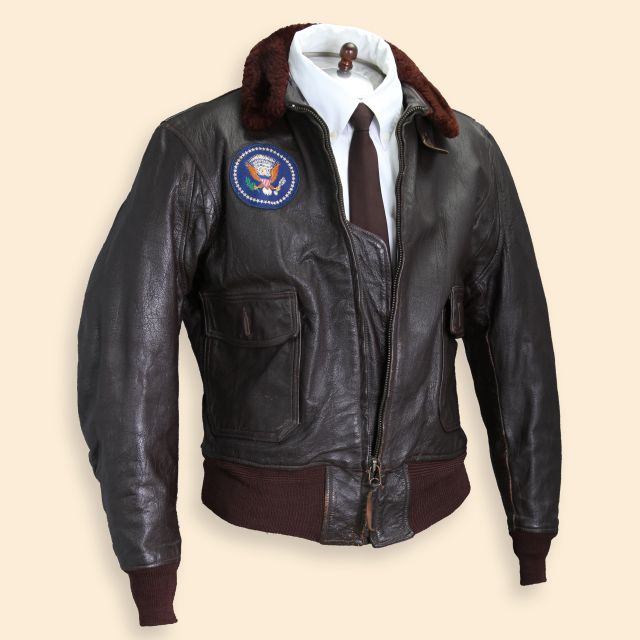
Dan Meader appeared before on The Hot Bid talking about a record-setting Presidential Air Force One bomber jacket, given by John F. Kennedy to loyal aide Dave Powers.

Image is courtesy of John McInnis Auctioneers.

Would you like to hire Sheila Gibson Stoodley for writing or editing work? Click the word “Menu” at the upper right for contact details.

A Morton Bartlett Figure Could Sell for $150,000 at Rago

What you see: Daydreaming Girl, a circa 1950 sculpture by the late American outsider artist Morton Bartlett. It’s one of 15 he made between 1936 and 1963, when he created a series of highly detailed figures of children in order to photograph them. Rago Auctions estimates Daydreaming Girl at $100,000 to $150,000.

The expert: Marion Harris, an independent specialist for Rago’s Outsider & Fine Art, Curious Objects auction.

How does Morton Bartlett fit the definition of an “outsider artist”? “Outsider artist” means outside the mainstream, for various reasons. You can be in prison. You can not be informed by the art world. Another way is being obsessive. Morton Bartlett falls into the “obsessive” category. This was his life, and he didn’t have traditional [art] training.

Was Bartlett entirely self-taught? He taught himself to sculpt, make clothing, make wigs, and shoot photographs? He didn’t take classes, but he went to Harvard and left after two years. He certainly had no help with sculpting. His downstairs neighbor was a sculptor, and he clearly saw him working.

The front of an alternate outfit, made by Bartlett, comes with Daydreaming Girl.
The front of an alternate outfit, made by Bartlett, which comes with Daydreaming Girl.

He taught himself to sew? Yes, yes. He bought wigs and altered them, but otherwise, he made everything. He didn’t make anything he wasn’t going to photograph.

He made the chair that goes with Daydreaming Girl? No, he bought the chair. I think that’s a commercial thing.

And he had no assistants? No, no, there weren’t. Nobody to help him. But if he wanted help, he would have gotten it. It [his project] wasn’t secret, it was private.

Do we know how much time he spent on creating each figure? We do. He tells us in a 1962 Yankee magazine story that each figure took up to a year, and each head took three to six months, depending on the head.

A closeup on Daydreaming Girl, showing her face and upper body.

What can we tell, just by looking, how difficult these Morton Bartlett figures were to make? The level of difficulty was quite high. He clearly was a perfectionist.

What do we know about how he worked? My sense, and it’s only a sense, is he worked mainly on one figure until it was done. He started with metal armatures for the arms and the legs and built around them with clay and plaster.

Daydreaming Girl shown in full against a white background, with scuffed knees and dangling feet clearly visible.

How does Daydreaming Girl compare to the other Morton Bartlett figures? I’d put her quite near the top. Her knees are just slightly scuffed, and her toe just skims the floor. He captures the essence of childhood in this figure.

And that facial expression… so fleeting, and he gets it. Exactly.

What book is the Morton Bartlett figure reading? I have photos of Daydreaming Girl from several angles, but none shows the cover or the pages of the book clearly enough to identify it. It’s a book the American Visionary Art Museum in Baltimore supplied for us. [The museum recently displayed Daydreaming Girl in a themed exhibit on parenthood.] It’s a 1950s children’s book about airplanes, but it’s not the original book. We don’t know what the original book was, but everything else is original–the clothes, the chair.

Do we know if Bartlett had any opportunities to observe actual children when he was making these figures and photographing them? We do. I researched carefully, and that’s why I’m comfortable saying [the figures] are a fantasy family, with no dark intent. He worked for a toy manufacturer and distributor in Boston called Scharf, which is how we know that if he wanted help [making his figures], he could have had it. He took pictures of Scharf’s daughter and Scharf was delighted, very happy with them. Bartlett also took pictures of children on the beach at Cohasset. When the Yankee magazine article came out, he received letters from people who recognized the dolls. People wrote to him, asking, “Are you the same Morton Bartlett who took pictures of my daughter at Cohasset? I send my regards.” It’s obvious he had nice relations with everybody.

Daydreaming Girl, a figure by outsider artist Morton Bartlett, shown in full on a white background.

Bartlett made his figures in order to photograph them, but I looked through everything I could find for Bartlett online and I did not see any photographs of Daydreaming Girl. Did I miss them somehow? No. Two or three of the figures aren’t photographed. When I bought it [the collection of material that came from Bartlett’s estate], it was boxes of arms, legs, hands, hundreds of bits. It took two years to assemble them. The paint finish was so precise–not every arm goes in every arm socket. Once I had the 15 dolls [assembled based on Bartlett’s photographs] I had to go do the catalog. If I had bits that didn’t relate to a specific doll, I set them aside to deal with them later. Twenty-five years passed. The Met bought them. Bartlett became an icon. I didn’t forget about the extra box, but I didn’t give it extra attention. Then we [she and her husband] moved. Then we assembled this doll.

Are there any other Morton Bartlett figures that don’t survive–they appear in his photos but don’t correspond to anything in the storage boxes of parts? I don’t think so. I don’t believe there are any more. The two he didn’t photograph–perhaps he wasn’t happy with them. That’s probably the answer to that.

Are any of the Morton Bartlett figures intended to be pairs of siblings, or are they all individual? I don’t see them as siblings, myself. They’re all quite individual. A lot of people believe the three boy figures are self-portraits. The boys are always seven or eight, the age Bartlett was when he was orphaned and adopted.

Is there any evidence that he named these figures? Yes, there is some. There were little cards with typed names [that she found in the trove of material from his estate]. I don’t know if this was his record-keeping technique, but there’s no other evidence of names.

And there’s no way to know which name goes with which Morton Bartlett figure… Exactly.

How many photographs did Morton Bartlett take of these figures? About 220. When I bought them, I didn’t know there were photos. It really was boxes of arms and legs and heads. That’s why it took so long to assemble them. The photos are a small body of work, which makes it more amazing.

What I find the strangest fact about all of this is the 1962 Yankee magazine article. With the biography that Morton Bartlett wrote for Harvard, he was kind of in a walled garden, speaking to peers who would tolerate some eccentricity, and even with that piece, his reference to the figure-photographing project is oblique. It does not hint at the scope of what he was doing. The Yankee magazine article shows the Morton Bartlett figures and goes into detail about them. Do we know why he agreed to do that piece, and why he never again sought or allowed media coverage? When I bought everything, I started my research, which led me to the writer [of the Yankee magazine piece], Michael Tatistcheff. He’s now dead–he died ten years ago–but he did remember it. He was engaged to Patricia Beals, Bartlett’s goddaughter. Bartlett loved them both, but he had no money. It all went into the dolls. As an engagement gift, he said to Mike, who had just graduated in communications, “Would you like to write about my dolls?” The twist was Yankee magazine told Mike they would pay him $6. It was meant to be one of three articles on Boston craftsmen. But they only paid him $4, and he decided he didn’t want to be a journalist, and went into teaching.

I wouldn’t have guessed that would be the explanation. I wouldn’t have guessed it either, but it’s ordinary. Not a big fancy complicated answer. It spoke to his kindness and generosity. But Pat and Mike never got married.

It was an engagement gift for his goddaughter that got him to step forward during his life. That’s right. That also means he was proud of it. It was private, but not a secret. I think that’s very important.

Daydreaming Girl, a figure by outsider artist Morton Bartlett, shown in full.

Morton Bartlett stopped making the figures in 1963. Was the Yankee magazine article a catalyst for that? I don’t think it was. He moved in 1963, to a house two doors down. We asked his neighbor about that [why Bartlett stopped] in the Family Found documentary. He looked at us and said, “Because he was finished.”

Can you talk about what it was like to discover Morton Bartlett’s work at the Pier Show in New York in 1993? I just stopped in my tracks. Ironically, it was the first year I hadn’t done the fair. I just went in with the public. It didn’t look complete–boxes of heads–I think people didn’t know what to do with them. But I love dolls, and I felt immediately attracted to them. When I got there, it had just come off hold [a hold is imposed on an artwork when a dealer at a fair has a commitment from a buyer]. Right away, I said I’d have them. It was a bit of money, but it was a fortune in assembling and doing the catalog and the research. Up until a couple of years ago, people said to me, “I was just behind you when you bought.” [They were a few minutes late and would have bought if she hadn’t.] There’s a moral to not panicking and getting there when you’re relaxed.

So, you getting the Morton Bartlett figures was down to luck? Isn’t it always? Everyone was talking about them. Clearly, there was a lot of work to do [to make them saleable]. About 60 boxes were delivered.

Sixty is a lot! It is. But I had a visceral connection–I’ve got to know what it is. I was fascinated, and I wanted to find out more.

Do we know how Morton Bartlett’s figures came to be saved? And could you talk about the inherent power of this material? So many outsider artists have gone unknown because whoever cleaned out their place decided to chuck their stuff in the Dumpster or the landfill rather than saving it and finding a place for it. Whoever found Bartlett’s stuff recognized it was worth saving, even though all they saw was boxes of plaster heads and limbs. I don’t know about powerful, but I think it’s interesting and tender. I do love dolls. Maybe it was luck, again, or the power of the work. Henry Darger is another example. It does take someone to present it.

But Bartlett himself didn’t see the figures as inherently valuable as art. He didn’t see in them what we see now. I don’t know what he saw. I know he saw them as a family, because he carried the photos with him. They were 4 x 3, very small.

A closeup, in profile, of the face of the Daydreaming Girl figure.

What, like wallet-size school portraits? Yes, exactly. That’s how I know the photos were his reality. He wrapped [the elements of the figures] up very carefully in newspapers dated to 1963, but he made the dolls only in order to photograph them, and he made the clothes only to clothe them. The end product was the photos.

Who saved the Morton Bartlett figures? Pat Beals was the one who told me this. He had a house, and after he died, his lawyer had the house cleaned out. This [the figures and the related material] was virtually all that was there. The cleaner contacted a dealer she knew and that dealer took it to the show on their behalf.

Why do you think he kept them? Because they were so beautiful, and they were part of the process. They were a means to an end. I’m quite comfortable in saying the photos are his reality, the end product. For 30 years, they were all in boxes. He didn’t need them any more–they had served their purpose. But it was 30 years of work. It was too special to throw away.

The Morton Bartlett figures were not mentioned in his will. Why do you think he left no instructions on what to do with them after he died? I don’t think he thought they were worth anything. And they weren’t, until they were complete. It took me five years to sell the first, and it was not easy.

I’m struck by the fact that he only did three boy figures, and all look to be around seven or eight years of age, which was roughly how old he was when his parents died and he was adopted. Why do you think he sculpted himself at the age when he suffered his greatest loss? Was he frozen in time? I don’t know. It’s just speculation that they look like him.

How reasonable is the speculation that the boy figures look like him? I don’t think I ever asked Pat Beals that. It is speculation, no more and no less than that.

A full shot of Daydreaming Girl, created by the late outsider artist Morton Bartlett.

Different art critics and art historians have different ideas about why Morton Bartlett made these figures. Why do you think he did it? I think it was a fantasy family. It was fulfilling the fantasy of having brothers and sisters.

The only reason the Morton Bartlett figures were recognized as art is because he died and they were found among his belongings. If we could somehow show him how people have received his creations, how do you think he would react? I think he’d be thrilled, I really do. And I think he’d be glad they survived. If he wanted to throw them away, he could have.

When did you finish assembling the Morton Bartlett figure titled Daydreaming Girl? About two years ago. Then we moved [she and her husband], and the American Visionary Art Museum in Baltimore contacted me. They had exhibitions of Morton Bartlett before, twice. They asked, “Do you have any Morton Bartlett sculptures? Our next show is on parenthood.” I said, “If you had called six months ago, I’d have said no, but I just completed another one.” [She loaned it to the AVAM show.]

What condition is the Morton Bartlett figure Daydreaming Girl in? Everything was perfect. There’s slight surface paint restoration and a very good cleaning and there’s really nothing else. It’s like finding an old painting in a cellar. It didn’t need very much at all.

How many Morton Bartlett figures have come to auction? There was one at Christie’s in 2003. It was a seven-year-old girl. The estimate was $20,000 to $30,000, and I think it sold for $35,000.

How many of the 15 Morton Bartlett figures remain in private hands? I think maybe three or four.

How did you arrive at the estimate of $100,000 to $150,000? It was a bit of a struggle. Morton Bartlett figures have sold for more than that privately. At auction, you start below what they go for. I believe it will find its level. I’m not at all worried.

How to bid: The Morton Bartlett figure is lot 1052 in the Outsider & Fine Art, Curious Objects sale at Rago Auctions on October 20, 2019.

How to subscribe to The Hot BidClick the trio of dots at the upper right of this page. You can also follow The Hot Bid on Instagram and follow the author on Twitter.

Rago Auctions is on Twitter and Instagram.

Marion Harris has appeared on The Hot Bid once before, talking about a 19th century life-size French wooden artist’s mannequin that ultimately sold for $45,000.

Marion Harris also deals in antiques. Her website devotes a section to Morton Bartlett and offers the Family Found catalog. A short version of the Family Found documentary is on YouTube.

Images are courtesy of Rago Auctions.

Would you like to hire Sheila Gibson Stoodley for writing or editing work? Click the word “Menu” at the upper right for contact details.

NEW RECORD! Elizabeth Catlett’s Sculpture Seated Woman Sold for (Scroll Down to See)

Update: Elizabeth Catlett’s Seated Woman sold for $389,000, more than doubling the high estimate and setting a new world auction record for the artist.

What you see: Seated Woman, a 1962 sculpture in mahogany by Elizabeth Catlett. Swann Auction Galleries estimates it at $100,000 to $150,000.

The expert: Nigel Freeman, director of Swann’s African-American fine art department.

Do we know how many sculptures Elizabeth Catlett made? There’s easily over 100, and probably close to 200. What’s interesting about the sculpture is it’s an early piece. She didn’t begin working in wood until she studied woodcarving in Mexico in the late 1950s. Her earliest dates to 1956. This is a significant work of refined sculpture. It shows how quickly she took to wood, and wood quickly became one of her materials.

Seated Woman, a 1962 sculpture in mahogany by Elizabeth Catlett.

Did she normally work in mahogany? She did do a number of works in mahogany. There are several mahogany works early in her career. She would do works in tropical woods, cedar, pecan. Mahogany, for a lot of reasons–beauty and durability–was a wood she would use often. It lends itself to the carving that she did.

Is Seated Woman a subject that she returns to over her career as a sculptor, or is this the only instance? Strong representations of women are part of her work, part of her creative impulse, and what she wanted to do. A woman seated on a box appears in the late 1950s in her work, and you see it throughout her work.

Seated Woman, a 1962 sculpture in mahogany by Elizabeth Catlett.

Was this sculpture based on a live model, or did Catlett imagine the figure? Most of these were done from her imagination. She may have had a model at some point. She may have done drawings of a model, but I’m not aware of a model for this piece. It’s an anonymous figure. There are later works where we do know the model. Here, the identity is not specific to a particular person. It’s more a universal idea.

What, if anything, do we know about how Catlett carved, and how she might have carved this work? This was actually made from several blocks of wood. She would find blocks of wood she would make into the figure she wanted, and glue them together. This is quite a complex thing to carve in wood.

And I imagine she had to wait to get blocks of wood that would match well. The wood has to be pieced together carefully. It’s stained and polished and made to fit together. It’s kind of the magic of these pieces. This is a typical way she would construct the general form. There were many different stages in the carving, down to the fine modeling and the polishing–very labor-intensive. This is a very finished, polished piece of wood.

Seated Woman, a 1962 sculpture in mahogany by Elizabeth Catlett.

And she wouldn’t have had any assistants at this point? I don’t think so.

Seated Woman was purchased by George Crockett, Jr. and his wife, Ethelene J. Crockett. He put his name and his social security number on the base of the sculpture. Do we know why? I understand why he might want to put his name on it, but… his social security number? [Laughs] I think it’s sort of sweet, in a way. He really valued Seated Woman. [He thought, if he put his social security number on it] if it was ever lost or stolen, it would come back to him. His grandchildren, who were involved in consigning it, weren’t aware of it [his unusual anti-theft precaution], but it rang true with his character. It’s endearing. He prized it, and he didn’t want anyone else to claim ownership. [The ID carving] is very small, on the back of the sculpture, on the bottom of the base. You’ll only find it if you look very closely. [It’s not visible in any of the pictures Swann provided.]

Have you handled the Elizabeth Catlett sculpture? It’s in my office. One of the nice perks of the job is getting to live with the art for a while.

What is the Elizabeth Catlett sculpture like in person? It’s got a wonderful presence.

This, more than many things I cover on The Hot Bid, I want to pick up and handle. [Laughs] It has a beautiful surface. It is a thing people want to handle. It stands about two feet tall. It’s larger than its size–it’s got a bigger presence. It’s got a certain heft and weight to it. You’re drawn to it. It’s very attractive.

Are there any aspects or details of the Elizabeth Catlett sculpture that the camera does not pick up? The experiential part of the sculpture. Your eye can move around it. She’s not just square on the base. It’s got a visceral quality and a very animated quality. She gives it life. It works on so many different levels–how dynamic and complicated the pose is, all the curves to it.

What condition is the Elizabeth Catlett sculpture in? It’s in very good condition. This work was in the Crockett family for a long time. With all wood, there’s some aging, and there’s always a few cracks. It was professionally cleaned and preserved for its appearance and to take care of the wood. Now it looks really fantastic.

How does it compare to other Elizabeth Catlett sculptures you’ve handled? We have had other works of hers in terra-cotta and wood. The record is Homage to My Black Sisters, a 68-inch high piece from 1968 that still stands as her auction record. We sold it in October 2009 for $288,000. It’s a decidedly different market today. In 2009, we’d only been doing African-American fine art auctions for two years, and there had been very few Elizabeth Catlett works at auction at that time. It was still early days.

How often do Elizabeth Catlett sculptures come to auction? From time to time. For wood, there have probably been half a dozen at auction. They’re all different. Homage to My Black Sisters was much more abstract, very modern.

Does Seated Woman have a different sort of presence than her later sculptures? This one is much more intense, I think, more intimate. It’s a small figure. The others are more abstracted. This is more representative. It’s an intricate carving, and very complex. It has a life to it. Her earlier works are more realistic and imbued with emotion. In her later works, though they are abstract, they’re more political works of art. This is more subtle. It’s part of its appeal. And she was getting into the prime of her career in the 1960s, which is wonderful.

Why will this Elizabeth Catlett sculpture stick in your memory? It’s from an interesting point in her career, and for the gorgeousness of the sculpture. It’s a really beautiful work. You can see all that went into it and the skill to pull it off–you can see it in the sculpture. It’s an impressive sculpture, and when you see it, you can’t help but be impressed.

How to bid: The Elizabeth Catlett sculpture is lot 63 in the African-American Fine Art sale at Swann Auction Galleries on October 8, 2019.

How to subscribe to The Hot BidClick the trio of dots at the upper right of this page. You can also follow The Hot Bid on Instagram and follow the author on Twitter.

Swann Galleries is on Instagram and Twitter.

Nigel Freeman spoke to The Hot Bid previously about an Emma Amos mixed-media work that ultimately sold for an auction record for the artist;  a set of Emperor Jones prints by Harlem Renaissance artist Aaron Douglasa story quilt that Oprah Winfrey commissioned Faith Ringgold to make about Dr. Maya Angelouan Elizabeth Catlett painting, and a Sargent Johnson copper mask.

Image is courtesy of Swann Auction Galleries.

Would you like to hire Sheila Gibson Stoodley for writing or editing work? Click the word “Menu” at the upper right for contact details.

RECORD! A Star Wars Boba Fett Rocket-firing Prototype Crosses the $100k Threshold at Hake’s

A circa 1979 Star Wars Boba Fett rocket-firing prototype, unpainted, with the L-slot configuration firing mechanism. It set a new world auction record for a Star Wars toy at Hake's in July 2019.

In the course of reporting this story, I learned about the next likely record-breaking Star Wars action figure–an even rarer Boba Fett prototype to be offered in a Hake’s auction that opens on October 15, 2019, and closes on November 6 and 7, 2019. That prototype could sell for as much as $200,000. You will see mentions of that toy, as well as pictures, woven into this article.

What you see: A circa 1979 Star Wars Boba Fett rocket-firing prototype, unpainted, with the L-slot configuration. It comes with a letter from Collectible Investment Brokerage (CIB) assigning the encapsulated toy an 85 (NM+) grade. It sold at Hake’s in July 2019 for $112,926–a new record for any Star Wars toy, and the first time a Star Wars toy has crossed the six-figure threshold at auction.

The expert: Alex Winter, President of Hake’s.

How often do late-1970s Star Wars prototype toys come to auction? What others have appeared? Prototypes for action figures are much more layered than for other things. They go through various stages, various color treatments. That’s why there’s so many Boba Fett prototypes. Only a handful have been at auction. It’s still fairly uncommon for them to come up. We happen to have had the luxury of two back to back, and one coming up. [Scroll down for news on the Boba Fett prototype that’s coming up.]

When I hear “prototype” I assume there’s just one, but you’re telling me that action figures require more than one. What number of prototypes is more typical for an action figure? Three to five? I think so. There’s a few for every figure. Boba Fett went through stages of the rocket-firing figure because it had a spring-loaded mechanism. They had to get it right, so more prototypes had to be produced.

Do we know how many Boba Fett prototypes exist? It’s all very vague and speculative, but there’s a very good article that has an accurate lineage of the Boba Fett action figure. [The 2016 story suggests that maybe 100 Boba Fett prototypes exist: about 80 of the L-slot variety, and 19 of the later J-slot version. The letters describe the shape of the rocket-firing mechanism built into Boba Fett’s backpack.]

Could you talk a bit about this rocket-firing Boba Fett toy, and why it’s legendary? It’s taken on a life of its own. Kenner documented what it was supposed to be and put it all into motion before realizing it was not going to work. [As described in the previously given link, the rocket-firing Boba Fett toy was touted in a winter 1979 Kenner catalog as free with four proofs of purchase of other Star Wars toys. Kids gathered the material, sent it off to Kenner, and waited six to eight weeks for the prize to arrive, only to discover that the much-celebrated rocket was fixed in place.] I was eight when Star Wars came out. I saw the original run and sent away for the Boba Fett figure. I don’t remember being disappointed, but everyone got a fixed rocket. Other kids could have been disappointed.

A circa 1979 Star Wars Boba Fett rocket-firing prototype, unpainted, with the L-slot configuration firing mechanism, shown with its certificate of authenticity from CIB.

This prototype is an example of the L-slot version of the toy. There was also a J-slot version. What is the significance of the slot configurations? The L-slot is the first version [of the rocket-firing mechanism]. It was very touchy–tap the figure, and it fired. The J-slot version made it a little more difficult to fire the rocket, but there was a problem. A piece of plastic could snap off that was very sharp, and could puncture [a kid’s] finger. Because they had already advertised it [as a rocket-firing toy], my guess is when they got to the deadline for when they were going to ship, they said, ‘Let’s just mount the rocket in place and get it out of here.’ [Another factor that might have led Kenner to fix the rocket in place] was a kid had choked to death on a rocket from a Battlestar Galactica toy. That could have been the reason for it. [A rocket-firing toy] sounds like a great concept, but it didn’t work. Kids got a stationary version in the mail.

This figure is unpainted. What’s the significance of that? Is it just further proof that it’s a prototype? This shows you the progression. With action figures, you go through so many stages until you get it right. Because they were still working out the firing mechanism, it was not painted. In the process, the concern is that the figure looks right, then making sure that the rocket works, and then they paint it in the final stages. It [the lack of paint] is a signpost.

Is this toy on a blank card? It’s encapsulated in plastic, in an acrylic case.

How did you set the estimate of $75,000 to $100,000? Was that the first time you’d given a Star Wars toy an estimate that includes a six-figure sum? It’s the second time. The first time was the Obi-Wan. It just got into that estimate. We based the estimate on what other Boba Fetts have sold for.

What’s the difference between this Boba Fett and the Obi-Wan Kenobi that set the record in November 2017? Is it down to one being a prototype and the other being a production toy? That’s really the big difference–one is a prototype and one is a production toy. Very few Obi-Wan have ever come to auction and sold. It’s probably a toss-up which one has fewer in existence.

The world auction record for a Star Wars toy broke three times from November 2017 to now–between the Obi-Wan and this Boba Fett prototype, you offered a different Boba Fett L-slot prototype in March 2018 that sold for more than $86,000. Why is there such strong movement in Star Wars toys now? Why has the record broken three times in less than two years? Five years ago, it [the Boba Fett prototype] was a $25,000 figure. Star Wars collectors are serious, and a lot are of the age where they have disposable income. It’s in the last five years or so that it’s been elevated to the level that it is.

The sale of this Boba Fett marks the first time any Star Wars toy has sold for more than $100,000. Could you discuss the significance of that? And did that milestone come when you expected it to come, or was it a little early, or a little late? The first comic book, the first baseball card, and the first original comic artwork breaking six figures was big news. This getting over $100,000 is a big deal, and a long time coming. A lot of that is [due to] third-party authentication. Other collectibles that have been encapsulated [sealed in plastic] have set the guideline for how the market is trending. That’s why we’re seeing what we see. As for the timing of the six figures, we had thought the Obi-Wan could do that. If it was one grade higher, it certainly would have. It’s trending upwards, as all Star Wars toys are. Collectors are there, and they’re ready and willing to pay what they have to.

What was your role in the auction? I tend to stay off the phones if I can. It’s all Internet bidding or phone bidding. I was monitoring things to make sure everything was running smoothly. I watched the whole auction unfold in front of me.

Did you have a dedicated screen for this Boba Fett lot? I have to watch the entire auction at once. It’s important that I watch everything unfurl.

That sounds tricky. I’ve been doing it for 34 years. But it’s hectic, for sure.

When did you know you had a new world auction record? We had a lot of activity for all three weeks online, to closing. On closing day, the Boba Fett prototype was around $85,000 with premium, which would have been $1,000 under the record. Even if we’d closed at that, we’d be happy, because it was right up to where the other sold. It came down to the wire. We got a bid at 9:19 pm, and that reopened the clock.

It reopened the clock? When you bid on an item, it resets the clock for 20 minutes.

So it extends the bidding life of the lot? Correct. When this was still going, much of the rest of the auction was over. It took to the very end until we eclipsed the record. It was a bit unnerving. A lot of people waited until the last minute, but that doesn’t work with us. We’re not eBay. There’s no sniping.

The Boba Fett sold for just under $113,000. Were you surprised by that? No. No. If it was twice its estimate, I would have been surprised, but it was just over the estimate. We were very pleased, but I wouldn’t say we were surprised.

And I understand Hake’s has another Boba Fett prototype coming up in November 2019 that could break the world auction record for any Star Wars toy again? This is the J-slot, the next version of the firing mechanism. It’s painted, and its grade is 85+. It’s the same grade [as the current record-holder], but it’s more desirable because it’s a J-slot, of which there are fewer. It looks like the one that was released.

Image of a painted rocket-firing Boba Fett prototype with a J-slot mechanism, which Hake's will offer in November 2019.
Image of a painted rocket-firing Boba Fett prototype with a J-slot mechanism, which Hake’s will offer in November 2019.

Do you have an estimate on that upcoming Boba Fett prototype? I haven’t committed to one yet. It literally showed up one day after the [July 2019] auction. It could be $100,000, it could be $200,000. It could beat the record substantially, based on what it is. It’s the more desirable of the two [styles] of rocket-firing mechanisms, it’s painted, and it appears in Star Wars collectibles reference books.

What did Kenner learn from the Boba Fett disaster, if anything? It changed the toy industry dramatically. After that, people were cautious and didn’t want to be sued [over a potential choking hazard]. [The toy industry] moved into a different era.

So it wasn’t just overpromising and underdelivering, it was eek, kids could die. Yep. They made sure every base was covered so nothing would come back on them. Now it’s obvious that a tiny piece of plastic that launches with great force was not the smartest [idea]. But it all led up to this legendary status for the rocket-fired Boba Fett.

How to subscribe to The Hot BidClick the trio of dots at the upper right of this page. You can also follow The Hot Bid on Instagram and follow the author on Twitter.

Hake’s is on Twitter and Instagram.

Images are courtesy of Hake’s.

Alex Winter also spoke to The Hot Bid about a 1939 copy of Batman’s comic book debut, which ultimately sold for almost $570,000.

I also wrote a piece about record-setting Star Wars action figures for the Field Notes section of the October 2019 issue of Robb Report.

Would you like to hire Sheila Gibson Stoodley for writing or editing work? Click the word “Menu” at the upper right for contact details.

SOLD! The Frank Lloyd Wright Armchair Commanded (Scroll Down to See)

A casual armchair, aka a sloped armchair, designed by Frank Lloyd Wright in 1956 for the Price Tower in Bartlesville, Oklahoma and shown in profile.

Update: The Frank Lloyd Wright casual armchair from Price Tower sold for $13,750.

What you see: A casual armchair, aka a sloped armchair, designed by Frank Lloyd Wright in 1956 for the Price Tower in Bartlesville, Oklahoma. Heritage Auctions estimates it at $12,000 to $18,000.

The expert: Brent Lewis, director of design at Heritage Auctions.

Could we start by telling the story of Price Tower, and how it came to be, and how it fits within the body of work of Frank Lloyd Wright? Price Tower was built in 1956. It’s a really interesting example of the work Wright was doing at the end of his life and career. [He died in 1959 at the age of 91.] He was approached by the Price family from Bartlesville, Oklahoma. Harold Price Sr. had a family business in oil and energy. Bartlesville is just outside Tulsa, a center of that [oil and energy businesses] at the time. He wanted to build a new headquarters for his company, and was looking for an architect. His sons, who were taking classes in architecture, initially recommended Bruce Goff, the truly maverick architect of this period. He taught at the University of Oklahoma. He met with Price and recommended meeting with Wright instead.

What happened when the Prices met Wright? They asked him to build something three to four stories tall. He proposed a 19-story skyscraper instead, in the middle of the prairie. They were swept along with his enthusiasm for the project and it was built. Wright called it “the tree that escaped the crowded forest”.

A casual armchair, aka a sloped armchair, designed by Frank Lloyd Wright in 1956 for the Price Tower in Bartlesville, Oklahoma. Here, it is shown in full from the front.

Is this the first time a Frank Lloyd Wright armchair from Price Tower has gone to auction? No. There have been a handful that have come up over the years. I count at least four of this model. About 15 years ago, an initial group of furniture from Price Tower sold in New York, and a handful have circulated and been on the market since.

Do all the Frank Lloyd Wright armchairs of this design look like this one–silver-colored frame with red upholstery? There are different variations, with different finishes and different colors of paint. We believe this one has its original paint finish. It’s been reupholstered, but in fabric that’s as close to the original as possible.

The lot notes say “some forty were originally specified”. Were 40 in fact made? I don’t know, but I suspect there were about 40 made. Some were sold and circulated over the years. The Price Tower Arts Center has many in their collection. Price Tower, the building, is now owned and operated by the nonprofit Price Tower Arts Center. It’s preserving, and in the process of preserving, more period rooms in the building, restoring them to how they were created. The funds from the sale will help them continue their core mission of preserving Price Tower.

The Frank Lloyd Wright armchair for Price Tower, shown from the rear in three-quarter view.

The seat and the back of this armchair have a hexagonal shape. I also see hexagons in the back and seat of a different Frank Lloyd Wright Price Tower chair offered in the sale. Are hexagons a main design motif of the building? I wouldn’t say hexagons, as such, are specifically a formal motif Wright used, but the building is entirely about angles. It’s formed as a series of triangles locked together at 30 degrees, 60 degrees. Wright was exploring geometry in a more complex way than boxes and rectangles. The angular design is mimicked and repeated in the furniture that was designed.

So they’re not so much hexagons as joined triangles? Yeah, I would say so.

How many Frank Lloyd Wright lots are in the October 1 sale? About 20 lots. Many are works for Price Tower, and many are duplicates from within the Price Tower Arts Center collection. Some were donated by Carolyn Price, the wife of Harold Price, Jr., who passed away last year.

A design drawing for the Frank Lloyd Wright armchair for Price Tower.

We have that great quote from Wright talking about the Price Tower, but do we have any quotes from Harold Price, Sr., or others in his family about this particular chair design? I don’t have anything at hand for you, but generally, the furniture was greeted with mixed reviews by the people who had to use it. It was designed for company offices, and the staff was meant to use the furniture. There are stories of people bringing their own chairs or desks in. The Price family must have been happy enough, because they were patrons of Frank Lloyd Wright for many years.

A detail shot of the Frank Lloyd Wright Price Tower armchair, showing the spine-like appearance of the back strut.

The metal spine of the Frank Lloyd Wright armchair makes me think of vertebrae. Is that deliberate? Is the back of the chair meant to imitate a spine? I think it’s an innovative use of material. Cast aluminum was not usually done at the time. Wright found a local person to do the work. He used a single material to provide the frame of the chair and provide a decorative layer to the chair at the same time. It’s one of the reasons I find the chair so compelling.

To me, it looks like the Frank Lloyd Wright armchair would have been seen as futuristic in 1956. Was the chair design considered futuristic? I don’t know how it was considered, but Price Tower was completed at a time when Wright was doing a very forward, very unique type of architecture. A couple of years later, he completed the Guggenheim in New York. His residential projects of the time were different and new. To a certain extent, people came to expect it from Wright. It was 20 years since he had done Fallingwater. He had moved quite a bit past his early and mid-career periods. At the same time, it was the mid-1950s. There were a lot of new ideas being generated through the applied arts, and seen throughout the American mid-century movement. I’m not sure the degree to which it was so surprising. Also, the armchair was not made for the mass market. It was a private commission. Wright had the freedom to experiment.

This is described as a “casual armchair”. Why? What makes it casual? I think it’s probably a reference to the slope of the arms, which allows for a more casual sitting position.

The Frank Lloyd Wright armchair for Price Tower, shown in full from the rear.

Have you sat in the Frank Lloyd Wright armchair? I have.

What’s that like? It’s fine. It’s like many chairs. It felt absolutely comfortable, but I don’t know what it’s like for eight or nine hours for a workday. It feels good to sit in. I don’t know if it would win any awards for ergonomic design.

Yeah, I’ve heard tell of how… how shall I put this… Wright making designs to please himself, and perhaps not thinking much about the people who would actually have to use his designs on a daily basis. I’m not sure that’s a fair characterization. The more I learn about Wright, [I am convinced] Wright cared about what his clients felt, and he did care about the function of his designs. But the wanted to consider the whole, and the unified whole, for that matter.

A three-quarter rear view of the Frank Lloyd Wright Price Tower armchair.

What’s your favorite detail of this Frank Lloyd Wright armchair? I’d say it’s the interpretation of the pattern into the structure itself, primarily in the use of triangles. It’s an echo of the design of the building. It has very few right angles.

What’s the world auction record for this Frank Lloyd Wright armchair? I can find £48,000 (roughly $60,000) in 2007 at Christie’s South Kensington, London.

Is there any chance this example will meet or beat the one that sold at Christie’s? Is its provenance better? I think we have to wait and see. It’s a very strong market for Wright right now. This is a great example, and I hope collectors will recognize it as such. I hope we’ll get a good price for the Price Tower Arts Center.

Why will this Frank Lloyd Wright armchair stick in your memory? It has its own visual language, its own aesthetic vocabulary, that can’t be mistaken for anything else. Once you see it, you’ll remember it. In that way, it’s iconic.

How to bid: The Frank Lloyd Wright armchair for Price Tower in Oklahoma is lot #67050 in the October 1, 2019 Design sale at Heritage Auctions.

How to subscribe to The Hot BidClick the trio of dots at the upper right of this page. You can also follow The Hot Bid on Instagram and follow the author on Twitter.

Heritage Auctions is on Twitter and Instagram.

Brent Lewis appeared on The Hot Bid once before, discussing Widow of a King, a 2006 work by Pae White.

Image is courtesy of Heritage Auctions.

Would you like to hire Sheila Gibson Stoodley for writing or editing work? Click the word “Menu” at the upper right for contact details.

WOW! The TV Space Patrol Toy Car Sold at Morphy Auctions for (Scroll Down to See)

Update: The TV Space Patrol toy car with box sold for $7,500.

What you see: A TV Space Patrol toy car with box, made in Japan, probably in the mid-1950s. Morphy Auctions estimates it at $3,000 to $5,000.

The expert: Tommy Sage Jr., head of toys and trains at Morphy Auctions.

Do we know when this TV Space Patrol toy car was made? I don’t see a date in the lot notes. There’s not an exact date, and there’s not an exact company. It just says “Made in Japan”. There is no maker [indicated] on the box or the car. I would say mid-1950s. It’s definitely 1950s, that’s for sure. It [looks like] a concept car or a Batmobile.

The cover of the box for the TV Space Patrol toy car, showing an astronaut driving a Motorama-looking dune buggy on the surface of the moon.

How often does the TV Space Patrol toy car come up with its original box? It’s rare with or without the box, but it’s especially rare with the box.

The lot notes describe its condition as “near mint”. What does that mean here? It’s got some scratches on top of the plastic dome. But usually, the dome is broken or missing. Most times, [the toy] doesn’t have it. This has it.

How many TV Space Patrol toy cars have you handled? I’ve handled four, and there were two boxed ones.

Do we have any notion at all of how many TV Space Patrol toy cars might have been made, and how many might have been imported to the United States? We don’t know how many were made, but there probably weren’t many. I’ve had four in 40 years.

This is described as a “Friction-powered” toy. What does that mean? You push it forward, and it rolls forward. Also, the spaceman inside has a TV camera, and he rotates, like he’s taking pictures on a planet or something, I guess. [Laughs] It was [made] 15 years before we actually landed on the moon. The pulp magazines got some things correct, and some things not nearly correct.

The TV Space Patrol car shown in full profile, with its nose cones pointing to the left.

This TV Space Patrol toy car is definitely cooler-looking than the moon buggy that the Apollo astronauts drove on the lunar surface, I grant you that. It was a lot cooler. And it wasn’t large, maybe nine and a half inches long. Maybe it didn’t sell well because of that. If they had made this car bigger–15 inches instead of nine–it could be worth $20,000. That’s my opinion.

An angle on the TV Space Patrol toy car's box, showing it from the side.

The box calls this a “TV Space Patrol” toy car. Was there a TV show connected with it? No. There was a TV show called Space Patrol, but it had nothing to do with this.

A detail shot of the dome of the TV Space Patrol toy car, focusing on the astronaut and his TV camera.

What’s your favorite detail of the TV Space Patrol toy car? The cones in the front are very cool. You can kind of twist them. They come off, and when they come off, they’re gone. Kids could pull them right off. They usually don’t survive. And having an astronaut with a smiling face [in the driver’s seat] that rotates and takes pictures is pretty neat.

If I was going to dream up a mid-20th century toy car, I would dream of this–something with fins and a dome and cones on the front. It’s impressive. It’s a really nice car, but seeing it in a book [before] seeing it in person, you think it’s going to be bigger. It’s not to scale.

Why did this particular TV Space Patrol toy car survive so well? I don’t know. Somebody probably owned it–there’s a ‘J’ written in pen on top of the box. Sometimes, kids write on the box. You see that a lot. Like a kid writing his name in a baseball glove–same thing.

Another detail shot of the dome of the TV Space Patrol car, showing the driver-astronaut-photographer in profile.

You mentioned earlier that the dome tends to be broken or missing, and the cones on the front tend to get lost. What other problems have you seen with TV Space Patrol toy cars? The hubcaps go missing. It has four white hubcaps, and they pry right off. A lot can go wrong with the car. If it’s in good condition, it will bring a lot of money.

We’re speaking on September 9, 2019, and there’s already a bid of $1,500 on the TV Space Patrol toy car. Is that meaningful? No. There are going to be a couple of serious bidders–usually calling in bids on the phone, or bidding during the auction.

What’s the world auction record for a TV Space Patrol toy car? Was it set at Morphy Auctions? In September 2013, we had one that brought $16,800. It might have been a shade nicer than this one. There was no scratching on the top of the dome. I would think that would be the record. I can’t remember one bringing more.

Why will this particular toy car stick in your memory? Because it’s boxed. I’m kind of a box freak. The box is probably worth as much as the toy. And there’s real character and a sense of history about the toy car because of when it was made–15 years before we landed on the moon.

How to bid: The TV Space Patrol toy car is lot 2194 in the Toy, Doll, & Figural Cast Iron sale at Morphy Auctions on September 24 and 25, 2019.

How to subscribe to The Hot BidClick the trio of dots at the upper right of this page. You can also follow The Hot Bid on Instagram and follow the author on Twitter.

Tommy Sage Jr. has appeared once before on The Hot Bid, discussing a record-setting Gang of Five Machine Man Japanese robot toy.

Image is courtesy of Morphy Auctions.

Would you like to hire Sheila Gibson Stoodley for writing or editing work? Click the word “Menu” at the upper right for contact details.

SOLD! The Lino Tagliapietra Dinosaur Commanded (Scroll Down to See)

A Lino Tagliapietra Dinosaur, a glass sculpture created at Murano, Italy in 2008. It is flamelike and colored with bright yellow and red and hunter green. It's kind of teardrop-shaped.

Update: The Lino Tagliapietra small dinosaur sold for $17,500.

What you see: A Lino Tagliapietra dinosaur, a glass sculpture created at Murano, Italy in 2008. Rago estimates it at $10,000 to $15,000.

The expert: Suzanne Perrault, partner and co-director of Rago’s 20th and 21st century design department.

First, how is Lino Tagliapietra’s name pronounced? Tag-lee-uh-pee-et-tra? Perfect!

How prolific is Lino Tagliapietra? Is he still working? He was born in 1934 and just turned 85. He is still working and regularly coming up with new techniques and series. He gives hope to all of us!

When did his “Dinosaur” series start? It started in 1997.

Why are these pieces called Dinosaurs? It has something to do with creatures of the Murano lagoon surrounding him, and the struggle between the heaviness and difficulty of handling glass in a large piece, while it is, at the same time, such a delicate material.  Lino can be very creative with how he brands his piece – look up “Batman!”

The reverse side of the Lino Tagliapietra Dinosaur looks vaguely like a sunflower bloom.

How well-regarded is the Dinosaur series among his works? Is it among the most sought-after? Lino has done a great many series and continues to invent new ones regularly. Some works also don’t have specific names. I’m sure some collectors like the swooping grace of dinosaurs best of everything. Personally, I’m a coldwork lover. [Coldwork describes techniques performed on glass at room temperature.] My favorite piece we’ve ever offered was this one because of all the different patterns offered on it.

What defines this piece as “small”? How big do his Dinosaurs tend to get? Well over 40 inches. At 21 inches tall, this is the tiniest I’ve seen.

What qualities make this an “exceptional small Dinosaur,” per the lot notes? It has a lovely, manageable scale. Its surface is also cold-worked in battuto and inciso, which they aren’t always. These are both carving patterns on glass, battuto being shorter and squatter, like a hammer mark on metal. Inciso refers to narrower marks, more reminiscent of wood grain. They add a dimension to the piece which collectors really appreciate. The way the colored elements are assembled is referred to as incalmo. It’s a difficult technique, and one that Lino and his crew have mastered like few others. All that together makes this Dinosaur an exceptional piece.

The Lino Tagliapietre Dinosaur shown against a black backdrop.

What details or characteristics mark it as a Lino Tagliapietra Dinosaur? The bulbous base, the elongated, twisted neck, and the impossibly small foot. While he has other bulbous shapes–something he might well have picked up from Archimede Seguso, his mentor–the Dinosaur’s shape is full of motion.

Are its colors typical or atypical for a Lino Tagliapietra Dinosaur?  Dinosaurs come in a very wide variety of colors and patterns. This is a difficult question to answer as there is not a specific color palette in this series.

How many people does Lino Tagliapietra work with to produce a Dinosaur? What is the production process like? I’ve seen him make a Dinosaur in a demonstration, and he probably had at least three or four people around him. It was a pretty big space, so there might have been more spread around. You can see him blow something like that on YouTube videos.  That’s just for the blowing part. The coldwork is done later by a company in Murano, I believe. For the most complicated shapes, he can be surrounded by as many as a dozen assistants. He’s also terribly popular, so I’m thinking there’s a line around the block for the opportunity to assist the maestro.

The lot notes say the Lino Tagliapietra Dinosaur has an etched signature and date. Is that typical? Yes. Lino signs pretty much everything he makes.

The Dinosaur form looks kind of… precarious. What stops Lino Tagliapietra Dinosaurs from tipping over and breaking? They’re well-balanced. They’re not as tippy as they appear, and they’re fairly heavy.

How often do Lino Tagliapietra Dinosaurs come to auction? No more than a few a year at auction, like two or three lately, world-wide.

What is it like in person? Are there aspects that the camera doesn’t quite pick up? At the risk of sounding obvious, it’s really small. It feels like a little dancer en pointe, which is heightened by the tiny, clear foot. It also looks like a flame. The experience of seeing this particular work is completely different from being confronted with a bold, large piece of glass.

What is the world auction record for a Lino Tagliapietra Dinosaur, and for a Lino Tagliapietra piece, period? We hold the world record for a Lino work, a twelve-piece Masai installation we sold in May 2018 for a price of almost $119,000. We sold a Dinosaur for $31,250 in 2017. Camard (Paris) beat that by a little in 2011 with the Barry Friedman Collection, I believe, with a hammer price of E20,000.

Why will this piece stick in your memory? Pretty much every unique piece of Lino sticks in my memory. I don’t know when I will see another Dinosaur of this size. It packs a lot of punch.

How to bid: The Lino Tagliapietra Dinosaur is lot 1559 in Contemporary Glass Featuring Dan Dailey: From the Barbara Tarleton Collection, a sale taking place at Rago on September 22, 2019.

How to subscribe to The Hot BidClick the trio of dots at the upper right of this page. You can also follow The Hot Bid on Instagram and follow the author on Twitter.

Rago Auctions is on Twitter and Instagram.

Suzanne Perrault appeared on The Hot Bid once before, talking about a record-setting Dale Chihuly chandelier.

Image is courtesy of Rago Auctions.

Would you like to hire Sheila Gibson Stoodley for writing or editing work? Click the word “Menu” at the upper right for contact details.

SOLD! The Print of President Theodore Roosevelt Dining with Booker T. Washington at the White House Sold For (Scroll Down to See)

A 1903 print commemorating a dinner President Theodore Roosevelt hosted for Booker T. Washington at the White House.

Update: The 1903 print of Theodore Roosevelt dining with Booker T. Washington at the White House sold for $2,250.

What you see: A 1903 print commemorating Theodore Roosevelt dining with Booker T. Washington at the White House two years earlier. Heritage Auctions estimates it could sell for $2,000 or more.

The expert: Curtis Lindner, associate director of Americana at Heritage Auctions.

How did the dinner come about? Why did it make sense for President Theodore Roosevelt to invite Booker T. Washington to dine at the White House in 1901? Roosevelt was not the first president to invite African-Americans to the White House, but Booker T. Washington was the first to be invited to dine at the White House. Washington was an advisor to Roosevelt.

What did Booker T. Washington advise President Theodore Roosevelt on? He advised him on horrible things happening to African-Americans, and wanted to get them more rights. That was a reason to invite him to dinner–to discuss voting rights in the South. Roosevelt probably had it in his mind that he wanted to run for president in 1905. Having Washington talk about voting for Roosevelt was very important. He was also a good friend of Roosevelt as well.

When did the two men become friends? Probably when Roosevelt was vice president. And when Roosevelt was governor of New York, he had invited African-Americans to the governor’s mansion, and had invited them to stay overnight. That didn’t become national news because he was a governor. When he did it as president, there was an uproar in the South. There are graphic quotes. The n-word was used extensively. Horrible things were said [along the lines of]–‘How dare he defame the White House by inviting him to dinner,’ and ‘How dare he dine with Roosevelt’s wife and white children.’ [Roosevelt had three sons and a daughter at the time.]

Was the uproar in all of the South? A majority. U.S. Senators and Congressmen made these comments. It seemed to be acceptable at the time.

How did the Northern states react? A lot of Northerners did support it. It was primarily the South, and a lot of Southern politicians, that didn’t like it at all.

Did the White House announce the dinner before it happened, or after? The White House announced it, from what I understand, after the dinner. Washington was up there for some sort of conference, and Roosevelt sent him a telegram inviting him to the White House. I don’t know if Roosevelt expected an uproar.

It sounds like it was spontaneous. Yes, it was more of a spontaneous thing. It was not fancy. It was just Booker T. Washington and Roosevelt’s family. And there were other people there–servants coming through as well. This is a “pro” print. It’s in support of the Roosevelt-Washington dinner. There are “con” buttons that depict Washington in caricature, and with bottles of liquor on the table, as if they were getting drunk. Those can sell for several hundred dollars, as well as the “pro”. There are also two versions of the “pro” print–one where the tablecloth says “Equality”, and one where it doesn’t. Both have the image of Lincoln between Roosevelt and Washington.

Yes, now that I look more closely at the print, there’s no hint of alcohol. No glasses are on the table, and maybe that’s a water carafe in the foreground? Absolutely. The “con” image is different from the “pro” buttons and the “pro” print. Washington has larger, curlier hair, and there’s no Lincoln between them. The juxtaposition is so interesting between the “con” image and the “pro” print.

The lot notes describe the dinner as a “public relations mistake Roosevelt never repeated.” What made the dinner a public relations mistake? After the uproar, the White House backpedaled a little, claiming it was a lunch. It was at 8 pm at night. It was not a lunch. The White House [might have said to Roosevelt] ‘We have a perception problem, Mister President.’ It was bad publicity for the president and the government in the eyes of many, especially in the South. I’m sure it took some time for this to go away. And Roosevelt never invited another African-American to dine at the White House. That doesn’t mean he didn’t have them over to visit, but there were no dinners or lunches. He probably didn’t want to deal with more controversy.

The dinner took place in 1901, but the print is dated 1903. What accounts for the two-year lag between the event and the publication of the print? I don’t have a definitive answer. What comes to mind is in late 1903 and early 1904, Roosevelt started running for president. Could he be trying to look good to the African-American population? On the other hand, would he want to remind the white American South about how mad they were when an African-American was in the White House? I don’t have a definitive answer. I could see how [a printer] would put it out a month after the dinner, but why two years after? Why wait those two years?

Well, in the middle of the 20th century, a lot of Irish Catholic homes displayed a photograph of President John F. Kennedy alongside the Pope. Could this print of President Theodore Roosevelt dining with Booker T. Washington have served the same sort of cultural role in African-American homes? That’s a good point. That could very well be why.

So, who would have been the audience for this print? Middle-class African-Americans? I would think it would be more for the African-American community. It’s a very flattering print of two brilliant men sitting down to eat. It was probably a coveted print that hung in a home next to a print of Abraham Lincoln.

Did you find any evidence that this could have been printed by a press that also offered an African-American newspaper? I could not find any information about that.

Is it possible that the Republican Party, or a local Republican group, might have commissioned the print to support Roosevelt’s 1905 campaign? I don’t think so at all.

And I take it this is a fanciful rendering of the dinner? There probably wasn’t a print of Abraham Lincoln hanging in the room where they ate? We do not know if there was an image of Lincoln in the room, but it was smart for the artist to add it. I’m sure he put it there with a lot of thought behind it. But there’s no actual photo or drawing of them having dinner. There was no White House photographer then. The images of Theodore Roosevelt and Booker T. Washington’s faces were used in other memorabilia. What you see is an artist’s rendition of what the dinner might have been like.

Yeah, the faces of the men look like they were lifted from two different photographs. Exactly. They [the artist or the printer] found other images and used the faces for this purpose.

It’s odd that Roosevelt and Washington aren’t looking at each other. It is strange. The artist could have had them looking at each other. Why he didn’t, I don’t know.

What condition is the print in? There’s some damage to it, some edge roughness, but this is overall a good example. The majority of examples have some condition issues–the print is 116 years old, and it’s ephemeral by nature.

Do we have any notion of how many of these prints were made, and how many survive? We’ve sold four examples, the highest for $5,250 in June 2018. I’ve probably seen 15 to 20 examples. I’m sure it was made in some quantity.

Why will this print stick in your memory? To me, I think, it shows we can look past our differences. Roosevelt was a great man who saw he could take advice from African-Americans and treat them equally. This print makes me think we have a chance in thus country to all get along.

How to bid: The 1903 print of Theodore Roosevelt dining with Booker T. Washington in the White House is lot #43316 in The David and Janice Frent Collection, Presidential and Political Americana, Part VI auction, taking place at Heritage Auctions on September 21 – 22, 2019.

How to subscribe to The Hot BidClick the trio of dots at the upper right of this page. You can also follow The Hot Bid on Instagram and follow the author on Twitter.

Heritage Auctions is on Twitter and Instagram.

Image is courtesy of Heritage Auctions.

Would you like to hire Sheila Gibson Stoodley for writing or editing work? Click the word “Menu” at the upper right for contact details.

SOLD! The George Ohr Vase Sold for (Scroll Down to See)

An exceptional large vase with ear handles and a serrated rim by George Ohr, dating to 1897 to 1900.

Update: The George Ohr vase sold for $10,625.

What you see: An exceptional large vase with ear handles and a serrated rim by George Ohr, the self-proclaimed “Mad Potter of Biloxi,” dating to 1897 to 1900. Rago estimates it at $10,000 to $15,000.

The expert: David Rago of Rago Arts and Auctions.

How prolific was George Ohr? He made about 10,000 pots during his career, from about 1885 to about 1909. Because the work was virtually unsaleable, most of it survived. Because the work was often paper-thin, much of it has minor damage. The entire body of work was stored away in Biloxi, some in the private homes of relatives, and the rest held by his surviving son. That, in and of itself, is a great story.

What makes this an “exceptional large vase” by Ohr, per the lot notes? What’s a more typical size for him? And specifically, what makes it “exceptional”? Ohr tended to work in “hand-sized” pots, as I like to call them. Four inches by four inches is typical. It seemed he could manipulate a pot uniformly, in integrated gestures, to complete something original and in the moment. He was very much an artist who worked with the flow the material–spinning clay, of a very elastic variety–and his own creative impulse. There is an immediacy to his best work, which is why it has captured the attention of collectors, artists, gallerists, and museums since 1970, when it was first put out on the open market. The vase in question is much larger than most and has two complicated handles. These tall, handled pots are a subset of his work that have remained among the more highly regarded this last half-century.

How often did Ohr create vases? Was that a favorite form of his? Is it a form that Ohr collectors prefer? One man, one pot. He dug the clay from a local river, wheelbarrowed to his Pot-Ohr-E, which he build with his own hands from the ground up, including the kiln. He threw on a wheel, endeavored to make “no two pots alike”, like human souls, and devoted his life to making truly unique work that no one wanted to buy.

Is ‘Pot-Ohr-E’ his term, or a whimsical term of your invention? His. “Mary had a little lamb.  George had a Pot-Ohr-E.”

The George Ohr vase is described as having ‘ear handles’. What are ear handles, and how often do they appear in his work? A small percentage of Ohr’s work had paired handles–unlike pitchers, say, which had one handle for pouring. Of the 10,000 pieces he produced, less than one percent received this treatment. I say this based on what I’ve actually seen [which is] about half his body of work, since 1973 when I handled my first piece, and period photos of him and his wares.

The George Ohr vase is described as having a ‘serrated rim’. How often does that feature appear in his work? Far less than one percent of the time. It’s not a decorative technique I think particularly interesting. The handles are the main point here. The pot itself is fairly straightforward, and the brown/green glaze is typical of much of his work.

How do all these elements–vase form, ear handles, serrated rim, ochre and gunmetal-speckled in color, large size–affect its appeal to collectors? Is it rare to have all these things in one Ohr piece? Any pot by Ohr this size with large double handles is quite rare and elevates it in the minds of collectors, both in stature and price, to the top ten percent of his production.

Is this vase unique? With rare exceptions, all of his work is unique. That was his fundamental approach, that art should occur in the moment, through an artist’s connection with his or her spirit, manifest in the craft. I don’t know that he actually worded it this way, but he spoke of souls and God, and it’s clear he was trying to capture something larger than to just make a pottery vase.

Did Ohr intend his vases to be functional, or purely sculptural? Are they meant to be used? He gave them functions, but I think that was just a starting point. For example, he made a double coffee/teapot where you poured coffee from the right and tea from the left. The lids were fused to it in the firing, so it didn’t actually function. I can’t speak for the man, but I’m sure he did not intend for these to actually be used to hold flowers or potables.

Would Ohr have created this vase entirely on his own, or would he have relied on assistants for certain parts of the production? Very few pieces of Ohr were done in any capacity by anyone but Ohr. He did have an assistant for a brief time, a Mr. Portman, whose initials have appeared on some pieces. He also worked with the famed potter Susan Frackelton, whose name [or] initials also appear on such pots. But 99 percent of the time, you buy a piece of Ohr, you’re buying Ohr’s hand.

How do we know this is an Ohr? Are fakes a problem with Ohr ceramics? There are a lot of fakes. His work has been augmented and copied by various people since the mid-1970s. The way to know a fake is to know Ohr’s work. If you’re buying this stuff online, on eBay, or from someone who is not a known expert in Ohr, it can be a rough ride. 

What sorts of Ohr fakes have been identified? The earliest fakes were in fact Ohr pieces, but ones he only bisque-fired and never glazed. Early sellers, thinking this work incomplete, and knowing it was hard to sell back in the 1970s, augmented them with glazing of their own. The next run of fakes were made from the ground up, with pieces usually of red clay and jet black glazing, rolled out and turned into hollowware vessels. These bore entirely the block stamp mark, which the fakers recreated using printer’s type, as Ohr did originally. Then came the absurd fakes, about mid- to late 1980s, which were dreadful pieces having nothing to do with Ohr’s work. Imagine, if you would, a piece of pottery that looks like a tree branch. Whatever mark was on the bottom of it was covered with plaster and “Ohr” crudely etched into it. As though that wasn’t stupid enough, that particular faker then spray-painted part of the work in day-glo colors.

George Ohr made this vase between 1897 and 1900. Was that a strong period for him? This is arguably his best period. He was still glazing pots at this time. He later switched to bisque fire only–“God put no color in souls, and I’ll put no color on my pots”–but was also at his creative peak in manipulation and overall concept of what he pieces could be. That is definitely his power alley period.

How have you seen the Ohr market change over time, in general? Mostly up, though with peaks and valleys.  We are not at a high point, but close to that level, in today’s market.

The 2011 description says the vase has “ribbon handles” and a “ripped rim”. Why might the language that describes these details changed between then and now? Just a different cataloguer at this point in time.  They are both correct in their way.

How does this Ohr vase compare to other Ohr vases you’ve had? I don’t want to damn it with faint praise. If this were a truly exceptional two-handled piece, the glaze would be red with orange and blue spots, the vase would have an in-body twist at its center, and it would be worth maybe seven to ten times the price.

What’s the world auction record for a piece by George Ohr? Sotheby’s sold a pot for 130,000 at auction in 2006. I sold a piece privately for about 150k about the same time.

What is it like to hold this vase in your hands? What is it like in person?Most are much lighter than you would expect, the fragility being an extension of the ephemeral nature of being human, I would surmise. If you were to handle a later bisque piece, it would be as though you were handling a large potato chip. The thinness of the work results from the local clay he developed and his unparalleled prowess at the potter’s wheel.

Rago sold this vase in June 2011 for $6,820 against an estimate of $5,000 to $7,000. What does it say about the Ohr market that it’s up again eight years later with an estimate of $10,000 to $15,000? Ohr is one of the few potters from the art pottery period whose work has retained value and even, in some cases, gone up.  That is because of an international market for the material, and the crossover to fine art buyers who recognize his importance as an artist.

How to bid: The George Ohr vase is lot 116 in the Early 20th Century Design auction at Rago on September 21, 2019.


How to subscribe to The Hot Bid
Click the trio of dots at the upper right of this page. You can also follow The Hot Bid on Instagram and follow the author on Twitter.

Rago Auctions is on Twitter and Instagram.

David Rago has appeared on The Hot Bid several times before, speaking about a super-tall Wally Bird, a record-setting unique ceramic tile by Frederick Hurten Rhead, a Paul Evans cabinet, and a René Lalique vase.

Image is courtesy of Rago Auctions.

The Ohr-O’Keefe Museum of Art (OOMA) in Biloxi, Mississippi is devoted to Ohr and his work. (O’Keefe is the name of the family who made a major donation to the museum.) It has posted an online exhibit of Ohr pottery.

Would you like to hire Sheila Gibson Stoodley for writing or editing work? Click the word “Menu” at the upper right for contact details.

WOW! The B.B. King Lucille Guitar Sold for (Scroll Down to See)

A prototype black Gibson ES-345 Lucille guitar, stage-played by B.B. King in his later years. Julien's estimates it at $80,000 to $100,000.

Update: The prototype black Gibson ES-345 Lucille guitar, stage-played by B.B. King, sold for $280,000–well above its estimate.

What you see: A prototype black Gibson ES-345 Lucille guitar, stage-played by B.B. King in his later years. Julien’s estimates it at $80,000 to $100,000.

The expert: Martin Nolan, executive director of Julien’s Auctions.

So, let’s start by explaining the deal with Lucille. How many Lucilles did B.B. King have over the course of his career? Is there an official count? There’s no official count, but we know there were many. Lucille dates back to 1949, when he was in his 20s and playing a venue in Arkansas. It was heated by a bucket of kerosene. A fight broke out between two men, and the kerosene was kicked over and started a fire. B.B. King realized he’d left his guitar behind, a very inexpensive Gibson arch top, and ran into the burning building and got it out. He found out that the fight was over a woman called Lucille.

And B.B. King named that guitar and all his subsequent main guitars Lucille as a reminder not to do something silly like run into a burning building to save a guitar? And to never fight over a woman.

So B.B. King had many Lucilles over the years, and not all looked the same, but what are the characteristics of a Lucille? What do most of us think of when we think of his guitar, Lucille? When you talk about what’s recognized as a Lucille, it’s black with gold hardware, and it’s a Gibson ES-345 guitar. It probably dates back to 1967, when he shifted his affection to the Gibson 345. That’s a luxurious model, a high-end guitar, very fitting for the king of the blues, B. B. King.

There are several Lucilles in the September 21 auction, but this particular one has the highest estimate of all. What makes this B.B. King Lucille guitar that much more valuable than the others? It’s a prototype, made for his 80th birthday. It was prototype one. He played it for the rest of his life. His last performance, in 2014, was with this particular guitar. It was one he cherished, and it was so beautifully done, customized for him to celebrate his 80th birthday. [King died in 2015, at the age of 89.]

And it became his main guitar from the time he received it from Gibson? Yes. This was his main guitar. He cherished it. There always seems to be a story to Lucille–this one was stolen from him in 2009, and he was devastated. It showed up in a pawn shop [later in 2009] in Las Vegas. A guitar dealer found it, sweaty, with broken strings, and with “prototype one guitar” on the back. He contacted Gibson, which put him in contact with B.B. King. He was very happy to be reunited with the Lucille guitar. He traded [a different guitar] to the dealer, saying, “I hope you enjoy playing this as much as I enjoy playing this prototype guitar.”

Does the fact that the B.B. King Lucille guitar was stolen and recovered make it more interesting to collectors? Its intrinsic value is $8,000 to $10,000, let’s say. I think the John Lennon Gibson we sold for $2.4 million had an intrinsic value of $2,000. That was stolen at a Christmas show in 1963. People loved the story, and it definitely played into it selling for $2.4 million.

A closeup of the lavishly decorated neck of the B.B. King Lucille guitar.

Do we know how many concerts B.B. King played with this Lucille? It would have been in the hundreds. He worked tirelessly. In his heyday, he played over 300 concerts a year. He came from very humble beginnings and he strived to become famous. When he got to a plateau in his career he never wanted to let go of that. He enjoyed playing music.

Does the September 21 sale represent the first time any B.B. King-owned and -stage played Lucille guitars have gone to auction? It’s the first time B.B. King has gone to auction with any of his guitars. It’s coming directly from his home to the auction block. That’s where the value is–the provenance, the chain of ownership, collectors love that. Being the next owner after the celebrity adds huge value.

What condition is the B.B. King Lucille guitar in? There’s no one area I’d say is worn down. It’s a heavy-duty guitar, a beauty of a guitar, but you can look at it and see it’s not pristine. There are little scratches that indicate it’s not a brand new guitar.

Have you played the B.B. King Lucille guitar? I have not, but I’ve held it many times. It’s amazing.

Is it well-balanced? It’s very well-balanced. It’s a very, very heavy guitar. For me to carry it for a period of time, it’s a challenge. I have handled many, many guitars, and this one stands out as being particularly heavy.

Is the B.B. King Lucille guitar solid? Semi-solid.

Would its weight have affected its sound? Yes, it definitely affects the sound. That’s why he liked it. He collaborated with Gibson on the guitar and definitely, the weight impacted the sound. That was important to B.B. King as a bluesman.

A closeup on the body of the B.B. King Lucille guitar, showing the decorative crown and the bluesman's signature, rendered in gold on gold.

What is your favorite detail on this B.B. King Lucille guitar? The gold inlay, the crown representing the king, his signature in gold on it–it’s just a beautiful instrument.

How to bid: The stage-played prototype B.B. King Lucille guitar is lot 543 in Property from the Estate of B.B. King, talking place at Julien’s Auctions on September 21, 2019.

How to subscribe to The Hot BidClick the trio of dots at the upper right of this page. You can also follow The Hot Bid on Instagram and follow the author on Twitter.

Julien’s Auctions is on Twitter and Instagram.

Image is courtesy of Julien’s Auctions.

Martin Nolan previously spoke to The Hot Bid about the “Happy Birthday Mr. President” dress that Marilyn Monroe wore to serenade JFK; the first TCB necklace given away by Elvis Presley, a purple Prince-worn tunic that the star donned for a 1998 BET interview, which yielded a famous GIF; a Joseff of Hollywood simulated diamond necklace worn by Hedy Lamarr, Ava Gardner, and several other Hollywood actresses, as well as a once-lost 1962 Gibson acoustic guitar belonging to John Lennon that sold for $2.4 million–a record for any guitar at auction.

Would you like to hire Sheila Gibson Stoodley for writing or editing work? Click the word “Menu” at the upper right for contact details.

RECORD! A Peter Hujar Portrait of David Wojnarowicz Commands $106,250 at Swann

Peter Hujar's black and white print, David Wojnarowicz: Manhattan-Night (III), features his friend and mentee. David Wojnarowicz, looking directly at the camera with a moody, faintly sultry expression.

What you see: David Wojnarowicz: Manhattan-Night (III), a 1985 silver print by Peter Hujar. Estimated at $15,000 to $25,000, it commanded $106,250 and a new auction record for Hujar during the first Pride Sale at Swann Auction Galleries on June 20, 2019.

The expert: Deborah Rogal, associate director of photographs and photobooks at Swann Auction Galleries.

Is his name pronounced HOO-jar? Yes.

How often do Peter Hujar photographs come to auction? I would consider them rare. As his work becomes more recognizable by collectors, more will come to the market. About 15 to 20 per year reach the auction market and they attract a lot of attention when they do.

How many prints did he typically make of an image? As far as I know, Hujar did apply edition numbers to his prints, but “four of 15” didn’t mean “four of 15.” It meant he was happy with the print, and generated interest in the print by adding a number. Photography is a young market, and at that time [the photograph dates to 1985], it was incredibly young. There was awareness among photographers of numbering in the print market, but it was not applied. He was not unique in that sense.

How many copies of David Wojnarowicz: Manhattan-Night (III) did he make? As far as we know, this is one of three examples of this image.

Do you know where the other two are? I don’t.

Was this the first print of the three to go to auction? There have been other images of David Wojnarowicz by Hujar at auction, but not this particular image.

Did Peter Hujar typically sign and date his photographs? Typically, yes, but not as a rule.

How involved was he in the process of printing his photos? Did he usually do most or all of the darkroom work? I believe he did do most or all of his own work. Part of the mentorship with David Wojnarowicz involved working in the darkroom together.

Was David Wojnarowicz involved with the production of this particular silver print? I couldn’t say with authority whether it could be true. If it is true, it’s impossible to prove.

Do we know how many portraits Peter Hujar took of David Wojnarowicz? He made several well-known portraits of Wojnarowicz. It was an incredibly close relationship. There are many images.

Are Hujar’s portraits of Wojnarowicz sought after? The result demonstrates that they are. Both are sought-after artists. [The photo] represents a rare opportunity to acquire an object that represents both of them. Hujar was known for taking portraits of figures of the downtown art scene. This is a stellar example of that type of image.

Do we know why Hujar named this photograph David Wojnarowicz: Manhattan-Night (III) ? I don’t. The title was supplied, in this case, by his estate.

The lot notes say this photograph went from the artist to the collector to you. Is that a typical trajectory for a Hujar? Yes. Much Hujar material we see coming to the market doesn’t have a long [provenance] history at all. The work has been held in collections by the first owners. Some were friends or colleagues of Hujar.

The portrait photograph measures 19 3/4 inches by 15 3/4 inches. Is that considered large for Hujar? If it is large, did that fact play a role in the final price? Many of his photographs are on a sheet like this. In the larger photographic market, it [oversize photographs] are often a factor. But much of his work has the same presentation. I don’t think the size was a factor in this case.

What is it like in person? Are there details that the camera doesn’t pick up? We do our best to capture the depth and lustrous qualities in the catalog, but nothing compares to seeing a print like this in person. Hujar is very subtle, very elegant, very rich. This has deep, velvety blacks and it’s rather moody. There’s a lot of detail in the lighter grey and white values. It’s so much more stunning in person. His work is characterized by sensuality–he draws it out of the figures he photographs. It’s one reason why [his work] is so prized by collectors today.

What was the previous auction record for a Hujar? It was set in 2015 at Christie’s by Candy Darling on her Deathbed, 1973. It sold for $50,000.

What was your role in the auction on the day of the sale? The Pride Auction involved almost all the departments at Swann. Sale day was all hands on deck. It was a really exciting moment. Most of the staff worked the phones. I think the whole room was holding its breath watching the phones battle it out [to see who would win the Hujar].

How was the photograph chosen for the Pride Sale? We were actively looking for material for the sale throughout the entire season. The Pride Sale was the right context for the work.

Does the creation of the Pride Sale predate the consignment of the Hujar photo? As I recall, yes, it did. We worked on the sale for quite some time.

Does Swann have plans to hold another Pride Sale? We do plan to hold another next year.

How did the context of the Pride Sale affect the final result? Would the Hujar photograph have done as well in a standard photography sale? I do think the context is really important to the work. The Pride Sale tells a specific story, and helped it [the photograph] gain a level of attention. I have no way of knowing [if it would do as well in a standard photography sale], but I hope so. The quality of the work and its rarity are very high.

Were you surprised that it sold for $106,250? I was. I think we all were very happily surprised at the results.

So you weren’t expecting it to break six figures? I was not. It was pretty stunning. I think everyone in the room was surprised. We knew how important Peter Hujar’s work is, and how stunning it is. It’s the moment we wait for–when something like this just takes off, it’s thrilling.

How long do you think this world auction record for Peter Hujar will stand? What else is out there that could beat it? One of the exciting and beautiful things about the auction market is you don’t know what will turn up tomorrow. I think the Hujar market will certainly grow as more collectors become aware of his work.

How to subscribe to The Hot BidClick the trio of dots at the upper right of this page. You can also follow The Hot Bid on Instagram and follow the author on Twitter.

Swann Galleries is on Instagram and Twitter.

Deborah Rogel spoke to The Hot Bid previously about a circa 1865 tintype of Dr. Mary Edwards Walker wearing her Medal of Honor.

Image is courtesy of Swann Auction Galleries.

Would you like to hire Sheila Gibson Stoodley for writing or editing work? Click the word “Menu” at the upper right for contact details.

SOLD! The Magician Automaton from Sleuth Sold for (Scroll Down to See)

A circa 1925-1930 magician automaton that appeared in the 1972 film Sleuth, which starred Laurence Olivier and Michael Caine. It stands 56 1/2 inches tall and performs eight movements.

Update: The magician automaton from Sleuth sold for $24,000.

What you see: A circa 1925-1930 magician automaton built in Paris that appeared in the 1972 film Sleuth, which starred Laurence Olivier and Michael Caine. It stands 56 1/2 inches tall and performs seven movements. Potter & Potter estimates it at $40,000 to $60,000.

The expert: Gabe Fajuri, president of Potter & Potter.

I wanted to start by asking why so many automata have a magic theme. How much overlap is there between magic trick designers and designers of automata? Why do automata fit well within the realm of performative magic? I guess I’d say because by nature, they’re magical objects, so they lend themselves to performing magic tricks. How they work, why they work–it’s all a wonder-making proposition. Magic and automata have kind of gone hand in hand for centuries.

What, if anything, do we know about why this automaton was made? Also, who might have purchased or commissioned this piece—what sort of person was likeliest to buy something like this when it was new? I don’t have the name in front of me, but he [the person who ordered it] had a number of commissions from JAF [the Parisian company believed to have built this automaton]. He wanted something special. It’s larger than many others out there. I think he was interested in automata. I don’t think he was a magician at all.

Is it reasonable to assume that this automaton was a custom commission, given its size and the number of movements it performs? Or are automata generally created as one-offs? There are catalogs of automata going back over a century. In the sale, we have a peacock that walks around, spreads its feathers, and keeps walking. In the Roullet & Decamps catalog, it was offered in three different sizes. That doesn’t mean there was a storage room that had 500 of each [size] sitting on the shelves. [The catalog said], ‘Here’s what we can do for you.’ They’d build them as they got orders, or they’d build six and when they ran out, they’d build six more.

The magician automaton from Sleuth, shown in full and in profile.

But would this magician automaton have been custom made, judging by its size and the number of movements it performs? I don’t think the movements point to that, but the size and the finish point to it being a custom commission. There are automata that are similarly complex or a lot more complex. It’s large and finely finished. I’m sure it was built to the specifications of the customer.

Why might someone have commissioned a large automaton such as this one? I believe this was for a private collector, but many were meant to be in shop windows, something to attract attention. It was a business expense, but it was an employee who required no salary. Hopefully people in the pre-television era would stop and be fascinated by what they saw.

How do we know this was built in Paris between 1925 and 1930? I was given the information by the consigner. Between his research and the [expertise of the] person who was working on his automata, I believe that’s how they pieced it together.

Does its large size–it stands almost five feet tall–hint at how it might have been used? And would its size have been harder to make than most automata? It’s perfect for use in a film, of course, because it’s a background player. I don’t think its size made it harder to build. I think it made it easier to build. There’s just more room [to hide the works].

The lot notes for the automaton from Sleuth say it has eight movements. Is that a lot for an automaton? And what are the movements? It’s on the higher end. I don’t mean to put it down–it’s certainly a complex mechanism. What I mean to say is it’s not playing checkers with anyone. It’s not elaborate. [Fajuri later corrects the total to seven movements, which include: moving its head up and down; moving its head back and forth; moving its lips; moving its eyes; an arm moving a wand; an arm moving a cone; and items changing under the table. If you wanted to count this last as a separate movement for every object the magician automaton produces, it would add several to the total. You can see the automaton performing in this video.]

But the more movements there are, the more chances that something will break or go wrong… Absolutely, the more complex it is, the more complex it is. But in Paris at the time, certainly [the first owner] had a choice of people in a three-mile radius to fix it. They were in spitting distance of each other.

A closeup of the magician automaton from Sleuth shows the figure lifting a cap to reveal a white rabbit sitting on the tabletop.

Does the magician automaton from Sleuth still perform all its movements? Yes.

Does it perform the movements in a set order, or can you choose which ones it does? It’s a set order, as is the case with most automata.

What can we tell by looking about how difficult it was to make? By watching it from the outside, you can’t tell anything, which is the point.

How original is this magician automaton from Sleuth? And how unusual is it for a nearly hundred-year-old automaton to retain its fabric elements–its original costume and turban? Earlier examples in the [August 24 auction] catalog are more remarkable for retaining their clothes. It had things that needed tending to when [the consigner] bought it. It got a tune-up and a polishing as opposed to an entirely new “chassis”. But we’ve sold automata that have been missing 50 percent of their works.

The magician automaton from Sleuth, shown lifting a wizard's cap.

Do any of the symbols on the front and the top of the table mean anything? Are they just gibberish? I believe they’re gibberish. They’re not recognizable to me.

What, if anything, do we know about how this automaton was chosen to appear in the film Sleuth? We don’t really have additional information.

Do we know if the filmmakers tweaked the automaton for the movie, or built a backup model? Not that we’re aware of.

What’s it like in person? It’s scary. He’s not smiling. He has a furrowed brow, and a stern, serious look. It’s the kind of thing where if you walk into the gallery before you turn on the lights and [you] feel someone standing there. It’s kind of scary.

Does it make noise? It’s not all that noticeable, but you do hear the mechanics working. It’s not distracting.

The magician automaton from Sleuth, shown head-on, about to lift a wizard's cap from a table carved with mysterious symbols.

What’s your favorite detail of the magician automaton from Sleuth? You mentioned it already. It’s the carving in the table. It shows an extra level of care that the builder went to to make it special. It adds an extra level of quality and craft to what could be a plain, wooden table, or could have had a cloth thrown over it. It adds to the charm, and adds a mysterious element to it.

Is it heavy? Yeah. It’s not 500 pounds or anything, but it requires a few people to move it.

How did you arrive at the $40,000 to $60,000 estimate? It was difficult. It was at Skinner in 2008 and sold for $40,000, which was a help. Like a lot of things we sell, there’s not a huge track record to compare it to. We seem to be the place that writes the books on a lot of things we sell. The Skinner auction record was the only one we could find.

How do other magician automata you’ve handled compare to this magician automaton from Sleuth? It’s the largest, and on the auction day, it may be the most expensive we’ve ever sold. Sleuth was nominated for four Academy Awards. It was a pretty serious film with well-known actors. Laurence Olivier was no slouch. It’s fair to say more people saw it in the film than ever saw it in a store window.

So it’s in the upper ranks? I’d say so, yeah. The way it does its tricks is amazing in its own right. Other automata in the auction do similar tricks, but when you combine that with its history, its size, and its aesthetics, it’s certainly right up there. It’s got a lot going for it.

How to bid: The automaton from Sleuth is lot 45 in Automata: Life and Other Illusions, taking place August 24, 2019 at Potter & Potter.

How to subscribe to The Hot BidClick the trio of dots at the upper right of this page. You can also follow The Hot Bid on Instagram and follow the author on Twitter.

Follow Potter & Potter on Instagram and Twitter.

In case you missed it above, here’s film of the magician automaton in action.

Images are courtesy of Potter & Potter.

Gabe Fajuri has appeared on The Hot Bid many times. He’s talked about a rare book from the creator of the Pepper’s Ghost illusion,  a Will & Finck brass sleeve holdout–a device for cheating at cards–which sold for $9,000a Snap Wyatt sideshow banner advertising a headless girl, a record-setting stage-worn magician’s tuxedo; a genuine 19th century gambler’s case that later sold for $6,765; a scarce 19th century poster of a tattooed man that fetched $8,610; a 1908 poster for the magician Chung Ling Soo that sold for $9,225; a Golden Girls letterman jacket that belonged to actress Rue McClanahan; and a 1912 Houdini poster that set the world record for any magic poster at auction.

Would you like to hire Sheila Gibson Stoodley for writing or editing work? Click the word “Menu” at the upper right for contact details.

RECORD! A Cygnet Swan Ladies Bicycle Sold for $24,150

An 1898 Cygnet "Swan" Ladies pneumatic safety bicycle, which has a striking looped frame painted in white.

During the summer, when auction schedules slow down, The Hot Bid showcases world auction records.

What you see: An 1898 Cygnet “Swan” Ladies pneumatic safety bicycle, by the Stoddard Manufacturing Company of Dayton, Ohio. Copake Auction sold it in April 2013 for $24,150, a record for this type of bike.

The expert: Mike Fallon, owner of Copake Auction.

How were ladies’ bikes different from mens’ bikes at the turn of the previous century? You had to have room for skirts. The crossbar, which goes from the steering head to the seat, had to dip down to accommodate bloomers or skirts. It was always lower. Ladies’ bikes often had a skirt guard on the rear tire and guards on the chain, also, where you pedal.

Was this the first example of this bicycle to go to auction? I don’t know, but in my 30 years of experience, only one has sold at auction. Though I could be 100 percent wrong about that. In the antiques world, there are no absolutes.

Detail of the 1898 Cygnet "Swan" Ladies pneumatic safety bicycle that shows the front wheel.

How long was the Stoddard Manufacturing Company in business? From 1897 to 1898.

Do we know how many Cygnet “Swan” Ladies Bicycles they made? No.

Was the Cygnet “Swan” Ladies Bicycle a popular bike? I don’t know, but here’s my guess. If they were only in business for one year, it was probably an expensive bike. There were probably thousands of brands [of bicycles available at the time]. It didn’t catch on. My guess is it was hard to make. It’s a labor-intensive design. Sometimes, really expensive utilitarian items don’t do very well.

Why was its looped frame considered to have an advantage over a diamond-shaped frame? Their idea was to add strength through a continuous stress member, as opposed to hard angles with stress points. I think it probably wasn’t a factor. Welding was a fairly new science at that point. Everyone struggled to be the newest, best, most innovative, except the plain Jane bikes. Probably, people were hesitant to buy things that were very expensive and different.

An 1898 Cygnet "Swan" Ladies pneumatic safety bicycle, shown in full profile.

But the looped frame has a purpose, right? It wasn’t just there to look cool? It was one of its selling points. It was not just for looks. It was industrial design as art. I think it’s the best-looking bike of the period. At the point I sold it, I was told there were only ten [still in existence], but who knows?

Yeah, you never know when someone will stumble across an old warehouse that has ten of them in it. Yes. I’ve heard stories throughout my career [like that], and I’ve been doing this quite a while.

Did the Cygnet “Swan” Ladies Bicycle get its name from its frame? “Cygnet” is French for “swan.” If you look at it, it has a swan-y look.

A close-up of the brand badge on the 1898 Cygnet "Swan" Ladies pneumatic safety bicycle.

Was it only sold in white? Nobody knows.

The lot notes describe the Cygnet “Swan” Ladies Bicycle as “one of the most stunning bicycles ever made.” Could you elaborate? What makes it stunning? I think the Cygnet is the most beautiful bike ever made, from my perspective. If that bike as sitting with 100 other bikes, it’d be the one 50 people are standing around, looking at.

A detail shot of the back wheel of the 1898 Cygnet "Swan" Ladies pneumatic safety bicycle, which shows decorative gold vines painted on the back fender.

The lot notes describe this example as being in “excellent restored condition”. What does that mean in this context? “Restored condition” means it was refurbished. When I say “excellent”, it means when he [the restorer] finishes, it looks like it came out of the factory, maybe better. I can’t tell you what was repaired on it. I never did find out.

Must an antique bike be rideable, or does that not matter to collectors? One of the interesting things about bicycles in general, and bicycle collectors specifically, is bicycle collectors tend to ride [their] bikes. I don’t ride them. I don’t think it’s appropriate to ride them. If I got on one and it gave way because of a bad weld… The big deal with bike-riders is riding first and rarity second. I’ve sold bikes that are really rare and been told, “It’s rare, but I can’t ride it.” To me, if you have a bike where there’s only ten in existence, I don’t care if it’s hard to ride, I want it in my collection.

But you choose not to ride the antique bikes you sell? I’ll get on a high-wheel if I’m feeling really stupid, but I don’t really ride the bikes. We look at them and know what to look at, and know how to describe them and photograph them. When things come in, they’re not my property. And riding a bike is riding a bike. They’re all about the same.

Detail shot of the seat of the 1898 Cygnet "Swan" Ladies pneumatic safety bicycle.

Are unrideable antique bikes always worthless? I’ll tell you a story. Someone called me and said they had a Lindbergh bike–pretty rare and very desirable. It had been outside. The frame was totally rotted, the handlebars were rusted, the wheels were gone. The main thing was the badge [which said “Lindbergh”]. I sold it for $1,400. The man who bought it came from California specifically to buy it. He took the name badge off and put the rest in a Dumpster.

Are ladies’ bikes rarer than mens’ bikes of the period? I think ladies’ bikes were more plentiful, and I’ll tell you why. The 1890s was ladies’ liberation, out on a ride with a boyfriend and without a chaperone. Millions and millions of bikes were made, and ladies tended to take care of their bikes.

What was your role in the auction? I was selling at the podium.

What do you recall of the sale? There was a lot of apprehension about how it would do. One of the kahunas of the bike world told me it’d go for over $10,000. Others said no way. They tend to be a conservative bunch.

How did you present the lot when it came up? We wheeled it onto the stage back then. Now, we wouldn’t.

The Cygnet “Swan” Ladies Bicycle sold for $24,150 against an estimate of $6,000 to $7,000. Did that surprise you? I would say yes, I was surprised. It was an unknown. I’d be surprised if it only went for that today.

Detail shot of the 1898 Cygnet "Swan" Ladies pneumatic safety bicycle, with the swan badge visible.

What is the bike like in person? Stunning is the word I used. It IS stunning. Even if you don’t like bicycles, it’s pretty cool-looking. I’m a pretty critical type of person when it comes to… anything. I can look at something and tell if something’s wrong with it. This bike, there’s nothing wrong with it.

Why will it stick in your memory? Because of its style. It’s a great-looking machine. For industrial design as art, it’s as good as it gets. This thing is just a fabulous object.

How to subscribe to The Hot BidClick the trio of dots at the upper right of this page. You can also follow The Hot Bid on Instagram and follow the author on Twitter.

Images are courtesy of Copake Auction.

Copake Auction holds an antique bicycle sale annually, in April, usually around the third weekend of the month.

Would you like to hire Sheila Gibson Stoodley for writing or editing work? Click the word “Menu” at the upper right for contact details.

RECORD! President Kennedy’s Air Force One Bomber Jacket Sells in 2013 at John McInnis Auctioneers

An Air Force One brown leather bomber jacket worn by President John F. Kennedy, shown in full.

During the summer, when auction schedules slow down, The Hot Bid showcases world auction records.

What you see: A brown Air Force One bomber jacket, size 44, which President John F. Kennedy gave to Dave Powers circa 1962. Estimated at $20,000 to $40,000, it sold at John McInnis Auctioneers in February 2013 for $655,500, a record for a presidential Air Force One bomber jacket.

The expert: Dan Meader, gallery director for John McInnis Auctioneers.

Who was David Powers, and what was his connection to John F. Kennedy? It started in 1946, when Kennedy was running for Congress. He needed to be a real player in the Charlestown area near Boston, and he was told by people in the know he had to befriend Dave Powers. He was the one who could really affect the local community. Kennedy knocked on his door, and brought him to a Gold Star Mother event. It was a really emotional meeting. Powers was blown away by his words, his actions, and how the audience took to him. He worked in the West Wing as a special assistant, and he remained a friend and confidant until the end. When things were tense in the White House, if people saw the president with Powers, they knew things were going to be OK.

How did John McInnis Auctioneers win the opportunity to auction Powers’s personal collection? We got a call from a person in Massachusetts who had things related to President Kennedy, and would we like to take a look? It was Powers’s son, who was in contact with Christie’s, Sotheby’s, Bonhams, all the big players. Someone recommended he contact us. We gave our presentation after we looked over the things. They chose us because of our desire, our ability, and our personal touch. They wanted to keep it [the sale] in Massachusetts, and the others only wanted to pick and choose. We had 750 lots, with literally thousands of objects [overall]. We were able to give [the collection] the honor it deserved.

How did President Kennedy’s Air Force One bomber jacket come to Powers? Did the president give it to him? The president had, I forget how many. It was an odd number of bomber jackets he had. Some he never wore, and gave to people. We believe he gave him this jacket in 1962. That’s how Dave got it. That’s how Dave got everything. He was the first creator of the JFK Library, and he gave thousands and thousands of objects to it. These [the collection McInnis sold] were the personal things he kept–things Dave had in drawers and files, a whole treasure trove. They [the family] didn’t understand what they had.

Did Powers wear it? I think he wore it on occasion. There’s a family story that when Powers passed away, his son hung it in the closet. He knew it was a special jacket, but he didn’t think of it in terms of dollars. It had been hanging there maybe a year or so, or two years. Then one of his [the son’s] kids was going away on an overseas trip, and was told, “You need a jacket to keep you warm at night.” The dad saw the jacket sticking out of the kid’s duffel bag and said, “Whoa, whoa, that’s JFK’s jacket.” If he hadn’t noticed that, it could have ended up lost and gone overseas. The kid just thought, “Oh, this will work, it’s leather.” He didn’t think about it, he didn’t understand. $655,000 later… [laughs] It was a good find for dad to see it sticking out of the bag.

How did you arrive at the estimate of $20,000 to $40,000? If you look at the estimates in the catalog, we tried to make things attainable. It was an unreserved sale across the board. It [the estimate] made people understand this is real, it’s going to be sold, and it’s going to sell for what it sells for. If we put the highest price on it, people would lose interest right away. If it felt attainable, they might get hooked, and maybe it would continue to go higher. That happened. I can tell you the person that won didn’t know what they would pay for it.

What condition was President Kennedy’s Air Force One bomber jacket in? It was in worn condition, but very good. There was a tiny hole in the stretchy material at the bottom of the jacket, but it wasn’t abused or anything like that. Dave didn’t wear it as an everyday jacket.

Do we know where the other JFK-era Air Force One bomber jackets are? JFK gave one to Peter Lawford, which sold for $14,000. I don’t know where that one is. There’s one at the JFK library. Bobby Kennedy had one, but Ethel Kennedy didn’t know where [it ended up].

Did you try it on? [Laughs] Yes. I don’t know if I’m supposed to say that.

What is President Kennedy’s Air Force One bomber jacket like in person? I think the most amazing thing for me about the jacket–I don’t want to say I was jaded. I saw all the personal things [Powers kept from his relationship with JFK] and got a sense of what it was all about, but during the previews [for the auction], we had two television camera crews come from Russia. JFK was so well-known to them because of Castro and Cuba. They were dying for the jacket. It brought him to life.

This jacket is actually connected to two presidents. Ronald Reagan asked to borrow it from Powers, and he agreed. How might that have affected its value? That was kind of an unknown. Ronald Reagan wrote Dave Powers a nice letter. He wanted it for his museum. Powers was kind enough to let it out. He only loaned it to President Reagan. [Reagan’s thank-you note to Powers was part of the lot.] When you can see another president enamored of the jacket, it’s just incredible, just incredible.

What was your role in the auction? I’m the gallery director here. I do behind-the-scenes stuff. John McInnis is the auctioneer. We believe the Powers auction broke the record for a continuous live auction of antiques. We began at 11 am on Sunday, February 17, 2013, President’s Day weekend, and it went around the clock, ending with lot 732 at 5:31 in the morning [on Monday, February 18, 2013]. We stood right there without a break. It took forever to sell stuff. All the major television stations came. Thousands and thousands and thousands of people wanted to participate.

When did the jacket come up? After 8 pm.

And bidding lasted 17 minutes? It was 17 or 17 1/2 minutes. It’s a huge amount of time. It’s an eternity. There were people online, people in the audience, and at least eight phone lines, if not ten, for the jacket alone.

Physically, how were you all doing at that point, having auctioned for eight straight hours and gotten to lot 327 of 723? I worked until 3 am before the auction. I was back here by six. I got a half-hour of sleep, but I couldn’t sleep anyway. It was unbelievable. I was handling all facets of the press, all the questions from bidders, and I was trying to keep the place looking good. At the time, I was drinking Rock Stars and Monsters [energy drinks] to keep me going. I was a zombie afterward. The auction ended at 5:30 am and I didn’t get home until 8:30. I had to bring the jacket home with me [laughs], because I had insurance. Physically, I was… so much adrenalin was going through me. It was kind of a high, I guess. It was so exciting–no lulls. People would come and go, watch it online, and come back again. I knew when something big was coming up because the hall would fill up again.

Did you physically bring out the jacket, or did you show a photo behind John McInnis as bidding started? We had it in a glass case behind the podium. Just prior to the sale, three or four lots ahead, we took it out so people could take pictures of it. We laid it on Dave Powers’s desk from the West Wing.

An Air Force One brown leather bomber jacket worn by President John F. Kennedy, shown in full.

What do you remember of the sale of President Kennedy’s Air Force One bomber jacket? The hall started to fill back up again. Don’t forget, there was a snowstorm, and it was getting late. I realized it was coming up. We didn’t know we were going to sell it for that kind of money. Personally, I thought it would sell for $75,000. I never thought it would go over half a million.

So you were surprised at the final figure? I was surprised, but I wasn’t. It had so much activity on it, [I realized] it could do $150,000 or $200,000. The beauty of the auction is the public determines the value of the object that day. On that particular day, that was what the public decided.

Did the snowstorm have any effect on the bidding? It had an effect on the crowd. [The sale room could hold about 450 attendees.] A lot of people couldn’t get here. I tried not to think about it. I had enough to worry about. But it didn’t have an effect on prices. It had an effect on the crowd being there in person, rather than online. That [the Internet option] made it much easier for them to bid without the stress of worrying about getting into an accident.

Did any members of the Powers family attend the sale? We don’t recommend [consigners] come to the auction. We had a private preview for the family, so they had their own time to shed their emotions. One of Powers’s grandchildren was having her Broadway debut in New York City that night. After 8:15 or 8:30, I got off the podium, went over, and left a message [with a family member]: “I wanted you to know what it just sold for.” Within two minutes, my phone was beeping. “I want to make sure I’ve got this right–WHAT did you say it sold for?” Prices were extremely strong across the board–10 times, 20 times, 30 times the estimates. It was incredible.

Did you have any notion that the auction would last as long as it did? No! No! Another auctioneer we’ve known forever texted me probably one hour in, “Do you realize, at the pace you’re going, it’s not going to end until 4 am?” [I texted back,] “I don’t care what it takes, so be it.” When you see the other end of it–the prices rise and rise and rise–it’s very exciting. It doesn’t happen often. It was a lot of fun. We run auctions of 700 or 800 lots in a day. We can usually do 60 to 75 lots an hour. We thought we’d be done by eight or nine at night. We could never have anticipated going for 30-something hours. [We thought,] “Eh, we can do it all in a day. We’ve done it a million times.” We never anticipated going through the night. We felt in full confidence we’d get through and be done by 9 pm.

Why will this piece stick in your memory? It was the most valuable thing to sell at the auction, by far, and the only item in the sale that brought over $100,000. But honestly, a few other things in the sale had a bigger impact on me. There’s the book Jackie Kennedy signed to Powers [after the assassination, saying] “You and I will miss him most.” There’s the typewritten schedule for November 21 and 22, 1963. Dave had annotated the whole, entire schedule. When the murder happened, Powers was the guy who brought him to the hospital. He was in a Secret Service car behind the president. He was there through the whole thing. He was his most loyal person. It was a true bromance. He never had a better friend.

How to subscribe to The Hot BidClick the trio of dots at the upper right of this page. You can also follow The Hot Bid on Instagram and follow the author on Twitter.

John McInnis Auctioneers is on Twitter.

Film of the 2013 auction does not appear to be online, but you can hear Meader discuss the sale in an episode of the Antique Auction Forum podcast that is up on YouTube. A photo of Meader with the jacket appears at the 1:15 mark.

Meader is at work on a Columbus Day 2019 auction of presidential material at John McInnis Auctioneers. Check the website or follow the house on Twitter for more information as the fall approaches.

Image is courtesy of John McInnis Auctioneers.

Would you like to hire Sheila Gibson Stoodley for writing or editing work? Click the word “Menu” at the upper right for contact details.

RECORD! An Isamu Noguchi Dining Table Sold for $1.6 Million

A unique pink marble dining room table designed by Isamu Noguchi for Mr. and Mrs. Milton Greene.

During the summer, when auction schedules slow down, The Hot Bid showcases world auction records.

What you see: A unique dining room table designed circa 1948 or 1949 by Isamu Noguchi for Mr. and Mrs. Milton Greene. Wright sold it in June 2018 for $1.6 million against an estimate of $1 million to $1.5 million, a record for a Noguchi dining table.

The expert: Richard Wright, president of Wright auction house.

How often did Noguchi accept commissions? He did do commissioned works. He did a relatively small amount of commissioned furniture. Definitely less than ten.

How unusual is it to have a commissioned Noguchi piece as well-documented as this one? [Milton Greene, who commissioned it, recorded the design and creation of the table and two other furnishings in a series of photos that are shown within the lot listing.] It’s pretty exceptional [laughs]. It’s not unusual to have documentation, but it’s unusual that it’s so prolific. Because it was commissioned by a photographer, we were able to find wonderful photo documentation. We have photos of Noguchi planning the installation, and on the installation day, reshaping the leg of a sofa.

Greene also commissioned what came to be called the Cloud sofa and Cloud ottoman from Noguchi. Were the three meant as a suite of furniture, or did they happen to be commissioned around the same time? The sofa and the ottoman were conceived together. Those elements directly relate. The dining table is unrelated, but aesthetically, it’s his work. They’re sympathetic to each other, but they’re not really designed for each other. [The sofa and ottoman went to auction at some point, but their whereabouts are unknown.]

The lot notes say, ‘in a letter, Noguchi wrote that Greene gave him a Leica camera in exchange for the designing of some furniture for him.’ Was that camera the extent of the payment that Noguchi accepted for the creation of the Cloud pieces and this table? It appears to be. That’s the only documentation we have. Financial records are not available. I don’t know if he gave him cash for the production. Leica cameras are not inexpensive, but they certainly haven’t appreciated in the same way [laughs].

How often did Noguchi use pink Georgia marble? He did a very famous sculpture that’s in the Met in the same stone. It’s in his vocabulary, especially at this time. There was something he liked about the expression of the marble–the color spoke to him. It was not widely used, but he used it before on a major sculpture.

What characteristics mark this as a Noguchi? First of all, the overall form of it–the three legs, the ovoid shape of the top, the sunken planter–but it’s really the overall shape and form of the table that identifies it as a Noguchi.

Is this table the first time he uses a hole or a depression in a piece of furniture? It’s a little hard to know for sure. His formal sculptures have voids. They became present in his sculpture before they were in his designed works. At the same time [as he was creating this table], he was developing a coffee table for Herman Miller that looks a bit like the dining table shrunk down. The bowl [the aluminum bowl in the center] is clever. You rotate it to lock it into place. You do it from under the table–seamless integration into the void. It was designed for flower arrangements in the Japanese tradition. It adds a tension point and a visual focus to the table.

The table’s legs do not match. Is that unusual for a Noguchi furnishing? It’s pretty unusual that all three are different–it may be the only time. It’s like he was thinking out the design as he was making it. If it was in production, he may not have articulated the legs individually.

How do the legs add to the appearance of the Isamu Noguchi dining table? It makes it visually light. It’s not a light table, but it adds visual dynamism and visual lightness that comes from having three legs versus four.

And how does the asymmetry of the top and the asymmetry in the placement of the legs of the Isamu Noguchi dining table add to its appeal? The subtle shape of the top versus the legs versus the void placement creates a composition I find dynamic and pleasing. That’s the artistry of it.

The Isamu Noguchi dining table stands 26 inches high, which is lower than most people would expect. Does that make it hard to use? It does. It requires you to use chairs that have a low seat. Standard height chairs make the table feel low. A standard height table is 29 inches. The consigner lived with this his whole life. He wasn’t six foot four, he was an average height. He never had an issue, never thought twice about the height of it. If the table was closer to a standard height, it might have had broader appeal, but it did just fine as it was.

A 1954 photograph included with the lot shows the table set and with three chairs around it. Did it come with chairs? They are Eames chairs, and that particular Eames design has a pretty low seat. Whether they were designed for the table or paired up with it, I don’t know.

How many people can the table seat? Comfortably, six. When we looked at it in the original house, five sat around it and had coffee and we could have had one more.

Has it been restored? No. It’s really in completely original condition, which is fantastic.

Is it heavy? Yup, it’s heavy. I don’t know its actual weight, but it’s probably 500 pounds. Not insignificant. It [the tabletop] is a serious piece of marble, and a single piece of marble.

Does it show signs of wear? Sure. It had a very nice patina. It’s hard to how polished the stone had been originally. There are small chips around the edge, and no significant stains. The surface had become very matte. The legs had nicks, vacuum cleaner marks. But it had been carefully used for 50 years. The presence of the patina, the feel of it is very organic, very honest.

What is the Isamu Noguchi dining table like in person? It has a real presence. It feels bigger in person. It has some qualities about it that are very hard to translate photographically, but I think [the lot photos] did a pretty good job.

What was your role in the auction? What do you remember of the sale? I was the auctioneer. We had multiple bidders. For us, it was a lot of money. As an auctioneer, it’s not often that I say “One million.” I had to practice my increments before, it was such a big dollar amount.

When did you know you had a record for an Isamu Noguchi dining table? I had a pretty good sense by the time we got over the lower estimate [$1 million]. By selling it, we set a record. It was pretty nerve-wracking. It would have been fine to sell it for $1 million but it was better to sell it for $1.4 million. It better reflected the importance and worth of the table. We worked very hard to present it and tell its full story. To sell it well is gratifying. A lot of thought and care went into this. It’s fun when it all works out.

Why will this piece stick in your memory? It’s just going to always be one of the most special pieces I’ll ever handle. There are very few pieces that you come across and say, “Wow, that’s really special.” This checks all the boxes.

How to subscribe to The Hot BidClick the trio of dots at the upper right of this page. You can also follow The Hot Bid on Instagram and follow the author on Twitter.

Wright is on Twitter and Instagram.

Image is courtesy of Wright.

Would you like to hire Sheila Gibson Stoodley for writing or editing work? Click the word “Menu” at the upper right for contact details.

RECORD! A Gang of Five Machine Man Japanese Robot Toy Sold at Morphy Auctions for $86,100 (Updated October 6, 2020)

A bright red tin lithographic Machine Man robot toy, circa 1960, the rarest of the Japanese robot toys known as the Gang of Five.

Update, October 6, 2020: Morphy Auctions offered a Machine Man with box in its September 23-24, 2020 Toy, Doll, & Figural Cast Iron auction. It commanded a staggering $159,900, easily setting a new record. That number also beat Sage’s speculation in this 2019 story about how well a Machine Man with box might sell. (Scroll down to see his educated guess.)

What you see: A tin lithographic Machine Man Japanese robot toy, circa 1960. Morphy Auctions sold it in March 2019 for $86,100–a record for this toy and for any “Gang of Five” Japanese robot toy.

The expert: Tommy Sage Jr., head of toys and trains at Morphy Auctions.

What is the “Gang of Five,” and what Japanese mid-century toy robots belong to the Gang of Five? They were all made between the late 1950s and early 1960s, by the same company, Masudaya. They’re kind of all uniform. They’re called “large skirt” robots because it looks like they’re wearing skirts. They’re all the same body type.

Is it the latest of the Gang of Five robots? Probably. It had to be ordered specifically. You could not buy it from a catalog. The other four, you could. It was fairly expensive for the time. It was probably over $10.

Do we have any notion why Masudaya made the Machine Man robot toy? Why would they make something oversize–it’s 15 inches tall–and not even put it in their catalog? Probably because the first four they made did sell well here. Maybe they figured this one would too. It would make logical sense. As for the catalog, maybe it was a test thing, to see how many people would want to get it.

How did the consigner receive the Machine Man robot toy? How old was he? He got it in 1960 on Christmas morning. He was nine. He doesn’t remember getting it with the box, which would be worth $40,000.

How did the consigner display the… restraint needed to keep the toy in this good a condition? He didn’t play with it much. He took good care of it. He put it in a closet. And he was an American guy, too. They had to order it special for him. I don’t know how they did it in 1960, but they did. You had to be in the know.

Was his father a toy retailer or something? How did the adults in the consigner’s life know enough to get this for him? I talked to his dad, but I didn’t ask that question. Maybe he knew somebody who had a toy store 60 years ago.

Is this the only robot toy the consigner got? It was. He’s lucky he got the best one. It’s crazy. He kept it all these years. He’s probably 67 or 68 and decided to sell it now.

Do we have any notion how many Machine Man robot toys Masudaya made, and how many survive? I don’t know that, but as far as what’s out there, there are about one dozen, including two boxed ones. For the other four [in the Gang of Five] there are many, many more than that.

How did this example of the Machine Man robot toy come to you? A friend of mine who also deals in robots knew he was going to sell and talked him into selling at auction. I don’t know the guy personally, but he did.

So, how often does a Machine Man robot toy come up at auction? Every five to seven years? In 16 years, this is the second one we’ve had.

Is the Machine Man robot toy always red, or are there variations? They’re all red. You never see variations. With any Gang of Five robot, they’re all the same.

The lot notes described the toy as a “stunning example” and “Near Mint – Mint.” Could you elaborate? It’s one of the best ones known, and the best ones I’ve ever seen. It’s just about mint.

Does it work? It works. When you turn it on, it moves in a pattern. There’s a metal circle on the bottom with wheels and spins around in a little pattern.

Does it light up or make noise? It just moves.

Do its arms move independently? They do, but they kind of swing. They don’t move up and down.

Is it heavy? It’s not heavy. It’s all tin litho. It’s very well made for what it is. It’s actually quite beautiful. It’s almost like the weight of a baby. Most robots are half this size. Most are six to 12 inches.

A bright red tin lithographic Machine Man robot toy, circa 1960, the rarest of the Japanese robot toys known as the Gang of Five.

What is it like in person? It’s beautiful. It’s very red, very colorful, very vibrant colors. I can imagine being a kid, getting it, would be incredible.

What was your role in the auction? I was on the phone with the winner. I’ve been friendly with them for ten years. They asked my advice. I said, “When are you going to get another one this nice?”

The Machine Man robot toy sold for $86,100. Did that surprise you? No, it didn’t surprise me at all. Personally, I thought it would bring $80,000. If it had had its box, it would have sold for $125,000. The box is incredibly important.

How long will this record stand? What else is out there that could meet or beat it? A few other really rare robots from the 1950s and 1960s I’ve never had at all might push the $100,000 barrier.

Why will this piece stick in your memory? We get a lot of stuff, but we don’t get a lot of things that are quite so special. If you approach $100,000, that’s a lot for a toy. The person who bought it is very, very happy, I can tell you that.

How to subscribe to The Hot BidClick the trio of dots at the upper right of this page. You can also follow The Hot Bid on Instagram and follow the author on Twitter.

Image is courtesy of Morphy Auctions.

Would you like to hire Sheila Gibson Stoodley for writing or editing work? Click the word “Menu” at the upper right for contact details.

RECORD! A Karl Lagerfeld Fashion Drawing Sold at Palm Beach Modern Auctions for $6,500

An early Karl Lagerfeld fashion drawing, done in the 1960s for the House of Tiziani. It shows a woman in an evening gown posing with her hands on her hips and looking to the left.

During the summer, when auction schedules slow down, The Hot Bid showcases world auction records.

What you see: A Karl Lagerfeld fashion drawing, done in the 1960s while he was working for the House of Tiziani. Palm Beach Modern Auctions sold it in April 2019 for $6,500, a record for a Karl Lagerfeld fashion drawing.

The expert: Rico Baca, auctioneer for Palm Beach Modern Auctions.

How rare are Karl Lagerfeld fashion drawings? We can start by talking about how rare fashion drawings are, period. Anytime you talk about fashion houses, you have people on staff producing [the drawings]. None are able to retain them for themselves. They belong to the house. It’s even more rare when you find someone signed their name to it. The drawings [Lagerfeld did for] Tiziani weren’t his. Because he worked for Tiziani, they were property of the house.

Are you aware of any other Karl Lagerfeld fashion drawings that he did for other houses? That I don’t know. I don’t have access to that information. But Lagerfeld was quoted as saying he saved none of his sketches. When they [the fashion house] started production, he’d throw them away. He’s been quoted saying that.

How did these Karl Lagerfeld fashion drawings for Tiziani emerge and survive? The consigner inherited them from his partner. The partner had been in a relationship with Tiziani. When it passed to the consigner, I went to the apartment Tiziani owned. He had saved several boxes of sketches. There were sketches Lagerfeld signed and he hadn’t signed.

How could you tell which unsigned drawings were by Lagerfeld? The style. Karl Lagerfeld would finish [them]. He’d put a face on [the model] with makeup and hair. He would finish the hands sometimes, and he might finish a foot with a shoe. Some had fabric attached to the sketches. It was easy to see which was his.

What’s the difference between the Lagerfeld drawings you sold in 2014 and the ones you sold in 2019? I think there were more sketches in the first group. There was more of a variety of finished product, and some had signatures. The second sale had no [drawings with] signatures. And Lagerfeld knew when we had the first auction. He would tweet as his cat, Choupette, and his cat tweeted, “If you want some of Daddy’s early drawings, they’re at Palm Beach Modern Auctions on Saturday.” If there were any questions about the authenticity of the drawings, Lagerfeld would have done it [spoken up] then.

When did the House of Tiziani close? I know the designer worked until the 1980s. These designers never stop. [Laughs]

Is it possible to know how many of the Lagerfeld drawings for Tiziani went to auction with you? Was it everything? You never know. They haven’t been under lock and key since the 1960s.

Do the two sales represent a good chunk of those drawings? It’s hard to know how many sketches are still out there. If you research fashion houses, you get a sense of the volume they do. Today they do even more than they did then, when they had two lines, one for each season. Now they put out lines every three weeks. It’s incomprehensible what they have to produce to maintain the houses.

What was Lagerfeld’s role at Tiziani? Was he the right-hand man? I don’t know, but he had to be high in the food chain. He helped Tiziani design for Elizabeth Taylor, and he helped him when he was working on movies for Elizabeth Taylor. He certainly wasn’t the person who brought in the tassels. He was there.

An early Karl Lagerfeld fashion drawing, done in the 1960s for the House of Tiziani. It shows a woman in an evening gown posing with her hands on her hips and looking to the left. A swatch of brown, semi-opaque fabric is attached to the right side of the drawing.

What do these drawings tell us about Lagerfeld’s skills? These were more than just sketches. They were works of art. And you really get that feeling when you look at the dresses. The reason they became sought-after sketches–look at that dress. It’s a beautiful dress. It’s timeless. This stuff is good. There’s nothing not to like about it. The quality is there.

A detail of an early Karl Lagerfeld fashion drawing, done in the 1960s for the House of Tiziani. It shows the upper part of the dress, which has a plunging neckline bordered by ruffles.

Do the sketches hint at the career that Lagerfeld had ahead of him? What you see in his sketches is his attention to detail is painstaking. I can’t imagine seeing that attention to detail in other sketches [by other people]. He took his time and gave thought to it. He’s doing a whole look when he’s doing these sketches.

If these drawings couldn’t be attributed to Lagerfeld, would they still be valuable? I wouldn’t go that far. Since then [the first auction], we’ve had James Galanos, who is a greater designer than Lagerfeld. We had eight folders of his sketches, and they only hammered for $2,000. [“Hammered” is the raw final price, without any premiums.] Not everyone reached Lagerfeld’s pinnacle. No one stays relevant to their death. They peak, they wane, they retire. What makes Lagerfeld unique is he was famous and relevant until he died.

What can you tell me about the sketch from the April 2019 sale pictured in lot 101? Do we know why it was commissioned, and for who, and who the model might have been? No. [Laughs] I wish I could give you a story that makes it more interesting. If you look at the sketch, it’s classic, and the colors are right. It’s a great dress.

What is the sketch like in person? It doesn’t really stand out to me from any of the other sketches. It’s just a beautiful dress.

Why did this particular sketch do well enough to set the world auction record for a Lagerfeld fashion sketch? That’s the mystery of an auction. All you need are two people who want the same thing. Who knows? Maybe it was two brides who thought that was the perfect dress. Part of what happened is we knew Lagerfeld had died. [He succumbed to pancreatic cancer in February 2019.] That was our only indication there might be more interest, but you don’t know how much until it happens.

So, before the sale, you would not have singled this one out as a likely record-setter. I wouldn’t have put my money on it. I did speak to a lot of people who bought them as gifts. Mothers bought them for daughters, daughters bought them for mothers, friends bought them for friends. Many bought two or three.

A fabric swatch was attached to this drawing. To what extent, if at all, did its presence drive the bidding? I think it did. Very few of them had cloth swatches.

You were the auctioneer at the sale. What do you recall of the experience? I generally do 60 lots an hour. I thought I’d be at the podium two hours max. Max. I had bronchitis and a cold. I got an inhaler and cough drops and thought, “I can do this.” It ended up going five hours. I opened the bidding up and it kept going and going. The last hour, I kept using the inhaler to get through it. It [the sale results] was good news, but it was a real surprise.

How long did it take you to recover? Quite a few days.

What do you remember of the experience of the sale? It was a pleasant one even though I was ill. [Laughs].

Were you hanging on to the podium for dear life? A little bit, but when the numbers are happening, it’s easy to walk through. It’s showtime. Run up to the podium and do your thing.

How long do you think this record will stand? Do you expect a drawing sold at one of your two auctions to come back eventually and meet or beat the $6,500 sum? The original sale had a number of sketches done on larger media. They were really finished pieces and they had signatures. At the same time, maybe Lagerfeld’s relevance will dim. I’m always amazed today about famous peoples’ relevance, and how it really does wane in today’s world. We move on so quickly.

How to subscribe to The Hot BidClick the trio of dots at the upper right of this page. You can also follow The Hot Bid on Instagram and follow the author on Twitter.

Palm Beach Modern Auctions is on Instagram.

Images are courtesy of Palm Beach Modern Auctions.

Would you like to hire Sheila Gibson Stoodley for writing or editing work? Click the word “Menu” at the upper right for contact details.

RECORD! A Schlüsselgerät 41, Successor to the Enigma Machine, Commands More Than $137,000 at Hermann Historica

The Schlüsselgerät 41 cryptographic machine, shown in full. It looks kind of like a typewriter, and it has a handle crank on its right side.

During the summer, when auction schedules slow down, The Hot Bid showcases world auction records.

What you see: A Schlüsselgerät 41 (SG 41) encryption machine, dating from World War II. Hermann Historica sold it for €122,500, or about $137,000, a world auction record for this rare machine.

The expert: Bernhard Pacher, executive managing director of Hermann Historica.

What does “Schlüsselgerät” mean in English? It’s a very simple technical term. Schlüssel means key, or cipher. Gerät is a piece of hardware. It literally means “cypher machine” or “encryption machine”.

How did it improve on the Enigma encryption machine that the German military relied on in World War II? If you look at the layout, the standard Enigma machine used by all but the German navy used three wheels. Three wheels gives you a certain number of combinations. The navy had Enigmas with four wheels. The Schlüsselgerät 41, from the beginning, had five wheels, and the top wheel, a sixth wheel, performed “not” operations. If it expected a certain operation [a particular pattern of encryption] based on the five wheels, the sixth wheel could say, “not going to do that.” The sixth wheel added extreme irregularity, making decryption very hard. Also, the Enigma, when it encoded an “A”, it could never be [it could never stand for] an “A”. On the SG 41, an “A” could be an “A.” It could be anything.

Were the Germans aware that the Allies had cracked the Enigma code when it started work on the Schlüsselgerät 41 in 1941? No. Their own encryption guys analyzed the Enigma for flaws in its design. When it was designed, it had way more options [for encryption] than the final, simplified one. [They saw the] inherent problem that an “A” can never be an “A”. [They realized] if you really analyzed that thing, you could come up with a chance to decipher it, and they needed something new. The Germans thought, even with the flaws, it would take the Allies three or four weeks to decipher the messages, and by then, who cares? They could not imagine the British could come up with a machine that goes through all the permutations in 30 minutes. They still somehow convinced themselves that the Enigma would be enough. Somehow the Schlüsselgerät 41 wasn’t given the priority it should have had.

Did the Schlüsselgerät 41 really weigh 13 kilos (28.6 pounds)? Yes, it did, and that’s the problem. This one doesn’t have a cover. Without it, it’s 11 kilos [24.2 pounds]. For that, it was considered too heavy for front-line use. It’s a bit crazy, because the Enigma was almost the same weight.

I understand the Schlüsselgerät 41 was made of steel. Was that an issue that might have delayed its production? Steel was one of the few materials that was not really in short supply [during World War II]. It came from all over the Reich. What should have made it lighter–aluminum, magnesium–was in short supply, and that was needed for the aircraft industry.

What did the crank on the right-hand side of the SG 41 do? That crank did what the motor did in the Enigma. You pushed a key, turned the crank, and got a result. It was a one by one by one operation. There was no battery needed, no electrics, but it slowed things down a bit. If the Schlüsselgerät 41 had an electric motor and a battery, taking over the job of the crank, that would add, easily, three kilos to the machine, and it really would have gotten out of hand. And it’s a delicate machine. You can’t push the crank full speed. You have to go fairly slowly.

The Enigma was more sturdy? Yes. It was all-electric. It was much quicker and much easier.

The lot notes say about 500 SG 41 units were built. Do we know how many survive? In April and May 1945, the order to destroy them went out. A total of 10 survived the war in operable condition.

How did this one survive? We can only trace it back to 1955, when the previous owner purchased it from a private collector. The speculation is the guy was supposed to destroy it [but] took it back home. For 30 years, it was given to a Swiss military museum as a loan. It was there until last year, when it was retrieved.

And this is the first one to go to auction? Yes. There was one on eBay 10 years ago at a fairly high price, which didn’t sell. It was in way worse condition than the one we had.

How did you set the estimate of €75,000 [$84,300]? Did you look at Enigma auction results? That was the minimum the consigner said they’d expect to receive. I personally would have given it a six-digit estimate. I was very, very disappointed it didn’t make €100,000 as the hammer price. We’ve sold Enigmas for €150,000, €160,000. A Schlüsselgerät 41 in perfect working condition should get at least what an Enigma gets.

It was in perfect condition? There were a few little pieces missing. That’s it. It’s not tampered with. There are no nicks, no dings, no scratches. The only thing missing is the cover.

A closer shot of the Schlüsselgerät 41, with its keyboard visible. The bottom door is open, showing a spool of white paper.

How did you describe its condition? I actually said it was almost “as new” with very few traces of wear and tear. It was built at the end of 1944. It didn’t see much operation. It probably sat in an office for five months. Then the guy got his hands on it in 1945, and we’re pretty sure that guy hid the machine. By 1955, he was probably happy to get rid of it.

Why not give an estimate range? We never give a range. How do you give a range for an object that’s absolutely unique? It’s another reason the result is damaging. If another Schlüsselgerät 41 pops up, [people will think] “Ah, that’s what it’s worth.” Wrong! That’s not what it’s worth. It’s what the top bidder was willing to pay, and no one was willing to bid higher than that. It should have been a bit higher than Enigmas we’ve sold, not just because of the rarity, but its complexity. It’s on a different level than the Enigma ever was. And to achieve that with moving parts is astonishing. It took until the 1960s to have a similar encryption in software. That thing was really good.

What does it sound like? It has a really nice mechanical sound. [You can hear some of its native audio around the 1:09 mark in this video that Hermann Historica made about the Schlüsselgerät 41.]

Were you in the sale room when the SG 41 came to the auction block? Emotionally, I was so tied to it, I needed to auction it myself. It didn’t quite work as I planned.

What do you recall of the actual sale? There were two people on the phone, bidding against each other, and I had a written bid. I had to disclose the highest written bid. The man on the phone went one step higher, and it was his. I tried to stimulate the Internet–there were so many bidders logged in, I was sure someone would bid. I was very disappointed it didn’t get past an Enigma machine. It didn’t come close.

Did the Schlüsselgerät 41 have any effect on World War II, at all? It would have changed the war if it was available in 1941. By then, the blitzkrieg strategy was working. By the time the units were delivered, the Manhattan Project was underway. We should be happy they weren’t deployed in larger numbers. It would have cost many more lives by not doing any good. It wouldn’t be a game-changer. It would be a war-extender. It would make the war last long enough to drop Fat Man and Little Boy on Berlin.

Why will the Schlüsselgerät 41 stick in your memory? Technical fascination. I have a background of 15 years in the computer business. Seeing binary code when no one was yet thinking in binary code–a living piece of mechanical software–is fascinating. That’s why I like it. It’s fascinating not just for its accuracy, it allows [for] translating binary thinking into mechanical action.

How to subscribe to The Hot BidClick the trio of dots at the upper right of this page. You can also follow The Hot Bid on Instagram and follow the author on Twitter.

Hermann Historica is on Instagram.

Image is courtesy of Hermann Historica.

In case you missed it above, here’s the video that Hermann Historica created about the Schlüsselgerät 41.

Would you like to hire Sheila Gibson Stoodley for writing or editing work? Click the word “Menu” at the upper right for contact details.

WOW! A Lobby Card from Tod Browning’s “Freaks” Sold at Heritage Auctions for (Scroll Down to See)

A scarce lobby card from Tod Browning's notorious 1932 film, Frreaks, sold at Heritage Auctions for $15,600.

Update: The 1932 lobby card from Freaks sold for $15,600.

What you see: An 11-inch-by-14-inch lobby card from the 1932 film Freaks. Heritage Auctions estimates it at $10,000 to $20,000.

The expert: Grey Smith, director of vintage movie poster auctions at Heritage Auctions.

How much 1932 promotional material from Freaks—lobby cards, posters, or otherwise—survives? Is it scarcer than promotional material made for other movies of its era? That period of the early 1930s is really a tough era to find significant posters from. Why is anyone’s guess. Freaks is as scarce as other horror films of the era. It had a very truncated release. The studio came under such criticism that it was pulled. Not a lot of paper [lobby cards, posters, etc.] got into the distribution chain. American paper, like this card, is scarce.

Did the studio deliberately destroy the posters and other materials it made to promote Freaks? That is unknown. I suspect, and this is purely a suggestion, when they pulled it, they trashed the paper.

But was it a “kill it with fire” trashing or more of a “don’t wanna pay rent on a warehouse to store leftover posters from this loser of a film” thing? It was probably a little bit of everything. My guess is when the film came under such scrutiny, perhaps they destroyed a lot of it. [Maybe the studio thought] “We can’t do anything with this property, let’s shelve it and move on.” The film sat on a shelf for 20 years. The other horror titles were so immensely popular, they used the paper up. It just got obliterated [from wear.] With Freaks, it was a different issue. They must have decided to destroy a lot of it. Why would they want 5,000 Freaks one-sheets sitting on shelves? They realized they’d had a lapse of better taste, and they had to shelve the movie pretty quickly. It’s really quite amazing to me that [the promotional material] did survive and get out to the public.

Could we talk a bit about how Freaks came about, how it was received, and how it became a cult classic? MGM decided it wanted to get on the gravy train that Universal was riding with Frankenstein and Dracula–‘Let’s produce our own horror films.’ Everybody suffered during the Depression, but what kept the doors open [at Universal] through the mid-1930s were horror films. Irving Thalberg went to Tod Browning, who was instrumental in getting Freaks made.

So MGM releases it, and what happens? I think people were really shocked to see human abnormalities on the screen. They titled it Freaks, but did people really expect to see people like that? I’m not sure they did.

Maybe it was the shift of frame? Until then, the public was used to seeing people billed as freaks in sideshows, inside tents. Maybe seeing them up on the silver screen, where they would normally see stars like Carole Lombard and Rudolph Valentino, was too much? The film did depict them in a sympathetic light, but also showed them as objects of ridicule. A number of people were offended. I suggest people thought, ‘Good heavens, in all decency, why depict [them] on screen?’ That’s why I believe it gained a cult following. It came out of the vault in the late 1940s and it was heavily screened and reviewed. There’s a huge fan base for it.

I haven’t seen the whole thing, but I’ve seen scenes, and read synopses of it, and I’m under the impression that Freaks is not a good movie–it had to include many different performers, and tried to string a bunch of vignettes into a plot… A lot of early sound films are sort of stage-bound–you don’t get really fluid camera movements. And I think the ending was tacked on. But you’re probably right. The characters are the story, essentially, and you’ve got a few bad people taking advantage of them. That’s the plot. People who saw it back in the day may have been shocked but thought, ‘What was that all about?’

Have people collected material from the original release of Freaks since the late 1940s, or did it start even earlier than that? Poster-collecting is rather a new hobby. If you were collecting paper in the 1950s, you were way ahead of the game. There was a lot of seeking-out of original posters for this film prior to the 1960s.

Is there a hierarchy of performers in Freaks–actors whose images collectors want more than the others? I think so, yes. The lobby cards [for Freaks] were an eight-card set. Two of them show groups of freaks. The title card, which is rare, depicts all the freaks. Those are the premium cards in the set. The card we have here, which shows a midget, is very desirable. It’s not what someone would call a “dead card.” A dead card in this set would be one without any freaks on it. It’s like having a Frankenstein lobby card without the monster on it. But it’s so scarce to find any cards from this title, it’s almost inconsequential.

This lobby card depicts Olga Baclanova and Harry Earles. What’s going on here? What scene is this? I haven’t watched the movie since I received this lobby card, and I don’t know where the scene falls in the film, but he’s wooing her and she’s reciprocating in a disingenuous manner. He’s just crazy about her. One of the lines on the poster is, “Can a Full Grown Woman Truly Love a Midget?

One thing that jumps out at me as I look at the image of the lobby card is it’s… not that freaky. This could be a kid having a fancy dress-up afternoon with his aunt rather than a little person having cocktails with a beautiful woman. Are the other images created to market Freaks equally tame? I don’t think so. There are other cards in the set that are more graphic.

Maybe the MGM marketing department included this to let theater owners gage their audience, and show tamer images if they felt that would better sell the movie? Maybe so. I will say these cards, other than the title card, are not as salacious as they could be. They probably didn’t want to have an image of the pinheads front and center. The late 1940s [re-release promotional material] is much more freak-related and more of an exploitation thing. MGM was the classy studio. There was nothing Poverty Row about it. I see it [material for Freaks, and ask myself] ‘What were they thinking?’ It’s so against the grain, so out of their wheelhouse. But MGM was powerful enough, and had enough money, that it could produce a number of different films. They could produce something off-the-wall and see if it stuck.

How many other copies of this Freaks lobby card exist? Do we know? There’s probably at least one or two other copies, maybe three.

I realize this is the first time this Freaks lobby card has appeared at Heritage Auctions, but is this the first time one has ever gone to auction? It looks like a copy of the card did sell in 2001 [at another auction house] for $4,250.

The lot notes describe the card as “very fine.” What does that mean? It means it’s really in quite nice shape. It essentially means there’s almost no tears, no nicks, no dings, no pinholes. The colors are bright. It’s a very strong grade.

Do we have any idea how the lobby card survived so well? I don’t. Stuff still comes to light. The Dracula title card and scare card [offered in this sale] came from a collector I didn’t know existed. He contacted me out of the blue. You just never know.

How did you arrive at the estimate of $10,000 to $20,000? Did you base it on results for other Freaks lobby cards? The thing is, we haven’t sold any lobby cards from Freaks for a while. It’s what it should be bringing. Have I overshot? Have I undershot? Who knows? Often, it’s really an educated guess. I cannot see the future.

As of July 10, the lobby card had received a bid of $5,000. Does that mean anything? No, it means absolutely nothing. The activity doesn’t begin until it goes to the block.

What’s the world auction record for a piece from Freaks? We sold an insert in March 2009 for $107,550. It does picture the freaks, and it shows Baclanova and Earles embracing. Above that is written out, “Freaks”. You can tell they’re freaks, but its not really so, so obvious. You don’t see the legless man or any of that. They’re done in caricature. [MGM] was pulling its punches to some degree.

What is the lobby card like in person? It’s really pretty. The photos are a true and accurate representation. It’s got a beautiful, soft, Technicolor look. It’s really quite gorgeous. That’s why I’ve always been in love with lobby cards. They’re really just beautiful.

Why will this piece stick in your memory? Anything from this title will stick in my memory. Anytime I get items that are scarce or rare sticks in my memory. I’m impressed they survived. And it’s fun to see things we’ve never sold before.

How to bid: The Freaks lobby card is lot #86165 in the Movie Posters Signature Auction that Heritage Auctions is holding on July 27 and 28, 2019.

How to subscribe to The Hot BidClick the trio of dots at the upper right of this page. You can also follow The Hot Bid on Instagram and follow the author on Twitter.

Heritage Auctions is on Twitter and Instagram.

Image is courtesy of Heritage Auctions.

Grey Smith has appeared on The Hot Bid twice before, talking about a unique Japanese movie poster for The Seven Samurai and a 1934 poster for the nudist film Children of the Sun.

Would you like to hire Sheila Gibson Stoodley for writing or editing work? Click the word “Menu” at the upper right for contact details.

Auctions, from the MIT Press Essential Knowledge Series (THB: Shelf Life)

The cover of Auctions, a book from the MIT Press Essential Knowledge series. It has a black background and three hands holding bidding paddles.

What you see: Auctions, *$15.95. from The MIT Press Essential Knowledge Series.

Does it fit in my purse? Yes, with ease.

Cut to the chase. Should I buy this book? Yes, but casual readers might find it tough going in places.

Auctions paid for itself in the preface, where it mentioned in passing that the Roman Empire had been sold at auction.

Wait, what?

Auctions doesn’t dwell on this momentous sale, mentioning it for the second and final time on page 2 where it notes the Roman Empire was sold in AD 193, following the overthrow of the emperor. But a spin around the web shows it’s true.

A detour for context: The Praetorian Guard killed Emperor Pertinax and proceeded to sell the throne to the highest bidder. Didius Julianus claimed it by pledging 25,000 sesterces to every soldier, or about 200 million sesterces total.

He bought himself a place in the historical record, but his failure to make good on his winning bid ensured his tenure would be short and troubled.

Didius Julianus ruled Rome from March 28 to June 1, when he was assassinated by a soldier. He was the second to steer the city in what became known as the Year of the Five Emperors.

Anyway. Not being a student of the classics or Ancient Rome, I was unaware of this fact before it jumped out of Auctions and bit me on the nose. If I hadn’t bought this book, I might never have learned of it.

The rest of the book is strong, albeit a bit dry. The authors steer clear of examining the emotions that drive people to bid while detailing the strategies people can use in various contexts.

Auctions is a textbook example of a book that does what it says on the box–it gives a succinct but comprehensive overview of the topic, chronicling the many types of auctions and their uses.

While it glides along admirably well, most people would not regard Auctions as beach reading. (Spoiler alert: I am not most people, and I did consider this fun-time reading.) The book contains tables and figures, and I needed to reread certain passages more than once before I was sure I understood them.

That said, Auctions is enlightening and it deserves a place on the shelf of anyone who cares about auctions and the ways in which they can play out. It explains why the auction format endures in the marketplace–it’s an effective tool for equating demand and supply. It talks about how bidders can collude, and how sellers can thwart that behavior. It pulls in game theory, and the prisoner’s dilemma. It poses theoreticals that illustrate bidding strategies.

It also weaves in entertaining takes on the form, such as the Truth or Consequences auction held annually at the Vetro Glassblowing Studio and Gallery. The auctioneers uphold the reserve price–the minimum bid an artist will accept for a glass artwork–in dramatic fashion. If no one bids high enough, a so-called “glass guillotine” smashes it.

Even if you’re long-marinated in the auction world, you will learn something new from Auctions. You’ll also find it a handy reference work.

Worth buying new, at full price.

How to buy Auctions: Please purchase it from an independent bookstore near you. You can also order it online from the MIT Press.

How to subscribe to The Hot BidClick the trio of dots at the upper right of this page. You can also follow The Hot Bid on Instagram and follow the author on Twitter.

The MIT Press is on Twitter and Instagram.

Image is courtesy of the MIT Press.

* I spotted Auctions in the wild, while wandering the MIT COOP at Kendall Square, and bought it on sight.

Auctions was originally published in January 2016.

Would you like to hire Sheila Gibson Stoodley for writing or editing work? Click the word “Menu” at the upper right for contact details.

RECORD! An Original Calvin & Hobbes Sunday Strip Sold at Heritage Auctions in 2012 for $203,150

Original Sunday comic strip art for Calvin & Hobbes, drawn by Bill Watterson. It depicts Calvin and Hobbes leaping into a pile of raked leaves.

During the summer, when auction schedules slow down, The Hot Bid showcases world auction records.

What you see: Original hand-colored art for a Sunday strip for Calvin & Hobbes, inscribed by artist-writer Bill Watterson. Heritage Auctions sold it in 2012 for $203,150, a record for an original Calvin & Hobbes strip.

The expert: Todd Hignite, vice president of comics and comic art at Heritage Auctions.

How often does original artwork for Calvin & Hobbes come to auction? They’re very rare. I think within the last 17 or 18 years, there have been about 15 to come to public auction, and we’ve sold all of those. There were possibly one or two in Europe before that, but they’re extremely rare. In terms of comic art in general and in terms of scarcity, it’s the first.

Even more so than original artwork for The Far Side? Yeah. Yeah. The reason for the scarcity of Calvin & Hobbes–Bill Watterson never sold the art. He donated–I don’t know the exact terms, maybe it’s a long-term loan–his originals to the Billy Ireland Cartoon Library and Museum at Ohio State University.

The date on this original Calvin & Hobbes Sunday strip is 10-19-1986, which is early in its run. Do collectors have a clear preference for earlier or later Calvin & Hobbes art, or does that not apply here? With Calvin & Hobbes, it doesn’t matter. The strip ran for a relatively short period.  It came out of the gate fully formed, and it did not decline. It was great from beginning to end. There are no periods that are less desirable.

Is this the only original Calvin & Hobbes Sunday strip to come to auction? It is. It’s the only Sunday strip that has a public auction record. The majority that have come up have been black-and-white dailys. The only ones that ever come out–He’d occasionally trade artwork for other artwork, or would give artwork to people associated with the syndicate or the production of the strip. The vast majority of originals have been dedicated to someone specific, someone he had some relationship with.

How did Watterson meet and know Brian Basset? Do we know when he gave the strip to him? I think it falls in the category we just talked about–it was a professional association.  We don’t know the date when he gave him it, but it was definitely during the run of the strip.

How good an example is it of an original Calvin & Hobbes Sunday strip? Does it have everything a collector would want? Or does it not matter, because collectors can’t afford to be picky? I think it’s both. If you’re paying hundreds of thousands for it, you want Calvin and Hobbes on it. The bonus is that Watterson hand-colored it. When he handed it to the syndicate, it was black and white. It’s pretty special by any measure, a very strong example.

So he didn’t typically color the Sunday strips himself? Correct. Sundays were like dailys–99 percent were not colored. He only would have done this because he was giving it to somebody. They were all black and white unless he chose to color it for a specific reason.

Does the inscription on the original Calvin & Hobbes Sunday strip add value? I would say it did not add any monetary value, but it’s also not irrelevant. It’s part of its history and collectors love that. They love to know the situation, especially with Watterson. How did it come out? He gave it to this person.

And it went from Watterson to Basset to you? Exactly right. Basically every example that has come to market has been in that situation.

Original Sunday comic strip art for Calvin & Hobbes, drawn by Bill Watterson. It depicts Calvin and Hobbes leaping into a pile of raked leaves.

What condition was it in? It was in great condition. There were no condition issues. What you may see in comic art is a condition problem–the paper has toned to yellow, it’s sunstruck because it was in a frame, the watercolors have faded–this had none of that. It’s as nice as you could hope for.

What was its estimate? In our comic and comic art auctions, we don’t have public estimates, but we do put internal estimates on things. The estimate on this was $100,000 to $150,000.

What was it like in person? It’s considered larger than what was printed, but Watterson didn’t draw that much larger than the printed dimensions. It was definitely larger, but not twice as large. There was not that big a discrepancy.

What was your role in the 2012 auction? Were you on the phone with a bidder? Yeah, I’m always on the phone, helping bidders in some way. I don’t recall if I was on the phone with the winning bidder.

And this was not just an instant record for an original Calvin & Hobbes Sunday strip, it was a record for any original Calvin & Hobbes strip? Yes, it was a world auction record for any Watterson art. The number under that is a Calvin & Hobbes watercolor for a calendar cover that we sold earlier that year for $107,000. The calendar art was definitely a benchmark for the Sunday strip.

What do you think it would sell for if it was consigned to you today? It’s hard. I definitely think it would be more than the person paid for it, but it was a huge price. It sold for a really, really strong price then. I think it would sell for a really, really strong price now, but I don’t know how much.

How long do you think this record will stand? What could beat it? If another Sunday strip came out. It would have to be another really good one, like this one. We do a lot of business in Europe and Asia. The market is a lot bigger now than it was then. If another came out, it would beat it. I don’t think this one will be back to market. He [the winning bidder] was very happy to get it.

Not coming back to market? Not even when the current owner dies? Probably, but he’s a young guy. [Laughs]

Why will this piece stick in your memory? Watterson, in my mind, was the most important comic strip artist after Schulz. It was a thrill to sell this. It was kind of a perfect storm with his art–someone at the very top of his art form, and his art basically doesn’t exist on the market. It was special for us to be able to handle it.

How to subscribe to The Hot BidClick the trio of dots at the upper right of this page. You can also follow The Hot Bid on Instagram and follow the author on Twitter.

Heritage Auctions is on Twitter and Instagram.

Never heard of Calvin & Hobbes? You have the biggest treat of your life ahead of you. Place your order and start reading.

Also, if it’s not at this link, it’s almost certainly not legitimate Calvin & Hobbes merchandise. Please don’t buy it, whatever it is.

And in case you missed it above, check out the Billy Ireland Cartoon Library & Museum at Ohio State University. Also, here are links to a daily Calvin & Hobbes strip and a truly legendary Sunday strip. You can follow the museum on Twitter and you can donate funds to it as well.

Image is courtesy of Heritage Auctions.

Would you like to hire Sheila Gibson Stoodley for writing or editing work? Click the word “Menu” at the upper right for contact details.

RECORD! Mavis Pusey’s Painting, “Nuvae”, Sold for $42,500 at Rago

Nuvae, a 1968 abstract canvas by Mavis Pusey, features large blocks of royal blue, milk chocolate brown, red, and white paint.

During the summer, when auction schedules slow down, The Hot Bid showcases world auction records.

What you see: Nuvae, a 1968 oil on burlap canvas by the late Jamaican-born artist Mavis Pusey. Rago Arts and Auctions sold it in May 2019 for $42,500, a world auction record for the artist.

The expert: Meredith Hilferty, fine art director at Rago Arts and Auctions.

Could we start by talking about Mavis… how do you pronounce her last name? Poo-SAY.

Can we talk about who she was, and her contributions to art? She was a Jamaican-born artist who came to New York at the age of 18. She decided to enroll with the Art Students League and fell into painting. She was firmly an abstract expressionist artist, which was unusual for a woman and for a black artist. She decided she was an abstract expressionist and she did not waver, though it wasn’t highly accepted. It was important that she did not waver. She didn’t let someone push her in a direction that she didn’t want to go.

Was she prolific? She was prolific, but not insanely prolific. This is the first work of hers we’ve ever handled, and I’ve been at Rago for 13 years. She painted a lot, but her work doesn’t come out on the market very often. I wouldn’t be surprised if more paintings come to market because of the recent sale.

Do collectors just love her work and hang onto it for decades? I think so. I think that’s one factor. Another is while she’s always had significant four- and five-figure prices, people weren’t faced with the decision, “Do I want to cash in on this?” A lot of times they love them as works of art, but there’s a personal connection there–they got it directly from the artist. Selling it was not necessarily on their minds.

Do we know why she named this painting Nuvae? We don’t know what it means. We certainly tried to figure it out, but we hit a dead end. She did title her work. We found other works with similar titles–one word, and they’re not words anyone would recognize. She also used titles that were very descriptive. She was inspired by urban landscapes, and some titles reflect that and are descriptive of that. This title doesn’t lead you in any particular direction. I kind of like that. [Laughs] It’s an abstract expressionist work of art in every sense of the word.

Is Nuvae part of a series, or is it a stand-alone work? I’d say it stands alone, but she did works in a similar style in the late 1960s. All stand-alone major paintings from that period relate to each other, but they’re not a series in that there’s no direct connection to each other.

She painted this on burlap. Is that typical for her? She did do quite a few paintings on burlap in this period, but she also painted on canvas. We don’t know why she used burlap. There’s not enough information to know the answer. It could have been that she’d run out of canvas, or it could have been that she wanted to try something else. It was purposeful. I think she was successful with it, and she used burlap for a good period of time.

Nuvae measures 30 inches by 40 inches. Is that a standard size for her? No, she actually would work bigger than this, oftentimes. It’s a big painting, but in the same period, she did 40 by 50, 50 by 60. The scale is significant, for sure.

Is Nuvae typical or atypical of her work? It’s very typical of her work from the late 1960s. A good part of her work is simply abstract and not representative. Others seem to reference urban landscapes, or the figures are much more direct. This has a more curving form that reminds the viewer of a figure..

Nuvae, a 1968 abstract canvas by Mavis Pusey, features large blocks of royal blue, milk chocolate brown, red, and white paint.

Is that central blue passage meant to be a figure? It kind of looks like it has a leg and an arm… I don’t know. There’s certainly a suggestion of a figure there, but I think it’s very loose. I think she was more highly focused on shape and color. She’s not making a direct enough connection for us to say it’s a reclining figure.

Pusey included Nuvae in her application for the Pollock-Krasner Foundation award, and she won it. Does that sort of thing affect a painting’s appeal to collectors? I think it does, absolutely. It’s a great honor for an artist to receive the Pollock-Krasner Foundation award. The appeal to collectors is the artist thought enough of the painting to include it in her application, and she won the award based on that application. It’s hard to say how much it affects the value of the piece, but it appeals to buyers.

What condition is the painting in? For a painting from the late 1960s, it’s in good condition. The things it needs are easily fixed by a good conservator. It’s a little loose on its stretcher.

Would that have anything to do with the burlap canvas? It could be. I’m not a conservator, but burlap is a heavier fabric, and it would certainly put more tension on the stretchers. It’s not really a major issue, but if it’s going to be hung in a museum exhibit or a collector’s home, you’d want it to be at its best, and part of that is having the burlap brought back to a taut configuration.

What is the painting like in person? It goes back to scale. When you stand in front of it, the canvas pulls you in and takes up your vision. The shapes play off each other and almost vibrate. You get the impression of a subtle palette, and it keeps your eye moving around the composition.

What was the previous world auction record for a Mavis Pusey painting? It was the same painting, when it sold at Swann in October 2013 for $33,750. You can see very directly how her market has changed in five and a half years. Before that, her record was set a year before, also at Swann, by Recarte, a larger 1968 painting that sold for $31,200. Not only is her work more and more desirable, but her late 1960s work has held records. That’s what people want.

Mavis Pusey died on April 20, 2019, and the Rago auction took place on May 4, 2019. What role, if any, did the timing of her death play in the new world record? I couldn’t say that it didn’t play a role. Certainly there was a little bit more buzz. But there was serious interest before her death was announced. The catalog came out before that, it was in our advertising and press releases and marketing before that. People were interested in the painting. If [her death] pushed it over…I’m not really convinced it was a major factor. I think this [interest in Pusey] has been building up, and she’s been getting more attention. I don’t think there’s a direct connection there. I don’t think it broke the record because she had just died.

What was your role in the auction? Generally, I put these sales together. Typically, during the day of sale, I’m in my office, talking to buyers about bids. This particular lot had a lot of action. I was called out to the phone table [the table where the auction house manages phone bidders]. I got to watch from the floor and see it break the record. I was glad I was pulled from the office to come out. It was really exciting.

How long do you think this world auction record for Mavis Pusey will stand? What else is out there that could meet or beat it? I think other paintings from the 1960s of the same quality [could do it]. She did also paint larger paintings, so, potentially, you could say they could sell for more, but they haven’t been on the market. We really have to wait and see. We find that when a record is set or an artist dies, more works come on the market. I think it really hinges on that.

Why will this piece stick in your memory? I always like to see an artist who hasn’t gotten the recognition they deserve get recognition. I’ve handled works that have set records for many women artists. It’s a satisfying part of the job.

How to subscribe to The Hot BidClick the trio of dots at the upper right of this page. You can also follow The Hot Bid on Instagram and follow the author on Twitter.

Rago Auctions is on Twitter and Instagram.

Image is courtesy of Rago Auctions.

Would you like to hire Sheila Gibson Stoodley for writing or editing work? Click the word “Menu” at the upper right for contact details.

NEW RECORD! The 1935 Negro League Baseball Broadside That Featured 15 Hall of Famers Sold at Hake’s For (Scroll Down to See)

This page from the 1935 Negro League Baseball broadside shows the Homestead Grays.

Update: The 1935 Negro League baseball broadside sold for $8,850, which represents a new auction record for this collectible item.

What you see: A 1935 Negro League baseball broadside, picturing six of the eight active teams of the time. Hake’s Auctions estimates it at $10,000 to $20,000.

The expert: Philip Garry III, Hake’s sports consultant.

How rare is Negro League Baseball (NLB) material in general? I suspect less of it was made, and less of it was saved. Is that correct? Exactly. Before Major League Baseball (MLB) became integrated in 1947, it was very unusual to find any surviving examples of NLB material, whether it was game-used pieces, cards, postcards, scorecards, or broadsides. There was never a single NLB baseball card issued in the United States, as opposed to millions released for MLB up until 1947.

Who was the audience for this cardboard broadside? It was not for sale. It was not produced for public collectibility. The audience was local townspeople, and it tried to draw them to a game. If you’re in inner city Pittsburgh, walking down Main Street, and you pass a hardware store, it might have this in the window. Some were displayed outdoors, posted on trees. I guarantee this one was in a store, because it survived in such nice condition.

Legendary player Josh Gibson, as pictured in the 1935 Negro League broadside.

The lot notes call this “what we believe to be the finest surviving example of Negro League Baseball advertising ever produced.” Could you elaborate? What makes it so fine? Going back to 2014, I researched NLB collectibles in general for over a year. I looked for anything with picture images on it–scorecards, broadsides… I didn’t have a whole lot of luck with photographs being pictured for the most part, until 1940. Then the images start getting clearer. Complete images of players in 1935 is unprecedented.

The lot notes also say player images were rarely featured before 1935. Is that true of just NLB, or all forms of professional baseball in the U.S. then? The NLB. It didn’t have quite so much in the way of broadsides. Expense and cost probably played a part in it. In the NLB, money was always tight.

The first page of the 1935 Negro National League broadside shows group shots of six of the eight teams.

Six of the eight 1935 NLB teams are shown on this broadside. Is it possible to know why the Newark Dodgers and the Philly Stars are not pictured here? It seems extra-weird that the Stars appear in name only, considering they were the defending champions. My guess is they [the leaders of the NLB] planned to do something similar for all teams in the league, but for some reason, production stopped too quickly. To raise the money to print, they probably went to each team and said “Look, we’re going to promote all the teams, and the cost is $100 per team,” and six said “OK” and paid it. The other two, maybe, didn’t have the money or didn’t think it was worthwhile. So they’re represented, but there are no pictures.

And this having “Nashville Elite Giants” on the front implies this was probably meant for display somewhere in Nashville, Tennessee? Probably. Whether they made them for other teams, I don’t know.

The Chicago American Giants team from the 1935 Negro League Baseball broadside.

What accounts for the way the pages of player photos are composed? My guess is they extracted the players’ images from the team photo. It’s possible that the Philly Stars and the Newark Dodgers didn’t have a team photo.

So, it looks great, but what else makes the broadside extraordinary? A total of 15 of the players are in the Baseball Hall of Fame at Cooperstown, New York, not counting the two teams who are not pictured. It has over 100 players [shown] on it. If any new [NLB] players get in the Hall of Fame, it will drive up the value further. The more superstars, the higher the value. Not only is the broadside worth a lot now, it has good investment potential for the future.

How many other copies of this broadside are known? My research shows three others have come up for auction. They are three different copies. You can see when they come up that the condition is different.

What’s the world auction record for this piece? The highest price I found was in 2010 at Heritage Auctions, which sold a copy for $6,572.50.

Cool Papa Bell's portrait from the 1935 Negro League Baseball broadside.

How did this particular copy manage to survive in such good condition? It was probably indoors instead of outdoors, and when the store owner was finished displaying it, he took it down and put it away, and it stayed in the building for who knows how long. Or, it went back to a team executive who took it back, and it stayed in a team archive for a while. Or, it went to a player. Executives’ and players’ estates are often the way this material comes to auction. That’s how a lot of it gets to the public.

Is there anything else out there among NLB collectibles that comes close to this broadside? There’s a 1924 Negro League World Series panoramic photo that shows 41 or 42 individual players and eight Hall of Famers. That’s the best I could find outside of this one.

The legendary Pittsburgh Crawfords, as shown in the 1935 Negro League Baseball broadside.

This broadside pictures the 1935 Pittsburgh Crawfords, which the lot notes say might be the “finest baseball club of all time. black or white”. Could you talk a bit more about that? What makes the 1935 Pittsburgh Crawfords legendary? In early baseball, the pitcher and the catcher tend to be the most important from a fan viewpoint. The Crawfords put Satchel Paige on as a pitcher, and Josh Gibson as a catcher. Paige was the best, and Gibson was the best. Getting both made for a tremendously successful team. Then they had Oscar Charleston, who was one of the top two all-around NLB players ever. With Oscar, they had a dynasty. Add Cool Papa Bell and Judy Johnson, and you have five Hall of Famers on one team, all at the peak of their careers, except Charleston, who was on a slide.

What is the broadside like in person? It’s big. It’s 22 inches by 28 inches. A very imposing piece. The clarity is excellent, compared to team photos and other broadsides. The images are so good, you can identify all the people on there. The outer boundary edges and the corners are intact. There are no pieces missing, no chips. Toning [a brown discoloration] is minimal compared to other copies. It’s just a great item. If you’re going to have one piece, this is the one to have. It has so much going for it.

Satchel Paige's photograph from the 1935 Negro League Baseball broadside.

Why will this piece stick in your memory? I was at the 2010 auction at Heritage and saw that one in person, but this is the first I’ve handled. I was always a big fan of this piece. Besides its appeal to the NLB collector base, a lot of people collect Baseball Hall of Fame material. This will strongly appeal to them because there’s 15 Hall of Famers on it. And a few NLB guys appear in virtually no other photographs. If you’re looking for those guys, this might be your only chance, ever, to fill the hole in your collection.

How to bid: The 1935 NLB broadside is item 519 in Auction #227 at Hake’s Auctions. Bidding on this particular item ends on July 10, 2019.

How to subscribe to The Hot BidClick the trio of dots at the upper right of this page. You can also follow The Hot Bid on Instagram and follow the author on Twitter.

Hake’s Auctions is on Twitter and Instagram.

You can purchase Philip Garry III’s Negro Leagues Baseball collectibles guide on eBay.

Images are courtesy of Hake’s.

Would you like to hire Sheila Gibson Stoodley for writing or editing work? Click the word “Menu” at the upper right for contact details.

RECORD! An Earnest-Gregory Dovetailed Goose Commands $810,000 and Several Auction Records at Copley

A full profile view of the record-setting Earnest-Gregory dovetailed goose decoy.

During the summer, when auction schedules slow down, The Hot Bid showcases world auction records.

What you see: The Earnest-Gregory dovetailed goose, a decoy that dates to circa 1870 and bears the name of two of its past owners as its creator is unknown. Copley Fine Art Auctions sold it in July 2018 for $810,000, setting a record for a goose decoy and a record for a decoy by an anonymous maker.

The expert: Colin McNair, decoy specialist for Copley Fine Art Auctions.

Ok, I’m starting with what might be an impudent question. The decoy depicts a Canada goose. In the 21st century, I know these birds as pests. Why did hunters in the late 19th century go after them? Were they pests then, too? Did they eat them? Was it both? Geese are good table fare. There’s a lot of meat on each bird. They’re great sporting game and they’re fun to hunt. The modern frustrations with the geese are just that–trouble with residential geese. Historically, geese were held in high regard and decoy-makers held them in high regard. Top goose-makers had fun with the head positions. You get a tremendous amount of variation from top goose makers. Geese are still celebrated by sportsmen and hunters today.

The goose decoy is named in part for Adele Earnest, the collector who sourced it and its two sibling decoys in 1954. Did she leave any notes about how she discovered the trio? She mentioned that she got them in Columbia, Pennsylvania. If there were details, they weren’t particularly telling on who made them and what the circumstances were. The fact that she remembered the town and the year is above the standard then in terms of collecting. And in collecting communities, there’s a lot of confidentiality about where something is sourced. A lot of times, collectors don’t divulge all the details of their finds.

Have any other decoys by this anonymous maker turned up? There are three geese known by this maker. Adding to that are a number of shorebirds that have the dovetail construction. Some of them were found in Massachusetts, and some believe the geese are from Massachusetts because of the shorebird find. Not until they were X-rayed could we be sure they were made by the same maker. The intricate techniques and specific materials used in construction identify them as being by the same maker.

No one else uses dovetail construction on their decoys? The dovetail construction is virtually unseen in any other decoy.

The Earnest-Gregory dovetailed goose decoy, with its head removed from the neck slot to show the unusual dovetail construction.

And the trail on the trio of decoys is completely cold? They were made as tools, and as such, were not signed as works of art. As tools, their value sunk to almost zero when plastic decoys entered the field. Only when they were recontextualized as found art did they have value again. When they were tools without a job, no one kept notes. It’s not uncommon for decoys to lose their entire history. At this point, the trail is cold unless the history is contained within the objects themselves.

Collector Stewart Gregory bought two of the three decoys from Earnest. Where is the third? Number three is in the Jerry Lauren collection. He has the other one.

Why did Gregory buy only two of the three? We don’t know the specifics, but it is unusual for collectors to acquire duplicates, of geese especially. Gregory was actually breaking with collecting norms by acquiring two geese with the same head position. It’s a testimony to his incredible excitement. With duck decoys, you have hens and drakes. Sexual dimorphism encourages collecting them in pairs. Shorebirds are small enough to keep two or three together. The exception is to have two geese in identical form.

Adele Earnest said the trio of goose decoys prompted her “subsequent devotion to the decoy as an art.” Donal C. O’Brien Jr., who had dozens of elite decoys, considered this one “the finest bird in his collection,” and “the best of the two” Gregory geese. What makes this decoy so great? This decoy strikes me as a complete object, purely from a visual sense. It will satisfy you from 100 yards away and when you have it in your hand. As a complete work of art in craftsmanship, it leaves virtually no room for improvement. I would add that as a decoy, it has impeccable provenance, and what I consider a perfect amount of gunning wear.

Gunning wear means it was “shot over”? Hunters fired their guns over the decoy in pursuit of live birds? Yes. As a tool for attracting birds, it was used in the water. It was used and abused as any decoy would be over [hunting] seasons.

What can we infer about the maker of this decoy by looking at it? When I see a piece like this, I see an incredibly talented craftsman who has a few audiences. Number one is the birds he’s trying to attract. Number two is the customer. Number three is their own standards and the ideas they may have about creating objects that live up to the talents they’re endowed with and should share. Some of these makers had a work ethic that was tied to their religion. They felt they had a duty to make the best object they could with their hands. They see themselves as having god-given talents they’re obliged to use to the fullest. That’s the idea. It’s evidenced when you look at the parts that are not seen by the bird or the hunter.

Detail of the carved tail of the record-setting Earnest-Gregory dovetailed goose decoy.

You mean details that only show up on X-rays–a technology that did not exist when we think this decoy was made? I’ve looked at a thousand decoy X-rays. There’s a strong connection between the level of craftsmanship on the outside of the bird and the level of craftsmanship on the inside. There’s an almost perfect correlation, makers holding their own personal standards.

What other things can you tell about the maker? Looking at its surface alone, I can identify half a dozen different painting techniques, which is unusual for decoys. You’re looking at a competent, well-trained artisan who paints well. He doesn’t labor over it. And that’s just the paint. The hollow body is meticulously hollowed, and the decoy has one of the most sophisticated head-to-neck transitions of any decoy. It has a nice finish, which is more challenging, but also can be more rewarding to the viewer and [can] show the most competent craftsmen at work. You can sand out a lot of mistakes. This person left it clean and crisp because he got it right the first time. The competence of the carving has led people to believe or wonder if it was made by a professional carousel carver, but nobody has lined up a carousel carving with this particular bird.

And we can be confident that the anonymous 19th-century maker is male? It’s far outside of precedent to be a woman. There are no documented female carvers [from that era, but you have to] consider that it possibly could have been a female painter. There’s a lot of collaborative effort in decoys.

What is your favorite detail on this decoy? My favorite thing about the bird is its totality. There’s no other decoy as satisfying from so many perspectives as this one, to me. But it’s probably the way the bird is hollowed out very intricately by hand to create the most stable, lightweight, and durable decoy possible. He’s doing work that no one is going to see.

It’s only going to show up on an X-ray? Only you at Copley will see it? [Laughs] Yes. The only people who’ll see it are the people at Copley, the clients, and the people who come to my X-ray talks.

Does the dovetail base on this goose decoy offer the hunter an advantage? The dovetail joint from the neck into the body offers a great advantage to a hunter. It allows the hunter to take the bird apart and transport it much more easily, with less chance of breakage. It’s understood, from a collecting standpoint, that goose heads [on decoys] crack or break off entirely. This bird is of durable construction, with a removable head. That’s no small part of why it’s in the condition it’s in, and why it has an unbroken neck today.

Detail shot of the Earnest-Gregory dovetailed goose decoy to show the head in place, but slightly slid out of the dovetail join.

Were you surprised it sold for $810,000? It was not a surprise that it went at that level. It was worth every penny. In terms of records, this is the third-highest price for any decoy at auction. It’s also a record for any goose decoy at auction, and an auction record for any unknown [decoy] maker.

How long might this record stand? What else is out there that could beat it? There are several goose decoys that could break this number. The first to come to mind are by Elmer Crowell, one of which used to hold the world record for any decoy. Others sit very close to the top of the list. I see the high-end decoy market continuing to expand and grow. I expect a significant amount of turnover in price at the very top.

Why will this piece stick in your memory? This specific decoy, before I ever saw it, was my favorite in the entire field of American waterfowl. The more time I spent with it, the better it got. I was so fortunate to be part of offering it for sale.

What was it like to hold it in your hands? It was a little scary. Let me rephrase that–it made you very aware you were holding a tremendously valuable object. It was also very satisfying. It’s a commanding and engaging object. It could dominate any space you put it in. Those are traits that only the greatest objects I’ve handled have.

How to subscribe to The Hot BidClick the trio of dots at the upper right of this page. You can also follow The Hot Bid on Instagram and follow the author on Twitter.

Images are courtesy of Copley Fine Art Auctions.

Copley Fine Art Auctions will hold its Sporting Sale 2019 on July 25 at Hotel 1620 in Plymouth, Massachusetts. Top lots include the Harmon “Dust Jacket” Plover trio, a group of shorebirds carved by Elmer Crowell, estimated at $730,000 to $1.1 million.

Colin McNair spoke to The Hot Bid in July 2018 about a preening black duck by Elmer Crowell from the same auction that ultimately sold for $600,000.

Would you like to hire Sheila Gibson Stoodley for writing or editing work? Click the word “Menu” at the upper right for contact details.

Yes, I filed this story under “Quack” even though the decoy depicts a goose. #SorryNotSorry

RECORD! The Bulova Chronograph that Apollo 15 Commander Dave Scott Wore on the Moon Sold for $1.6 Million at RR Auction in 2015

The Bulova chronograph that astronaut David Scott wore on the surface of the moon during the Apollo 15 mission, shown in full.

What you see: The Bulova chronograph that astronaut David Scott wore on the surface of the moon during the Apollo 15 mission. RR Auction sold it in October 2015 for $1.6 million against an estimate of $750,000. It set a then-record for an Apollo item, a record for an item owned and directly consigned by an astronaut, a record for a timepiece used on the lunar surface, a record for any Bulova watch, and a RR Auction house record for the most expensive lot that it has handled.

The expert: Bobby Livingston, executive vice president at RR Auction.

The Apollo astronauts relied on government-issued Omega Speedmaster chronographs. How did Scott convince NASA to let him use the Bulova instead? He didn’t. Scott and the others are engineers, responsible for the lives of their crews. They brought backups. Bulova gave him the watch and a stopwatch, which we also sold. The company was U.S.-owned at the time. They tried very hard to get the chronograph contract from NASA. Bulova’s then-boss, Omar Bradley, had said, “How can we put boys on the moon wearing foreign-made watches?” During the second EVA [A NASA acronym that stands for “extravehicular activity,” which describes anything an astronaut does outside a spacecraft that has left the Earth], he noticed that the crystal on his Omega Speedmaster was gone. We don’t know why [it went missing] but the heat emanating from the sun may have heated to a temperature that had it pop off. Scott took the Omega off the strap and replaced it with the Bulova. It was a prototype watch. He brought it as a backup, with no promises to the Bulova company that he would use it.

The Bulova chronograph was a prototype? It was the prototype they made to pitch to NASA on the contract that Omega got. They developed it to go to the moon, but it was never put into production. Only Dave, the [spacecraft] commander, had a Bulova backup. I don’t think the others [his two crewmates] were approached by the Bulova company.

The Bulova chronograph that astronaut David Scott wore on the surface of the moon during the Apollo 15 mission, shown in full.

Could you talk for a bit about why the astronauts needed these watches, and how they relied on them? They all needed wristwatches. Dave basically used it to keep track of the elapsed time on the consumables used. We included a quote from Scott in the catalog: “Time is of the essence during human lunar expeditions–and exploration time on the surface is limited by the oxygen and water (for cooling) we can carry in our backpacks… knowledge of precise time remaining was essential.”

How long did Scott wear the Bulova chronograph on the lunar surface? The third EVA was four hours, 49 minutes, and 50 seconds. [Livingston relayed these numbers from memory, with complete fluency.] What was really cool about the watch was he drove the lunar rover while wearing it. He was the first to drive on the moon, and the watch stood up to that, obviously. It was very much exposed to lunar material. You can see the scratches on the bezel.

Closeup of the dial of the Bulova chronograph that astronaut David Scott wore on the surface of the moon during the Apollo 15 mission. Moon dust is visible on the face of the wristwatch.

Was Scott wearing the watch when he repeated Galileo’s experiment on the lunar surface, dropping the hammer and the feather and proving they’d hit the ground at the same time? Yes, but he didn’t actually use the watch. Each arm was holding out an item, and he didn’t need the timer to see them hit the surface. They hit at the same time. It was apparent. [Laughs] But he wore the watch when he did it. The significance of this particular watch on his arm when he did it was profound to us.

Did the watch and the strap have lunar dust on it? It certainly had remnants of lunar material when I saw it, and obvious damage to the crystal from the lunar surface.

The Bulova chronograph that astronaut David Scott wore on the surface of the moon during the Apollo 15 mission, shown in full, with the fuzzy side of the velcro strap visible.

The strap as well? Yes, it was apparent that lunar material was on it when I got it. There are shots of Dave wearing the watch during splashdown [the term for when a spacecraft makes its return landing in the ocean; the astronauts disembark into a dinghy], so it may have been in the ocean. [RR Auction created a dedicated catalog for Scott’s Bulova. You can see a period photo of a post-splashdown Scott, his watch clearly visible on his wrist, on pages 14-15.] There is a bit of rust on the watch. I saw lunar dust on it. It wasn’t covered. There wasn’t tons of it. But it certainly had it.

What did Scott do with the watch after the Apollo 15 mission? He put it into a baggie and kept it in storage for 40 years until he sent it to us.

Does the watch have inherent value? Would it be worth something even if it hadn’t gone to the moon on Scott’s wrist? It sounds like it might, given that it was a prototype designed to win a NASA contract. Even if it never went to the moon, it has collectible value. Interestingly, when I approached Bulova and said I had Dave’s Bulova, which he wore on the moon, they didn’t believe me.

How did you convince Bulova of your claim? Dave had retained documents from Bulova. I had source material that didn’t exist in their archives of Omar Bradley talking about the watch and getting the contract. Then they believed me. [Laughs]

You set an estimate of $750,000. How did you come up with that number? We based it on other artifacts that we had sold for Dave Scott. We sold his rotational hand controller for a similar price, $610,000, and we sold his cuff checklist for $364,000. We felt it was the most important thing that he had in his collection. We recognized that it was the only watch that’s been on the lunar surface that you could own. The government still retains all of the Omega watches. Anything that’s been on the lunar surface has immense value because it’s critical to the mission. This certainly was.

I imagine there was cross-competition for this between watch collectors and space memorabilia collectors. That was exactly what happened. As it got higher, we had dueling collectors of Apollo [material] and watches. They understood the significance of the item. Not only was it on the surface, it was a watch. It crossed over, certainly.

Did you try it on? I did not. The lunar strap had to fit on the space suit, so it was quite long. I used gloves to handle it. I do own a Bulova chronograph replica because it is my favorite thing.

Closeup of part of the velcro strap on the Bulova chronograph that astronaut David Scott wore on the surface of the moon during the Apollo 15 mission.

Do you wear the Bulova chronograph replica every day? Yeah! [laughs]

How did you convince Scott to consign the watch? We knew it existed. It was rumored in the collecting community that he wore it on the EVA. Once he became a client, it did take some effort for him to consign it, but he’s glad he did. It wasn’t the first thing out of storage. We built a relationship with him, and then he said, “I have this watch…”

Does the watch still work? From the time I got it to the time I sold it, it had a little life in it. Somehow, it showed us it still worked. [Between Scott taking the scouting photos of the watch and Livingston receiving the watch, the hands advanced, but it’s not clear when they briefly winked to life.] I wouldn’t wind it. Usually with a watch, you clean it. This watch, you don’t want to clean it. It’s just too important.

A closeup of the dial of the Bulova chronograph that astronaut David Scott wore on the surface of the moon during the Apollo 15 mission.

What was the auction like? We sold it live at our gallery in Boston. All of us worked really hard on the auction. It was a really intense moment, adrenalin pumping. When we exceeded our client’s expectations, it was unbelievable. If I recall correctly, there were five initial bidders. The lot took eight or nine minutes.

Was Scott there in the sale room? No, but he was listening through a computer. We got his reaction at the time. He was very generous and kind to everyone who worked on the auction. He made it about our staff and the auction. I think he understood the importance of getting the object in the hands of a collector who will take care of it. I think that’s what he cares about.

Were you surprised that it sold for $1.6 million? You know, our expectations were $750,000. It was thrilling for it to get to a $1 million bid and keep going [laughs loudly]. That was unbelievable. It was an achievement for us. We don’t sell fine art. We don’t have Banksy shredding his work on our walls. [laughs]

Why will this piece stick in your memory? It crosses so many lines. It’s history. It was important to the mission. It’s a great story. There’s incredible photographic provenance [evidence]. It comes right from him. It tells so many stories of the mission. It has an emotional resonance with me on so many levels. And it went to the moon! [laughs] And came back!

How to subscribe to The Hot Bid: Click the trio of dots at the upper right of this page. You can also follow The Hot Bid on Instagram and follow the author on Twitter.

Images are courtesy of RR Auction.

In case you missed it above, here’s the link to the digital version of the dedicated catalog that RR Auctions produced for the Bulova chronograph.

And in case you missed it above, here’s video of Dave Scott performing Galileo’s gravity experiment on the surface of the moon during the Apollo 15 mission.

And here’s a short video segment on the sale of the watch.

Livingston spoke to The Hot Bid previously about Dave Scott’s Apollo 17-flown Robbins medal and spoke in 2017 about a ring that Clyde Barrow made in prison to give to his girlfriend, Bonnie Parker.

Would you like to hire Sheila Gibson Stoodley for writing or editing work? Click the word “Menu” at the upper right for contact details.

SOLD! The First Lady Jackie Kennedy-Oleg Cassini Archive Sold for (Scroll Down to See)

Fashion drawing done for First Lady Jackie Kennedy by a member of the House of Cassini.

Update: The Oleg Cassini-First Lady Jackie Kennedy archive sold for $3,125.

What you see: An image from an archive of more than 40 original drawings, letters, clippings, and other materials from the early 1960s that show how designer Oleg Cassini and his team developed fashions for First Lady Jacqueline Kennedy. Doyle estimates it at $4,000 to $6,000.

The expert: Peter Costanzo, senior vice president at Doyle as well as its executive director for books, autographs, and photographs; coins, bank notes, and postage stamps; and estate and appraisal services.

How rare is it for something like this archive to survive? Is there anything similar between the First Lady and another fashion designer that dates to the White House years? It’s hard for me to say. It is a special archive. It’s Oleg Cassini’s workroom archive, and it shows a working relationship. It was ephemeral then, and it’s ephemeral now. The clothes were the final goal. This was how they did it in the analog age, by drawing everything out. They sat with Mrs. Kennedy and homed in on what she needed for her appearances and her events. Cassini made over 300 pieces for Mrs. Kennedy.

Wow, so he was really her go-to guy. Yes.

How did this archive survive? The archives usually remain with the fashion houses if they’re not discarded. This is a rare opportunity because material like this is seldom on the market.

What does this archive reveal about the working relationship between the First Lady and Cassini’s team? Mrs. Kennedy was highly involved in the process. She provided ideas and made her own drawings. She went through fashion magazines and newspapers and noted what she liked and didn’t like, and they would react to it. She would draw [fashion sketches] and write little comments on fabrics she liked and didn’t like. And she would comment on accessories–this needs a bag or a coat to match. The lot includes contact sheets–Cassini had models that wore Mrs. Kennedy’s size. She would annotate the pictures of the models. She’s very honest in her comments to him and very forthcoming. She felt very comfortable in the relationship and felt it went very well.

Fashion drawings done in blue ink the early 1960s by First Lady Jackie Kennedy, showing six figures in long dresses.
Fashion drawings by First Lady Jacqueline Kennedy, from lot 22 in the Doyle auction.

Are you aware of any other archive that’s come to auction that contains fashion drawings in Mrs. Kennedy’s own hand? We sold a similar fashion archive a few years ago. [It sold in November 2017 for $11,875.] It’s related to the same workshop, from the same period, and was retained by one of the workshop employees at the time. This is similar.

And Cassini stored it all this time? It comes directly from his estate. It was in his home in Oyster Bay, New York.

What was Jacqueline Kennedy’s relationship with Oleg Cassini like? It was extremely intimate. He was the one putting clothes on her back when she was the most-photographed woman on the planet. It has to be considered a collaboration with a wonderful public figure who embraced and acknowledged her role. I think that’s what we see with Cassini and Mrs. Kennedy.

And we know this archive stops in 1962 because… that’s the latest-dated item in it? I have something equally of note in the sale, but selling separately: Lot 14, a detailed workroom ledger of the Kennedy White House years. I know the record book starts in 1961. Page 14 is dated March 1963. The last entry before the assassination is November 13, 1963. There’s something somewhat ominous [mentioned in the ledger]–a pink costume dress and jacket. I think it’s poignant that the last entry before the assassination ends with a pink item.

What condition is the archive in? I think it’s in very good condition from the time of use until now. In the time it was used, it was handled, folded, mailed, and written on. There are some handling creases and torn corners, but it’s very well-preserved overall. The handling is original with its use.

Fashion drawing, with handwritten notes, done by First Lady Jackie Kennedy in the early 1960s. It shows three headless figures.
Another fashion drawing by the First Lady, with handwritten annotations.

What is it like to handle this material? It puts you in the moment with them. You feel like you’re in the room–that’s been my experience. It’s wonderful to feel like you’re in a workroom with Oleg Cassini and Mrs. Kennedy as they produced clothing that became iconic. The designs really became emblematic of the beginning of the 1960s–the Jet Set era, the Jackie look.

Why will this lot stick in your memory? Because it’s highly primary material. It’s a rare opportunity to engage with high-quality First Lady material, let alone the White House years known as Camelot, which doesn’t seem to recede from memory at all. It’s remarkable to view these items. That’s why they’ll stick with me.

How to bid: The Cassini-Kennedy archive is lot 22 in The Estate of Oleg Cassini, a sale taking place at Doyle on June 27, 2019.

How to subscribe to The Hot BidClick the trio of dots at the upper right of this page. You can also follow The Hot Bid on Instagram and follow the author on Twitter.

Images are courtesy of Doyle.

Doyle is on Twitter and Instagram.

Would you like to hire Sheila Gibson Stoodley for writing or editing work? Click the word “Menu” at the upper right for contact details.

(UPDATE) RECORD: A Game-Worn 1920 Babe Ruth Jersey Hit a Grand Slam at SCP Auctions in 2012

A circa 1920 gray flannel road jersey with the words New York across the front in blue, worn by Babe Ruth. It sold for $4.4 million in 2012.

Update: On June 15, 2019, Hunt Auctions sold a game-worn Babe Ruth jersey with the word “YANKEES” sewn across the chest for $5.64 million, setting a new record for any item of sports memorabilia.

What you see: A road gray, game-worn New York Yankees jersey that was worn by Babe Ruth. SCP Auctions sold it for $4.4 million in May 2012, setting a record for any item of sports memorabilia at auction.

How rare are game-worn Babe Ruth baseball uniforms? “If you count them all, it’s ten. If you’re talking Yankees, it’s less than half a dozen,” says SCP Vice President Dan Imler, adding that SCP has handled five of the ten.

Ruth was recognized as a superstar in his time. Why weren’t more game-worn Babe Ruth uniforms saved, even as mementoes? “In his era, even the Yankees were fairly frugal,” he says. “It was typical to issue only two home uniforms and two road uniforms for the entire season, and they were considered to be disposable. [Once the season was over,] they would send them to the minor leagues as a cost-saving measure. That’s how a lot of [pre-1970 game-worn baseball uniforms] come to market–a player in the minors is issued a major-league jersey and doesn’t go on to a career, but he keeps his jersey.”

I understand that SCP Auctions uncovered some information that made the jersey even more valuable? “There was an undiscovered element to the jersey,” Imler says. “Before it came to us, we knew it was a Babe Ruth Yankees road uniform in all-original condition, but it was not dated until it reached us. We were able to date it to 1920, which elevated it quite a bit.”

How did you pinpoint the jersey’s date to 1920? “Through photo-matching. Also, it has cut sleeves [shorter sleeves than standard issue]. We were able to find images of Ruth with cut sleeves from that period,” he says.

Your colleague, SCP President David Kohler, called the Ruth road jersey “The finest sports artifact we’ve handled in our 30-year history.” Do you agree? “I absolutely agree with that. It’s arguably the finest piece of baseball memorabilia to surface anywhere,” Imler says. “You have to start with Ruth. Ruth is on a level all his own. When it comes to baseball memorabilia, he is the king. There’s nothing more coveted than a jersey or a uniform he work on his back in the most critical period of baseball history. Any Ruth uniform would be paramount, but he wore it in the earliest part of his career, when he transformed and resurrected the game. It checks all the boxes. It has everything you could ask for.”

Well, maybe not everything. Would it have sold for even more if it was a home jersey–if it had the famous Yankees pinstripes? “I don’t think so. I don’t think anyone looked at it as if it was lacking anything,” he says. “I don’t think anyone was wanting more from it.”

SCP estimated the jersey at $2 million and up. Was it difficult to arrive at that estimate?  “Any sports object in seven figures is very uncommon. Multiple seven figures is very rare territory,” he says. “It was a lofty estimate at the time, but the market spoke and it sold for more than double that estimate. It validated the quality we believed it possessed.”

What factors drove the record price? “It was the best of the best in every category,” Imler says. “It was Babe Ruth. The quality was off the charts. It was completely original. It was from the most pivotal point in his career. And the fact that so few Ruth-worn jerseys come up–it was a huge call to action for high-end clients. When an item like this presents itself, you never know when you’re going to get another shot.”

How long do you think the record will stand? “Certainly this same jersey, if it was ever offered again, would surpass the previous sale price. I could see the record being topped in the next five years if something comparable surfaced,” Imler says, adding that he is not aware of another item, aside from the jersey itself, that could beat the auction record.

How to subscribe to The Hot BidClick the trio of dots at the upper right of this page. You can also follow The Hot Bid on Instagram and follow the author on Twitter.

SCP Auctions is on Twitter and Instagram as well.

Image is courtesy of SCP Auctions.

Would you like to hire Sheila Gibson Stoodley for writing or editing work? Click the word “Menu” at the upper right for contact details.

SOLD! The Steinlen Cat Poster with Two Progressive Prints Sold for (Scroll Down to See)

The completed version of the 1894 Théophile-Alexandre Steinlen poster, advertising his first gallery show. It features a calico cat and a black cat, both seated.

Update: The 1894 Steinlen cat poster, offered with two progressive prints, sold for $5,000.

What you see: An 1894 poster by Théophile-Alexandre Steinlen, advertising a show of his work at the Bodiniére gallery. It also includes two progressive prints of the lithographic poster (scroll down to see them). Rennert’s Gallery estimates the group at $14,000 to $17,000.

The expert: Jack Rennert of Rennert’s Gallery.

I realize to some extent that all posters are advertisements for an artist’s skills, but how unusual is it to see a poster as literal as this one, which advertises Steinlen’s first gallery show in Paris? He did this for an exhibition at Bodiniére. It’s not a reproduction of a poster or a painting [in the show]. It’s an actual design, integrated with text, and he designed the text. It’s completely his poster.

What does it say about him that when choosing the image for this poster–which is intended to lure people to the gallery to buy his artworks–he chose to depict cats? Cats are one of his most iconic and popular images. He loved cats, and had a house full of them. People say you could tell where he lived within five blocks of his house.

The lot notes describe the pair shown on the poster as “his cats.” Might we know which of his cats modeled for this? Did they have names? Or were these imaginary cats? He had dozens of stray cats that he brought into his home in Paris. He didn’t need to imagine them. He had his models right there in his home. Lot 450, the following lot, is maybe his most famous poster of all, and it has his daughter, Colette, and three cats. It was for sterilized milk. She’s testing it before she gives it to them. Of the three cats, the two at the front could be the same two in the Bodiniére exhibit poster. He did them two years apart.

Are the cats in the Bodiniére exhibition poster shown at around life size? The poster is 32 inches wide by 23 inches high, so yeah, pretty much life size. They take up half the entire image of the poster.

The poster is horizontal. Is that unusual for this era? Yes. Ninety percent of the posters of the 1890s were vertical posters, meant to go on vertical spaces, like hoardings. It could have been that this Bodiniére exhibit poster was never meant to be an outdoor advertisement. It could have been in store windows.

Do I sense Japanese influence here? It kind of reminds me of Japanese woodcuts. Japanese art was very popular and influential with many artists in the 1890s, especially in Paris. You can see some of that in the treatment here, especially in the coloring of the cats. But I wouldn’t put too much stock in that. This is Steinlen and his way of drawing.

Do we have any notion of how many of these posters were printed, and how many survive? We don’t know, and I’ve spent a lifetime trying to find out. I would guess that since it was a one-time exhibit, for one month, in one place and one city, I don’t think he would have had more than 200 or 300 copies made. There was no need for more.

This example of the poster comes with two progressive prints of the design, which show lithographic color passes. How do the prints give insight into how the poster was made? It’s stone lithography, so first, they’d do just the gray area, then overprint it with black in a few areas, giving it a solid, deep black look. The third color plate is red, which gives a nice color to the cat and the lettering. It’s unusual to show the final product and how it was arrived at.

A progressive print of the 1894 Théophile-Alexandre Steinlen poster, advertising his first gallery show. It focuses on the gray areas of the image.

Do we have any idea how this example of the poster survived with two related progressive prints? I’d say it’s more likely that it came from the archive of Charles Verneau, his favorite printer. There’s no reason for someone outside of a printing plant to have them. Every now and then you do see progressive prints for a poster, and inevitably, they come from printers’ storage. They’re rare.

How many times have you handled the Steinlen Bodiniére Exposition poster? Over the last 50 years, I’ve handled it ten to 12 times.

And how rare is it to see any poster with progressive prints, never mind a poster as iconic as this Steinlen? It’s extremely rare. Only real passionate poster collectors care enough to even want it. There’s nothing pretty about them. They’re incomplete works. But they appreciate seeing what went into the final [lithographic] stone.

In your 50 years in the business, how often have you seen a poster with progressive prints come up? I’ve probably had a couple dozen instances of that. Once every two or three years, I get a series.

So the Steinlen plus progressive prints will be of more interest to a museum or an institution? Absolutely. I expect museums, galleries, and foundations to have a special interest in them.

How did the presence of the progressive prints affect the estimate? It obviously increases it, but not by a hell of a lot. The poster often sells for $10,000. I estimated this in the $14,000 to $17,000 range because of the prints.

A progressive print of the 1894 Théophile-Alexandre Steinlen poster, advertising his first gallery show. It focuses on the black areas of the image.

What’s the world auction record for this Steinlen poster? Was it set with you? The highest at our auctions was $9,200 in 2006. [This seems to be the world record, not just a house record.]

What makes this a successful poster? Why does it still sell for thousands of dollars more than a century after it was printed? It’s very appealing. It catches your attention. Cat people have an additional reason to be enamored of it. It’s one of the favorite posters by one of the most famous poster artists of the period. It was an important exhibition for him. It established him in the artistic community.

So the 1894 show did well? It was a successful show for him. He sold all his works. I won’t say it was because of the poster, but maybe it takes some of the credit.

How to bid: The 1894 Steinlen Bodiniére Exposition poster is lot 449 in the PAI-LXXVIII: Rare Posters auction taking place at Rennert’s Gallery on June 23, 2019.

How to subscribe to The Hot BidClick the trio of dots at the upper right of this page. You can also follow The Hot Bid on Instagram and follow the author on Twitter.

Rennert’s Gallery is on Instagram and Twitter.

Image is courtesy of Rennert’s Gallery.

Would you like to hire Sheila Gibson Stoodley for writing or editing work? Click the word “Menu” at the upper right for contact details.

An Amazing 1935 Negro League Baseball Broadside, Featuring Over 100 Players and 15 Hall of Famers, Could Command $20,000 at Hake’s

This page from the 1935 Negro League Baseball broadside shows the Homestead Grays.

What you see: A 1935 Negro League baseball broadside, picturing six of the eight active teams of the time. Hake’s Auctions estimates it at $10,000 to $20,000.

The expert: Philip Garry III, Hake’s sports consultant.

How rare is Negro League Baseball (NLB) material in general? I suspect less of it was made, and less of it was saved. Is that correct? Exactly. Before Major League Baseball (MLB) became integrated in 1947, it was very unusual to find any surviving examples of NLB material, whether it was game-used pieces, cards, postcards, scorecards, or broadsides. There was never a single NLB baseball card issued in the United States, as opposed to millions released for MLB up until 1947.

Who was the audience for this cardboard broadside? It was not for sale. It was not produced for public collectibility. The audience was local townspeople, and it tried to draw them to a game. If you’re in inner city Pittsburgh, walking down Main Street, and you pass a hardware store, it might have this in the window. Some were displayed outdoors, posted on trees. I guarantee this one was in a store, because it survived in such nice condition.

Josh Gibson's image from the 1935 Negro League Baseball broadside.

The lot notes call this “what we believe to be the finest surviving example of Negro League Baseball advertising ever produced.” Could you elaborate? What makes it so fine? Going back to 2014, I researched NLB collectibles in general for over a year. I looked for anything with picture images on it–scorecards, broadsides… I didn’t have a whole lot of luck with photographs being pictured for the most part, until 1940. Then the images start getting clearer. Complete images of players in 1935 is unprecedented.

The lot notes also say player images were rarely featured before 1935. Is that true of just NLB, or all forms of professional baseball in the U.S. then? The NLB. It didn’t have quite so much in the way of broadsides. Expense and cost probably played a part in it. In the NLB, money was always tight.

The first page of the 1935 Negro National League broadside shows group shots of six of the eight teams.

Six of the eight 1935 NLB teams are shown on this broadside. Is it possible to know why the Newark Dodgers and the Philly Stars are not pictured here? It seems extra-weird that the Stars appear in name only, considering they were the defending champions. My guess is they [the leaders of the NLB] planned to do something similar for all teams in the league, but for some reason, production stopped too quickly. To raise the money to print, they probably went to each team and said “Look, we’re going to promote all the teams, and the cost is $100 per team,” and six said “OK” and paid it. The other two, maybe, didn’t have the money or didn’t think it was worthwhile. So they’re represented, but there are no pictures.

And this having “Nashville Elite Giants” on the front implies this was probably meant for display somewhere in Nashville, Tennessee? Probably. Whether they made them for other teams, I don’t know.

The Chicago American Giants team from the 1935 Negro League Baseball broadside.

What accounts for the way the pages of player photos are composed? My guess is they extracted the players’ images from the team photo. It’s possible that the Philly Stars and the Newark Dodgers didn’t have a team photo.

So, it looks great, but what else makes the broadside extraordinary? A total of 15 of the players are in the Baseball Hall of Fame at Cooperstown, New York, not counting the two teams who are not pictured. It has over 100 players [shown] on it. If any new [NLB] players get in the Hall of Fame, it will drive up the value further. The more superstars, the higher the value. Not only is the broadside worth a lot now, it has good investment potential for the future.

How many other copies of this broadside are known? My research shows three others have come up for auction. They are three different copies. You can see when they come up that the condition is different.

What’s the world auction record for this piece? The highest price I found was in 2010 at Heritage Auctions, which sold a copy for $6,572.50.

Satchel Paige's photograph from the 1935 Negro League Baseball broadside.

How did this particular copy manage to survive in such good condition? It was probably indoors instead of outdoors, and when the store owner was finished displaying it, he took it down and put it away, and it stayed in the building for who knows how long. Or, it went back to a team executive who took it back, and it stayed in a team archive for a while. Or, it went to a player. Executives’ and players’ estates are often the way this material comes to auction. That’s how a lot of it gets to the public.

Is there anything else out there among NLB collectibles that comes close to this broadside? There’s a 1924 Negro League World Series panoramic photo that shows 41 or 42 individual players and eight Hall of Famers. That’s the best I could find outside of this one.

The legendary Pittsburgh Crawfords, as shown in the 1935 Negro League Baseball broadside.

This broadside pictures the 1935 Pittsburgh Crawfords, which the lot notes say might be the “finest baseball club of all time. black or white”. Could you talk a bit more about that? What makes the 1935 Pittsburgh Crawfords legendary? In early baseball, the pitcher and the catcher tend to be the most important from a fan viewpoint. The Crawfords put Satchel Paige on as a pitcher, and Josh Gibson as a catcher. Paige was the best, and Gibson was the best. Getting both made for a tremendously successful team. Then they had Oscar Charleston, who was one of the top two all-around NLB players ever. With Oscar, they had a dynasty. Add Cool Papa Bell and Judy Johnson, and you have five Hall of Famers on one team, all at the peak of their careers, except Charleston, who was on a slide.

What is the broadside like in person? It’s big. It’s 22 inches by 28 inches. A very imposing piece. The clarity is excellent, compared to team photos and other broadsides. The images are so good, you can identify all the people on there. The outer boundary edges and the corners are intact. There are no pieces missing, no chips. Toning [a brown discoloration] is minimal compared to other copies. It’s just a great item. If you’re going to have one piece, this is the one to have. It has so much going for it.

Satchel Paige's photograph from the 1935 Negro League Baseball broadside.

Why will this piece stick in your memory? I was at the 2010 auction at Heritage and saw that one in person, but this is the first I’ve handled. I was always a big fan of this piece. Besides its appeal to the NLB collector base, a lot of people collect Baseball Hall of Fame material. This will strongly appeal to them because there’s 15 Hall of Famers on it. And a few NLB guys appear in virtually no other photographs. If you’re looking for those guys, this might be your only chance, ever, to fill the hole in your collection.

How to bid: The 1935 NLB broadside is item 519 in Auction #227 at Hake’s Auctions. Bidding on this particular item ends on July 10, 2019.

How to subscribe to The Hot BidClick the trio of dots at the upper right of this page. You can also follow The Hot Bid on Instagram and follow the author on Twitter.

Hake’s Auctions is on Twitter and Instagram.

You can purchase Philip Garry III’s Negro Leagues Baseball collectibles guide on eBay.

Images are courtesy of Hake’s.

Would you like to hire Sheila Gibson Stoodley for writing or editing work? Click the word “Menu” at the upper right for contact details.

WOW! An Abraham Lincoln Parade Lantern Sold for (Scroll Down to See)

This rare circa 1860s parade lantern features an image of Abraham Lincoln on one panel and a spread-winged eagle sitting on a shield with the word "union" on it.

Update: Heritage Auctions sold the Abraham Lincoln parade lantern for $22,500.

What you see: A glass and tin Abraham Lincoln parade lantern, dating to the 1860s. While Heritage Auctions has not given it an official estimate, bidding opened at $7,500.

The expert: Tom Slater, director of Americana auctions for Heritage Auctions.

How popular were political torchlight parades in the 19th century? In the 19th century, obviously, they didn’t have the communications media we have today. It was important to promote candidates, and torchlight parades were a popular way to do that. They were big events, and integral to politics from 1830 to about 1880 or 1890.

And they fade away after electricity begins to spread? Sure. It’s not coincidental that you see them until the 1890s.

How rare are these lanterns, period, never mind those that depict Abraham Lincoln? I’ve only seen one, two, or three examples of each type. It’s hard to say how many of them there were.

How many people in a parade would have had a lantern as fancy as this one? Multiple people carried torches on the ends of poles. Something like this, there would have been fewer to begin with. They’re really, really rare. We don’t really have evidence if [paraders carried] multiples of this exact type. They heyday of tin and glass lamps is from 1850 to 1872.

So, one person might have had the privilege of carrying this lantern, and the rest might have had more mundane lanterns? It could very well be. It would have been like with a candle. There’s a fitting in the bottom for one.

Is the pole original? It’s the original tin pole. It would have extended a couple of inches beyond what you see in the pictures to fit into a wooden pole.

What’s that thing on the top that looks like an upside-down cupcake wrapper? It’s a vent. Heat would vent from the candle.

Are the printed paper Lincoln and eagle-with-shield images sandwiched between clear glass? The glass is outside, protecting the paper, which adheres to the reverse of the glass. There’s deterioration around the perimeter, which is not that surprising.

Yes, what kind of condition is the lantern in? And what does it mean to talk about condition when maybe three examples survive? You could use the term “excellent” if you wanted to. It’s all there–all four glass panels, and the image is strong. It’s all there. There’s as much as you could ask for from a lantern.

So it has the ideal amount of wear? If it looked like it was made yesterday, it wouldn’t be interesting to me. This has the perfect look. You can see immediately that it’s old. You can relate it to something that happened 150 years ago.

The rare circa 1860s campaign parade lantern for Abraham Lincoln, showing the other two sides of the four-sided object. One is entirely blue, and the other is entirely red.

Why are two of the four panels colored red and blue? To make it colorful, and make a better, colorful display. There’s no symbolic significance. You see red and blue in a lot of political material.

Have you tried putting an LED light in it to get a notion of what it looked like all lit up? That would be ideal. There’s always a risk that a candle could fall over and set the paper on fire. Some have to be backlit [to get a notion of what they’re like] but in this case, as long as there’s daylight, you can see the image very clearly. You don’t need a light inside to make it present better.

Do we know what company might have made the lantern? We don’t.

But it wasn’t made by an enthusiastic individual? It’s definitely manufactured, with paper inserts sized to fit that particular lantern. It’s a complete manufactured unit. It was almost certainly made in New England.

Would Lincoln’s campaign have provided the lantern to paraders? We’re sure it didn’t come from a central source. Political parties were much more local in those days. There was probably a company you could order it from, but it was not provided from above.

How on earth did something this fragile survive so well for so long? The vast majority of lanterns did not survive. People didn’t think they were important to save. Generally, these were disposable, not made as souvenirs to be kept. They served a purpose. But there’s no specific information on how, when, and where [this one survived].

Have you seen the other two surviving Lincoln lanterns? How does this one compare to them? We’re just guessing there might be three. Personally, I’ve never seen another. I can guarantee there’s not five.

This lantern is shown on page 274 of Arthur Schlessinger Jr.’s book Running for President: The Candidates and Their Images 1789-1896. How, if at all, does that affect the lantern’s value? It definitely adds something. It’s considered one of the definitive reference books on political memorabilia. Being chosen to illustrate the book adds cachet. I’m not sure it adds dollar value, but it adds cachet.

What is it like in person? It’s arresting. It communicates the flavor of the times. It’s a very evocative piece, very pleasing to look at.

Why will it stick in your memory? It’s a particularly rare and desirable type of item. You don’t see it very often. And it’s Lincoln. Everybody loves Lincoln. Lincoln is magic because of his historic nature–a wartime president, maybe the greatest president, and he was assassinated at the end of the war. We get bids on Lincoln items from people who aren’t political collectors.

How to bid: The Lincoln lantern is lot #36163 in The David and Janice Frent Collection of Presidential and Political Americana, Part V, taking place at Heritage Auctions June 22 and June 23, 2019.

How to subscribe to The Hot BidClick the trio of dots at the upper right of this page. You can also follow The Hot Bid on Instagram and follow the author on Twitter.

Heritage Auctions is on Twitter and Instagram.

Image is courtesy of Heritage Auctions.

Would you like to hire Sheila Gibson Stoodley for writing or editing work? Click the word “Menu” at the upper right for contact details.

SOLD! A George Sosnak Grantland Rice Baseball Fetched (Scroll Down to See)

A baseball transformed by self-taught artist George Sosnak. This angle showcases the words "First World Series Aircaster Writer Grantland Rice."

Update: The baseball George Sosnak dedicated to Grantland Rice and the 1921 World Series sold for $2,396.

What you see: A baseball transformed by the late self-taught artist George Sosnak. SCP Auctions estimates it at $5,000 to $7,000.

The expert: Dan Imler, vice president of SCP Auctions.

How prolific was Sosnak? Has anyone done a count or a census of how many balls he decorated? I’ve read in the past that he completed roughly 800 to 1,000 baseballs, but he started roughly 3,000. And he was definitely prolific in the sense of his following and his admirers. His baseballs have been exhibited in many museums, including folk art museums.

He was born in 1922 and died in 1992. Do we know how long he was active as an artist? I definitely think he was most prolific in the 60s and the 70s. In fact he donated some of his work to Cooperstown [The National Baseball Hall of Fame in Cooperstown, New York] in the early 70s.

What do we know about his creative process? How did he choose his subjects, and how did he create these baseballs? He was definitely focused on notable figures and milestones. He was not confined to players, as you can see by the Grantland Rice baseball we have. He celebrated figures from all facets of the game. In most cases, he started with an autographed ball and built around that–stats, historic data, combined with colorful scenes.

Did Rice autograph it? That’s not the case with this ball, but many Sosnaks I’ve seen have autographs on them.

If a Sosnak has an autograph, how does that factor in to its value to collectors? I think most people collect Sosnak balls for the artistry. That’s where the value is. If the autograph was Babe Ruth or Ty Cobb, it might be more valuable, but it’s looked at for its artistic value more than anything else.

Do we have an idea of how long it would take Sosnak to complete a baseball, and how long it might have taken him to finish this one? We can only make an assumption by looking at the detail of his work, the thoroughness of it. If you look at the Grantland Rice ball, every centimeter of the ball’s surface is covered and well thought out and almost tells a story. I imagine it took many hours of work to produce the typical Sosnak ball.

A baseball transformed by self-taught artist George Sosnak. This angle shows how Sosnak crammed a recap of the 1921 World Series within the borders of this seam of the ball.

Do we know what media he used to produce this–markers? Paint? From what I’ve read, the media was India ink.

Do we know why he chose Grantland Rice to showcase on this ball? Sosnak was an aficionado of baseball and all baseball facts. He himself was a minor league umpire. He had a lot of experience in the game, and a lot of passion for it. What inspired this ball is appreciation for the great historical figures of the game. Grantland Rice was as prolific as it gets in his field.

Did Grantland Rice commission this ball, or ever see it? We don’t know that, but Sosnak was known to give balls to subjects as gifts. We’ve done a lot of athletes’ estate sales, and we see Sosnak balls received as gifts.

A baseball transformed by self-taught artist George Sosnak. This angle showcases his portrait of Grantland Rice broadcasting the 1921 World Series over the telephone system.

How might the fact that Grantland Rice appears on this ball affect its value to collectors? Or does the … decorative intensity matter more? All the factors combine to contribute to the value–subject matter, graphic quality. This one in particular has a dual subject, a dual purpose. It acknowledges Grantland Rice and also memorializes the 1921 World Series.

Forgive me as I don’t know off the top of my head, but why was the 1921 World Series significant? The 1921 World Series might be acknowledged as the first broadcast World Series.

Is that why Sosnak uses the word “Aircaster”–a word I’ve never encountered before? I think it’s a primitive term for “broadcaster”. Grantland Rice telephoned the play-by-play. It was a very primitive broadcast via telephone over four New England radio stations. That ground-breaking aspect is being celebrated on this ball.

Is there a date on this ball? Do we know when Sosnak made this? There’s no date. The only thing we have to go by is a very faint Rawlings stamp on the baseball. It looks like it was probably late 1970s, based on the type of ball it’s on.

What details do Sosnak collectors want in a baseball, and does this one have them? First, I would say great imagery. One panel has a wonderful image of Grantland Rice broadcasting, and you have the Yankees logo and the Giants logo, the two World Series combatants. It has great titling, and a complete, complete play-by-play of the game. It’s just covered. The decorative quality and historical content is just fabulous.

A baseball transformed by self-taught artist George Sosnak. This angle showcases how tightly Sosnak crammed the ball's surface with information about how the 1921 World Series played out.

Where does this Sosnak ball rank on the scale of information-density? It’s on the higher end of the scale, I would say. But there are many like it.

And collectors prefer Sosnak balls that are thoroughly jammed with text? Absolutely. The greater sampling of his work, the better.

Do we know about the provenance of this ball? We really don’t. There’s no long chain of custody here prior to our consigner. He’s had it for many years and we can’t trace it beyond that.

What condition is it in? This one is in relatively high grade for a Sosnak ball. They are susceptible to wear and chipping. This one shows very little of that. He’d typically put a coat of shellac over the ball to protect the ink.

That has to be a problem with Sosnak balls–you want to pick them up and turn them over, to see everything on them. Yeah, there’s something to see on all sides. If you want to fully digest it, there’s a lot of reading to be done.

Another angle on the baseball transformed by self-taught artist George Sosnak, showing statistics and facts about the 1921 World Series between the Yankees and the Giants.

How many Sosnak balls have you handled? How often do they tend to come up? We’ve had probably a dozen in our history. In various auctions, half a dozen to a dozen per year come up. They’re very collectible, and there’s not a lot of turnover. When collectors acquire them, they tend to hang onto them for a while.

Have you handled it? What’s it like in person? I have. It’s stunning, it’s gorgeous. The colors are very, very vibrant. They don’t seem to have faded or changed much since it was created. He used high-quality materials and on top of that, it’s very well-preserved.

What’s the world auction record for a Sosnak? The highest price I could find is $15,500, a Stan Musial, part of his personal collection, sold in 2013.

Why will this piece stick in your memory? Sostak balls are all unique. Every time you see one, you have to be in awe. It will stick in my mind because I got a history lesson about Grantland Rice and the 1921 broadcast. I not only appreciate the artistry of the ball, I got an education as well.

How to bid: The George Sostak Grantland Rice baseball is lot 10 in SCP Auctions‘s current sale, which opened June 5 and closes on June 22.

How to subscribe to The Hot BidClick the trio of dots at the upper right of this page. You can also follow The Hot Bid on Instagram and follow the author on Twitter.

SCP Auctions is on Twitter and Instagram.

Images are courtesy of SCP Auctions.

Would you like to hire Sheila Gibson Stoodley for writing or editing work? Click the word “Menu” at the upper right for contact details.

Oleg Cassini’s Archive of White House-era Jacqueline Kennedy Material Could Command $6,000 at Doyle

Fashion drawing done for First Lady Jackie Kennedy by a member of the House of Cassini.

What you see: An image from an archive of more than 40 original drawings, letters, clippings, and other materials from the early 1960s that show how designer Oleg Cassini and his team developed fashions for First Lady Jacqueline Kennedy. Doyle estimates it at $4,000 to $6,000.

The expert: Peter Costanzo, senior vice president at Doyle as well as its executive director for books, autographs, and photographs; coins, bank notes, and postage stamps; and estate and appraisal services.

How rare is it for something like this archive to survive? Is there anything similar between the First Lady and another fashion designer that dates to the White House years? It’s hard for me to say. It is a special archive. It’s Oleg Cassini’s workroom archive, and it shows a working relationship. It was ephemeral then, and it’s ephemeral now. The clothes were the final goal. This was how they did it in the analog age, by drawing everything out. They sat with Mrs. Kennedy and homed in on what she needed for her appearances and her events. Cassini made over 300 pieces for Mrs. Kennedy.

Wow, so he was really her go-to guy. Yes.

How did this archive survive? The archives usually remain with the fashion houses if they’re not discarded. This is a rare opportunity because material like this is seldom on the market.

What does this archive reveal about the working relationship between the First Lady and Cassini’s team? Mrs. Kennedy was highly involved in the process. She provided ideas and made her own drawings. She went through fashion magazines and newspapers and noted what she liked and didn’t like, and they would react to it. She would draw [fashion sketches] and write little comments on fabrics she liked and didn’t like. And she would comment on accessories–this needs a bag or a coat to match. The lot includes contact sheets–Cassini had models that wore Mrs. Kennedy’s size. She would annotate the pictures of the models. She’s very honest in her comments to him and very forthcoming. She felt very comfortable in the relationship and felt it went very well.

Fashion drawings by First Lady Jacqueline Kennedy, from lot 22 in the Doyle auction.

Are you aware of any other archive that’s come to auction that contains fashion drawings in Mrs. Kennedy’s own hand? We sold a similar fashion archive a few years ago. [It sold in November 2017 for $11,875.] It’s related to the same workshop, from the same period, and was retained by one of the workshop employees at the time. This is similar.

And Cassini stored it all this time? It comes directly from his estate. It was in his home in Oyster Bay, New York.

What was Jacqueline Kennedy’s relationship with Oleg Cassini like? It was extremely intimate. He was the one putting clothes on her back when she was the most-photographed woman on the planet. It has to be considered a collaboration with a wonderful public figure who embraced and acknowledged her role. I think that’s what we see with Cassini and Mrs. Kennedy.

And we know this archive stops in 1962 because… that’s the latest-dated item in it? I have something equally of note in the sale, but selling separately: Lot 14, a detailed workroom ledger of the Kennedy White House years. I know the record book starts in 1961. Page 14 is dated March 1963. The last entry before the assassination is November 13, 1963. There’s something somewhat ominous [mentioned in the ledger]–a pink costume dress and jacket. I think it’s poignant that the last entry before the assassination ends with a pink item.

What condition is the archive in? I think it’s in very good condition from the time of use until now. In the time it was used, it was handled, folded, mailed, and written on. There are some handling creases and torn corners, but it’s very well-preserved overall. The handling is original with its use.

Fashion drawing, with handwritten notes, done by First Lady Jackie Kennedy in the early 1960s. It shows three headless figures.
Another fashion drawing by the First Lady, with handwritten annotations.

What is it like to handle this material? It puts you in the moment with them. You feel like you’re in the room–that’s been my experience. It’s wonderful to feel like you’re in a workroom with Oleg Cassini and Mrs. Kennedy as they produced clothing that became iconic. The designs really became emblematic of the beginning of the 1960s–the Jet Set era, the Jackie look.

Why will this lot stick in your memory? Because it’s highly primary material. It’s a rare opportunity to engage with high-quality First Lady material, let alone the White House years known as Camelot, which doesn’t seem to recede from memory at all. It’s remarkable to view these items. That’s why they’ll stick with me.

How to bid: The Cassini-Kennedy archive is lot 22 in The Estate of Oleg Cassini, a sale taking place at Doyle on June 27, 2019.

How to subscribe to The Hot BidClick the trio of dots at the upper right of this page. You can also follow The Hot Bid on Instagram and follow the author on Twitter.

Images are courtesy of Doyle.

Doyle is on Twitter and Instagram.

Would you like to hire Sheila Gibson Stoodley for writing or editing work? Click the word “Menu” at the upper right for contact details.

Will An Abraham Lincoln Lantern Burn Brightly at Heritage Auctions?

This rare circa 1860s parade lantern features an image of Abraham Lincoln on one panel and a spread-winged eagle sitting on a shield with the word "union" on it.

What you see: A glass and tin Abraham Lincoln parade lantern, dating to the 1860s. While Heritage Auctions has not given it an official estimate, bidding opened at $7,500.

The expert: Tom Slater, director of Americana auctions for Heritage Auctions.

How popular were political torchlight parades in the 19th century? In the 19th century, obviously, they didn’t have the communications media we have today. It was important to promote candidates, and torchlight parades were a popular way to do that. They were big events, and integral to politics from 1830 to about 1880 or 1890.

And they fade away after electricity begins to spread? Sure. It’s not coincidental that you see them until the 1890s.

How rare are these lanterns, period, never mind those that depict Abraham Lincoln? I’ve only seen one, two, or three examples of each type. It’s hard to say how many of them there were.

How many people in a parade would have had a lantern as fancy as this one? Multiple people carried torches on the ends of poles. Something like this, there would have been fewer to begin with. They’re really, really rare. We don’t really have evidence if [paraders carried] multiples of this exact type. They heyday of tin and glass lamps is from 1850 to 1872.

So, one person might have had the privilege of carrying this lantern, and the rest might have had more mundane lanterns? It could very well be. It would have been like with a candle. There’s a fitting in the bottom for one.

Is the pole original? It’s the original tin pole. It would have extended a couple of inches beyond what you see in the pictures to fit into a wooden pole.

What’s that thing on the top that looks like an upside-down cupcake wrapper? It’s a vent. Heat would vent from the candle.

Are the printed paper Lincoln and eagle-with-shield images sandwiched between clear glass? The glass is outside, protecting the paper, which adheres to the reverse of the glass. There’s deterioration around the perimeter, which is not that surprising.

Yes, what kind of condition is the lantern in? And what does it mean to talk about condition when maybe three examples survive? You could use the term “excellent” if you wanted to. It’s all there–all four glass panels, and the image is strong. It’s all there. There’s as much as you could ask for from a lantern.

So it has the ideal amount of wear? If it looked like it was made yesterday, it wouldn’t be interesting to me. This has the perfect look. You can see immediately that it’s old. You can relate it to something that happened 150 years ago.

The rare circa 1860s campaign parade lantern for Abraham Lincoln, showing the other two sides of the four-sided object. One is entirely blue, and the other is entirely red.

Why are two of the four panels colored red and blue? To make it colorful, and make a better, colorful display. There’s no symbolic significance. You see red and blue in a lot of political material.

Have you tried putting an LED light in it to get a notion of what it looked like all lit up? That would be ideal. There’s always a risk that a candle could fall over and set the paper on fire. Some have to be backlit [to get a notion of what they’re like] but in this case, as long as there’s daylight, you can see the image very clearly. You don’t need a light inside to make it present better.

Do we know what company might have made the lantern? We don’t.

But it wasn’t made by an enthusiastic individual? It’s definitely manufactured, with paper inserts sized to fit that particular lantern. It’s a complete manufactured unit. It was almost certainly made in New England.

Would Lincoln’s campaign have provided the lantern to paraders? We’re sure it didn’t come from a central source. Political parties were much more local in those days. There was probably a company you could order it from, but it was not provided from above.

How on earth did something this fragile survive so well for so long? The vast majority of lanterns did not survive. People didn’t think they were important to save. Generally, these were disposable, not made as souvenirs to be kept. They served a purpose. But there’s no specific information on how, when, and where [this one survived].

Have you seen the other two surviving Lincoln lanterns? How does this one compare to them? We’re just guessing there might be three. Personally, I’ve never seen another. I can guarantee there’s not five.

This lantern is shown on page 274 of Arthur Schlessinger Jr.’s book Running for President: The Candidates and Their Images 1789-1896. How, if at all, does that affect the lantern’s value? It definitely adds something. It’s considered one of the definitive reference books on political memorabilia. Being chosen to illustrate the book adds cachet. I’m not sure it adds dollar value, but it adds cachet.

What is it like in person? It’s arresting. It communicates the flavor of the times. It’s a very evocative piece, very pleasing to look at.

Why will it stick in your memory? It’s a particularly rare and desirable type of item. You don’t see it very often. And it’s Lincoln. Everybody loves Lincoln. Lincoln is magic because of his historic nature–a wartime president, maybe the greatest president, and he was assassinated at the end of the war. We get bids on Lincoln items from people who aren’t political collectors.

How to bid: The Lincoln lantern is lot #36163 in The David and Janice Frent Collection of Presidential and Political Americana, Part V, taking place at Heritage Auctions June 22 and June 23, 2019.

How to subscribe to The Hot BidClick the trio of dots at the upper right of this page. You can also follow The Hot Bid on Instagram and follow the author on Twitter.

Heritage Auctions is on Twitter and Instagram.

Image is courtesy of Heritage Auctions.

Would you like to hire Sheila Gibson Stoodley for writing or editing work? Click the word “Menu” at the upper right for contact details.

WHOA! A Mickey Mouse Fantasia Sorcerer’s Apprentice Model Drawing Fetched (Scroll Down to See)

A model drawing of Mickey Mouse, dressed in his Sorcerer's Apprentice costume of red robes that tie at the waist and a blue wizard's hat. He is in the classic Sorcerer's apprentice pose, with an arc of yellow light springing from his left hand and hovering over his right index finger. The drawing is rendered in colored pencil.

Update: The circa 1940s Disney model drawing of Mickey Mouse as the Sorcerer’s Apprentice sold for $10,200.

What you see: A Disney “model drawing” of Mickey Mouse as the Sorcerer’s Apprentice from Fantasia. It dates to the 1940s. Heritage Auctions expects it to sell for $2,500 to $3,500.

The expert: Jim Lentz, director of animation art for Heritage Auctions.

So, what makes this the “Holy Grail of Mickey Mouse art”? Mickey Mouse was changed in 1939 by Fred Moore to have pupils. The Sorcerer’s Apprentice was originally going to be a short, but they needed box office power for the art film, so they put it into Fantasia. When you rank Mickey Mouse’s greatest hits, the Sorcerer’s Apprentice is considered his number one all-time appearance. It’s the Fred Moore design, the first time Mickey Mouse has pupils, Fantasia, and Mickey Mouse’s signature role of all time.

Did Fred Moore make other notable changes to the design of Mickey Mouse? The ears changed a little bit, and the face is fuller. But the introduction of pupils was a big thing.

This is a model drawing. What are model drawings, and how did Disney use them? A model drawing is used for reference, for publicity, for books, and for posters. It didn’t go under the [animation] camera. It’s always perfect, and it’s used for reference on how something is to be drawn. It’s a high-quality piece of artwork.

This one is identified as MD-28. Does that imply that Disney did at least 27 other model drawings for Fantasia? No, it’s just an inventory number for the studio.

Are there other Mickey Mouse Fantasia model drawings? There’s never just one, but it’s the only one of the quintessential [Mickey Mouse Fantasia] pose seen everywhere that’s come to market. I’ve been doing this [animation art] for 40 years and I’ve never seen it. I’ve seen it on the covers of books and press kits. It’s a famous pose.

Is it at all possible to know who at Disney would have done this model drawing? No, it’s not known. You have to remember that the animators weren’t paid to be artists. They were making films. The artist was always Walt Disney Studios. At that time, the head of art for Disney Publicity was Hank Porter, but we can’t say it’s Hank Porter. There’s no way to know it’s him.

Was there someone, or some type of animator at Disney to whom the task of model drawing typically fell? The principal animator for Mickey Mouse as the Sorcerer’s Apprentice was Fred Moore. He came up with the design used for Mickey, but there’s no way to know who did the drawing, because it’s so tight.

If the drawing was looser, we might be able to tell who drew it? If it was looser, we could tell by the animator’s style. But it’s not an animation drawing, it’s a model drawing. It’s final, and cleaned up.

How often do Disney model drawings come to auction? They’re not common. We do see them from time to time, but one of this quality is extremely rare.

This is faintly colored, not fully colored. Was that typical for model drawings at Disney in the 1940s? Pencil was used for the drawing, so they stayed with graphite and colored pencils. If it was a cell, it would be different, and if it was a painting, it would be different.

What estimate would you put on this? I think it’s going to go to $2,500 to $3,500. That’s what I see good Sorcerer’s Apprentice drawings going for.

What’s the provenance of this piece? It’s from the family of a former Disney employee.

The lot notes describe the model drawing as being in “very good condition.” What does that mean in this context, when we’re talking about a piece of functional art? It’s not folded. It’s not smudged. There are no tears, or holes in the paper.

What’s it like in person? I think it’s pretty amazing. It’s Mickey Mouse in his greatest role, and in an amazing pose. It’s kind of a trophy piece of Mickey Mouse art, and it’s done by hand.

What’s the record for a Disney model drawing? I wouldn’t do that for Disney model drawings, but I would do it for Disney Mickey Mouse drawings. The highest I know of for a Disney Mickey Mouse drawing is $14,400 for a Steamboat Willie drawing at Heritage Auctions in December 2018.

Ah, so this model drawing probably won’t get close to that. I think it will go for $2,500 to $3,500, and I wouldn’t be surprised if it hit $5,000.

Why will this piece stick in your memory? That image looks at me every day. I have a whole library of Disney books that I reference when I work on catalogs. I have one, The Art of Disney’s Fantasia, and that image is on the cover. It kind of threw me when I first saw the artwork–“Hey, wait a minute!” It pops up a lot. It’s a famous image. It’s pretty spectacular.

How to bid: The circa 1940s Disney model drawing of Mickey Mouse as the Sorcerer’s Apprentice is lot #96139 in the Animation Art auction taking place at Heritage Auctions on June 15 and 16, 2019.

How to subscribe to The Hot BidClick the trio of dots at the upper right of this page. You can also follow The Hot Bid on Instagram and follow the author on Twitter.

Heritage Auctions is on Twitter and Instagram.

Image is courtesy of Heritage Auctions.

Would you like to hire Sheila Gibson Stoodley for writing or editing work? Click the word “Menu” at the upper right for contact details.

SOLD! A Civil War Battle Flag, Carried by African-American Union Troops and Painted by David Bustill Bowser, Sold for (Scroll Down to See)

A Civil War-era flag carried by the 127th Regiment of the United States Colored Troops and painted by African-American artist David Bustill Bowser. It shows a black Union soldier and Columbia, the female personification of America. She has pale skin and dark hair and she carries the American flag. The image is bordered by gold laurel leaves. Above it we see the motto that reads, "We Will Prove Ourselves Men". The blue cloth of the flag is ragged in places.

Update: The Civil War flag carried by the 127th Regiment of the USCT sold for $196,800.

What you see: The battle flag of the 127th Regiment of the USCT (United States Colored Troops), from Pennsylvania, which fought in the Civil War in 1864 and 1865. It was painted by African-American artist David Bustill Bowser.

The expert: Craig D. Womeldorf, chief executive officer, Morphy Auctions.

How rare are battle-used Civil War regiment flags of any kind? It’s such a wide range. There are battle flags from many regiments, Union and Confederate. They had to have flags in battle to identify the regiment. As you can imagine, they were used heavily. Some got lost and destroyed. They’re very rare.

How rare are United States Colored Troops (USCT) flags, and how rare are USCT flags made by an African-American artist? There were eleven African-American regiments raised in Pennsylvania, and there was one flag per regiment. Of the eleven, this is the only one left. Seven [of the other ten] are known from photographic images. USCT flags were not issued by state or federal governments. They were created by supporters. After the war, [military officials] didn’t need to send them back to government entities. They went back to the USCT. Several went to the archives at West Point in 1906, and they were removed and destroyed in 1942. This one happened to go back to the GAR [Grand Army of the Republic, an organization for Union veterans] and survived.

And it went back to the artist, David Bustill Bowser, after the war? It’s believed, but not confirmed, that Commander Louis Wagner of Camp William Penn transferred the flag to Bowser after the war. [Camp William Penn, in what is now LaMott, Pennsylvania, was the state’s training camp for African-American Civil War soldiers.] Bowser transferred it to GAR Post 2, which is where we got it.

And that GAR post collection, which morphed into the GAR Civil War Museum and Library, is deaccessing the flag? What is your definition of deaccessing?

A museum releasing objects from its inventory by selling them or giving them to another institution. Yes. They went through the first stage of restoring the flag. We took it to the next step. We took it to someone who specialized in antique flag restoration, preserving it for posterity forever.

How prolific was David Bustill Bowser? We think he was prolific in certain commercial categories, but his paintings and Civil War banners are rare and unique.

Do we know how Bowser was chosen for the Pennsylvania USCT flag commission? He was a prominent Philadelphia artist. We didn’t research how he was chosen, but we know there was opposition, and how it was pushed back. [From the lot notes: When opposition to the choice of Bowser as the artist to paint the flags developed within the Supervisory Committee of the camp, Bowser persuaded John Forney, a powerful Republican Philadelphia politician and newspaper owner, to argue that “he is a poor man, and certainly professes very remarkable talent. He has been active in the cause and is himself a colored man, and it seems to me there would be peculiar hardship in taking away this little job from him and giving it to a wealthy house.”]

Did Bowser fight in the Civil War? He did not.

Could you talk a bit about Bowser’s importance to African-American art history? He studied with the best artists of the era, and he inspired Henry Ossawa Tanner, one of the best African-American artists of the 19th century.

Could you discuss what the 127th Regiment did during the war? The lot notes say that it was “in battle once” at Deep Bottom, Virginia, a week before General Robert E. Lee surrendered, but the notes also say the regiment “saw action” at several points in 1864 and 1865. What does “saw action” mean here, and how is it distinct from formally being in battle? “Action” can mean additional activity in battle and campaign support. Most battles are a logistical supply chain issue. Bringing up food, water, rifles, and material is as critical to the battle as the actual battle.

How does this flag match the iconography of other Civil War battle flags, and how does it depart from it? UCST regimental flags generally had a similar motif, usually involving a soldier and Columbia [a female personification of America], but with different text. Each had its own motto. This one says “We Will Prove Ourselves Men.” It’s different from other [Union] regimental flags, which are variations on the American flag. You find variations, different orientations of the stars, the eagle, the stripes, the regimental number, but you don’t see pictorial representations.

Would the makers of USCT flags have had more freedom with their designs because they weren’t government-issued? I don’t know about regimental flag distribution, but they [the UCST regiments] were not considered regular troops. Maybe they had more latitude, maybe they didn’t, I don’t know.

And is the phrase “We Will Prove Ourselves Men” unique to this flag? It’s unique in the Pennsylvania group.

The flag depicts a black male soldier with a white woman, Columbia, who symbolizes America. Would this have been a controversial image in mid-1860s America? Clearly the flag depicts race consciousness, and we can imagine it would have had an element of controversy at the time, although we have no specific indications or stories associated with any controversy. Battle flags needed to be an identifiable for their purpose. If you’ve seen a Civil War reenactment or a movie, it’s smoky, it’s mayhem. A lot of regimental battle flags are similar and can be confused [in the heat of battle], but this would stand out. And it shows the pride of the unit–We Will Prove Ourselves Men. You don’t see that on other flags. We can imagine the uniquely-painted, colorful banner met it intentions well.

What condition is the flag in? Does it show signs of having been in battle? It shows signs of wear, for sure, because it was in pieces and had to be restored. It was probably worn from use in battle, and at the end of the war, [veterans from the regiment] took pieces as souvenirs.

I think I see a hole near the word “Men” in the motto, and I think I see paler blue spots at the lower left, which might be thin spots. Is that, in fact, what I see? If you blow up the image so that the word “Men” is in the middle of the screen, you’ll see fine mesh netting and lots and lots of tiny stitches that match the color of blue. [Click on the main shot of the lot and then click the area once or twice.] They were extremely meticulous about that. Those are original sections and restored sections attached to a support net, and that is attached to an acid-free cotton batting. And that is inside a UV-protected enclosure.

How did you arrive at an estimate for this, especially with it being the only survivor of the eleven Bowser Pennsylvania regimental flags, which has never gone to auction before? We got a team of experts together. We looked at other flags…

Did you look at other works by Bowser? There’s nothing like this that survives, so there’s nothing else to compare it to. In the last Edged Weapon, Armor, and Militaria sale, we had a North Carolina [Confederate] battle flag, a pretty basic flag, captured on the retreat from Gettysburg. It sold for $96,000. It was not as pictorial, with a different legacy, a different significance, a whole different genre of flag. We believe this, in many ways, is more significant and rare.

How many different audiences of collectors will fight for this flag? Military historians, art historians, African-American, Civil War, Grand Army of the Republic enthusiasts–a pretty wide group. We hope it will generate a lot of interest.

What is the flag like in person? I’m kind of a Civil War buff. I look at it, and to me, it’s suspended in time because it’s preserved so well. If you’ve been to Gettysburg or the museums in Virginia, you get a weighty feeling. Emotionally, it’s intense, but somber at the same time, because you know what these people dealt with.

What’s the auction record for a UCST flag, and for any Civil War battle flag? I don’t know about UCST. I looked, but couldn’t find any. The most expensive flag I could find was Confederate general JEB Stuart’s personal battle flag. It sold for $956,000 in December 2006. But I think this has the opportunity to be more important than that. It’s got a different combination of factors. I don’t know where it’s going to go. I think it’s worth at least the estimate.

Why will this flag stick in your memory? It connects to so many elements of the Civil War and American history. It’s astounding and unique. I haven’t seen or heard of anything like it. People say something is unique–this is the definition of unique.

How to bid: The 127th Regiment USCT flag is lot 2161 in the Edged Weapon, Armor, and Militaria sale taking place June 12 and 13 at Morphy Auctions. It will come to the block on the second day of the sale.

How to subscribe to The Hot BidClick the trio of dots at the upper right of this page. You can also follow The Hot Bid on Instagram and follow the author on Twitter.

Image is courtesy of Morphy Auctions.

Would you like to hire Sheila Gibson Stoodley for writing or editing work? Click the word “Menu” at the upper right for contact details.

George Sosnak Dedicated a Baseball to Grantland Rice and the 1921 World Series. It Could Achieve $7,000 at SCP Auctions

A baseball transformed by self-taught artist George Sosnak. This angle showcases the words "First World Series Aircaster Writer Grantland Rice."

What you see: A baseball transformed by the late self-taught artist George Sosnak. SCP Auctions estimates it at $5,000 to $7,000.

The expert: Dan Imler, vice president of SCP Auctions.

How prolific was George Sosnak? Has anyone done a count or a census of how many balls he decorated? I’ve read in the past that he completed roughly 800 to 1,000 baseballs, but he started roughly 3,000. And he was definitely prolific in the sense of his following and his admirers. His baseballs have been exhibited in many museums, including folk art museums.

He was born in 1922 and died in 1992. Do we know how long he was active as an artist? I definitely think he was most prolific in the 60s and the 70s. In fact he donated some of his work to Cooperstown [The National Baseball Hall of Fame in Cooperstown, New York] in the early 70s.

What do we know about his creative process? How did he choose his subjects, and how did he create these baseballs? He was definitely focused on notable figures and milestones. He was not confined to players, as you can see by the Grantland Rice baseball we have. He celebrated figures from all facets of the game. In most cases, he started with an autographed ball and built around that–stats, historic data, combined with colorful scenes.

Did Grantland Rice autograph it? That’s not the case with this ball, but many Sosnaks I’ve seen have autographs on them.

If a George Sosnak baseball has an autograph, how does that factor in to its value to collectors? I think most people collect Sosnak balls for the artistry. That’s where the value is. If the autograph was Babe Ruth or Ty Cobb, it might be more valuable, but it’s looked at for its artistic value more than anything else.

Do we have an idea of how long it would take Sosnak to complete a baseball, and how long it might have taken him to finish this one? We can only make an assumption by looking at the detail of his work, the thoroughness of it. If you look at the Grantland Rice ball, every centimeter of the ball’s surface is covered and well thought out and almost tells a story. I imagine it took many hours of work to produce the typical Sosnak ball.

A baseball transformed by self-taught artist George Sosnak. This angle shows how Sosnak crammed a recap of the 1921 World Series within the borders of this seam of the ball.

Do we know what media George Sosnak used to produce this–markers? Paint? From what I’ve read, the media was India ink.

Do we know why he chose Grantland Rice to showcase on this ball? Sosnak was an aficionado of baseball and all baseball facts. He himself was a minor league umpire. He had a lot of experience in the game, and a lot of passion for it. What inspired this ball is appreciation for the great historical figures of the game. Grantland Rice was as prolific as it gets in his field.

Did Grantland Rice commission this ball, or ever see it? We don’t know that, but Sosnak was known to give balls to subjects as gifts. We’ve done a lot of athletes’ estate sales, and we see Sosnak balls received as gifts.

A baseball transformed by self-taught artist George Sosnak. This angle showcases his portrait of Grantland Rice broadcasting the 1921 World Series over the telephone system.

How might the fact that Grantland Rice appears on this ball affect its value to collectors? Or does the … decorative intensity matter more? All the factors combine to contribute to the value–subject matter, graphic quality. This one in particular has a dual subject, a dual purpose. It acknowledges Grantland Rice and also memorializes the 1921 World Series.

Forgive me as I don’t know off the top of my head, but why was the 1921 World Series significant? The 1921 World Series might be acknowledged as the first broadcast World Series.

Is that why George Sosnak uses the word “Aircaster”–a word I’ve never encountered before? I think it’s a primitive term for “broadcaster”. Grantland Rice telephoned the play-by-play. It was a very primitive broadcast via telephone over four New England radio stations. That ground-breaking aspect is being celebrated on this ball.

Is there a date on this George Sosnak baseball? Do we know when Sosnak made this? There’s no date. The only thing we have to go by is a very faint Rawlings stamp on the baseball. It looks like it was probably late 1970s, based on the type of ball it’s on.

What details do Sosnak collectors want in a baseball, and does this one have them? First, I would say great imagery. One panel has a wonderful image of Grantland Rice broadcasting, and you have the Yankees logo and the Giants logo, the two World Series combatants. It has great titling, and a complete, complete play-by-play of the game. It’s just covered. The decorative quality and historical content is just fabulous.

A baseball transformed by self-taught artist George Sosnak. This angle showcases how tightly Sosnak crammed the ball's surface with information about how the 1921 World Series played out.

Where does this George Sosnak baseball rank on the scale of information-density? It’s on the higher end of the scale, I would say. But there are many like it.

And collectors prefer George Sosnak baseballs that are thoroughly jammed with text? Absolutely. The greater sampling of his work, the better.

Do we know about the provenance of this George Sosnak baseball? We really don’t. There’s no long chain of custody here prior to our consigner. He’s had it for many years and we can’t trace it beyond that.

What condition is it in? This one is in relatively high grade for a Sosnak ball. They are susceptible to wear and chipping. This one shows very little of that. He’d typically put a coat of shellac over the ball to protect the ink.

That has to be a problem with George Sosnak baseballs–you want to pick them up and turn them over, to see everything on them. Yeah, there’s something to see on all sides. If you want to fully digest it, there’s a lot of reading to be done.

Another angle on the baseball transformed by self-taught artist George Sosnak, showing statistics and facts about the 1921 World Series between the Yankees and the Giants.

How many George Sosnak baseballs have you handled? How often do they tend to come up? We’ve had probably a dozen in our history. In various auctions, half a dozen to a dozen per year come up. They’re very collectible, and there’s not a lot of turnover. When collectors acquire them, they tend to hang onto them for a while.

Have you handled it? What’s it like in person? I have. It’s stunning, it’s gorgeous. The colors are very, very vibrant. They don’t seem to have faded or changed much since it was created. He used high-quality materials and on top of that, it’s very well-preserved.

What’s the world auction record for a Sosnak? The highest price I could find is $15,500, a Stan Musial, part of his personal collection, sold in 2013.

Why will this George Sosnak baseball stick in your memory? Sostak balls are all unique. Every time you see one, you have to be in awe. It will stick in my mind because I got a history lesson about Grantland Rice and the 1921 broadcast. I not only appreciate the artistry of the ball, I got an education as well.

How to bid: The George Sostak Grantland Rice baseball is lot 10 in SCP Auctions‘s current sale, which opened June 5 and closes on June 22.

How to subscribe to The Hot BidClick the trio of dots at the upper right of this page. You can also follow The Hot Bid on Instagram and follow the author on Twitter.

SCP Auctions is on Twitter and Instagram.

Images are courtesy of SCP Auctions.

Would you like to hire Sheila Gibson Stoodley for writing or editing work? Click the word “Menu” at the upper right for contact details.

SOLD! Ben Austrian’s White Hen with Chickens Flew Away With (Scroll Down to See)

Ben Austrian's "White Hen with Chickens" shows a mother hen at left, with 13 yellow chicks clustering near her on a bed of straw. One of the chicks perches on her back.

Update: Ben Austrian’s White Hen with Chickens sold for $6,875.

What you see: White Hen with Chickens, painted in 1913 by American artist Ben Austrian. Freeman’s estimates it at $7,000 to $10,000.

The expert: Raphaël Chatroux, associate specialist in the fine art department at Freeman’s.

Who was Ben Austrian? What do we know about him and his work? He’s a local boy, born and raised in Reading, Pennsylvania. He had a lonely childhood, and he was sick very often. The air in Reading was quite polluted, so he had to spend his summers outside the city at a relative’s farm. He called it his vacation home. He went there for many years, from his early childhood until his mid-teens.

And he was self-taught, yes? Yes. Not by choice, but by necessity. Austrian’s family was very poor, and they didn’t have the means to send him to art school. At the age of five, his parents gave him a box of watercolors. During the summer, he was by himself and experimented with it. At an early age, he knew he wanted to become an artist. His mom was supportive, but his dad was wary. It was hard for a local artist to break through. He wanted him to work in the family business, which started as a dry-goods shop and evolved into a steam laundry. Austrian always painted on the side.

How did his career evolve? The first phase is from his early years until his father dies when Austrian is 27. He did have a few successes. He was very persistent in trying to show his art, though he wasn’t able to devote himself to it full time. His dad dying was a wake-up call to sell the family business and devote himself to art.

Did he paint hens and chicks exclusively? No, but it’s what he started painting in the very beginning–he painted what he knew. The first things he painted were chickens and landscapes. He painted other animals, such as ducks and horses, and at one point, his cat paintings were as popular as his chicken paintings. As he aged, he turned solely to landscapes.

And when he was a kid on the farm in the summer, he would feed the chickens? Exactly. He grew up surrounded by them. In a letter, he said, “I paint chickens because I love them.”

Was Austrian prolific? Do we have a count of how many works he made? There’s no catalogue raisonné. It’s hard to estimate the number of paintings he did, but he was prolific. It’s in the thousands. It’s difficult, too [to get a more precise count], because he wasn’t so good at keeping track of all of them, especially the early ones. A lot of the paintings are very similar, with similar names, like Mother Hen and Chicks. It’s tough to establish a chronology and an exhaustive summary of what he did. In the 1900s, he started putting dates on paintings.

Was he well-known in his time, or did his reputation grow later? He was well-known while he was alive. He was considered a Reading celebrity and he was smart about it–he was able to create a business out of it. When he worked for his dad, he knew to paint an original before meeting one of his dad’s clients. He was very strong-headed, and he did everything possible to break through. His partnership with the Bon Ami Company helped a lot. It assured his legacy, and it’s part of why he’s famous today. They made reproductions [of his works] that people could have on their fridge or in their wallet.

In reading about Austrian, I came across a claim that he taught his chickens to pose for him. Is that true? It seems crazy, but it’s true. You can find a lot of pictures of Austrian in his studio, surrounded by hens and chicks. He loved them. He talked to them every day, and he gave them names–some were elaborate. He raised them all on his own, so they only knew him. There was a special bond between the animals and Austrian. He had an incubator as well. [He did] whatever he needed to study their behavior and be as accurate as possible.

How did he teach chickens to pose for him? He always started by painting the hen first, and alone, because the chicks will always harass the mom. He’d put her in something like a nest, so she’d be quiet. With the chicks, the key to catching their attention was speaking to them–he could imitate their mom’s cackle. Or he’d use an object, like a piece of raw meat hanging from a stick. They’d gather round, infatuated with it, and that would give him a minute to catch the overall composition. Cigars would hypnotize them. They would freeze when they saw the light of a cigar. That would keep them quiet for a few moments.

In looking at the catalog for the sale, it’s clear that 100 years ago or so, there was a market for paintings of chicks and hens. I see several works by Austrian, and paintings of chicks by Mary Russell Smith and Arthur Fitzwilliam Tait. Who was the audience for these works when they were new? Who bought and collected them? I’ll start by saying Austrian was not the first one [to paint chicks and hens] and not the only one. He was late in the game. When Mary Russell Smith died, he was very much a kid. Because Austrian was self-taught, he didn’t copy from other artists, but it [scenes of chickens] was a popular genre of the time. There were lots of dealers who handled these paintings, and Austrian often chased private collectors himself. He sold a lot to department stores and jewelry stores, which saw art as a way to get people to feel comfortable and spend more money. Wanamaker’s [a Philadelphia department store] had a lot of Austrians, and John Wanamaker bought directly from him–he bought for himself and for his stores. It was a good source of income.

What detail of White Hen with Chickens do you like best, and how does it speak to Austrian’s mastery? It’s quite a good painting because you have a lot of chicks, which is what matters, and an imposing motherly figure that anchors it all. What I like is the composition itself. I like the contrast between the quiet mom and the undisciplined children. They’re running around, some are on her back, and some are about out of the picture frame, but mom doesn’t move. She’s self-composed. That’s what I like, the organized chaos in the painting.

Have Austrian’s paintings always been collected, or was there a fall-off after his death? I think he’s always been steadily collected. There was never really a fall-off.

How often do Austrians come to market? And is it unusual to have this many in a single sale? What’s unusual here is the collection provenance. They’re from the Bon Ami Company itself, which helped shape his legacy and his image. It’s never sold works by Austrian before. It’s an event for them to come up for sale. Bon Ami is a golden provenance for a Ben Austrian painting.

Why are they selling the paintings now? They’re reshaping their collection and taking a more curated approach. They’re not trying to get every painting linked to Ben Austrian. And it’s a good way to raise brand awareness of the company, through Ben Austrian.

So this is the first time the Bon Ami Corporation has sold any of its Austrians? They’re fresh to market.

And that’s why you’re comfortable selling several in the same auction–because of the Bon Ami provenance? Exactly. The Bon Ami name helps because it ties the collection together.

White Hen with Chickens measures 20 inches by 26 inches. Is that an unusual size for Austrian? I wouldn’t say it’s typical, but it’s on a larger scale. It’s the largest devoted to chickens. At 20 inches by 26 inches, the birds are pretty much life size, which was something Austrian was well aware of. When hens are in the paintings, the paintings tend to be larger. When it’s just chicks, they tend to be smaller. It has to do with the emotions you’re supposed to feel. A small work with two chicks fighting over a bug is cute, and you can hold it in your hand. A hen is more serious. It has to be bigger, and it has to hang on the wall. He was very well aware of those visual tricks.

What’s the world auction record for a Ben Austrian painting? It’s a painting of a dog and a cat–no chickens–that sold at Pook & Pook in 2011 for $80,000. I dug a bit deeper and found the fourth-highest auction record is very similar to the White Hen with Chickens painting. It sold in 2004 for $40,000.

What is White Hen with Chickens like in person? What’s very nice about the painting is on one hand, you have a subject that’s very whimsical and cute–the children are agitated and the mom is quiet. It’s not a hen with chicks, it’s a mother and her children. That’s why you like it–he’s able to put humanity into the painting without being versed in sentimentalism. He’s very naturalistic in style, but he’s able to give some warmth to it, so it’s not kitsch. And if you look up close, the technique is perfect. The colors are not at all muddy or dark. They’re very pure, very bright, even though [the scene] takes place in a barn. For the chicks, he wanted something light and fuzzy, so he drew an outline and created a soft, sfumato-like blur, which gave that effect. You think it’s whimsical, but you can see the skills there. His technique is spot-on, and he learned it by himself.

How to bid: White Hen with Chickens is lot 48 in the American Art & Pennsylvania Impressionists auction at Freeman’s on June 9, 2019.

How to subscribe to The Hot BidClick the trio of dots at the upper right of this page. You can also follow The Hot Bid on Instagram and follow the author on Twitter.

Freeman’s is on Twitter and Instagram as well.

Image is courtesy of Freeman’s.

Would you like to hire Sheila Gibson Stoodley for writing or editing work? Click the word “Menu” at the upper right for contact details.

SOLD! Edward Gorey’s Cat Fancy Cover Illustration Sold For (Scroll Down to See)

A New Yorker cover by the late Edward Gorey. It depicts two tuxedo cats looking at each other on an oversize bed, fitted with ruffles, shams, and pillows festooned with intricate yellow flowers.

Update: The Edward Gorey Cat Fancy cover illustration for The New Yorker sold for $16,250.

What you see: Cat Fancy, a cover illustration created for The New Yorker magazine by the late Edward Gorey. Swann Auction Galleries estimates it at $10,000 to $15,000.

The expert: Christine von der Linn, specialist in art books and original illustration at Swann Auction Galleries.

Do we know why Gorey only did two covers for The New Yorker, and why the commissions came so late in his life? He seems like a good fit for a cover illustrator for that magazine. Was he considered too well-known to commission? Gorey’s relationship with The New Yorker was a long and curious one. His first real review and introduction to the wider public, and certainly the New York cultural elite, appeared in the magazine’s pages in its December 26, 1959 issue. The great literary critic, Edmund Wilson, an admirer of Gorey’s work, wrote an appreciation titled The Albums of Edward Gorey. His relative obscurity, he felt, was due to his working mainly to amuse himself. In 1950, around the time of his first commissions, when he was drawing for the Harvard Advocate and smaller humor magazines, Gorey actually submitted his work to The New Yorker. Then-Cartoon Editor Frank Modell rejected it, suggesting that “less eccentric drawings might draw a more enthusiastic audience.” It would take 43 years before the sensibilities and ironic humor of the magazine, under Tina Brown’s editorship, finally embraces his irreverent, camp-goth style.

How did the magazine use the artwork commissioned from Gorey under Tina Brown’s editorship? Lot 188 is among the three pieces he submitted in 1993. Instead of being used as a cover, it was used as a memorial postscript in The New Yorker when he died in 2000.

Why was this Gorey illustration, Cat Fancy, not used by The New Yorker until 2018? Art editor Françoise Mouly explained in her Cover Story that The New Yorker’s editor, David Remnick, asked if they had any unpublished work by Gorey in their archives to accompany an appreciation of him by Joan Acocella for their December 10th issue. Mouly was delighted to find a file of this original artwork and used it on the cover. The original artworks were sent back to Gorey’s agent, John Locke, after they had been digitized.

Do we know why The New Yorker didn’t use it back when they commissioned it, in the early 1990s? There’s no indications about why they didn’t use it, but in general, The New Yorker doesn’t like to use the same illustrator in a calendar year. They did one in December 1992, the first time Edward Gorey was on the cover, of a fantastic image of a denuded, stick-like Christmas tree with a family enthusiastically wrapping it with holiday-themed wallpaper. Maybe other covers came in, and it sunk to the bottom of the pile.

How often do Edward Gorey originals come up at auction? Pieces do come up a few times a year. We’ve handled upwards of 60 originals.

So, they’re out there, but at any given time, what’s out there might not be the Goreys you’d want most. That’s true, and Gorey appeals to people in different ways. Some like his Goth style. They want Dracula, and they want anything related to his Mystery! drawings for PBS. Those two works tend to set the highest prices.

You’ve got eight Goreys in the June 4 sale. Is that an unusually high number? We’ve had as many as 12 in a single sale. It varies. We’ve had sales with no Goreys, and sales with three to four. Three to four is more typical.

What’s the record for an original work by Gorey? In March 2017, we sold a piece I named Skeletons and Hiding Figures. We believed it’s an illustration for PBS’s Mystery! series, circa the 1980s. It’s not terribly large and it’s unsigned, but it’s clearly in Gorey’s hand and it contains all his types–obelisks, hiding figures, mustachioed men in a garden setting. It sold for $18,750.

Where are most of Gorey’s originals? Are they in a library or another institution? The majority of his pieces are owned by the Edward Gorey Charitable Trust. When Gorey died, anything in his possession became property of the trust. It has them at an off-site property and loans them to the Edward Gorey House in Yarmouth Port, Massachusetts.

Cat Fancy looks elaborate. Do we have any notion of how long it might have taken him to finish? His attention to detail is so strong, I imagine it took him several days. He drafted parts of it in pencil, then he went over it with ink, and then he colored it in with watercolors.

Could we talk about how this piece will appeal to Gorey collectors? What details does it have that Gorey collectors prize? First and foremost, its subject is cats. Gorey adopted several in his lifetime and thought of them as family, and as kindred spirits. They served as artistic inspiration, and sometimes he referred to them as people. His signature “Gorey Cat” pranced on the scene in 1972 with the publication of Amphigorey, his first anthology. Other works featuring cats include The Sopping Thursday, Category, Fletcher and Zenobia, T. S. Eliot’s Old Possum’s Book of Practical Cats, and his famous ballet cats. Their style changed throughout the years, but they remain among his most popular. Cat Fancy also reflects his love of Victorian and Edwardian interiors—the overstuffed fussiness and detailed fabrics. It shows his skill and love of line work, much of which was influenced by Japanese Ukiyo-e woodcuts, the Surrealists, and the ink work of English artists like Aubrey Beardsley and Edward Ardizzone. His favorite colors were lemon yellow, olive green, and lavender, and this piece contains them in varying hues. In short, it hits on all cylinders.

Are there aspects of the illustration that the camera doesn’t quite capture? When you get up close to the artwork, you can see the flowers contain little insects. Not all of them–here and there throughout the quilt. Gorey loved insects. He often worked insects into his artwork.

Are there other aspects the camera doesn’t pick up? It draws you in. The composition, while incredibly complicated and busy, but part of its enchantment is that you find yourself, like the cats, getting lost in that big, soft bed.

Why will this illustration stick in your memory? I had an inkling where the two New Yorker pieces were, and I am thrilled to be able to be able to shepherd them from one appreciative owner into the hands of new, excited collectors. And I’m a Gorey groupie. I’m a book person, I adore cats, and lounging places, and it has my favorite color, so you’re making me want to bid on it! [Laughs]. It’s a terrific piece.

How to bid: Edward Gorey’s Cat Fancy is lot 187 in the Illustration Art auction taking place at Swann Auction Galleries on June 4, 2019.

How to subscribe to The Hot BidClick the trio of dots at the upper right of this page. You can also follow The Hot Bid on Instagram and follow the author on Twitter.

Swann Auction Galleries is on Instagram and Twitter.

Image is courtesy of Swann Auction Galleries.

Christine von der Linn has appeared before on The Hot Bid, speaking about a spellbinding 1938 Wanda Gág illustration for Snow White and the Seven Dwarfsan Arthur Rackham illustration of Danaë and the Infant Perseusa Rockwell Kent-illustrated edition of Moby Dick and original Erté artwork for a 1933 Harper’s Bazaar cover.

The Edward Gorey House has a website.

Would you like to hire Sheila Gibson Stoodley for writing or editing work? Click the word “Menu” at the upper right for contact details.

A Steinlen Cat Poster with Two Progressive Prints Could Command $17,000

The completed version of the 1894 Théophile-Alexandre Steinlen poster, advertising his first gallery show. It features a calico cat and a black cat, both seated.

What you see: An 1894 poster by Théophile-Alexandre Steinlen, advertising a show of his work at the Bodiniére gallery. It also includes two progressive prints of the lithographic poster (scroll down to see them). Rennert’s Gallery estimates the group at $14,000 to $17,000.

The expert: Jack Rennert of Rennert’s Gallery.

I realize to some extent that all posters are advertisements for an artist’s skills, but how unusual is it to see a poster as literal as this one, which advertises Steinlen’s first gallery show in Paris? He did this for an exhibition at Bodiniére. It’s not a reproduction of a poster or a painting [in the show]. It’s an actual design, integrated with text, and he designed the text. It’s completely his poster.

What does it say about him that when choosing the image for this poster–which is intended to lure people to the gallery to buy his artworks–he chose to depict cats? Cats are one of his most iconic and popular images. He loved cats, and had a house full of them. People say you could tell where he lived within five blocks of his house.

The lot notes describe the pair shown on the poster as “his cats.” Might we know which of his cats modeled for this? Did they have names? Or were these imaginary cats? He had dozens of stray cats that he brought into his home in Paris. He didn’t need to imagine them. He had his models right there in his home. Lot 450, the following lot, is maybe his most famous poster of all, and it has his daughter, Colette, and three cats. It was for sterilized milk. She’s testing it before she gives it to them. Of the three cats, the two at the front could be the same two in the Bodiniére exhibit poster. He did them two years apart.

Are the cats in the Bodiniére exhibition poster shown at around life size? The poster is 32 inches wide by 23 inches high, so yeah, pretty much life size. They take up half the entire image of the poster.

The poster is horizontal. Is that unusual for this era? Yes. Ninety percent of the posters of the 1890s were vertical posters, meant to go on vertical spaces, like hoardings. It could have been that this Bodiniére exhibit poster was never meant to be an outdoor advertisement. It could have been in store windows.

Do I sense Japanese influence here? It kind of reminds me of Japanese woodcuts. Japanese art was very popular and influential with many artists in the 1890s, especially in Paris. You can see some of that in the treatment here, especially in the coloring of the cats. But I wouldn’t put too much stock in that. This is Steinlen and his way of drawing.

Do we have any notion of how many of these posters were printed, and how many survive? We don’t know, and I’ve spent a lifetime trying to find out. I would guess that since it was a one-time exhibit, for one month, in one place and one city, I don’t think he would have had more than 200 or 300 copies made. There was no need for more.

This example of the poster comes with two progressive prints of the design, which show lithographic color passes. How do the prints give insight into how the poster was made? It’s stone lithography, so first, they’d do just the gray area, then overprint it with black in a few areas, giving it a solid, deep black look. The third color plate is red, which gives a nice color to the cat and the lettering. It’s unusual to show the final product and how it was arrived at.

A progressive print of the 1894 Théophile-Alexandre Steinlen poster, advertising his first gallery show. It focuses on the gray areas of the image.

Do we have any idea how this example of the poster survived with two related progressive prints? I’d say it’s more likely that it came from the archive of Charles Verneau, his favorite printer. There’s no reason for someone outside of a printing plant to have them. Every now and then you do see progressive prints for a poster, and inevitably, they come from printers’ storage. They’re rare.

How many times have you handled the Steinlen Bodiniére Exposition poster? Over the last 50 years, I’ve handled it ten to 12 times.

And how rare is it to see any poster with progressive prints, never mind a poster as iconic as this Steinlen? It’s extremely rare. Only real passionate poster collectors care enough to even want it. There’s nothing pretty about them. They’re incomplete works. But they appreciate seeing what went into the final [lithographic] stone.

In your 50 years in the business, how often have you seen a poster with progressive prints come up? I’ve probably had a couple dozen instances of that. Once every two or three years, I get a series.

So the Steinlen plus progressive prints will be of more interest to a museum or an institution? Absolutely. I expect museums, galleries, and foundations to have a special interest in them.

How did the presence of the progressive prints affect the estimate? It obviously increases it, but not by a hell of a lot. The poster often sells for $10,000. I estimated this in the $14,000 to $17,000 range because of the prints.


A progressive print of the 1894 Théophile-Alexandre Steinlen poster, advertising his first gallery show. It focuses on the black areas of the image.

What’s the world auction record for this Steinlen poster? Was it set with you? The highest at our auctions was $9,200 in 2006. [This seems to be the world record, not just a house record.]

What makes this a successful poster? Why does it still sell for thousands of dollars more than a century after it was printed? It’s very appealing. It catches your attention. Cat people have an additional reason to be enamored of it. It’s one of the favorite posters by one of the most famous poster artists of the period. It was an important exhibition for him. It established him in the artistic community.

So the 1894 show did well? It was a successful show for him. He sold all his works. I won’t say it was because of the poster, but maybe it takes some of the credit.

How to bid: The 1894 Steinlen Bodiniére Exposition poster is lot 449 in the PAI-LXXVIII: Rare Posters auction taking place at Rennert’s Gallery on June 23, 2019.

How to subscribe to The Hot BidClick the trio of dots at the upper right of this page. You can also follow The Hot Bid on Instagram and follow the author on Twitter.

Rennert’s Gallery is on Instagram and Twitter.

Image is courtesy of Rennert’s Gallery.

Would you like to hire Sheila Gibson Stoodley for writing or editing work? Click the word “Menu” at the upper right for contact details.

Edward Gorey’s Original Cat Fancy Cover Illustration Could Sell for $15,000 at Swann


A New Yorker cover by the late Edward Gorey. It depicts two tuxedo cats looking at each other on an oversize bed, fitted with ruffles, shams, and pillows festooned with intricate yellow flowers.

What you see: Cat Fancy, a cover illustration created for The New Yorker magazine by the late Edward Gorey. Swann Auction Galleries estimates it at $10,000 to $15,000.

The expert: Christine von der Linn, specialist in art books and original illustration at Swann Auction Galleries.

Do we know why Gorey only did two covers for The New Yorker, and why the commissions came so late in his life? He seems like a good fit for a cover illustrator for that magazine. Was he considered too well-known to commission? Gorey’s relationship with The New Yorker was a long and curious one. His first real review and introduction to the wider public, and certainly the New York cultural elite, appeared in the magazine’s pages in its December 26, 1959 issue. The great literary critic, Edmund Wilson, an admirer of Gorey’s work, wrote an appreciation titled The Albums of Edward Gorey. His relative obscurity, he felt, was due to his working mainly to amuse himself. In 1950, around the time of his first commissions, when he was drawing for the Harvard Advocate and smaller humor magazines, Gorey actually submitted his work to The New Yorker. Then-Cartoon Editor Frank Modell rejected it, suggesting that “less eccentric drawings might draw a more enthusiastic audience.” It would take 43 years before the sensibilities and ironic humor of the magazine, under Tina Brown’s editorship, finally embraces his irreverent, camp-goth style.

How did the magazine use the artwork commissioned from Gorey under Tina Brown’s editorship? Lot 188 is among the three pieces he submitted in 1993. Instead of being used as a cover, it was used as a memorial postscript in The New Yorker when he died in 2000.

Why was this Gorey illustration, Cat Fancy, not used by The New Yorker until 2018? Art editor Françoise Mouly explained in her Cover Story that The New Yorker’s editor, David Remnick, asked if they had any unpublished work by Gorey in their archives to accompany an appreciation of him by Joan Acocella for their December 10th issue. Mouly was delighted to find a file of this original artwork and used it on the cover. The original artworks were sent back to Gorey’s agent, John Locke, after they had been digitized.

Do we know why The New Yorker didn’t use it back when they commissioned it, in the early 1990s? There’s no indications about why they didn’t use it, but in general, The New Yorker doesn’t like to use the same illustrator in a calendar year. They did one in December 1992, the first time Edward Gorey was on the cover, of a fantastic image of a denuded, stick-like Christmas tree with a family enthusiastically wrapping it with holiday-themed wallpaper. Maybe other covers came in, and it sunk to the bottom of the pile.

How often do Edward Gorey originals come up at auction? Pieces do come up a few times a year. We’ve handled upwards of 60 originals.

So, they’re out there, but at any given time, what’s out there might not be the Goreys you’d want most. That’s true, and Gorey appeals to people in different ways. Some like his Goth style. They want Dracula, and they want anything related to his Mystery! drawings for PBS. Those two works tend to set the highest prices.

You’ve got eight Goreys in the June 4 sale. Is that an unusually high number? We’ve had as many as 12 in a single sale. It varies. We’ve had sales with no Goreys, and sales with three to four. Three to four is more typical.

What’s the record for an original work by Gorey? In March 2017, we sold a piece I named Skeletons and Hiding Figures. We believed it’s an illustration for PBS’s Mystery! series, circa the 1980s. It’s not terribly large and it’s unsigned, but it’s clearly in Gorey’s hand and it contains all his types–obelisks, hiding figures, mustachioed men in a garden setting. It sold for $18,750.

Where are most of Gorey’s originals? Are they in a library or another institution? The majority of his pieces are owned by the Edward Gorey Charitable Trust. When Gorey died, anything in his possession became property of the trust. It has them at an off-site property and loans them to the Edward Gorey House in Yarmouth Port, Massachusetts.

Cat Fancy looks elaborate. Do we have any notion of how long it might have taken him to finish? His attention to detail is so strong, I imagine it took him several days. He drafted parts of it in pencil, then he went over it with ink, and then he colored it in with watercolors.

Could we talk about how this piece will appeal to Gorey collectors? What details does it have that Gorey collectors prize? First and foremost, its subject is cats. Gorey adopted several in his lifetime and thought of them as family, and as kindred spirits. They served as artistic inspiration, and sometimes he referred to them as people. His signature “Gorey Cat” pranced on the scene in 1972 with the publication of Amphigorey, his first anthology. Other works featuring cats include The Sopping Thursday, Category, Fletcher and Zenobia, T. S. Eliot’s Old Possum’s Book of Practical Cats, and his famous ballet cats. Their style changed throughout the years, but they remain among his most popular. Cat Fancy also reflects his love of Victorian and Edwardian interiors—the overstuffed fussiness and detailed fabrics. It shows his skill and love of line work, much of which was influenced by Japanese Ukiyo-e woodcuts, the Surrealists, and the ink work of English artists like Aubrey Beardsley and Edward Ardizzone. His favorite colors were lemon yellow, olive green, and lavender, and this piece contains them in varying hues. In short, it hits on all cylinders.

Are there aspects of the illustration that the camera doesn’t quite capture? When you get up close to the artwork, you can see the flowers contain little insects. Not all of them–here and there throughout the quilt. Gorey loved insects. He often worked insects into his artwork.

Are there other aspects the camera doesn’t pick up? It draws you in. The composition, while incredibly complicated and busy, but part of its enchantment is that you find yourself, like the cats, getting lost in that big, soft bed.

Why will this illustration stick in your memory? I had an inkling where the two New Yorker pieces were, and I am thrilled to be able to be able to shepherd them from one appreciative owner into the hands of new, excited collectors. And I’m a Gorey groupie. I’m a book person, I adore cats, and lounging places, and it has my favorite color, so you’re making me want to bid on it! [Laughs]. It’s a terrific piece.

How to bid: Edward Gorey’s Cat Fancy is lot 187 in the Illustration Art auction taking place at Swann Auction Galleries on June 4, 2019.

How to subscribe to The Hot BidClick the trio of dots at the upper right of this page. You can also follow The Hot Bid on Instagram and follow the author on Twitter.

Swann Auction Galleries is on Instagram and Twitter.

Image is courtesy of Swann Auction Galleries.

Christine von der Linn has appeared before on The Hot Bid, speaking about a spellbinding 1938 Wanda Gág illustration for Snow White and the Seven Dwarfsan Arthur Rackham illustration of Danaë and the Infant Perseusa Rockwell Kent-illustrated edition of Moby Dick and original Erté artwork for a 1933 Harper’s Bazaar cover.

The Edward Gorey House has a website.

Would you like to hire Sheila Gibson Stoodley for writing or editing work? Click the word “Menu” at the upper right for contact details.

Ben Austrian’s White Hen with Chickens, the Leader of a Flock of Paintings at Freeman’s, Could Achieve $10,000

Ben Austrian's "White Hen with Chickens" shows a mother hen at left, with 13 yellow chicks clustering near her on a bed of straw. One of the chicks perches on her back.

What you see: White Hen with Chickens, painted in 1913 by American artist Ben Austrian. Freeman’s estimates it at $7,000 to $10,000.

The expert: Raphaël Chatroux, associate specialist in the fine art department at Freeman’s.

Who was Ben Austrian? What do we know about him and his work? He’s a local boy, born and raised in Reading, Pennsylvania. He had a lonely childhood, and he was sick very often. The air in Reading was quite polluted, so he had to spend his summers outside the city at a relative’s farm. He called it his vacation home. He went there for many years, from his early childhood until his mid-teens.

And he was self-taught, yes? Yes. Not by choice, but by necessity. Austrian’s family was very poor, and they didn’t have the means to send him to art school. At the age of five, his parents gave him a box of watercolors. During the summer, he was by himself and experimented with it. At an early age, he knew he wanted to become an artist. His mom was supportive, but his dad was wary. It was hard for a local artist to break through. He wanted him to work in the family business, which started as a dry-goods shop and evolved into a steam laundry. Austrian always painted on the side.

How did his career evolve? The first phase is from his early years until his father dies when Austrian is 27. He did have a few successes. He was very persistent in trying to show his art, though he wasn’t able to devote himself to it full time. His dad dying was a wake-up call to sell the family business and devote himself to art.

Did he paint hens and chicks exclusively? No, but it’s what he started painting in the very beginning–he painted what he knew. The first things he painted were chickens and landscapes. He painted other animals, such as ducks and horses, and at one point, his cat paintings were as popular as his chicken paintings. As he aged, he turned solely to landscapes.

And when he was a kid on the farm in the summer, he would feed the chickens? Exactly. He grew up surrounded by them. In a letter, he said, “I paint chickens because I love them.”

Was Austrian prolific? Do we have a count of how many works he made? There’s no catalogue raisonné. It’s hard to estimate the number of paintings he did, but he was prolific. It’s in the thousands. It’s difficult, too [to get a more precise count], because he wasn’t so good at keeping track of all of them, especially the early ones. A lot of the paintings are very similar, with similar names, like Mother Hen and Chicks. It’s tough to establish a chronology and an exhaustive summary of what he did. In the 1900s, he started putting dates on paintings.

Was he well-known in his time, or did his reputation grow later? He was well-known while he was alive. He was considered a Reading celebrity and he was smart about it–he was able to create a business out of it. When he worked for his dad, he knew to paint an original before meeting one of his dad’s clients. He was very strong-headed, and he did everything possible to break through. His partnership with the Bon Ami Company helped a lot. It assured his legacy, and it’s part of why he’s famous today. They made reproductions [of his works] that people could have on their fridge or in their wallet.

In reading about Austrian, I came across a claim that he taught his chickens to pose for him. Is that true? It seems crazy, but it’s true. You can find a lot of pictures of Austrian in his studio, surrounded by hens and chicks. He loved them. He talked to them every day, and he gave them names–some were elaborate. He raised them all on his own, so they only knew him. There was a special bond between the animals and Austrian. He had an incubator as well. [He did] whatever he needed to study their behavior and be as accurate as possible.

How did he teach chickens to pose for him? He always started by painting the hen first, and alone, because the chicks will always harass the mom. He’d put her in something like a nest, so she’d be quiet. With the chicks, the key to catching their attention was speaking to them–he could imitate their mom’s cackle. Or he’d use an object, like a piece of raw meat hanging from a stick. They’d gather round, infatuated with it, and that would give him a minute to catch the overall composition. Cigars would hypnotize them. They would freeze when they saw the light of a cigar. That would keep them quiet for a few moments.

In looking at the catalog for the sale, it’s clear that 100 years ago or so, there was a market for paintings of chicks and hens. I see several works by Austrian, and paintings of chicks by Mary Russell Smith and Arthur Fitzwilliam Tait. Who was the audience for these works when they were new? Who bought and collected them? I’ll start by saying Austrian was not the first one [to paint chicks and hens] and not the only one. He was late in the game. When Mary Russell Smith died, he was very much a kid. Because Austrian was self-taught, he didn’t copy from other artists, but it [scenes of chickens] was a popular genre of the time. There were lots of dealers who handled these paintings, and Austrian often chased private collectors himself. He sold a lot to department stores and jewelry stores, which saw art as a way to get people to feel comfortable and spend more money. Wanamaker’s [a Philadelphia department store] had a lot of Austrians, and John Wanamaker bought directly from him–he bought for himself and for his stores. It was a good source of income.

What detail of White Hen with Chickens do you like best, and how does it speak to Austrian’s mastery? It’s quite a good painting because you have a lot of chicks, which is what matters, and an imposing motherly figure that anchors it all. What I like is the composition itself. I like the contrast between the quiet mom and the undisciplined children. They’re running around, some are on her back, and some are about out of the picture frame, but mom doesn’t move. She’s self-composed. That’s what I like, the organized chaos in the painting.

Have Austrian’s paintings always been collected, or was there a fall-off after his death? I think he’s always been steadily collected. There was never really a fall-off.

How often do Austrians come to market? And is it unusual to have this many in a single sale? What’s unusual here is the collection provenance. They’re from the Bon Ami Company itself, which helped shape his legacy and his image. It’s never sold works by Austrian before. It’s an event for them to come up for sale. Bon Ami is a golden provenance for a Ben Austrian painting.

Why are they selling the paintings now? They’re reshaping their collection and taking a more curated approach. They’re not trying to get every painting linked to Ben Austrian. And it’s a good way to raise brand awareness of the company, through Ben Austrian.

So this is the first time the Bon Ami Corporation has sold any of its Austrians? They’re fresh to market.

And that’s why you’re comfortable selling several in the same auction–because of the Bon Ami provenance? Exactly. The Bon Ami name helps because it ties the collection together.

White Hen with Chickens measures 20 inches by 26 inches. Is that an unusual size for Austrian? I wouldn’t say it’s typical, but it’s on a larger scale. It’s the largest devoted to chickens. At 20 inches by 26 inches, the birds are pretty much life size, which was something Austrian was well aware of. When hens are in the paintings, the paintings tend to be larger. When it’s just chicks, they tend to be smaller. It has to do with the emotions you’re supposed to feel. A small work with two chicks fighting over a bug is cute, and you can hold it in your hand. A hen is more serious. It has to be bigger, and it has to hang on the wall. He was very well aware of those visual tricks.

What’s the world auction record for a Ben Austrian painting? It’s a painting of a dog and a cat–no chickens–that sold at Pook & Pook in 2011 for $80,000. I dug a bit deeper and found the fourth-highest auction record is very similar to the White Hen with Chickens painting. It sold in 2004 for $40,000.

What is White Hen with Chickens like in person? What’s very nice about the painting is on one hand, you have a subject that’s very whimsical and cute–the children are agitated and the mom is quiet. It’s not a hen with chicks, it’s a mother and her children. That’s why you like it–he’s able to put humanity into the painting without being versed in sentimentalism. He’s very naturalistic in style, but he’s able to give some warmth to it, so it’s not kitsch. And if you look up close, the technique is perfect. The colors are not at all muddy or dark. They’re very pure, very bright, even though [the scene] takes place in a barn. For the chicks, he wanted something light and fuzzy, so he drew an outline and created a soft, sfumato-like blur, which gave that effect. You think it’s whimsical, but you can see the skills there. His technique is spot-on, and he learned it by himself.

How to bid: White Hen with Chickens is lot 48 in the American Art & Pennsylvania Impressionists auction at Freeman’s on June 9, 2019.

How to subscribe to The Hot BidClick the trio of dots at the upper right of this page. You can also follow The Hot Bid on Instagram and follow the author on Twitter.

Freeman’s is on Twitter and Instagram as well.

Image is courtesy of Freeman’s.

Would you like to hire Sheila Gibson Stoodley for writing or editing work? Click the word “Menu” at the upper right for contact details.

SOLD! A Roberto Montenegro Painting from the 1920s Commanded (Scroll Down to See)

Update: Roberto Montenegro’s Untitled (Tehuanas in Traditional Huipil Grande Headdresses) sold for $81,250.

What you see: Untitled (Tehuanas in Traditional Huipil Grande Headdresses), painted in the 1920s by Roberto Montenegro. Christie’s estimates it at $70,000 to $90,000.

The expert: Virgilio Garza, head of Latin American art for Christie’s.

How prolific was Montenegro? He was very prolific. He worked for five decades. He continued to paint into his sixties. He died in 1968.

Why hasn’t he received the scholarly attention that some of his peers have gotten? He’s a very well-known artist, and he’s always included in surveys of Mexican art. The market likes him. What’s missing is a volume that captures the depth of his career and really studies his accomplishments.

How do we know that he painted this sometime in the 1920s? It’s not dated, but stylistically, it’s related to a Montenegro painting of Maya women that the Museum of Modern Art (MoMA) owns, and that dates to 1926.

When–on what occasions–do Tehuanas [women native to the Tehuantepec area of Mexico] don this distinctive ceremonial garb? Weddings and funerals? To me, in this particular painting, because they’re holding flowers and almost appear to be compressed in a tight space, almost stacked against each other, it appears to be a processsion. Their demeanor is serious. It’s more an expression of reverence. The faces are not laughing or smiling. Do you remember the Diego Rivera painting from the Rockefeller collection? That picture was Tehuanas too. That’s a feast, a very different atmosphere, celebrating. This seems to be a little more serious. A religious offering, maybe a funeral, but we can’t tell.

What is mexicanidad, and how is it reflected in this painting? It’s a term that refers to putting elements of Mexican culture in the forefront of a painting or an artistic expression. A lot of artists reflect mexicanidad in different ways. Frida Kahlo was a master of mexicanidad. Everything she did or said or wrote deeply embraced her Mexican identity. She took it to another level in dress and in how she expressed herself.

The lot notes say that Montenegro traveled in Europe almost continually from 1905 to 1920, looking at historic and contemporary European art. Do we know how soon he painted this after he returned to Mexico? I wish we could, but sadly, no. His sister [who owned the painting] has passed away. She would have known.

This looks really Cubist to me. Do we know if he looked at Cubist works during his travels? I think he had seen avant-garde art in Europe, like Diego Rivera had. Montenegro obviously knew the work of other artists like Rivera, who had a Cubist period.

Is this the first time he plays with the geometric potential of these Tehuana outfits? I think Diego did it too. What’s different about this treatment in this particular painting–it’s very graphic, very frontal. It seems to confront the viewer. That’s what’s attractive about the painting. And it’s very sculptural.

Sculptural? Is the paint piled up on the surface of the canvas? No, no, the painting is flat. When I say sculptural, the shapes almost appear to be 3-D in the way that Montenegro overlaps the headdresses with the faces in the back. There’s a sense of transparency, almost.

Are his other depictions of Tehuanas this geometric? No, they’re not. If you look at his murals, the Tejuanas are soft and others don’t have headdresses. I think this is one of the few that do.

Do we know anything about his working style? Did he pose models for this, or take reference photos, or did he imagine this scene? I think these women are archetypes.

From memory? Yeah, from memory.

Why is this painting so effective? I think it’s very striking. Part of that is you’re looking at this very frontally. It’s almost them looking at you rather than you looking at them.

Is this typical or atypical of his work? I think it’s an outlier. He used a lot of Mexican motifs, but it’s an outlier in the way the picture is constructed.

What is the painting like in person? What’s interesting about the painting is it’s very tight. It’s effective in that you feel this is a group of women in a small procession. They’re very strategically placed in the picture plane, but they have their own personalities.

How often do Montenegros appear at auction? Normally there’s one every season. They don’t circulate too much. He’s not an artist people are trading constantly. When collectors find a Montenegro, they tend to keep it for generations.

From the looks of the lot notes, this has never been to auction before–correct? No, never.

How rare is it to have a Montenegro that’s fresh to market? Every two years, there’s a surprise. This was a total surprise. We didn’t know about the picture until [the heirs] contacted us. It was owned by his sister. She lived in California. Montenegro gave it to her on one of his trips to visit, and it’s been in the family all these years. I don’t know if it’s been published. It’s really the first time it’s been seen. It’s really great. It’s one of my favorite things in the sale.

What condition is it in? Very good shape. We cleaned it superficially, but it’s in great shape.

What’s the auction record for a Montenegro? It was set at Christie’s. It was one of his self-portraits in a sphere, from 1955. It sold in 2017 for $187,500.

So this could set a new record for the artist, maybe. Let’s just say it’s conceivable.

Why will this painting stick in your memory? It is a memorable painting. It’s very graphic. And it’s lovely in the flesh, really, really lovely. Sometimes, if you’re lucky, you get a rediscovered artwork. This example has never been seen or published in color. Now the image is out there, and people can refer to it. We love to sell things, and we love to contribute to the understanding of an artist by presenting something that’s so good and special.

How to bid: Untitled (Tehuanas in Traditional Huipil Grande Headdresses) is lot 13 in the Latin American Art sale taking place at Christie’s New York on May 22 and 23, 2019.

How to subscribe to The Hot BidClick the trio of dots at the upper right of this page. You can also follow The Hot Bid on Instagram and follow the author on Twitter.

Christie’s is on Twitter and Instagram. 

Image is courtesy of Christie’s.

Virgilio Garza has appeared twice before on The Hot Bid, speaking about a record-setting Diego Rivera painting from the Rockefeller family and a Fernando Botero circus painting.

Would you like to hire Sheila Gibson Stoodley for writing or editing work? Click the word “Menu” at the upper right for contact details.

SOLD! The Malling-Hansen “Writing Ball,” An Example of the First Commercial Typewriter, Sold For (Scroll Down to See)

A Malling-Hansen "Writing Ball", an early typewriter, shown in three-quarter view. Its semi-circular keyboard appears above its curved typing surface.

Update: The Malling-Hansen “Writing Ball” sold for €100,000, or about $111,600.

What you see: A Malling-Hansen “Writing Ball,” the first commercially produced typewriter, circa the 1870s or so. Auction Team Breker estimates it at €70,000 to €90,000, or $78,000 to $100,000.

The expert: Nick Hawkins, U.K. representative for Auction Team Breker, on behalf of founder Uwe Breker.

Who was Rasmus Malling-Hansen and how did he come to create the Writing Ball? Was he an inventor, or is this the only thing he made? He was a Danish pastor and also the director of the Royal Institute for the Deaf and Dumb in Copenhagen. He didn’t have an inventor’s background. He designed it with his students in mind, to help them “speak with their fingers.” That was the objective of making the Writing Ball.

A Malling-Hansen "Writing Ball", an early typewriter, shown in profile.

The lot notes say Malling-Hansen claimed those who used the Writing Ball could achieve a speed “easily two to three times as fast as normal,” presumably meaning “normal” was handwriting speed. Was the device able to do that? I’m not sure about it compared to handwriting, but compared to other machines that came later, yes, and for two reasons. One, its spherical shape made the positioning of the fingers easier and more natural. Two, the placement of the keys, with the vowels at the left hand and the consonants at the right, made the schematics of the machine easier to grasp. And it was a relatively compact machine compared to typewriters that came later. It also had spring-loaded keys, so the pressure needed to type was less–you didn’t have to work as hard.

What innovations did the Writing Ball introduce that became standard features on later typewriters? The main ones were the automatic carriage return, the space bar, the bell to signal the end of the line, carbon copies, and visible writing–when you lift the hemisphere away from the curvature [the beige-colored curved piece below the keyboard] you can see what you wrote on the paper.

Did the Writing Ball debut all these features, or was it the first to bring them together? It was the first one to put them together. His machine was really revolutionary when you look back on it now. It was almost too modern for its time.

An angle on a Malling-Hansen "Writing Ball", an early typewriter, that shows the undersides of several of its keys.

How many Writing Balls were made? Do we know? And is the serial number on this one, 103, a clue that helps us figure out how many were made? Yes, it is a clue. Mr. Breker estimates 180 were produced, and 35 survive.

Do we know how long the production run was? In the space of ten to 12 years, and they were all made to order. You couldn’t walk into a shop and buy one.  It took a while [to make one]. Friedrich Nietzche’s, I think, took nine months to be delivered. He ordered his quite late in the production cycle. He was a famous customer, but not a satisfied customer. There’s an article about how his was damaged on a trip to Geneva. He blamed the machine, but it was probably the roads or rails of the time.

How many Writing Balls has Auction Team Breker handled? Our electronic records start in 1999. Since then, we have sold six. Mr. Breker thinks that before 1999, we sold another six.

What’s the auction record for a Writing Ball? Was it set at Auction Team Breker? Yes. The highest result was around €150,000 [roughly $168,000].

Does this Writing Ball work? It does, yes. I haven’t used this particular machine, but I have used another.

An overhead view of a Malling-Hansen "Writing Ball", an early typewriter. The semi-circular keyboard appears above its curved typing surface.

What does it sound like when in use? Does it sound like the typewriters we’re familiar with from 20th-century movies and TV shows? It has a softer sound than the classic typewriter because the materials are lighter. Brass is softer than steel. I’d say it’s more mellow than the classic clacking of typewriter keys.

And it’s been in the family of the original recipient until now? As far as we know, it’s been in the family since it was originally owned.

How often do Writing Balls come up at auction? It seems like they appear every two to three years. I would say so. They are very rare, but they’ve made some big prices in the last two to three years. That’s brought more to market.

What is it like in person? I think one of the things that’s remarkable about the design is it’s very organic, the curvature of the top and the keys. The things you see in person are the complexity of the appearance, combined with the function. And it has a beautiful patina. It has a very soft look, like the lacquer you see on an antique microscope or telephone. And it’s not been restored, which you really appreciate it when you look at it. All the keys are original as well. This is all-original.

So, no parts have been replaced? As far as we know, it’s all-original and functional.

Is that unusual? It’s quite unusual, and it’s probably [survived so well] because it’s been in one family. When something comes to market from one family or collection, the condition is usually very good.

A side view of a Malling-Hansen "Writing Ball", an early typewriter, that shows the keyboard pulled up and away from its curved typing surface.

The lot notes describe the Writing Ball as being in “excellent general condition.” What does that mean here? Auction Team Breker uses a coding system. Mr. Breker coded this as a 2-2. The first 2 means very good, one step down from mint. I don’t think any antique typewriter is mint. The other 2 means it’s in fully functional condition. If you’re inclined, you can write a letter on it. It’s better if it doesn’t need to be restored. In reality, most Malling-Hansen Writing Balls are in museums or advanced private collections. Another element with antique metal is the brass lacquer. The original patina is very sensitive to touch. To preserve it in good condition, you shouldn’t type–maybe a once-a-year special demonstration is enough.

Why will this Writing Ball stick in your memory? They’re all special. This one has a nice family history, which makes it stand out, but they’re all special in their own way. They all have something different about them.

Anything else you’d like to point out about this piece? In the catalog description is a translation of a sonnet that Nietzsche wrote about the machine in frustration: “The writing ball is a thing like me:/ Made of iron yet easily twisted on journeys/Patience and tact are required in abundance/As well as fine fingers to use us.” It was nice to include.

It’s funny to see that Nietzche got frustrated by his typewriter in the 19th century. Machines seem to possess a life of their own. They don’t do what we want when we need them the most. The great philosopher had similar problems as we have today with our laptops and iPhones. Modern technology and being alienated from technology probably goes back as long as people have had machines.

How to bid: The Malling-Hansen Writing Ball is lot 0076 in the 150th Science & Technology, Mechanical Music, and Toys auction taking place May 18, 2019 at Auction Team Breker in Koeln, Germany.

How to subscribe to The Hot BidClick the trio of dots at the upper right of this page. You can also follow The Hot Bid on Instagram and follow the author on Twitter.

Auction Team Breker has a website.

There’s also a society devoted to Rasmus Malling-Hansen.

Images are courtesy of Auction Team Breker.

Would you like to hire Sheila Gibson Stoodley for writing or editing work? Click the word “Menu” at the upper right for contact details.

A Unique Civil War Battle Flag, Carried by African-American Union Troops and Painted by David Bustill Bowser, Might Find Glory at Morphy Auctions

A Civil War-era flag carried by the 127th Regiment of the United States Colored Troops and painted by African-American artist David Bustill Bowser. It shows a black Union soldier and Columbia, the female personification of America. She has pale skin and dark hair and she carries the American flag. The image is bordered by gold laurel leaves. Above it we see the motto that reads, "We Will Prove Ourselves Men". The blue cloth of the flag is ragged in places.

What you see: The battle flag of the 127th Regiment of the USCT (United States Colored Troops), from Pennsylvania, which fought in the Civil War in 1864 and 1865. It was painted by African-American artist David Bustill Bowser.

The expert: Craig D. Womeldorf, chief executive officer, Morphy Auctions.

How rare are battle-used Civil War regiment flags of any kind? It’s such a wide range. There are battle flags from many regiments, Union and Confederate. They had to have flags in battle to identify the regiment. As you can imagine, they were used heavily. Some got lost and destroyed. They’re very rare.

How rare are United States Colored Troops (USCT) flags, and how rare are USCT flags made by an African-American artist? There were eleven African-American regiments raised in Pennsylvania, and there was one flag per regiment. Of the eleven, this is the only one left. Seven [of the other ten] are known from photographic images. USCT flags were not issued by state or federal governments. They were created by supporters. After the war, [military officials] didn’t need to send them back to government entities. They went back to the USCT. Several went to the archives at West Point in 1906, and they were removed and destroyed in 1942. This one happened to go back to the GAR [Grand Army of the Republic, an organization for Union veterans] and survived.

And it went back to the artist, David Bustill Bowser, after the war? It’s believed, but not confirmed, that Commander Louis Wagner of Camp William Penn transferred the flag to Bowser after the war. [Camp William Penn, in what is now LaMott, Pennsylvania, was the state’s training camp for African-American Civil War soldiers.] Bowser transferred it to GAR Post 2, which is where we got it.

And that GAR post collection, which morphed into the GAR Civil War Museum and Library, is deaccessing the flag? What is your definition of deaccessing?

A museum releasing objects from its inventory by selling them or giving them to another institution. Yes. They went through the first stage of restoring the flag. We took it to the next step. We took it to someone who specialized in antique flag restoration, preserving it for posterity forever.

How prolific was David Bustill Bowser? We think he was prolific in certain commercial categories, but his paintings and Civil War banners are rare and unique.

Do we know how Bowser was chosen for the Pennsylvania USCT flag commission? He was a prominent Philadelphia artist. We didn’t research how he was chosen, but we know there was opposition, and how it was pushed back. [From the lot notes: When opposition to the choice of Bowser as the artist to paint the flags developed within the Supervisory Committee of the camp, Bowser persuaded John Forney, a powerful Republican Philadelphia politician and newspaper owner, to argue that “he is a poor man, and certainly professes very remarkable talent. He has been active in the cause and is himself a colored man, and it seems to me there would be peculiar hardship in taking away this little job from him and giving it to a wealthy house.”]

Did Bowser fight in the Civil War? He did not.

Could you talk a bit about Bowser’s importance to African-American art history? He studied with the best artists of the era, and he inspired Henry Ossawa Tanner, one of the best African-American artists of the 19th century.

Could you discuss what the 127th Regiment did during the war? The lot notes say that it was “in battle once” at Deep Bottom, Virginia, a week before General Robert E. Lee surrendered, but the notes also say the regiment “saw action” at several points in 1864 and 1865. What does “saw action” mean here, and how is it distinct from formally being in battle? “Action” can mean additional activity in battle and campaign support. Most battles are a logistical supply chain issue. Bringing up food, water, rifles, and material is as critical to the battle as the actual battle.

How does this flag match the iconography of other Civil War battle flags, and how does it depart from it? UCST regimental flags generally had a similar motif, usually involving a soldier and Columbia [a female personification of America], but with different text. Each had its own motto. This one says “We Will Prove Ourselves Men.” It’s different from other [Union] regimental flags, which are variations on the American flag. You find variations, different orientations of the stars, the eagle, the stripes, the regimental number, but you don’t see pictorial representations.

Would the makers of USCT flags have had more freedom with their designs because they weren’t government-issued? I don’t know about regimental flag distribution, but they [the UCST regiments] were not considered regular troops. Maybe they had more latitude, maybe they didn’t, I don’t know.

And is the phrase “We Will Prove Ourselves Men” unique to this flag? It’s unique in the Pennsylvania group.

The flag depicts a black male soldier with a white woman, Columbia, who symbolizes America. Would this have been a controversial image in mid-1860s America? Clearly the flag depicts race consciousness, and we can imagine it would have had an element of controversy at the time, although we have no specific indications or stories associated with any controversy. Battle flags needed to be an identifiable for their purpose. If you’ve seen a Civil War reenactment or a movie, it’s smoky, it’s mayhem. A lot of regimental battle flags are similar and can be confused [in the heat of battle], but this would stand out. And it shows the pride of the unit–We Will Prove Ourselves Men. You don’t see that on other flags. We can imagine the uniquely-painted, colorful banner met it intentions well.

What condition is the flag in? Does it show signs of having been in battle? It shows signs of wear, for sure, because it was in pieces and had to be restored. It was probably worn from use in battle, and at the end of the war, [veterans from the regiment] took pieces as souvenirs.

I think I see a hole near the word “Men” in the motto, and I think I see paler blue spots at the lower left, which might be thin spots. Is that, in fact, what I see? If you blow up the image so that the word “Men” is in the middle of the screen, you’ll see fine mesh netting and lots and lots of tiny stitches that match the color of blue. [Click on the main shot of the lot and then click the area once or twice.] They were extremely meticulous about that. Those are original sections and restored sections attached to a support net, and that is attached to an acid-free cotton batting. And that is inside a UV-protected enclosure.

How did you arrive at an estimate for this, especially with it being the only survivor of the eleven Bowser Pennsylvania regimental flags, which has never gone to auction before? We got a team of experts together. We looked at other flags…

Did you look at other works by Bowser? There’s nothing like this that survives, so there’s nothing else to compare it to. In the last Edged Weapon, Armor, and Militaria sale, we had a North Carolina [Confederate] battle flag, a pretty basic flag, captured on the retreat from Gettysburg. It sold for $96,000. It was not as pictorial, with a different legacy, a different significance, a whole different genre of flag. We believe this, in many ways, is more significant and rare.

How many different audiences of collectors will fight for this flag? Military historians, art historians, African-American, Civil War, Grand Army of the Republic enthusiasts–a pretty wide group. We hope it will generate a lot of interest.

What is the flag like in person? I’m kind of a Civil War buff. I look at it, and to me, it’s suspended in time because it’s preserved so well. If you’ve been to Gettysburg or the museums in Virginia, you get a weighty feeling. Emotionally, it’s intense, but somber at the same time, because you know what these people dealt with.

What’s the auction record for a UCST flag, and for any Civil War battle flag? I don’t know about UCST. I looked, but couldn’t find any. The most expensive flag I could find was Confederate general JEB Stuart’s personal battle flag. It sold for $956,000 in December 2006. But I think this has the opportunity to be more important than that. It’s got a different combination of factors. I don’t know where it’s going to go. I think it’s worth at least the estimate.

Why will this flag stick in your memory? It connects to so many elements of the Civil War and American history. It’s astounding and unique. I haven’t seen or heard of anything like it. People say something is unique–this is the definition of unique.

How to bid: The 127th Regiment USCT flag is lot 2161 in the Edged Weapon, Armor, and Militaria sale taking place June 12 and 13 at Morphy Auctions. It will come to the block on the second day of the sale.

How to subscribe to The Hot BidClick the trio of dots at the upper right of this page. You can also follow The Hot Bid on Instagram and follow the author on Twitter.

Image is courtesy of Morphy Auctions.

Would you like to hire Sheila Gibson Stoodley for writing or editing work? Click the word “Menu” at the upper right for contact details.

A Seriously Steampunk Writing Ball, the First Commercially Produced Typewriter, Could Command $100,000 at Auction Team Breker

A Malling-Hansen "Writing Ball", an early typewriter, shown in three-quarter view. Its semi-circular keyboard appears above its curved typing surface.

What you see: A Malling-Hansen “Writing Ball,” the first commercially produced typewriter, circa the 1870s or so. Auction Team Breker estimates it at €70,000 to €90,000, or $78,000 to $100,000.

The expert: Nick Hawkins, U.K. representative for Auction Team Breker, on behalf of founder Uwe Breker.

Who was Rasmus Malling-Hansen and how did he come to create the Writing Ball? Was he an inventor, or is this the only thing he made? He was a Danish pastor and also the director of the Royal Institute for the Deaf and Dumb in Copenhagen. He didn’t have an inventor’s background. He designed it with his students in mind, to help them “speak with their fingers.” That was the objective of making the Writing Ball.

A Malling-Hansen "Writing Ball", an early typewriter, shown in profile.

The lot notes say Malling-Hansen claimed those who used the Writing Ball could achieve a speed “easily two to three times as fast as normal,” presumably meaning “normal” was handwriting speed. Was the device able to do that? I’m not sure about it compared to handwriting, but compared to other machines that came later, yes, and for two reasons. One, its spherical shape made the positioning of the fingers easier and more natural. Two, the placement of the keys, with the vowels at the left hand and the consonants at the right, made the schematics of the machine easier to grasp. And it was a relatively compact machine compared to typewriters that came later. It also had spring-loaded keys, so the pressure needed to type was less–you didn’t have to work as hard.

What innovations did the Writing Ball introduce that became standard features on later typewriters? The main ones were the automatic carriage return, the space bar, the bell to signal the end of the line, carbon copies, and visible writing–when you lift the hemisphere away from the curvature [the beige-colored curved piece below the keyboard] you can see what you wrote on the paper.

Did the Writing Ball debut all these features, or was it the first to bring them together? It was the first one to put them together. His machine was really revolutionary when you look back on it now. It was almost too modern for its time.

An angle on a Malling-Hansen "Writing Ball", an early typewriter, that shows the undersides of several of its keys.

How many Writing Balls were made? Do we know? And is the serial number on this one, 103, a clue that helps us figure out how many were made? Yes, it is a clue. Mr. Breker estimates 180 were produced, and 35 survive.

Do we know how long the production run was? In the space of ten to 12 years, and they were all made to order. You couldn’t walk into a shop and buy one.  It took a while [to make one]. Friedrich Nietzche’s, I think, took nine months to be delivered. He ordered his quite late in the production cycle. He was a famous customer, but not a satisfied customer. There’s an article about how his was damaged on a trip to Geneva. He blamed the machine, but it was probably the roads or rails of the time.

How many Writing Balls has Auction Team Breker handled? Our electronic records start in 1999. Since then, we have sold six. Mr. Breker thinks that before 1999, we sold another six.

What’s the auction record for a Writing Ball? Was it set at Auction Team Breker? Yes. The highest result was around €150,000 [roughly $168,000].

Does this Writing Ball work? It does, yes. I haven’t used this particular machine, but I have used another.

An overhead view of a Malling-Hansen "Writing Ball", an early typewriter. The semi-circular keyboard appears above its curved typing surface.

What does it sound like when in use? Does it sound like the typewriters we’re familiar with from 20th-century movies and TV shows? It has a softer sound than the classic typewriter because the materials are lighter. Brass is softer than steel. I’d say it’s more mellow than the classic clacking of typewriter keys.

And it’s been in the family of the original recipient until now? As far as we know, it’s been in the family since it was originally owned.

How often do Writing Balls come up at auction? It seems like they appear every two to three years. I would say so. They are very rare, but they’ve made some big prices in the last two to three years. That’s brought more to market.

What is it like in person? I think one of the things that’s remarkable about the design is it’s very organic, the curvature of the top and the keys. The things you see in person are the complexity of the appearance, combined with the function. And it has a beautiful patina. It has a very soft look, like the lacquer you see on an antique microscope or telephone. And it’s not been restored, which you really appreciate it when you look at it. All the keys are original as well. This is all-original.

So, no parts have been replaced? As far as we know, it’s all-original and functional.

Is that unusual? It’s quite unusual, and it’s probably [survived so well] because it’s been in one family. When something comes to market from one family or collection, the condition is usually very good.

A side view of a Malling-Hansen "Writing Ball", an early typewriter, that shows the keyboard pulled up and away from its curved typing surface.

The lot notes describe the Writing Ball as being in “excellent general condition.” What does that mean here? Auction Team Breker uses a coding system. Mr. Breker coded this as a 2-2. The first 2 means very good, one step down from mint. I don’t think any antique typewriter is mint. The other 2 means it’s in fully functional condition. If you’re inclined, you can write a letter on it. It’s better if it doesn’t need to be restored. In reality, most Malling-Hansen Writing Balls are in museums or advanced private collections. Another element with antique metal is the brass lacquer. The original patina is very sensitive to touch. To preserve it in good condition, you shouldn’t type–maybe a once-a-year special demonstration is enough.

Why will this Writing Ball stick in your memory? They’re all special. This one has a nice family history, which makes it stand out, but they’re all special in their own way. They all have something different about them.

Anything else you’d like to point out about this piece? In the catalog description is a translation of a sonnet that Nietzsche wrote about the machine in frustration: “The writing ball is a thing like me:/ Made of iron yet easily twisted on journeys/Patience and tact are required in abundance/As well as fine fingers to use us.” It was nice to include.

It’s funny to see that Nietzche got frustrated by his typewriter in the 19th century. Machines seem to possess a life of their own. They don’t do what we want when we need them the most. The great philosopher had similar problems as we have today with our laptops and iPhones. Modern technology and being alienated from technology probably goes back as long as people have had machines.

How to bid: The Malling-Hansen Writing Ball is lot 0076 in the 150th Science & Technology, Mechanical Music, and Toys auction taking place May 18, 2019 at Auction Team Breker in Koeln, Germany.

How to subscribe to The Hot BidClick the trio of dots at the upper right of this page. You can also follow The Hot Bid on Instagram and follow the author on Twitter.

Auction Team Breker has a website.

There’s also a society devoted to Rasmus Malling-Hansen.

Images are courtesy of Auction Team Breker.

Would you like to hire Sheila Gibson Stoodley for writing or editing work? Click the word “Menu” at the upper right for contact details.
SOLD! John Lennon’s Copy of the Beatles’ Infamous “Butcher” Cover Sold for (Scroll Down to See)

John Lennon drew a speech bubble for the inscription on his copy of the infamous Beatles "Butcher cover". The image shows McCartney, Lennon, Harrison, and Starr in white lab coats and draped with dismembered dolls and raw meat. McCartney signed it below Lennon's speech bubble. Starr signed the area over his right shoulder.

Update: John Lennon’s personal copy of the Beatles’ Yesterday and Today with the infamous “Butcher” cover, which he inscribed, dated, and drew upon, and which was later autographed by Paul McCartney and Ringo Starr, sold for $234,400–a record for a Beatles “Butcher” album.

What you see: A U.S first state Butcher album prototype, stereo example, of the Beatles’ Yesterday and Today, which was owned by John Lennon. He inscribed and dated it and drew a sketch on the back cover. Later, the recipient obtained signatures from Paul McCartney and Ringo Starr. Julien’s Auctions estimates it at $160,000 to $180,000.

The expert: Martin Nolan, executive director of Julien’s Auctions.

So, let’s start with how this album cover came about. It was offensive in 1966, and many would find it offensive now. How did this image get chosen for the album cover? How did it advance as far as getting a press run of 750,000 before it was stopped and recalled? It was a time toward the end of the Beatles as a group, working together. They were jaded and tired and exhausted [with] another photo shoot, another album. Bob Whitaker shot the photo. Some say it was a message against the war in Vietnam. Another theory was that Beatles albums in the USA were not exactly the same as the format in the UK, and the four guys felt their albums were being butchered.

But it was not shot as an album cover. How did it end up on the cover? I think they got together and decided it would be amazing and send a message, whatever the message they thought they were sending. They were young lads. They had produced a new album every year. They had this experience [the photo shoot with Whitaker], this fun event, and decided it would be the cover of the album.

All four Beatles were in favor of putting it on the cover? Yeah, I think they were. Their lives were changing. They wanted something that was almost rebellious in a way, and they went along with it.

Do we know how many copies of the first state version of the Butcher cover–the ones that escaped into the market, and were not covered with the shot of the Beatles posing in and around the trunk–exist? Capitol Records sent it to retailers and radio stations and leaders in getting the message out about the upcoming album. Advance copies. Once it was out, [people] started to question it. Capitol Records recalled it. I expect at the time the sentiment of the people who didn’t like it returned it to Capitol Records and wanted a replacement one.

But do we have numbers on how many first state Butcher covers are out there? I’ve seen maybe five in the last 15 years. We also had the original album, the replacement, and additional photos related to the whole debacle. [Juliens’s sold the collection as a single lot in 2013 for $38,400 against an estimate of $30,000 to $40,000.]

Do we know how many first state Butcher prototype covers are out there? We do not. But what we should really focus on is it was John Lennon’s first state Butcher prototype cover. We sold Ringo Starr’s copy of the White Album for $790,000. Before that, the highest [the record for the most expensive record sold at auction] was an Elvis Presley record that sold for $300,000. This was Lennon’s, and he had a quote saying the cover was a comment on the Vietnam War–“If the public can accept something as cruel as the war, they can accept this cover.”

So Lennon was a proponent of the cover? Exactly. And the fact that this hung in Lennon’s apartment [in The Dakota in New York City], and it has John’s drawing on it–it’s an amazing part of this.

This is why I want to break it down, because there are a lot of moving parts here. Let’s subtract the Lennon provenance. A first state Butcher album cover prototype is pretty damn valuable on its own. It’s valuable. It’s really important. Collectors love to handle something like that and ideally it hasn’t been handled or opened or played. John Lennon did open and play it.

The John Lennon inscription is valuable on its own. Obviously, John Lennon is no longer with us. Anything signed by John Lennon has value in and of itself. Among the Beatles, he’s the most highly collectible.

Lennon did a sketch of a boy with a shovel and a dog on a blank area of his copy of the Beatles "Butcher" album cover.

The John Lennon artwork is valuable on its own. His drawings sell for a lot. We sold a concept sketch drawing for Sargent Pepper for $87,500 in 2017.

And it’s signed by all the Beatles except George Harrison. [Laughs] Dave Morrell [who received the record from Lennon] was a young guy in 1971. Later, when he saw how the collectibility of the Beatles was going, he thought it would be good to have all four signatures. George Harrison passed in 2001, but he got Paul and Ringo to sign. It’s hard to  do [get signatures from the surviving Beatles]. They rarely sign anything these days.

I imagine he tried to get George Harrison’s signature? Surely, he would have tried. Harrison was reclusive, and not as accessible as Paul or Ringo.

If the album had signatures from all four Beatles, would that raise the estimate? No, it wouldn’t. It would factor into the winning bid, not the estimate. Three out of four isn’t bad.

You sold Ringo Starr’s copy of the White Album for $790,000 against an estimate of $40,000 to $60,000. Is the estimate on Lennon’s Butcher cover conservative? When we did the Ringo auction, he was a gentleman to work with. We had everything finished on the catalog, and he asked to meet with us in London. He told us, “I’m going to give you something very special.” It had been in a bank vault for about 35 years. Everyone speculated that John Lennon had the first copy of the White Album, but it was Ringo. He wanted a reserve of $60,000. We said absolutely. We were so amazed by the reactions. It was just phenomenal, a world record. But to answer the question–we placed a conservative estimate. We can’t determine where it will end up.

What are the odds that Lennon’s Butcher cover will break seven figures? [Laughs] I certainly hope so, but you never know. It’s an auction. The sky’s the limit. We’re doing the auction in Liverpool, which adds to the hype. John Lennon’s artwork, the signatures, it’s a prototype of an album that was recalled, it all plays into what goes down on May 9.

Lennon traded this to Morrell for a reel-to-reel bootleg. For those who don’t know, can you explain a bit about bootleg culture, and explain why Lennon would have traded this album for a bootleg? It’s still happening today, exchanging and swapping [recordings made at concerts and other venues]. With Beatles memorabilia, there’s a huge network of people plugged into that. John Lennon was no different. Morrell had a Yellow Matter Custard bootleg. Lennon wanted it.

But we value that Lennon Butcher cover a lot differently in 2019 than Lennon and Morrell did in 1971. Can you explain why the trade made sense to them? Even though the concept of collectibility wasn’t as strong then as now, it was recognized as a collectible album, because of its notoriety. In 1971, people were keeping the cover with the original, controversial art. It wasn’t that unusual back in 1971 not to place a value on an item. They wanted to say they owned it. It was not monetarily driven like it is today. Lennon surely thought that getting his hands on the recording was more important to him at the time. He could get another album cover on his wall if he still needed it. Morrell was not interested in monetary value. He in turn got something he wanted.

It was as simple as, “I have this, and you don’t have it. Give me something I don’t have in trade for it.” Like trading baseball cards. If you have something really good, you can get something really good. If you have a B-rated item, you get a B-rated item in exchange.

An image of the vinyl record from John Lennon's personal copy of the Beatles "Butcher" album cover. He did take it out and play it.

Are there any period pictures that show the album hanging on the walls of Lennon’s apartment in the Dakota? I don’t know, but I’m not aware.

Is this the first time it’s come to auction? As far as I’m aware, yes.

The auction is planned for Liverpool. Did you get the consignment first, and then choose Liverpool, or did you choose Liverpool and then secure the consignment? We’ve been working with Liverpool for many years. We’ve done discovery days for the last three years, and we’ve uncovered some really interesting items. We thought it would be cool to hold a Beatles auction there at the Beatles Story Museum in Liverpool. This album came as a result of the call. Once the press release [about the sale] went out, we got the call.

Have you held the album in your hands? I had it in my hands Monday morning [March 25]. This gives me chills. There was so much controversy when it came out. John Lennon signed it, and it was on his wall. 50 years later, we’re talking about it. I’ve never seen an album like this. There are so many variations of collectibility in one album. There’s so much history, so many stories to be told.

How to bid: John Lennon’s copy of the first state prototype Butcher album cover is lot 266 in Music Icons: The Beatles in Liverpool, an all-Beatles auction conducted by Julien’s Auctions. It contains more than 200 items, and takes place on May 9, 2019.

How to subscribe to The Hot BidClick the trio of dots at the upper right of this page. You can also follow The Hot Bid on Instagram and follow the author on Twitter.

Julien’s Auctions is on Twitter and Instagram.

Images are courtesy of Julien’s Auctions.

Martin Nolan previously spoke to The Hot Bid about Marilyn Monroe’s record-setting Happy Birthday, Mr. President dress,  a Joseff of Hollywood simulated diamond necklace worn by Hedy Lamarr, Ava Gardner, and several other Hollywood actresses; a once-lost 1962 Gibson acoustic guitar belonging to John Lennon that sold for $2.4 million–a record for any guitar at auction; and a purple tunic worn by Prince.

Would you like to hire Sheila Gibson Stoodley for writing or editing work? Click the word “Menu” at the upper right for contact details.

Art Collecting Today: Market Insights for Everyone Passionate About Art by Doug Woodham (THB: Shelf Life)

The cover of Doug Woodham's book Art Collecting Today: Market Insights for Everyone Passionate About Art is orange with a nondescript painting at the upper right.

What you see: Art Collecting Today: Market Insights for Everyone Passionate About Art by Doug Woodham. *$24.99, Allworth Press.

Does it fit in my purse? Yes, just.

Cut to the chase. Should I buy this book? Yes.

You could call this Everything You Wanted to Know About the Art World, But Were Afraid to Ask, but Woodham wouldn’t, because he knows better than to reach for a joke that last got laughs in 1975.

Still, ACT serves that sort of role, explaining all the things you should know about art-collecting, but might not, or might have forgotten, and it does it without condescension.

ACT came out in Spring 2017 and has aged well overall (the GOP tax bill passed later that year affected the information on art and taxes, but c’mon,).

Woodham knows whereof he speaks, having embraced contemporary art as a 15-year-old and having followed a path that took him to a PhD in economics, a stint at McKinsey, and president of the Americas at Christie’s from 2012 to 2015.

This background helped him obtain almost 100 interviews for the book with collectors, art advisors (which is his current profession), auction house and gallery folks, lawyers, and others who might not normally speak as freely.

The material Woodham gathered from the anonymous dozens ensures that ACT is not a dry recitation of dos and don’ts. It pulls in topical art controversies that were live before May 2017, including the unusual threat that the Detroit Institute of the Arts faced in the wake of the city of Detroit declaring bankruptcy. It acknowledges the rise of Instagram and details its impact. It spends a chapter showing how six artists–Christopher Wool, Amedeo Modigliani, Yayoi Kusama, Rene Magritte, Ruth Asawa, and Elizabeth Murray–have seen their market reputations rise and fall.

And it deals head-on with the emotions of buyers and sellers. For ages, the tenets of economics assumed that market movers generally acted rationally. That’s never been true for art, and could never be true for art, because loving art isn’t rational. And art that goes unloved eventually goes unloved by the art marketplace.

ACT excels at grappling with the inherent irrationality of the art market, shedding light on its mysteries without killing its romance. It explores the alchemy of how love turns into money, or fails to, with deftness and brevity.

This book is perfect for subway journey reading and just-before-you-fall-asleep reading in that you can jump into it and out of it at will with the confidence that you’ll learn something, enjoy yourself, or both. Usually both.

Worth buying new, at full price.

How to buy Art Collecting Today: Please purchase it from an independent bookstore near you. If there isn’t one near you, try ordering it from the Strand Bookstore.

How to subscribe to The Hot BidClick the trio of dots at the upper right of this page. You can also follow The Hot Bid on Instagram and follow the author on Twitter.

Doug Woodham is on Instagram, and he has a website. He also publishes a quarterly e-newsletter, dubbed Art and Money. Scroll to the bottom of this page to subscribe.

Image is courtesy of Doug Woodham.

* I received Art Collecting Today as an advance review copy through one of the five people whose brains I picked when I was working out whether and how to do this blog. I’m confident that if I’d heard about it later, I would have bought it or put it on my wish list.

Art Collecting Today was originally published in Spring 2017.

Would you like to hire Sheila Gibson Stoodley for writing or editing work? Click the word “Menu” at the upper right for contact details.

John Lennon’s Copy of the Infamous “Butcher” Beatles Album Cover Could Set a World Auction Record in Liverpool

John Lennon drew a speech bubble for the inscription on his copy of the infamous Beatles "Butcher cover". The image shows McCartney, Lennon, Harrison, and Starr in white lab coats and draped with dismembered dolls and raw meat. McCartney signed it below Lennon's speech bubble. Starr signed the area over his right shoulder.

What you see: A U.S first state Butcher album prototype, stereo example, of the Beatles’ Yesterday and Today, which was owned by John Lennon. He inscribed and dated it and drew a sketch on the back cover. Later, the recipient obtained signatures from Paul McCartney and Ringo Starr. Julien’s Auctions estimates it at $160,000 to $180,000.

The expert: Martin Nolan, executive director of Julien’s Auctions.

So, let’s start with how this album cover came about. It was offensive in 1966, and many would find it offensive now. How did this image get chosen for the album cover? How did it advance as far as getting a press run of 750,000 before it was stopped and recalled? It was a time toward the end of the Beatles as a group, working together. They were jaded and tired and exhausted [with] another photo shoot, another album. Bob Whitaker shot the photo. Some say it was a message against the war in Vietnam. Another theory was that Beatles albums in the USA were not exactly the same as the format in the UK, and the four guys felt their albums were being butchered.

But it was not shot as an album cover. How did it end up on the cover? I think they got together and decided it would be amazing and send a message, whatever the message they thought they were sending. They were young lads. They had produced a new album every year. They had this experience [the photo shoot with Whitaker], this fun event, and decided it would be the cover of the album.

All four Beatles were in favor of putting it on the cover? Yeah, I think they were. Their lives were changing. They wanted something that was almost rebellious in a way, and they went along with it.

Do we know how many copies of the first state version of the Butcher cover–the ones that escaped into the market, and were not covered with the shot of the Beatles posing in and around the trunk–exist? Capitol Records sent it to retailers and radio stations and leaders in getting the message out about the upcoming album. Advance copies. Once it was out, [people] started to question it. Capitol Records recalled it. I expect at the time the sentiment of the people who didn’t like it returned it to Capitol Records and wanted a replacement one.

But do we have numbers on how many first state Butcher covers are out there? I’ve seen maybe five in the last 15 years. We also had the original album, the replacement, and additional photos related to the whole debacle. [Juliens’s sold the collection as a single lot in 2013 for $38,400 against an estimate of $30,000 to $40,000.]

Do we know how many first state Butcher prototype covers are out there? We do not. But what we should really focus on is it was John Lennon’s first state Butcher prototype cover. We sold Ringo Starr’s copy of the White Album for $790,000. Before that, the highest [the record for the most expensive record sold at auction] was an Elvis Presley record that sold for $300,000. This was Lennon’s, and he had a quote saying the cover was a comment on the Vietnam War–“If the public can accept something as cruel as the war, they can accept this cover.”

So Lennon was a proponent of the cover? Exactly. And the fact that this hung in Lennon’s apartment [in The Dakota in New York City], and it has John’s drawing on it–it’s an amazing part of this.

This is why I want to break it down, because there are a lot of moving parts here. Let’s subtract the Lennon provenance. A first state Butcher album cover prototype is pretty damn valuable on its own. It’s valuable. It’s really important. Collectors love to handle something like that and ideally it hasn’t been handled or opened or played. John Lennon did open and play it.

The John Lennon inscription is valuable on its own. Obviously, John Lennon is no longer with us. Anything signed by John Lennon has value in and of itself. Among the Beatles, he’s the most highly collectible.

Lennon did a sketch of a boy with a shovel and a dog on a blank area of his copy of the Beatles "Butcher" album cover.

The John Lennon artwork is valuable on its own. His drawings sell for a lot. We sold a concept sketch drawing for Sargent Pepper for $87,500 in 2017.

And it’s signed by all the Beatles except George Harrison. [Laughs] Dave Morrell [who received the record from Lennon] was a young guy in 1971. Later, when he saw how the collectibility of the Beatles was going, he thought it would be good to have all four signatures. George Harrison passed in 2001, but he got Paul and Ringo to sign. It’s hard to  do [get signatures from the surviving Beatles]. They rarely sign anything these days.

I imagine he tried to get George Harrison’s signature? Surely, he would have tried. Harrison was reclusive, and not as accessible as Paul or Ringo.

If the album had signatures from all four Beatles, would that raise the estimate? No, it wouldn’t. It would factor into the winning bid, not the estimate. Three out of four isn’t bad.

You sold Ringo Starr’s copy of the White Album for $790,000 against an estimate of $40,000 to $60,000. Is the estimate on Lennon’s Butcher cover conservative? When we did the Ringo auction, he was a gentleman to work with. We had everything finished on the catalog, and he asked to meet with us in London. He told us, “I’m going to give you something very special.” It had been in a bank vault for about 35 years. Everyone speculated that John Lennon had the first copy of the White Album, but it was Ringo. He wanted a reserve of $60,000. We said absolutely. We were so amazed by the reactions. It was just phenomenal, a world record. But to answer the question–we placed a conservative estimate. We can’t determine where it will end up.

What are the odds that Lennon’s Butcher cover will break seven figures? [Laughs] I certainly hope so, but you never know. It’s an auction. The sky’s the limit. We’re doing the auction in Liverpool, which adds to the hype. John Lennon’s artwork, the signatures, it’s a prototype of an album that was recalled, it all plays into what goes down on May 9.

Lennon traded this to Morrell for a reel-to-reel bootleg. For those who don’t know, can you explain a bit about bootleg culture, and explain why Lennon would have traded this album for a bootleg? It’s still happening today, exchanging and swapping [recordings made at concerts and other venues]. With Beatles memorabilia, there’s a huge network of people plugged into that. John Lennon was no different. Morrell had a Yellow Matter Custard bootleg. Lennon wanted it.

But we value that Lennon Butcher cover a lot differently in 2019 than Lennon and Morrell did in 1971. Can you explain why the trade made sense to them? Even though the concept of collectibility wasn’t as strong then as now, it was recognized as a collectible album, because of its notoriety. In 1971, people were keeping the cover with the original, controversial art. It wasn’t that unusual back in 1971 not to place a value on an item. They wanted to say they owned it. It was not monetarily driven like it is today. Lennon surely thought that getting his hands on the recording was more important to him at the time. He could get another album cover on his wall if he still needed it. Morrell was not interested in monetary value. He in turn got something he wanted.

It was as simple as, “I have this, and you don’t have it. Give me something I don’t have in trade for it.” Like trading baseball cards. If you have something really good, you can get something really good. If you have a B-rated item, you get a B-rated item in exchange.

An image of the vinyl record from John Lennon's personal copy of the Beatles "Butcher" album cover. He did take it out and play it.

Are there any period pictures that show the album hanging on the walls of Lennon’s apartment in the Dakota? I don’t know, but I’m not aware.

Is this the first time it’s come to auction? As far as I’m aware, yes.

The auction is planned for Liverpool. Did you get the consignment first, and then choose Liverpool, or did you choose Liverpool and then secure the consignment? We’ve been working with Liverpool for many years. We’ve done discovery days for the last three years, and we’ve uncovered some really interesting items. We thought it would be cool to hold a Beatles auction there at the Beatles Story Museum in Liverpool. This album came as a result of the call. Once the press release [about the sale] went out, we got the call.

Have you held the album in your hands? I had it in my hands Monday morning [March 25]. This gives me chills. There was so much controversy when it came out. John Lennon signed it, and it was on his wall. 50 years later, we’re talking about it. I’ve never seen an album like this. There are so many variations of collectibility in one album. There’s so much history, so many stories to be told.

How to bid: John Lennon’s copy of the first state prototype Butcher album cover is lot 266 in Music Icons: The Beatles in Liverpool, an all-Beatles auction conducted by Julien’s Auctions. It contains more than 200 items, and takes place on May 9, 2019.

How to subscribe to The Hot BidClick the trio of dots at the upper right of this page. You can also follow The Hot Bid on Instagram and follow the author on Twitter.

Julien’s Auctions is on Twitter and Instagram.

Images are courtesy of Julien’s Auctions.

Martin Nolan previously spoke to The Hot Bid about Marilyn Monroe’s record-setting Happy Birthday, Mr. President dress,  a Joseff of Hollywood simulated diamond necklace worn by Hedy Lamarr, Ava Gardner, and several other Hollywood actresses; a once-lost 1962 Gibson acoustic guitar belonging to John Lennon that sold for $2.4 million–a record for any guitar at auction; and a purple tunic worn by Prince.

Would you like to hire Sheila Gibson Stoodley for writing or editing work? Click the word “Menu” at the upper right for contact details.

SOLD! The True History of Pepper’s Ghost Commanded (Scroll Down to See)

The cover of The True History of Pepper's Ghost depicts a skeleton seated cross-legged and lifting a white cloth or veil off itself. The book cover has a black background.

Update: Potter & Potter sold the copy of The True History of Pepper’s Ghost for $1,020.

What you see: A copy of The True History of Pepper’s Ghost, an 1890 book by Professor John Henry Pepper. Potter & Potter estimates it at $600 to $900.

The expert: Gabe Fajuri, president of Potter & Potter.

What is Pepper’s Ghost, and how was John Pepper involved in it? It’s a theatrical effect used to manifest figures on a stage. They could be ghosts, they could be people, they could be objects, even. It was devised in the mid-19th century by Henry Dircks and popularized by John Pepper.

How did he popularize it? Pepper came up with a way to streamline the installation of the device. Dircks wanted to modify every theater in a major way to install the invention. Pepper made it adaptable and practical.

Why was the special effect such a big deal when it debuted in 1862? Because it made ghosts walk on stage.

Were there previous attempts to do something like Pepper’s Ghost, which fell short? I’m not aware of any, and I’m not an authority, but people had played with using glass in a similar way going back centuries.

To what extent, if at all, was the impact of Pepper’s Ghost amplified by debuting in a play based on a book by Charles Dickens? My recollection is the play it was used in involved the appearance of a ghost. What I like about that was Charles Dickens was an amateur magician. They probably chose it [the debut of the effect] coincidentally, but there’s some serendipity there.

What I find interesting is Pepper tried, almost heroically, to give due credit to Dircks, but the public persisted in calling the effect “Pepper’s Ghost.” But look at songwriting. Maybe it’s a stretch, but how many of Whitney Houston’s songs did she actually write? It’s the performance that makes the memory in the public mind.

But it’s not typical for someone to try as hard as Pepper did to share credit. No, especially when the profit motive is involved. But, eventually, Henry Dircks signed the patent over to Pepper. It shows he had no animosity to Pepper. It helped cement it in the public mind, I suppose, but the public doesn’t go back and read patent papers.

Have you read the book? Do we know why Pepper felt he had to write a book titled The True History of Pepper’s Ghost? I have not read it, and I don’t know his motivation.

Does it go into detail about how to produce the Pepper’s Ghost effect? Oh, yeah. The folding frontispiece shows you how to set it up. It’s literally the first page.

How is the Pepper’s Ghost effect used today? I know it’s been adapted for many practical and entertaining purposes. One you probably don’t think of is the headsup display on a car’s windshield. A more frivolous use brought Tupac Shakur to life on stage. It’s been used for decades in carnivals to turn a girl into a gorilla.

It’s a surprisingly durable special effect, given that it’s more than 150 years old. Sometimes, you know, simplicity is an art. It’s hard to improve upon something so direct and effective.

Do we know how many copies of the book were printed? Also, how many copies have you handled? I don’t know the number printed, but I’ve handled two or three in 11 years.

What condition is the book in? Lovely. It’s not in fine condition, but considering its age and scarcity, it’s good, in bookseller’s terms.

Who would have been the audience for this book? I imagine it would be scientists, or theater owners, or people who wanted to incorporate effects into a production. It could have been magicians or curiosity seekers as well. The cover is beautiful–one of its main attractions these days. The skeleton on the cover says it all.

How to bid: The True History of Pepper’s Ghost is lot 405 in The Magic Collection of Ray Goulet, a sale taking place at Potter & Potter on April 27, 2019.

How to subscribe to The Hot BidClick the trio of dots at the upper right of this page. You can also follow The Hot Bid on Instagram and follow the author on Twitter.

Follow Potter & Potter on Instagram and Twitter.

Gabe Fajuri is a favorite on The Hot Bid. He’s talked about a Will & Finck brass sleeve holdout–a device for cheating at cards–which sold for $9,000a Snap Wyatt sideshow banner advertising a headless girl, a record-setting stage-worn magician’s tuxedo; a genuine 19th century gambler’s case that later sold for $6,765; a scarce 19th century poster of a tattooed man that fetched $8,610; a 1908 poster for the magician Chung Ling Soo that sold for $9,225; a Golden Girls letterman jacket that belonged to actress Rue McClanahan; and a 1912 Houdini poster that set the world record for any magic poster at auction.

Gabe rightly points out that the peerless Jim Steinmeyer wrote the definitive book on the Pepper’s Ghost special effect: The Science Behind the Ghost, which you can purchase from Steinmeyer’s website.

Image is courtesy of Potter & Potter.

Would you like to hire Sheila Gibson Stoodley for writing or editing work? Click the word “Menu” at the upper right for contact details.