NEW RECORD! Elizabeth Catlett’s Sculpture Seated Woman Sold for (Scroll Down to See)

Update: Elizabeth Catlett’s Seated Woman sold for $389,000, more than doubling the high estimate and setting a new world auction record for the artist.

What you see: Seated Woman, a 1962 sculpture in mahogany by Elizabeth Catlett. Swann Auction Galleries estimates it at $100,000 to $150,000.

The expert: Nigel Freeman, director of Swann’s African-American fine art department.

Do we know how many sculptures Elizabeth Catlett made? There’s easily over 100, and probably close to 200. What’s interesting about the sculpture is it’s an early piece. She didn’t begin working in wood until she studied woodcarving in Mexico in the late 1950s. Her earliest dates to 1956. This is a significant work of refined sculpture. It shows how quickly she took to wood, and wood quickly became one of her materials.

Seated Woman, a 1962 sculpture in mahogany by Elizabeth Catlett.

Did she normally work in mahogany? She did do a number of works in mahogany. There are several mahogany works early in her career. She would do works in tropical woods, cedar, pecan. Mahogany, for a lot of reasons–beauty and durability–was a wood she would use often. It lends itself to the carving that she did.

Is Seated Woman a subject that she returns to over her career as a sculptor, or is this the only instance? Strong representations of women are part of her work, part of her creative impulse, and what she wanted to do. A woman seated on a box appears in the late 1950s in her work, and you see it throughout her work.

Seated Woman, a 1962 sculpture in mahogany by Elizabeth Catlett.

Was this sculpture based on a live model, or did Catlett imagine the figure? Most of these were done from her imagination. She may have had a model at some point. She may have done drawings of a model, but I’m not aware of a model for this piece. It’s an anonymous figure. There are later works where we do know the model. Here, the identity is not specific to a particular person. It’s more a universal idea.

What, if anything, do we know about how Catlett carved, and how she might have carved this work? This was actually made from several blocks of wood. She would find blocks of wood she would make into the figure she wanted, and glue them together. This is quite a complex thing to carve in wood.

And I imagine she had to wait to get blocks of wood that would match well. The wood has to be pieced together carefully. It’s stained and polished and made to fit together. It’s kind of the magic of these pieces. This is a typical way she would construct the general form. There were many different stages in the carving, down to the fine modeling and the polishing–very labor-intensive. This is a very finished, polished piece of wood.

Seated Woman, a 1962 sculpture in mahogany by Elizabeth Catlett.

And she wouldn’t have had any assistants at this point? I don’t think so.

Seated Woman was purchased by George Crockett, Jr. and his wife, Ethelene J. Crockett. He put his name and his social security number on the base of the sculpture. Do we know why? I understand why he might want to put his name on it, but… his social security number? [Laughs] I think it’s sort of sweet, in a way. He really valued Seated Woman. [He thought, if he put his social security number on it] if it was ever lost or stolen, it would come back to him. His grandchildren, who were involved in consigning it, weren’t aware of it [his unusual anti-theft precaution], but it rang true with his character. It’s endearing. He prized it, and he didn’t want anyone else to claim ownership. [The ID carving] is very small, on the back of the sculpture, on the bottom of the base. You’ll only find it if you look very closely. [It’s not visible in any of the pictures Swann provided.]

Have you handled the Elizabeth Catlett sculpture? It’s in my office. One of the nice perks of the job is getting to live with the art for a while.

What is the Elizabeth Catlett sculpture like in person? It’s got a wonderful presence.

This, more than many things I cover on The Hot Bid, I want to pick up and handle. [Laughs] It has a beautiful surface. It is a thing people want to handle. It stands about two feet tall. It’s larger than its size–it’s got a bigger presence. It’s got a certain heft and weight to it. You’re drawn to it. It’s very attractive.

Are there any aspects or details of the Elizabeth Catlett sculpture that the camera does not pick up? The experiential part of the sculpture. Your eye can move around it. She’s not just square on the base. It’s got a visceral quality and a very animated quality. She gives it life. It works on so many different levels–how dynamic and complicated the pose is, all the curves to it.

What condition is the Elizabeth Catlett sculpture in? It’s in very good condition. This work was in the Crockett family for a long time. With all wood, there’s some aging, and there’s always a few cracks. It was professionally cleaned and preserved for its appearance and to take care of the wood. Now it looks really fantastic.

How does it compare to other Elizabeth Catlett sculptures you’ve handled? We have had other works of hers in terra-cotta and wood. The record is Homage to My Black Sisters, a 68-inch high piece from 1968 that still stands as her auction record. We sold it in October 2009 for $288,000. It’s a decidedly different market today. In 2009, we’d only been doing African-American fine art auctions for two years, and there had been very few Elizabeth Catlett works at auction at that time. It was still early days.

How often do Elizabeth Catlett sculptures come to auction? From time to time. For wood, there have probably been half a dozen at auction. They’re all different. Homage to My Black Sisters was much more abstract, very modern.

Does Seated Woman have a different sort of presence than her later sculptures? This one is much more intense, I think, more intimate. It’s a small figure. The others are more abstracted. This is more representative. It’s an intricate carving, and very complex. It has a life to it. Her earlier works are more realistic and imbued with emotion. In her later works, though they are abstract, they’re more political works of art. This is more subtle. It’s part of its appeal. And she was getting into the prime of her career in the 1960s, which is wonderful.

Why will this Elizabeth Catlett sculpture stick in your memory? It’s from an interesting point in her career, and for the gorgeousness of the sculpture. It’s a really beautiful work. You can see all that went into it and the skill to pull it off–you can see it in the sculpture. It’s an impressive sculpture, and when you see it, you can’t help but be impressed.

How to bid: The Elizabeth Catlett sculpture is lot 63 in the African-American Fine Art sale at Swann Auction Galleries on October 8, 2019.

How to subscribe to The Hot BidClick the trio of dots at the upper right of this page. You can also follow The Hot Bid on Instagram and follow the author on Twitter.

Swann Galleries is on Instagram and Twitter.

Nigel Freeman spoke to The Hot Bid previously about an Emma Amos mixed-media work that ultimately sold for an auction record for the artist;  a set of Emperor Jones prints by Harlem Renaissance artist Aaron Douglasa story quilt that Oprah Winfrey commissioned Faith Ringgold to make about Dr. Maya Angelouan Elizabeth Catlett painting, and a Sargent Johnson copper mask.

Image is courtesy of Swann Auction Galleries.

Would you like to hire Sheila Gibson Stoodley for writing or editing work? Click the word “Menu” at the upper right for contact details.

SOLD! The Frank Lloyd Wright Armchair Commanded (Scroll Down to See)

A casual armchair, aka a sloped armchair, designed by Frank Lloyd Wright in 1956 for the Price Tower in Bartlesville, Oklahoma and shown in profile.

Update: The Frank Lloyd Wright casual armchair from Price Tower sold for $13,750.

What you see: A casual armchair, aka a sloped armchair, designed by Frank Lloyd Wright in 1956 for the Price Tower in Bartlesville, Oklahoma. Heritage Auctions estimates it at $12,000 to $18,000.

The expert: Brent Lewis, director of design at Heritage Auctions.

Could we start by telling the story of Price Tower, and how it came to be, and how it fits within the body of work of Frank Lloyd Wright? Price Tower was built in 1956. It’s a really interesting example of the work Wright was doing at the end of his life and career. [He died in 1959 at the age of 91.] He was approached by the Price family from Bartlesville, Oklahoma. Harold Price Sr. had a family business in oil and energy. Bartlesville is just outside Tulsa, a center of that [oil and energy businesses] at the time. He wanted to build a new headquarters for his company, and was looking for an architect. His sons, who were taking classes in architecture, initially recommended Bruce Goff, the truly maverick architect of this period. He taught at the University of Oklahoma. He met with Price and recommended meeting with Wright instead.

What happened when the Prices met Wright? They asked him to build something three to four stories tall. He proposed a 19-story skyscraper instead, in the middle of the prairie. They were swept along with his enthusiasm for the project and it was built. Wright called it “the tree that escaped the crowded forest”.

A casual armchair, aka a sloped armchair, designed by Frank Lloyd Wright in 1956 for the Price Tower in Bartlesville, Oklahoma. Here, it is shown in full from the front.

Is this the first time a Frank Lloyd Wright armchair from Price Tower has gone to auction? No. There have been a handful that have come up over the years. I count at least four of this model. About 15 years ago, an initial group of furniture from Price Tower sold in New York, and a handful have circulated and been on the market since.

Do all the Frank Lloyd Wright armchairs of this design look like this one–silver-colored frame with red upholstery? There are different variations, with different finishes and different colors of paint. We believe this one has its original paint finish. It’s been reupholstered, but in fabric that’s as close to the original as possible.

The lot notes say “some forty were originally specified”. Were 40 in fact made? I don’t know, but I suspect there were about 40 made. Some were sold and circulated over the years. The Price Tower Arts Center has many in their collection. Price Tower, the building, is now owned and operated by the nonprofit Price Tower Arts Center. It’s preserving, and in the process of preserving, more period rooms in the building, restoring them to how they were created. The funds from the sale will help them continue their core mission of preserving Price Tower.

The Frank Lloyd Wright armchair for Price Tower, shown from the rear in three-quarter view.

The seat and the back of this armchair have a hexagonal shape. I also see hexagons in the back and seat of a different Frank Lloyd Wright Price Tower chair offered in the sale. Are hexagons a main design motif of the building? I wouldn’t say hexagons, as such, are specifically a formal motif Wright used, but the building is entirely about angles. It’s formed as a series of triangles locked together at 30 degrees, 60 degrees. Wright was exploring geometry in a more complex way than boxes and rectangles. The angular design is mimicked and repeated in the furniture that was designed.

So they’re not so much hexagons as joined triangles? Yeah, I would say so.

How many Frank Lloyd Wright lots are in the October 1 sale? About 20 lots. Many are works for Price Tower, and many are duplicates from within the Price Tower Arts Center collection. Some were donated by Carolyn Price, the wife of Harold Price, Jr., who passed away last year.

A design drawing for the Frank Lloyd Wright armchair for Price Tower.

We have that great quote from Wright talking about the Price Tower, but do we have any quotes from Harold Price, Sr., or others in his family about this particular chair design? I don’t have anything at hand for you, but generally, the furniture was greeted with mixed reviews by the people who had to use it. It was designed for company offices, and the staff was meant to use the furniture. There are stories of people bringing their own chairs or desks in. The Price family must have been happy enough, because they were patrons of Frank Lloyd Wright for many years.

A detail shot of the Frank Lloyd Wright Price Tower armchair, showing the spine-like appearance of the back strut.

The metal spine of the Frank Lloyd Wright armchair makes me think of vertebrae. Is that deliberate? Is the back of the chair meant to imitate a spine? I think it’s an innovative use of material. Cast aluminum was not usually done at the time. Wright found a local person to do the work. He used a single material to provide the frame of the chair and provide a decorative layer to the chair at the same time. It’s one of the reasons I find the chair so compelling.

To me, it looks like the Frank Lloyd Wright armchair would have been seen as futuristic in 1956. Was the chair design considered futuristic? I don’t know how it was considered, but Price Tower was completed at a time when Wright was doing a very forward, very unique type of architecture. A couple of years later, he completed the Guggenheim in New York. His residential projects of the time were different and new. To a certain extent, people came to expect it from Wright. It was 20 years since he had done Fallingwater. He had moved quite a bit past his early and mid-career periods. At the same time, it was the mid-1950s. There were a lot of new ideas being generated through the applied arts, and seen throughout the American mid-century movement. I’m not sure the degree to which it was so surprising. Also, the armchair was not made for the mass market. It was a private commission. Wright had the freedom to experiment.

This is described as a “casual armchair”. Why? What makes it casual? I think it’s probably a reference to the slope of the arms, which allows for a more casual sitting position.

The Frank Lloyd Wright armchair for Price Tower, shown in full from the rear.

Have you sat in the Frank Lloyd Wright armchair? I have.

What’s that like? It’s fine. It’s like many chairs. It felt absolutely comfortable, but I don’t know what it’s like for eight or nine hours for a workday. It feels good to sit in. I don’t know if it would win any awards for ergonomic design.

Yeah, I’ve heard tell of how… how shall I put this… Wright making designs to please himself, and perhaps not thinking much about the people who would actually have to use his designs on a daily basis. I’m not sure that’s a fair characterization. The more I learn about Wright, [I am convinced] Wright cared about what his clients felt, and he did care about the function of his designs. But the wanted to consider the whole, and the unified whole, for that matter.

A three-quarter rear view of the Frank Lloyd Wright Price Tower armchair.

What’s your favorite detail of this Frank Lloyd Wright armchair? I’d say it’s the interpretation of the pattern into the structure itself, primarily in the use of triangles. It’s an echo of the design of the building. It has very few right angles.

What’s the world auction record for this Frank Lloyd Wright armchair? I can find £48,000 (roughly $60,000) in 2007 at Christie’s South Kensington, London.

Is there any chance this example will meet or beat the one that sold at Christie’s? Is its provenance better? I think we have to wait and see. It’s a very strong market for Wright right now. This is a great example, and I hope collectors will recognize it as such. I hope we’ll get a good price for the Price Tower Arts Center.

Why will this Frank Lloyd Wright armchair stick in your memory? It has its own visual language, its own aesthetic vocabulary, that can’t be mistaken for anything else. Once you see it, you’ll remember it. In that way, it’s iconic.

How to bid: The Frank Lloyd Wright armchair for Price Tower in Oklahoma is lot #67050 in the October 1, 2019 Design sale at Heritage Auctions.

How to subscribe to The Hot BidClick the trio of dots at the upper right of this page. You can also follow The Hot Bid on Instagram and follow the author on Twitter.

Heritage Auctions is on Twitter and Instagram.

Brent Lewis appeared on The Hot Bid once before, discussing Widow of a King, a 2006 work by Pae White.

Image is courtesy of Heritage Auctions.

Would you like to hire Sheila Gibson Stoodley for writing or editing work? Click the word “Menu” at the upper right for contact details.

WOW! The TV Space Patrol Toy Car Sold at Morphy Auctions for (Scroll Down to See)

Update: The TV Space Patrol toy car with box sold for $7,500.

What you see: A TV Space Patrol toy car with box, made in Japan, probably in the mid-1950s. Morphy Auctions estimates it at $3,000 to $5,000.

The expert: Tommy Sage Jr., head of toys and trains at Morphy Auctions.

Do we know when this TV Space Patrol toy car was made? I don’t see a date in the lot notes. There’s not an exact date, and there’s not an exact company. It just says “Made in Japan”. There is no maker [indicated] on the box or the car. I would say mid-1950s. It’s definitely 1950s, that’s for sure. It [looks like] a concept car or a Batmobile.

The cover of the box for the TV Space Patrol toy car, showing an astronaut driving a Motorama-looking dune buggy on the surface of the moon.

How often does the TV Space Patrol toy car come up with its original box? It’s rare with or without the box, but it’s especially rare with the box.

The lot notes describe its condition as “near mint”. What does that mean here? It’s got some scratches on top of the plastic dome. But usually, the dome is broken or missing. Most times, [the toy] doesn’t have it. This has it.

How many TV Space Patrol toy cars have you handled? I’ve handled four, and there were two boxed ones.

Do we have any notion at all of how many TV Space Patrol toy cars might have been made, and how many might have been imported to the United States? We don’t know how many were made, but there probably weren’t many. I’ve had four in 40 years.

This is described as a “Friction-powered” toy. What does that mean? You push it forward, and it rolls forward. Also, the spaceman inside has a TV camera, and he rotates, like he’s taking pictures on a planet or something, I guess. [Laughs] It was [made] 15 years before we actually landed on the moon. The pulp magazines got some things correct, and some things not nearly correct.

The TV Space Patrol car shown in full profile, with its nose cones pointing to the left.

This TV Space Patrol toy car is definitely cooler-looking than the moon buggy that the Apollo astronauts drove on the lunar surface, I grant you that. It was a lot cooler. And it wasn’t large, maybe nine and a half inches long. Maybe it didn’t sell well because of that. If they had made this car bigger–15 inches instead of nine–it could be worth $20,000. That’s my opinion.

An angle on the TV Space Patrol toy car's box, showing it from the side.

The box calls this a “TV Space Patrol” toy car. Was there a TV show connected with it? No. There was a TV show called Space Patrol, but it had nothing to do with this.

A detail shot of the dome of the TV Space Patrol toy car, focusing on the astronaut and his TV camera.

What’s your favorite detail of the TV Space Patrol toy car? The cones in the front are very cool. You can kind of twist them. They come off, and when they come off, they’re gone. Kids could pull them right off. They usually don’t survive. And having an astronaut with a smiling face [in the driver’s seat] that rotates and takes pictures is pretty neat.

If I was going to dream up a mid-20th century toy car, I would dream of this–something with fins and a dome and cones on the front. It’s impressive. It’s a really nice car, but seeing it in a book [before] seeing it in person, you think it’s going to be bigger. It’s not to scale.

Why did this particular TV Space Patrol toy car survive so well? I don’t know. Somebody probably owned it–there’s a ‘J’ written in pen on top of the box. Sometimes, kids write on the box. You see that a lot. Like a kid writing his name in a baseball glove–same thing.

Another detail shot of the dome of the TV Space Patrol car, showing the driver-astronaut-photographer in profile.

You mentioned earlier that the dome tends to be broken or missing, and the cones on the front tend to get lost. What other problems have you seen with TV Space Patrol toy cars? The hubcaps go missing. It has four white hubcaps, and they pry right off. A lot can go wrong with the car. If it’s in good condition, it will bring a lot of money.

We’re speaking on September 9, 2019, and there’s already a bid of $1,500 on the TV Space Patrol toy car. Is that meaningful? No. There are going to be a couple of serious bidders–usually calling in bids on the phone, or bidding during the auction.

What’s the world auction record for a TV Space Patrol toy car? Was it set at Morphy Auctions? In September 2013, we had one that brought $16,800. It might have been a shade nicer than this one. There was no scratching on the top of the dome. I would think that would be the record. I can’t remember one bringing more.

Why will this particular toy car stick in your memory? Because it’s boxed. I’m kind of a box freak. The box is probably worth as much as the toy. And there’s real character and a sense of history about the toy car because of when it was made–15 years before we landed on the moon.

How to bid: The TV Space Patrol toy car is lot 2194 in the Toy, Doll, & Figural Cast Iron sale at Morphy Auctions on September 24 and 25, 2019.

How to subscribe to The Hot BidClick the trio of dots at the upper right of this page. You can also follow The Hot Bid on Instagram and follow the author on Twitter.

Tommy Sage Jr. has appeared once before on The Hot Bid, discussing a record-setting Gang of Five Machine Man Japanese robot toy.

Image is courtesy of Morphy Auctions.

Would you like to hire Sheila Gibson Stoodley for writing or editing work? Click the word “Menu” at the upper right for contact details.

SOLD! The Lino Tagliapietra Dinosaur Commanded (Scroll Down to See)

A Lino Tagliapietra Dinosaur, a glass sculpture created at Murano, Italy in 2008. It is flamelike and colored with bright yellow and red and hunter green. It's kind of teardrop-shaped.

Update: The Lino Tagliapietra small dinosaur sold for $17,500.

What you see: A Lino Tagliapietra dinosaur, a glass sculpture created at Murano, Italy in 2008. Rago estimates it at $10,000 to $15,000.

The expert: Suzanne Perrault, partner and co-director of Rago’s 20th and 21st century design department.

First, how is Lino Tagliapietra’s name pronounced? Tag-lee-uh-pee-et-tra? Perfect!

How prolific is Lino Tagliapietra? Is he still working? He was born in 1934 and just turned 85. He is still working and regularly coming up with new techniques and series. He gives hope to all of us!

When did his “Dinosaur” series start? It started in 1997.

Why are these pieces called Dinosaurs? It has something to do with creatures of the Murano lagoon surrounding him, and the struggle between the heaviness and difficulty of handling glass in a large piece, while it is, at the same time, such a delicate material.  Lino can be very creative with how he brands his piece – look up “Batman!”

The reverse side of the Lino Tagliapietra Dinosaur looks vaguely like a sunflower bloom.

How well-regarded is the Dinosaur series among his works? Is it among the most sought-after? Lino has done a great many series and continues to invent new ones regularly. Some works also don’t have specific names. I’m sure some collectors like the swooping grace of dinosaurs best of everything. Personally, I’m a coldwork lover. [Coldwork describes techniques performed on glass at room temperature.] My favorite piece we’ve ever offered was this one because of all the different patterns offered on it.

What defines this piece as “small”? How big do his Dinosaurs tend to get? Well over 40 inches. At 21 inches tall, this is the tiniest I’ve seen.

What qualities make this an “exceptional small Dinosaur,” per the lot notes? It has a lovely, manageable scale. Its surface is also cold-worked in battuto and inciso, which they aren’t always. These are both carving patterns on glass, battuto being shorter and squatter, like a hammer mark on metal. Inciso refers to narrower marks, more reminiscent of wood grain. They add a dimension to the piece which collectors really appreciate. The way the colored elements are assembled is referred to as incalmo. It’s a difficult technique, and one that Lino and his crew have mastered like few others. All that together makes this Dinosaur an exceptional piece.

The Lino Tagliapietre Dinosaur shown against a black backdrop.

What details or characteristics mark it as a Lino Tagliapietra Dinosaur? The bulbous base, the elongated, twisted neck, and the impossibly small foot. While he has other bulbous shapes–something he might well have picked up from Archimede Seguso, his mentor–the Dinosaur’s shape is full of motion.

Are its colors typical or atypical for a Lino Tagliapietra Dinosaur?  Dinosaurs come in a very wide variety of colors and patterns. This is a difficult question to answer as there is not a specific color palette in this series.

How many people does Lino Tagliapietra work with to produce a Dinosaur? What is the production process like? I’ve seen him make a Dinosaur in a demonstration, and he probably had at least three or four people around him. It was a pretty big space, so there might have been more spread around. You can see him blow something like that on YouTube videos.  That’s just for the blowing part. The coldwork is done later by a company in Murano, I believe. For the most complicated shapes, he can be surrounded by as many as a dozen assistants. He’s also terribly popular, so I’m thinking there’s a line around the block for the opportunity to assist the maestro.

The lot notes say the Lino Tagliapietra Dinosaur has an etched signature and date. Is that typical? Yes. Lino signs pretty much everything he makes.

The Dinosaur form looks kind of… precarious. What stops Lino Tagliapietra Dinosaurs from tipping over and breaking? They’re well-balanced. They’re not as tippy as they appear, and they’re fairly heavy.

How often do Lino Tagliapietra Dinosaurs come to auction? No more than a few a year at auction, like two or three lately, world-wide.

What is it like in person? Are there aspects that the camera doesn’t quite pick up? At the risk of sounding obvious, it’s really small. It feels like a little dancer en pointe, which is heightened by the tiny, clear foot. It also looks like a flame. The experience of seeing this particular work is completely different from being confronted with a bold, large piece of glass.

What is the world auction record for a Lino Tagliapietra Dinosaur, and for a Lino Tagliapietra piece, period? We hold the world record for a Lino work, a twelve-piece Masai installation we sold in May 2018 for a price of almost $119,000. We sold a Dinosaur for $31,250 in 2017. Camard (Paris) beat that by a little in 2011 with the Barry Friedman Collection, I believe, with a hammer price of E20,000.

Why will this piece stick in your memory? Pretty much every unique piece of Lino sticks in my memory. I don’t know when I will see another Dinosaur of this size. It packs a lot of punch.

How to bid: The Lino Tagliapietra Dinosaur is lot 1559 in Contemporary Glass Featuring Dan Dailey: From the Barbara Tarleton Collection, a sale taking place at Rago on September 22, 2019.

How to subscribe to The Hot BidClick the trio of dots at the upper right of this page. You can also follow The Hot Bid on Instagram and follow the author on Twitter.

Rago Auctions is on Twitter and Instagram.

Suzanne Perrault appeared on The Hot Bid once before, talking about a record-setting Dale Chihuly chandelier.

Image is courtesy of Rago Auctions.

Would you like to hire Sheila Gibson Stoodley for writing or editing work? Click the word “Menu” at the upper right for contact details.

SOLD! The Print of President Theodore Roosevelt Dining with Booker T. Washington at the White House Sold For (Scroll Down to See)

A 1903 print commemorating a dinner President Theodore Roosevelt hosted for Booker T. Washington at the White House.

Update: The 1903 print of Theodore Roosevelt dining with Booker T. Washington at the White House sold for $2,250.

What you see: A 1903 print commemorating Theodore Roosevelt dining with Booker T. Washington at the White House two years earlier. Heritage Auctions estimates it could sell for $2,000 or more.

The expert: Curtis Lindner, associate director of Americana at Heritage Auctions.

How did the dinner come about? Why did it make sense for President Theodore Roosevelt to invite Booker T. Washington to dine at the White House in 1901? Roosevelt was not the first president to invite African-Americans to the White House, but Booker T. Washington was the first to be invited to dine at the White House. Washington was an advisor to Roosevelt.

What did Booker T. Washington advise President Theodore Roosevelt on? He advised him on horrible things happening to African-Americans, and wanted to get them more rights. That was a reason to invite him to dinner–to discuss voting rights in the South. Roosevelt probably had it in his mind that he wanted to run for president in 1905. Having Washington talk about voting for Roosevelt was very important. He was also a good friend of Roosevelt as well.

When did the two men become friends? Probably when Roosevelt was vice president. And when Roosevelt was governor of New York, he had invited African-Americans to the governor’s mansion, and had invited them to stay overnight. That didn’t become national news because he was a governor. When he did it as president, there was an uproar in the South. There are graphic quotes. The n-word was used extensively. Horrible things were said [along the lines of]–‘How dare he defame the White House by inviting him to dinner,’ and ‘How dare he dine with Roosevelt’s wife and white children.’ [Roosevelt had three sons and a daughter at the time.]

Was the uproar in all of the South? A majority. U.S. Senators and Congressmen made these comments. It seemed to be acceptable at the time.

How did the Northern states react? A lot of Northerners did support it. It was primarily the South, and a lot of Southern politicians, that didn’t like it at all.

Did the White House announce the dinner before it happened, or after? The White House announced it, from what I understand, after the dinner. Washington was up there for some sort of conference, and Roosevelt sent him a telegram inviting him to the White House. I don’t know if Roosevelt expected an uproar.

It sounds like it was spontaneous. Yes, it was more of a spontaneous thing. It was not fancy. It was just Booker T. Washington and Roosevelt’s family. And there were other people there–servants coming through as well. This is a “pro” print. It’s in support of the Roosevelt-Washington dinner. There are “con” buttons that depict Washington in caricature, and with bottles of liquor on the table, as if they were getting drunk. Those can sell for several hundred dollars, as well as the “pro”. There are also two versions of the “pro” print–one where the tablecloth says “Equality”, and one where it doesn’t. Both have the image of Lincoln between Roosevelt and Washington.

Yes, now that I look more closely at the print, there’s no hint of alcohol. No glasses are on the table, and maybe that’s a water carafe in the foreground? Absolutely. The “con” image is different from the “pro” buttons and the “pro” print. Washington has larger, curlier hair, and there’s no Lincoln between them. The juxtaposition is so interesting between the “con” image and the “pro” print.

The lot notes describe the dinner as a “public relations mistake Roosevelt never repeated.” What made the dinner a public relations mistake? After the uproar, the White House backpedaled a little, claiming it was a lunch. It was at 8 pm at night. It was not a lunch. The White House [might have said to Roosevelt] ‘We have a perception problem, Mister President.’ It was bad publicity for the president and the government in the eyes of many, especially in the South. I’m sure it took some time for this to go away. And Roosevelt never invited another African-American to dine at the White House. That doesn’t mean he didn’t have them over to visit, but there were no dinners or lunches. He probably didn’t want to deal with more controversy.

The dinner took place in 1901, but the print is dated 1903. What accounts for the two-year lag between the event and the publication of the print? I don’t have a definitive answer. What comes to mind is in late 1903 and early 1904, Roosevelt started running for president. Could he be trying to look good to the African-American population? On the other hand, would he want to remind the white American South about how mad they were when an African-American was in the White House? I don’t have a definitive answer. I could see how [a printer] would put it out a month after the dinner, but why two years after? Why wait those two years?

Well, in the middle of the 20th century, a lot of Irish Catholic homes displayed a photograph of President John F. Kennedy alongside the Pope. Could this print of President Theodore Roosevelt dining with Booker T. Washington have served the same sort of cultural role in African-American homes? That’s a good point. That could very well be why.

So, who would have been the audience for this print? Middle-class African-Americans? I would think it would be more for the African-American community. It’s a very flattering print of two brilliant men sitting down to eat. It was probably a coveted print that hung in a home next to a print of Abraham Lincoln.

Did you find any evidence that this could have been printed by a press that also offered an African-American newspaper? I could not find any information about that.

Is it possible that the Republican Party, or a local Republican group, might have commissioned the print to support Roosevelt’s 1905 campaign? I don’t think so at all.

And I take it this is a fanciful rendering of the dinner? There probably wasn’t a print of Abraham Lincoln hanging in the room where they ate? We do not know if there was an image of Lincoln in the room, but it was smart for the artist to add it. I’m sure he put it there with a lot of thought behind it. But there’s no actual photo or drawing of them having dinner. There was no White House photographer then. The images of Theodore Roosevelt and Booker T. Washington’s faces were used in other memorabilia. What you see is an artist’s rendition of what the dinner might have been like.

Yeah, the faces of the men look like they were lifted from two different photographs. Exactly. They [the artist or the printer] found other images and used the faces for this purpose.

It’s odd that Roosevelt and Washington aren’t looking at each other. It is strange. The artist could have had them looking at each other. Why he didn’t, I don’t know.

What condition is the print in? There’s some damage to it, some edge roughness, but this is overall a good example. The majority of examples have some condition issues–the print is 116 years old, and it’s ephemeral by nature.

Do we have any notion of how many of these prints were made, and how many survive? We’ve sold four examples, the highest for $5,250 in June 2018. I’ve probably seen 15 to 20 examples. I’m sure it was made in some quantity.

Why will this print stick in your memory? To me, I think, it shows we can look past our differences. Roosevelt was a great man who saw he could take advice from African-Americans and treat them equally. This print makes me think we have a chance in thus country to all get along.

How to bid: The 1903 print of Theodore Roosevelt dining with Booker T. Washington in the White House is lot #43316 in The David and Janice Frent Collection, Presidential and Political Americana, Part VI auction, taking place at Heritage Auctions on September 21 – 22, 2019.

How to subscribe to The Hot BidClick the trio of dots at the upper right of this page. You can also follow The Hot Bid on Instagram and follow the author on Twitter.

Heritage Auctions is on Twitter and Instagram.

Image is courtesy of Heritage Auctions.

Would you like to hire Sheila Gibson Stoodley for writing or editing work? Click the word “Menu” at the upper right for contact details.

SOLD! The George Ohr Vase Sold for (Scroll Down to See)

An exceptional large vase with ear handles and a serrated rim by George Ohr, dating to 1897 to 1900.

Update: The George Ohr vase sold for $10,625.

What you see: An exceptional large vase with ear handles and a serrated rim by George Ohr, the self-proclaimed “Mad Potter of Biloxi,” dating to 1897 to 1900. Rago estimates it at $10,000 to $15,000.

The expert: David Rago of Rago Arts and Auctions.

How prolific was George Ohr? He made about 10,000 pots during his career, from about 1885 to about 1909. Because the work was virtually unsaleable, most of it survived. Because the work was often paper-thin, much of it has minor damage. The entire body of work was stored away in Biloxi, some in the private homes of relatives, and the rest held by his surviving son. That, in and of itself, is a great story.

What makes this an “exceptional large vase” by Ohr, per the lot notes? What’s a more typical size for him? And specifically, what makes it “exceptional”? Ohr tended to work in “hand-sized” pots, as I like to call them. Four inches by four inches is typical. It seemed he could manipulate a pot uniformly, in integrated gestures, to complete something original and in the moment. He was very much an artist who worked with the flow the material–spinning clay, of a very elastic variety–and his own creative impulse. There is an immediacy to his best work, which is why it has captured the attention of collectors, artists, gallerists, and museums since 1970, when it was first put out on the open market. The vase in question is much larger than most and has two complicated handles. These tall, handled pots are a subset of his work that have remained among the more highly regarded this last half-century.

How often did Ohr create vases? Was that a favorite form of his? Is it a form that Ohr collectors prefer? One man, one pot. He dug the clay from a local river, wheelbarrowed to his Pot-Ohr-E, which he build with his own hands from the ground up, including the kiln. He threw on a wheel, endeavored to make “no two pots alike”, like human souls, and devoted his life to making truly unique work that no one wanted to buy.

Is ‘Pot-Ohr-E’ his term, or a whimsical term of your invention? His. “Mary had a little lamb.  George had a Pot-Ohr-E.”

The George Ohr vase is described as having ‘ear handles’. What are ear handles, and how often do they appear in his work? A small percentage of Ohr’s work had paired handles–unlike pitchers, say, which had one handle for pouring. Of the 10,000 pieces he produced, less than one percent received this treatment. I say this based on what I’ve actually seen [which is] about half his body of work, since 1973 when I handled my first piece, and period photos of him and his wares.

The George Ohr vase is described as having a ‘serrated rim’. How often does that feature appear in his work? Far less than one percent of the time. It’s not a decorative technique I think particularly interesting. The handles are the main point here. The pot itself is fairly straightforward, and the brown/green glaze is typical of much of his work.

How do all these elements–vase form, ear handles, serrated rim, ochre and gunmetal-speckled in color, large size–affect its appeal to collectors? Is it rare to have all these things in one Ohr piece? Any pot by Ohr this size with large double handles is quite rare and elevates it in the minds of collectors, both in stature and price, to the top ten percent of his production.

Is this vase unique? With rare exceptions, all of his work is unique. That was his fundamental approach, that art should occur in the moment, through an artist’s connection with his or her spirit, manifest in the craft. I don’t know that he actually worded it this way, but he spoke of souls and God, and it’s clear he was trying to capture something larger than to just make a pottery vase.

Did Ohr intend his vases to be functional, or purely sculptural? Are they meant to be used? He gave them functions, but I think that was just a starting point. For example, he made a double coffee/teapot where you poured coffee from the right and tea from the left. The lids were fused to it in the firing, so it didn’t actually function. I can’t speak for the man, but I’m sure he did not intend for these to actually be used to hold flowers or potables.

Would Ohr have created this vase entirely on his own, or would he have relied on assistants for certain parts of the production? Very few pieces of Ohr were done in any capacity by anyone but Ohr. He did have an assistant for a brief time, a Mr. Portman, whose initials have appeared on some pieces. He also worked with the famed potter Susan Frackelton, whose name [or] initials also appear on such pots. But 99 percent of the time, you buy a piece of Ohr, you’re buying Ohr’s hand.

How do we know this is an Ohr? Are fakes a problem with Ohr ceramics? There are a lot of fakes. His work has been augmented and copied by various people since the mid-1970s. The way to know a fake is to know Ohr’s work. If you’re buying this stuff online, on eBay, or from someone who is not a known expert in Ohr, it can be a rough ride. 

What sorts of Ohr fakes have been identified? The earliest fakes were in fact Ohr pieces, but ones he only bisque-fired and never glazed. Early sellers, thinking this work incomplete, and knowing it was hard to sell back in the 1970s, augmented them with glazing of their own. The next run of fakes were made from the ground up, with pieces usually of red clay and jet black glazing, rolled out and turned into hollowware vessels. These bore entirely the block stamp mark, which the fakers recreated using printer’s type, as Ohr did originally. Then came the absurd fakes, about mid- to late 1980s, which were dreadful pieces having nothing to do with Ohr’s work. Imagine, if you would, a piece of pottery that looks like a tree branch. Whatever mark was on the bottom of it was covered with plaster and “Ohr” crudely etched into it. As though that wasn’t stupid enough, that particular faker then spray-painted part of the work in day-glo colors.

George Ohr made this vase between 1897 and 1900. Was that a strong period for him? This is arguably his best period. He was still glazing pots at this time. He later switched to bisque fire only–“God put no color in souls, and I’ll put no color on my pots”–but was also at his creative peak in manipulation and overall concept of what he pieces could be. That is definitely his power alley period.

How have you seen the Ohr market change over time, in general? Mostly up, though with peaks and valleys.  We are not at a high point, but close to that level, in today’s market.

The 2011 description says the vase has “ribbon handles” and a “ripped rim”. Why might the language that describes these details changed between then and now? Just a different cataloguer at this point in time.  They are both correct in their way.

How does this Ohr vase compare to other Ohr vases you’ve had? I don’t want to damn it with faint praise. If this were a truly exceptional two-handled piece, the glaze would be red with orange and blue spots, the vase would have an in-body twist at its center, and it would be worth maybe seven to ten times the price.

What’s the world auction record for a piece by George Ohr? Sotheby’s sold a pot for 130,000 at auction in 2006. I sold a piece privately for about 150k about the same time.

What is it like to hold this vase in your hands? What is it like in person?Most are much lighter than you would expect, the fragility being an extension of the ephemeral nature of being human, I would surmise. If you were to handle a later bisque piece, it would be as though you were handling a large potato chip. The thinness of the work results from the local clay he developed and his unparalleled prowess at the potter’s wheel.

Rago sold this vase in June 2011 for $6,820 against an estimate of $5,000 to $7,000. What does it say about the Ohr market that it’s up again eight years later with an estimate of $10,000 to $15,000? Ohr is one of the few potters from the art pottery period whose work has retained value and even, in some cases, gone up.  That is because of an international market for the material, and the crossover to fine art buyers who recognize his importance as an artist.

How to bid: The George Ohr vase is lot 116 in the Early 20th Century Design auction at Rago on September 21, 2019.


How to subscribe to The Hot Bid
Click the trio of dots at the upper right of this page. You can also follow The Hot Bid on Instagram and follow the author on Twitter.

Rago Auctions is on Twitter and Instagram.

David Rago has appeared on The Hot Bid several times before, speaking about a super-tall Wally Bird, a record-setting unique ceramic tile by Frederick Hurten Rhead, a Paul Evans cabinet, and a René Lalique vase.

Image is courtesy of Rago Auctions.

The Ohr-O’Keefe Museum of Art (OOMA) in Biloxi, Mississippi is devoted to Ohr and his work. (O’Keefe is the name of the family who made a major donation to the museum.) It has posted an online exhibit of Ohr pottery.

Would you like to hire Sheila Gibson Stoodley for writing or editing work? Click the word “Menu” at the upper right for contact details.

WOW! The B.B. King Lucille Guitar Sold for (Scroll Down to See)

A prototype black Gibson ES-345 Lucille guitar, stage-played by B.B. King in his later years. Julien's estimates it at $80,000 to $100,000.

Update: The prototype black Gibson ES-345 Lucille guitar, stage-played by B.B. King, sold for $280,000–well above its estimate.

What you see: A prototype black Gibson ES-345 Lucille guitar, stage-played by B.B. King in his later years. Julien’s estimates it at $80,000 to $100,000.

The expert: Martin Nolan, executive director of Julien’s Auctions.

So, let’s start by explaining the deal with Lucille. How many Lucilles did B.B. King have over the course of his career? Is there an official count? There’s no official count, but we know there were many. Lucille dates back to 1949, when he was in his 20s and playing a venue in Arkansas. It was heated by a bucket of kerosene. A fight broke out between two men, and the kerosene was kicked over and started a fire. B.B. King realized he’d left his guitar behind, a very inexpensive Gibson arch top, and ran into the burning building and got it out. He found out that the fight was over a woman called Lucille.

And B.B. King named that guitar and all his subsequent main guitars Lucille as a reminder not to do something silly like run into a burning building to save a guitar? And to never fight over a woman.

So B.B. King had many Lucilles over the years, and not all looked the same, but what are the characteristics of a Lucille? What do most of us think of when we think of his guitar, Lucille? When you talk about what’s recognized as a Lucille, it’s black with gold hardware, and it’s a Gibson ES-345 guitar. It probably dates back to 1967, when he shifted his affection to the Gibson 345. That’s a luxurious model, a high-end guitar, very fitting for the king of the blues, B. B. King.

There are several Lucilles in the September 21 auction, but this particular one has the highest estimate of all. What makes this B.B. King Lucille guitar that much more valuable than the others? It’s a prototype, made for his 80th birthday. It was prototype one. He played it for the rest of his life. His last performance, in 2014, was with this particular guitar. It was one he cherished, and it was so beautifully done, customized for him to celebrate his 80th birthday. [King died in 2015, at the age of 89.]

And it became his main guitar from the time he received it from Gibson? Yes. This was his main guitar. He cherished it. There always seems to be a story to Lucille–this one was stolen from him in 2009, and he was devastated. It showed up in a pawn shop [later in 2009] in Las Vegas. A guitar dealer found it, sweaty, with broken strings, and with “prototype one guitar” on the back. He contacted Gibson, which put him in contact with B.B. King. He was very happy to be reunited with the Lucille guitar. He traded [a different guitar] to the dealer, saying, “I hope you enjoy playing this as much as I enjoy playing this prototype guitar.”

Does the fact that the B.B. King Lucille guitar was stolen and recovered make it more interesting to collectors? Its intrinsic value is $8,000 to $10,000, let’s say. I think the John Lennon Gibson we sold for $2.4 million had an intrinsic value of $2,000. That was stolen at a Christmas show in 1963. People loved the story, and it definitely played into it selling for $2.4 million.

A closeup of the lavishly decorated neck of the B.B. King Lucille guitar.

Do we know how many concerts B.B. King played with this Lucille? It would have been in the hundreds. He worked tirelessly. In his heyday, he played over 300 concerts a year. He came from very humble beginnings and he strived to become famous. When he got to a plateau in his career he never wanted to let go of that. He enjoyed playing music.

Does the September 21 sale represent the first time any B.B. King-owned and -stage played Lucille guitars have gone to auction? It’s the first time B.B. King has gone to auction with any of his guitars. It’s coming directly from his home to the auction block. That’s where the value is–the provenance, the chain of ownership, collectors love that. Being the next owner after the celebrity adds huge value.

What condition is the B.B. King Lucille guitar in? There’s no one area I’d say is worn down. It’s a heavy-duty guitar, a beauty of a guitar, but you can look at it and see it’s not pristine. There are little scratches that indicate it’s not a brand new guitar.

Have you played the B.B. King Lucille guitar? I have not, but I’ve held it many times. It’s amazing.

Is it well-balanced? It’s very well-balanced. It’s a very, very heavy guitar. For me to carry it for a period of time, it’s a challenge. I have handled many, many guitars, and this one stands out as being particularly heavy.

Is the B.B. King Lucille guitar solid? Semi-solid.

Would its weight have affected its sound? Yes, it definitely affects the sound. That’s why he liked it. He collaborated with Gibson on the guitar and definitely, the weight impacted the sound. That was important to B.B. King as a bluesman.

A closeup on the body of the B.B. King Lucille guitar, showing the decorative crown and the bluesman's signature, rendered in gold on gold.

What is your favorite detail on this B.B. King Lucille guitar? The gold inlay, the crown representing the king, his signature in gold on it–it’s just a beautiful instrument.

How to bid: The stage-played prototype B.B. King Lucille guitar is lot 543 in Property from the Estate of B.B. King, talking place at Julien’s Auctions on September 21, 2019.

How to subscribe to The Hot BidClick the trio of dots at the upper right of this page. You can also follow The Hot Bid on Instagram and follow the author on Twitter.

Julien’s Auctions is on Twitter and Instagram.

Image is courtesy of Julien’s Auctions.

Martin Nolan previously spoke to The Hot Bid about the “Happy Birthday Mr. President” dress that Marilyn Monroe wore to serenade JFK; the first TCB necklace given away by Elvis Presley, a purple Prince-worn tunic that the star donned for a 1998 BET interview, which yielded a famous GIF; a Joseff of Hollywood simulated diamond necklace worn by Hedy Lamarr, Ava Gardner, and several other Hollywood actresses, as well as a once-lost 1962 Gibson acoustic guitar belonging to John Lennon that sold for $2.4 million–a record for any guitar at auction.

Would you like to hire Sheila Gibson Stoodley for writing or editing work? Click the word “Menu” at the upper right for contact details.

SOLD! The Magician Automaton from Sleuth Sold for (Scroll Down to See)

A circa 1925-1930 magician automaton that appeared in the 1972 film Sleuth, which starred Laurence Olivier and Michael Caine. It stands 56 1/2 inches tall and performs eight movements.

Update: The magician automaton from Sleuth sold for $24,000.

What you see: A circa 1925-1930 magician automaton built in Paris that appeared in the 1972 film Sleuth, which starred Laurence Olivier and Michael Caine. It stands 56 1/2 inches tall and performs seven movements. Potter & Potter estimates it at $40,000 to $60,000.

The expert: Gabe Fajuri, president of Potter & Potter.

I wanted to start by asking why so many automata have a magic theme. How much overlap is there between magic trick designers and designers of automata? Why do automata fit well within the realm of performative magic? I guess I’d say because by nature, they’re magical objects, so they lend themselves to performing magic tricks. How they work, why they work–it’s all a wonder-making proposition. Magic and automata have kind of gone hand in hand for centuries.

What, if anything, do we know about why this automaton was made? Also, who might have purchased or commissioned this piece—what sort of person was likeliest to buy something like this when it was new? I don’t have the name in front of me, but he [the person who ordered it] had a number of commissions from JAF [the Parisian company believed to have built this automaton]. He wanted something special. It’s larger than many others out there. I think he was interested in automata. I don’t think he was a magician at all.

Is it reasonable to assume that this automaton was a custom commission, given its size and the number of movements it performs? Or are automata generally created as one-offs? There are catalogs of automata going back over a century. In the sale, we have a peacock that walks around, spreads its feathers, and keeps walking. In the Roullet & Decamps catalog, it was offered in three different sizes. That doesn’t mean there was a storage room that had 500 of each [size] sitting on the shelves. [The catalog said], ‘Here’s what we can do for you.’ They’d build them as they got orders, or they’d build six and when they ran out, they’d build six more.

The magician automaton from Sleuth, shown in full and in profile.

But would this magician automaton have been custom made, judging by its size and the number of movements it performs? I don’t think the movements point to that, but the size and the finish point to it being a custom commission. There are automata that are similarly complex or a lot more complex. It’s large and finely finished. I’m sure it was built to the specifications of the customer.

Why might someone have commissioned a large automaton such as this one? I believe this was for a private collector, but many were meant to be in shop windows, something to attract attention. It was a business expense, but it was an employee who required no salary. Hopefully people in the pre-television era would stop and be fascinated by what they saw.

How do we know this was built in Paris between 1925 and 1930? I was given the information by the consigner. Between his research and the [expertise of the] person who was working on his automata, I believe that’s how they pieced it together.

Does its large size–it stands almost five feet tall–hint at how it might have been used? And would its size have been harder to make than most automata? It’s perfect for use in a film, of course, because it’s a background player. I don’t think its size made it harder to build. I think it made it easier to build. There’s just more room [to hide the works].

The lot notes for the automaton from Sleuth say it has eight movements. Is that a lot for an automaton? And what are the movements? It’s on the higher end. I don’t mean to put it down–it’s certainly a complex mechanism. What I mean to say is it’s not playing checkers with anyone. It’s not elaborate. [Fajuri later corrects the total to seven movements, which include: moving its head up and down; moving its head back and forth; moving its lips; moving its eyes; an arm moving a wand; an arm moving a cone; and items changing under the table. If you wanted to count this last as a separate movement for every object the magician automaton produces, it would add several to the total. You can see the automaton performing in this video.]

But the more movements there are, the more chances that something will break or go wrong… Absolutely, the more complex it is, the more complex it is. But in Paris at the time, certainly [the first owner] had a choice of people in a three-mile radius to fix it. They were in spitting distance of each other.

A closeup of the magician automaton from Sleuth shows the figure lifting a cap to reveal a white rabbit sitting on the tabletop.

Does the magician automaton from Sleuth still perform all its movements? Yes.

Does it perform the movements in a set order, or can you choose which ones it does? It’s a set order, as is the case with most automata.

What can we tell by looking about how difficult it was to make? By watching it from the outside, you can’t tell anything, which is the point.

How original is this magician automaton from Sleuth? And how unusual is it for a nearly hundred-year-old automaton to retain its fabric elements–its original costume and turban? Earlier examples in the [August 24 auction] catalog are more remarkable for retaining their clothes. It had things that needed tending to when [the consigner] bought it. It got a tune-up and a polishing as opposed to an entirely new “chassis”. But we’ve sold automata that have been missing 50 percent of their works.

The magician automaton from Sleuth, shown lifting a wizard's cap.

Do any of the symbols on the front and the top of the table mean anything? Are they just gibberish? I believe they’re gibberish. They’re not recognizable to me.

What, if anything, do we know about how this automaton was chosen to appear in the film Sleuth? We don’t really have additional information.

Do we know if the filmmakers tweaked the automaton for the movie, or built a backup model? Not that we’re aware of.

What’s it like in person? It’s scary. He’s not smiling. He has a furrowed brow, and a stern, serious look. It’s the kind of thing where if you walk into the gallery before you turn on the lights and [you] feel someone standing there. It’s kind of scary.

Does it make noise? It’s not all that noticeable, but you do hear the mechanics working. It’s not distracting.

The magician automaton from Sleuth, shown head-on, about to lift a wizard's cap from a table carved with mysterious symbols.

What’s your favorite detail of the magician automaton from Sleuth? You mentioned it already. It’s the carving in the table. It shows an extra level of care that the builder went to to make it special. It adds an extra level of quality and craft to what could be a plain, wooden table, or could have had a cloth thrown over it. It adds to the charm, and adds a mysterious element to it.

Is it heavy? Yeah. It’s not 500 pounds or anything, but it requires a few people to move it.

How did you arrive at the $40,000 to $60,000 estimate? It was difficult. It was at Skinner in 2008 and sold for $40,000, which was a help. Like a lot of things we sell, there’s not a huge track record to compare it to. We seem to be the place that writes the books on a lot of things we sell. The Skinner auction record was the only one we could find.

How do other magician automata you’ve handled compare to this magician automaton from Sleuth? It’s the largest, and on the auction day, it may be the most expensive we’ve ever sold. Sleuth was nominated for four Academy Awards. It was a pretty serious film with well-known actors. Laurence Olivier was no slouch. It’s fair to say more people saw it in the film than ever saw it in a store window.

So it’s in the upper ranks? I’d say so, yeah. The way it does its tricks is amazing in its own right. Other automata in the auction do similar tricks, but when you combine that with its history, its size, and its aesthetics, it’s certainly right up there. It’s got a lot going for it.

How to bid: The automaton from Sleuth is lot 45 in Automata: Life and Other Illusions, taking place August 24, 2019 at Potter & Potter.

How to subscribe to The Hot BidClick the trio of dots at the upper right of this page. You can also follow The Hot Bid on Instagram and follow the author on Twitter.

Follow Potter & Potter on Instagram and Twitter.

In case you missed it above, here’s film of the magician automaton in action.

Images are courtesy of Potter & Potter.

Gabe Fajuri has appeared on The Hot Bid many times. He’s talked about a rare book from the creator of the Pepper’s Ghost illusion,  a Will & Finck brass sleeve holdout–a device for cheating at cards–which sold for $9,000a Snap Wyatt sideshow banner advertising a headless girl, a record-setting stage-worn magician’s tuxedo; a genuine 19th century gambler’s case that later sold for $6,765; a scarce 19th century poster of a tattooed man that fetched $8,610; a 1908 poster for the magician Chung Ling Soo that sold for $9,225; a Golden Girls letterman jacket that belonged to actress Rue McClanahan; and a 1912 Houdini poster that set the world record for any magic poster at auction.

Would you like to hire Sheila Gibson Stoodley for writing or editing work? Click the word “Menu” at the upper right for contact details.

RECORD! A Cygnet Swan Ladies Bicycle Sold for $24,150

An 1898 Cygnet "Swan" Ladies pneumatic safety bicycle, which has a striking looped frame painted in white.

During the summer, when auction schedules slow down, The Hot Bid showcases world auction records.

What you see: An 1898 Cygnet “Swan” Ladies pneumatic safety bicycle, by the Stoddard Manufacturing Company of Dayton, Ohio. Copake Auction sold it in April 2013 for $24,150, a record for this type of bike.

The expert: Mike Fallon, owner of Copake Auction.

How were ladies’ bikes different from mens’ bikes at the turn of the previous century? You had to have room for skirts. The crossbar, which goes from the steering head to the seat, had to dip down to accommodate bloomers or skirts. It was always lower. Ladies’ bikes often had a skirt guard on the rear tire and guards on the chain, also, where you pedal.

Was this the first example of this bicycle to go to auction? I don’t know, but in my 30 years of experience, only one has sold at auction. Though I could be 100 percent wrong about that. In the antiques world, there are no absolutes.

Detail of the 1898 Cygnet "Swan" Ladies pneumatic safety bicycle that shows the front wheel.

How long was the Stoddard Manufacturing Company in business? From 1897 to 1898.

Do we know how many Cygnet “Swan” Ladies Bicycles they made? No.

Was the Cygnet “Swan” Ladies Bicycle a popular bike? I don’t know, but here’s my guess. If they were only in business for one year, it was probably an expensive bike. There were probably thousands of brands [of bicycles available at the time]. It didn’t catch on. My guess is it was hard to make. It’s a labor-intensive design. Sometimes, really expensive utilitarian items don’t do very well.

Why was its looped frame considered to have an advantage over a diamond-shaped frame? Their idea was to add strength through a continuous stress member, as opposed to hard angles with stress points. I think it probably wasn’t a factor. Welding was a fairly new science at that point. Everyone struggled to be the newest, best, most innovative, except the plain Jane bikes. Probably, people were hesitant to buy things that were very expensive and different.

An 1898 Cygnet "Swan" Ladies pneumatic safety bicycle, shown in full profile.

But the looped frame has a purpose, right? It wasn’t just there to look cool? It was one of its selling points. It was not just for looks. It was industrial design as art. I think it’s the best-looking bike of the period. At the point I sold it, I was told there were only ten [still in existence], but who knows?

Yeah, you never know when someone will stumble across an old warehouse that has ten of them in it. Yes. I’ve heard stories throughout my career [like that], and I’ve been doing this quite a while.

Did the Cygnet “Swan” Ladies Bicycle get its name from its frame? “Cygnet” is French for “swan.” If you look at it, it has a swan-y look.

A close-up of the brand badge on the 1898 Cygnet "Swan" Ladies pneumatic safety bicycle.

Was it only sold in white? Nobody knows.

The lot notes describe the Cygnet “Swan” Ladies Bicycle as “one of the most stunning bicycles ever made.” Could you elaborate? What makes it stunning? I think the Cygnet is the most beautiful bike ever made, from my perspective. If that bike as sitting with 100 other bikes, it’d be the one 50 people are standing around, looking at.

A detail shot of the back wheel of the 1898 Cygnet "Swan" Ladies pneumatic safety bicycle, which shows decorative gold vines painted on the back fender.

The lot notes describe this example as being in “excellent restored condition”. What does that mean in this context? “Restored condition” means it was refurbished. When I say “excellent”, it means when he [the restorer] finishes, it looks like it came out of the factory, maybe better. I can’t tell you what was repaired on it. I never did find out.

Must an antique bike be rideable, or does that not matter to collectors? One of the interesting things about bicycles in general, and bicycle collectors specifically, is bicycle collectors tend to ride [their] bikes. I don’t ride them. I don’t think it’s appropriate to ride them. If I got on one and it gave way because of a bad weld… The big deal with bike-riders is riding first and rarity second. I’ve sold bikes that are really rare and been told, “It’s rare, but I can’t ride it.” To me, if you have a bike where there’s only ten in existence, I don’t care if it’s hard to ride, I want it in my collection.

But you choose not to ride the antique bikes you sell? I’ll get on a high-wheel if I’m feeling really stupid, but I don’t really ride the bikes. We look at them and know what to look at, and know how to describe them and photograph them. When things come in, they’re not my property. And riding a bike is riding a bike. They’re all about the same.

Detail shot of the seat of the 1898 Cygnet "Swan" Ladies pneumatic safety bicycle.

Are unrideable antique bikes always worthless? I’ll tell you a story. Someone called me and said they had a Lindbergh bike–pretty rare and very desirable. It had been outside. The frame was totally rotted, the handlebars were rusted, the wheels were gone. The main thing was the badge [which said “Lindbergh”]. I sold it for $1,400. The man who bought it came from California specifically to buy it. He took the name badge off and put the rest in a Dumpster.

Are ladies’ bikes rarer than mens’ bikes of the period? I think ladies’ bikes were more plentiful, and I’ll tell you why. The 1890s was ladies’ liberation, out on a ride with a boyfriend and without a chaperone. Millions and millions of bikes were made, and ladies tended to take care of their bikes.

What was your role in the auction? I was selling at the podium.

What do you recall of the sale? There was a lot of apprehension about how it would do. One of the kahunas of the bike world told me it’d go for over $10,000. Others said no way. They tend to be a conservative bunch.

How did you present the lot when it came up? We wheeled it onto the stage back then. Now, we wouldn’t.

The Cygnet “Swan” Ladies Bicycle sold for $24,150 against an estimate of $6,000 to $7,000. Did that surprise you? I would say yes, I was surprised. It was an unknown. I’d be surprised if it only went for that today.

Detail shot of the 1898 Cygnet "Swan" Ladies pneumatic safety bicycle, with the swan badge visible.

What is the bike like in person? Stunning is the word I used. It IS stunning. Even if you don’t like bicycles, it’s pretty cool-looking. I’m a pretty critical type of person when it comes to… anything. I can look at something and tell if something’s wrong with it. This bike, there’s nothing wrong with it.

Why will it stick in your memory? Because of its style. It’s a great-looking machine. For industrial design as art, it’s as good as it gets. This thing is just a fabulous object.

How to subscribe to The Hot BidClick the trio of dots at the upper right of this page. You can also follow The Hot Bid on Instagram and follow the author on Twitter.

Images are courtesy of Copake Auction.

Copake Auction holds an antique bicycle sale annually, in April, usually around the third weekend of the month.

Would you like to hire Sheila Gibson Stoodley for writing or editing work? Click the word “Menu” at the upper right for contact details.

RECORD! President Kennedy’s Air Force One Bomber Jacket Sells in 2013 at John McInnis Auctioneers

An Air Force One brown leather bomber jacket worn by President John F. Kennedy, shown in full.

During the summer, when auction schedules slow down, The Hot Bid showcases world auction records.

What you see: A brown Air Force One bomber jacket, size 44, which President John F. Kennedy gave to Dave Powers circa 1962. Estimated at $20,000 to $40,000, it sold at John McInnis Auctioneers in February 2013 for $655,500, a record for a presidential Air Force One bomber jacket.

The expert: Dan Meader, gallery director for John McInnis Auctioneers.

Who was David Powers, and what was his connection to John F. Kennedy? It started in 1946, when Kennedy was running for Congress. He needed to be a real player in the Charlestown area near Boston, and he was told by people in the know he had to befriend Dave Powers. He was the one who could really affect the local community. Kennedy knocked on his door, and brought him to a Gold Star Mother event. It was a really emotional meeting. Powers was blown away by his words, his actions, and how the audience took to him. He worked in the West Wing as a special assistant, and he remained a friend and confidant until the end. When things were tense in the White House, if people saw the president with Powers, they knew things were going to be OK.

How did John McInnis Auctioneers win the opportunity to auction Powers’s personal collection? We got a call from a person in Massachusetts who had things related to President Kennedy, and would we like to take a look? It was Powers’s son, who was in contact with Christie’s, Sotheby’s, Bonhams, all the big players. Someone recommended he contact us. We gave our presentation after we looked over the things. They chose us because of our desire, our ability, and our personal touch. They wanted to keep it [the sale] in Massachusetts, and the others only wanted to pick and choose. We had 750 lots, with literally thousands of objects [overall]. We were able to give [the collection] the honor it deserved.

How did President Kennedy’s Air Force One bomber jacket come to Powers? Did the president give it to him? The president had, I forget how many. It was an odd number of bomber jackets he had. Some he never wore, and gave to people. We believe he gave him this jacket in 1962. That’s how Dave got it. That’s how Dave got everything. He was the first creator of the JFK Library, and he gave thousands and thousands of objects to it. These [the collection McInnis sold] were the personal things he kept–things Dave had in drawers and files, a whole treasure trove. They [the family] didn’t understand what they had.

Did Powers wear it? I think he wore it on occasion. There’s a family story that when Powers passed away, his son hung it in the closet. He knew it was a special jacket, but he didn’t think of it in terms of dollars. It had been hanging there maybe a year or so, or two years. Then one of his [the son’s] kids was going away on an overseas trip, and was told, “You need a jacket to keep you warm at night.” The dad saw the jacket sticking out of the kid’s duffel bag and said, “Whoa, whoa, that’s JFK’s jacket.” If he hadn’t noticed that, it could have ended up lost and gone overseas. The kid just thought, “Oh, this will work, it’s leather.” He didn’t think about it, he didn’t understand. $655,000 later… [laughs] It was a good find for dad to see it sticking out of the bag.

How did you arrive at the estimate of $20,000 to $40,000? If you look at the estimates in the catalog, we tried to make things attainable. It was an unreserved sale across the board. It [the estimate] made people understand this is real, it’s going to be sold, and it’s going to sell for what it sells for. If we put the highest price on it, people would lose interest right away. If it felt attainable, they might get hooked, and maybe it would continue to go higher. That happened. I can tell you the person that won didn’t know what they would pay for it.

What condition was President Kennedy’s Air Force One bomber jacket in? It was in worn condition, but very good. There was a tiny hole in the stretchy material at the bottom of the jacket, but it wasn’t abused or anything like that. Dave didn’t wear it as an everyday jacket.

Do we know where the other JFK-era Air Force One bomber jackets are? JFK gave one to Peter Lawford, which sold for $14,000. I don’t know where that one is. There’s one at the JFK library. Bobby Kennedy had one, but Ethel Kennedy didn’t know where [it ended up].

Did you try it on? [Laughs] Yes. I don’t know if I’m supposed to say that.

What is President Kennedy’s Air Force One bomber jacket like in person? I think the most amazing thing for me about the jacket–I don’t want to say I was jaded. I saw all the personal things [Powers kept from his relationship with JFK] and got a sense of what it was all about, but during the previews [for the auction], we had two television camera crews come from Russia. JFK was so well-known to them because of Castro and Cuba. They were dying for the jacket. It brought him to life.

This jacket is actually connected to two presidents. Ronald Reagan asked to borrow it from Powers, and he agreed. How might that have affected its value? That was kind of an unknown. Ronald Reagan wrote Dave Powers a nice letter. He wanted it for his museum. Powers was kind enough to let it out. He only loaned it to President Reagan. [Reagan’s thank-you note to Powers was part of the lot.] When you can see another president enamored of the jacket, it’s just incredible, just incredible.

What was your role in the auction? I’m the gallery director here. I do behind-the-scenes stuff. John McInnis is the auctioneer. We believe the Powers auction broke the record for a continuous live auction of antiques. We began at 11 am on Sunday, February 17, 2013, President’s Day weekend, and it went around the clock, ending with lot 732 at 5:31 in the morning [on Monday, February 18, 2013]. We stood right there without a break. It took forever to sell stuff. All the major television stations came. Thousands and thousands and thousands of people wanted to participate.

When did the jacket come up? After 8 pm.

And bidding lasted 17 minutes? It was 17 or 17 1/2 minutes. It’s a huge amount of time. It’s an eternity. There were people online, people in the audience, and at least eight phone lines, if not ten, for the jacket alone.

Physically, how were you all doing at that point, having auctioned for eight straight hours and gotten to lot 327 of 723? I worked until 3 am before the auction. I was back here by six. I got a half-hour of sleep, but I couldn’t sleep anyway. It was unbelievable. I was handling all facets of the press, all the questions from bidders, and I was trying to keep the place looking good. At the time, I was drinking Rock Stars and Monsters [energy drinks] to keep me going. I was a zombie afterward. The auction ended at 5:30 am and I didn’t get home until 8:30. I had to bring the jacket home with me [laughs], because I had insurance. Physically, I was… so much adrenalin was going through me. It was kind of a high, I guess. It was so exciting–no lulls. People would come and go, watch it online, and come back again. I knew when something big was coming up because the hall would fill up again.

Did you physically bring out the jacket, or did you show a photo behind John McInnis as bidding started? We had it in a glass case behind the podium. Just prior to the sale, three or four lots ahead, we took it out so people could take pictures of it. We laid it on Dave Powers’s desk from the West Wing.

An Air Force One brown leather bomber jacket worn by President John F. Kennedy, shown in full.

What do you remember of the sale of President Kennedy’s Air Force One bomber jacket? The hall started to fill back up again. Don’t forget, there was a snowstorm, and it was getting late. I realized it was coming up. We didn’t know we were going to sell it for that kind of money. Personally, I thought it would sell for $75,000. I never thought it would go over half a million.

So you were surprised at the final figure? I was surprised, but I wasn’t. It had so much activity on it, [I realized] it could do $150,000 or $200,000. The beauty of the auction is the public determines the value of the object that day. On that particular day, that was what the public decided.

Did the snowstorm have any effect on the bidding? It had an effect on the crowd. [The sale room could hold about 450 attendees.] A lot of people couldn’t get here. I tried not to think about it. I had enough to worry about. But it didn’t have an effect on prices. It had an effect on the crowd being there in person, rather than online. That [the Internet option] made it much easier for them to bid without the stress of worrying about getting into an accident.

Did any members of the Powers family attend the sale? We don’t recommend [consigners] come to the auction. We had a private preview for the family, so they had their own time to shed their emotions. One of Powers’s grandchildren was having her Broadway debut in New York City that night. After 8:15 or 8:30, I got off the podium, went over, and left a message [with a family member]: “I wanted you to know what it just sold for.” Within two minutes, my phone was beeping. “I want to make sure I’ve got this right–WHAT did you say it sold for?” Prices were extremely strong across the board–10 times, 20 times, 30 times the estimates. It was incredible.

Did you have any notion that the auction would last as long as it did? No! No! Another auctioneer we’ve known forever texted me probably one hour in, “Do you realize, at the pace you’re going, it’s not going to end until 4 am?” [I texted back,] “I don’t care what it takes, so be it.” When you see the other end of it–the prices rise and rise and rise–it’s very exciting. It doesn’t happen often. It was a lot of fun. We run auctions of 700 or 800 lots in a day. We can usually do 60 to 75 lots an hour. We thought we’d be done by eight or nine at night. We could never have anticipated going for 30-something hours. [We thought,] “Eh, we can do it all in a day. We’ve done it a million times.” We never anticipated going through the night. We felt in full confidence we’d get through and be done by 9 pm.

Why will this piece stick in your memory? It was the most valuable thing to sell at the auction, by far, and the only item in the sale that brought over $100,000. But honestly, a few other things in the sale had a bigger impact on me. There’s the book Jackie Kennedy signed to Powers [after the assassination, saying] “You and I will miss him most.” There’s the typewritten schedule for November 21 and 22, 1963. Dave had annotated the whole, entire schedule. When the murder happened, Powers was the guy who brought him to the hospital. He was in a Secret Service car behind the president. He was there through the whole thing. He was his most loyal person. It was a true bromance. He never had a better friend.

How to subscribe to The Hot BidClick the trio of dots at the upper right of this page. You can also follow The Hot Bid on Instagram and follow the author on Twitter.

John McInnis Auctioneers is on Twitter.

Film of the 2013 auction does not appear to be online, but you can hear Meader discuss the sale in an episode of the Antique Auction Forum podcast that is up on YouTube. A photo of Meader with the jacket appears at the 1:15 mark.

Meader is at work on a Columbus Day 2019 auction of presidential material at John McInnis Auctioneers. Check the website or follow the house on Twitter for more information as the fall approaches.

Image is courtesy of John McInnis Auctioneers.

Would you like to hire Sheila Gibson Stoodley for writing or editing work? Click the word “Menu” at the upper right for contact details.

RECORD! The Bulova Chronograph that Apollo 15 Commander Dave Scott Wore on the Moon Sold for $1.6 Million at RR Auction in 2015

The Bulova chronograph that astronaut David Scott wore on the surface of the moon during the Apollo 15 mission, shown in full.

What you see: The Bulova chronograph that astronaut David Scott wore on the surface of the moon during the Apollo 15 mission. RR Auction sold it in October 2015 for $1.6 million against an estimate of $750,000. It set a then-record for an Apollo item, a record for an item owned and directly consigned by an astronaut, a record for a timepiece used on the lunar surface, a record for any Bulova watch, and a RR Auction house record for the most expensive lot that it has handled.

The expert: Bobby Livingston, executive vice president at RR Auction.

The Apollo astronauts relied on government-issued Omega Speedmaster chronographs. How did Scott convince NASA to let him use the Bulova instead? He didn’t. Scott and the others are engineers, responsible for the lives of their crews. They brought backups. Bulova gave him the watch and a stopwatch, which we also sold. The company was U.S.-owned at the time. They tried very hard to get the chronograph contract from NASA. Bulova’s then-boss, Omar Bradley, had said, “How can we put boys on the moon wearing foreign-made watches?” During the second EVA [A NASA acronym that stands for “extravehicular activity,” which describes anything an astronaut does outside a spacecraft that has left the Earth], he noticed that the crystal on his Omega Speedmaster was gone. We don’t know why [it went missing] but the heat emanating from the sun may have heated to a temperature that had it pop off. Scott took the Omega off the strap and replaced it with the Bulova. It was a prototype watch. He brought it as a backup, with no promises to the Bulova company that he would use it.

The Bulova chronograph was a prototype? It was the prototype they made to pitch to NASA on the contract that Omega got. They developed it to go to the moon, but it was never put into production. Only Dave, the [spacecraft] commander, had a Bulova backup. I don’t think the others [his two crewmates] were approached by the Bulova company.

The Bulova chronograph that astronaut David Scott wore on the surface of the moon during the Apollo 15 mission, shown in full.

Could you talk for a bit about why the astronauts needed these watches, and how they relied on them? They all needed wristwatches. Dave basically used it to keep track of the elapsed time on the consumables used. We included a quote from Scott in the catalog: “Time is of the essence during human lunar expeditions–and exploration time on the surface is limited by the oxygen and water (for cooling) we can carry in our backpacks… knowledge of precise time remaining was essential.”

How long did Scott wear the Bulova chronograph on the lunar surface? The third EVA was four hours, 49 minutes, and 50 seconds. [Livingston relayed these numbers from memory, with complete fluency.] What was really cool about the watch was he drove the lunar rover while wearing it. He was the first to drive on the moon, and the watch stood up to that, obviously. It was very much exposed to lunar material. You can see the scratches on the bezel.

Closeup of the dial of the Bulova chronograph that astronaut David Scott wore on the surface of the moon during the Apollo 15 mission. Moon dust is visible on the face of the wristwatch.

Was Scott wearing the watch when he repeated Galileo’s experiment on the lunar surface, dropping the hammer and the feather and proving they’d hit the ground at the same time? Yes, but he didn’t actually use the watch. Each arm was holding out an item, and he didn’t need the timer to see them hit the surface. They hit at the same time. It was apparent. [Laughs] But he wore the watch when he did it. The significance of this particular watch on his arm when he did it was profound to us.

Did the watch and the strap have lunar dust on it? It certainly had remnants of lunar material when I saw it, and obvious damage to the crystal from the lunar surface.

The Bulova chronograph that astronaut David Scott wore on the surface of the moon during the Apollo 15 mission, shown in full, with the fuzzy side of the velcro strap visible.

The strap as well? Yes, it was apparent that lunar material was on it when I got it. There are shots of Dave wearing the watch during splashdown [the term for when a spacecraft makes its return landing in the ocean; the astronauts disembark into a dinghy], so it may have been in the ocean. [RR Auction created a dedicated catalog for Scott’s Bulova. You can see a period photo of a post-splashdown Scott, his watch clearly visible on his wrist, on pages 14-15.] There is a bit of rust on the watch. I saw lunar dust on it. It wasn’t covered. There wasn’t tons of it. But it certainly had it.

What did Scott do with the watch after the Apollo 15 mission? He put it into a baggie and kept it in storage for 40 years until he sent it to us.

Does the watch have inherent value? Would it be worth something even if it hadn’t gone to the moon on Scott’s wrist? It sounds like it might, given that it was a prototype designed to win a NASA contract. Even if it never went to the moon, it has collectible value. Interestingly, when I approached Bulova and said I had Dave’s Bulova, which he wore on the moon, they didn’t believe me.

How did you convince Bulova of your claim? Dave had retained documents from Bulova. I had source material that didn’t exist in their archives of Omar Bradley talking about the watch and getting the contract. Then they believed me. [Laughs]

You set an estimate of $750,000. How did you come up with that number? We based it on other artifacts that we had sold for Dave Scott. We sold his rotational hand controller for a similar price, $610,000, and we sold his cuff checklist for $364,000. We felt it was the most important thing that he had in his collection. We recognized that it was the only watch that’s been on the lunar surface that you could own. The government still retains all of the Omega watches. Anything that’s been on the lunar surface has immense value because it’s critical to the mission. This certainly was.

I imagine there was cross-competition for this between watch collectors and space memorabilia collectors. That was exactly what happened. As it got higher, we had dueling collectors of Apollo [material] and watches. They understood the significance of the item. Not only was it on the surface, it was a watch. It crossed over, certainly.

Did you try it on? I did not. The lunar strap had to fit on the space suit, so it was quite long. I used gloves to handle it. I do own a Bulova chronograph replica because it is my favorite thing.

Closeup of part of the velcro strap on the Bulova chronograph that astronaut David Scott wore on the surface of the moon during the Apollo 15 mission.

Do you wear the Bulova chronograph replica every day? Yeah! [laughs]

How did you convince Scott to consign the watch? We knew it existed. It was rumored in the collecting community that he wore it on the EVA. Once he became a client, it did take some effort for him to consign it, but he’s glad he did. It wasn’t the first thing out of storage. We built a relationship with him, and then he said, “I have this watch…”

Does the watch still work? From the time I got it to the time I sold it, it had a little life in it. Somehow, it showed us it still worked. [Between Scott taking the scouting photos of the watch and Livingston receiving the watch, the hands advanced, but it’s not clear when they briefly winked to life.] I wouldn’t wind it. Usually with a watch, you clean it. This watch, you don’t want to clean it. It’s just too important.

A closeup of the dial of the Bulova chronograph that astronaut David Scott wore on the surface of the moon during the Apollo 15 mission.

What was the auction like? We sold it live at our gallery in Boston. All of us worked really hard on the auction. It was a really intense moment, adrenalin pumping. When we exceeded our client’s expectations, it was unbelievable. If I recall correctly, there were five initial bidders. The lot took eight or nine minutes.

Was Scott there in the sale room? No, but he was listening through a computer. We got his reaction at the time. He was very generous and kind to everyone who worked on the auction. He made it about our staff and the auction. I think he understood the importance of getting the object in the hands of a collector who will take care of it. I think that’s what he cares about.

Were you surprised that it sold for $1.6 million? You know, our expectations were $750,000. It was thrilling for it to get to a $1 million bid and keep going [laughs loudly]. That was unbelievable. It was an achievement for us. We don’t sell fine art. We don’t have Banksy shredding his work on our walls. [laughs]

Why will this piece stick in your memory? It crosses so many lines. It’s history. It was important to the mission. It’s a great story. There’s incredible photographic provenance [evidence]. It comes right from him. It tells so many stories of the mission. It has an emotional resonance with me on so many levels. And it went to the moon! [laughs] And came back!

How to subscribe to The Hot Bid: Click the trio of dots at the upper right of this page. You can also follow The Hot Bid on Instagram and follow the author on Twitter.

Images are courtesy of RR Auction.

In case you missed it above, here’s the link to the digital version of the dedicated catalog that RR Auctions produced for the Bulova chronograph.

And in case you missed it above, here’s video of Dave Scott performing Galileo’s gravity experiment on the surface of the moon during the Apollo 15 mission.

And here’s a short video segment on the sale of the watch.

Livingston spoke to The Hot Bid previously about Dave Scott’s Apollo 17-flown Robbins medal and spoke in 2017 about a ring that Clyde Barrow made in prison to give to his girlfriend, Bonnie Parker.

Would you like to hire Sheila Gibson Stoodley for writing or editing work? Click the word “Menu” at the upper right for contact details.

SOLD! Edward Gorey’s Cat Fancy Cover Illustration Sold For (Scroll Down to See)

A New Yorker cover by the late Edward Gorey. It depicts two tuxedo cats looking at each other on an oversize bed, fitted with ruffles, shams, and pillows festooned with intricate yellow flowers.

Update: The Edward Gorey Cat Fancy cover illustration for The New Yorker sold for $16,250.

What you see: Cat Fancy, a cover illustration created for The New Yorker magazine by the late Edward Gorey. Swann Auction Galleries estimates it at $10,000 to $15,000.

The expert: Christine von der Linn, specialist in art books and original illustration at Swann Auction Galleries.

Do we know why Gorey only did two covers for The New Yorker, and why the commissions came so late in his life? He seems like a good fit for a cover illustrator for that magazine. Was he considered too well-known to commission? Gorey’s relationship with The New Yorker was a long and curious one. His first real review and introduction to the wider public, and certainly the New York cultural elite, appeared in the magazine’s pages in its December 26, 1959 issue. The great literary critic, Edmund Wilson, an admirer of Gorey’s work, wrote an appreciation titled The Albums of Edward Gorey. His relative obscurity, he felt, was due to his working mainly to amuse himself. In 1950, around the time of his first commissions, when he was drawing for the Harvard Advocate and smaller humor magazines, Gorey actually submitted his work to The New Yorker. Then-Cartoon Editor Frank Modell rejected it, suggesting that “less eccentric drawings might draw a more enthusiastic audience.” It would take 43 years before the sensibilities and ironic humor of the magazine, under Tina Brown’s editorship, finally embraces his irreverent, camp-goth style.

How did the magazine use the artwork commissioned from Gorey under Tina Brown’s editorship? Lot 188 is among the three pieces he submitted in 1993. Instead of being used as a cover, it was used as a memorial postscript in The New Yorker when he died in 2000.

Why was this Gorey illustration, Cat Fancy, not used by The New Yorker until 2018? Art editor Françoise Mouly explained in her Cover Story that The New Yorker’s editor, David Remnick, asked if they had any unpublished work by Gorey in their archives to accompany an appreciation of him by Joan Acocella for their December 10th issue. Mouly was delighted to find a file of this original artwork and used it on the cover. The original artworks were sent back to Gorey’s agent, John Locke, after they had been digitized.

Do we know why The New Yorker didn’t use it back when they commissioned it, in the early 1990s? There’s no indications about why they didn’t use it, but in general, The New Yorker doesn’t like to use the same illustrator in a calendar year. They did one in December 1992, the first time Edward Gorey was on the cover, of a fantastic image of a denuded, stick-like Christmas tree with a family enthusiastically wrapping it with holiday-themed wallpaper. Maybe other covers came in, and it sunk to the bottom of the pile.

How often do Edward Gorey originals come up at auction? Pieces do come up a few times a year. We’ve handled upwards of 60 originals.

So, they’re out there, but at any given time, what’s out there might not be the Goreys you’d want most. That’s true, and Gorey appeals to people in different ways. Some like his Goth style. They want Dracula, and they want anything related to his Mystery! drawings for PBS. Those two works tend to set the highest prices.

You’ve got eight Goreys in the June 4 sale. Is that an unusually high number? We’ve had as many as 12 in a single sale. It varies. We’ve had sales with no Goreys, and sales with three to four. Three to four is more typical.

What’s the record for an original work by Gorey? In March 2017, we sold a piece I named Skeletons and Hiding Figures. We believed it’s an illustration for PBS’s Mystery! series, circa the 1980s. It’s not terribly large and it’s unsigned, but it’s clearly in Gorey’s hand and it contains all his types–obelisks, hiding figures, mustachioed men in a garden setting. It sold for $18,750.

Where are most of Gorey’s originals? Are they in a library or another institution? The majority of his pieces are owned by the Edward Gorey Charitable Trust. When Gorey died, anything in his possession became property of the trust. It has them at an off-site property and loans them to the Edward Gorey House in Yarmouth Port, Massachusetts.

Cat Fancy looks elaborate. Do we have any notion of how long it might have taken him to finish? His attention to detail is so strong, I imagine it took him several days. He drafted parts of it in pencil, then he went over it with ink, and then he colored it in with watercolors.

Could we talk about how this piece will appeal to Gorey collectors? What details does it have that Gorey collectors prize? First and foremost, its subject is cats. Gorey adopted several in his lifetime and thought of them as family, and as kindred spirits. They served as artistic inspiration, and sometimes he referred to them as people. His signature “Gorey Cat” pranced on the scene in 1972 with the publication of Amphigorey, his first anthology. Other works featuring cats include The Sopping Thursday, Category, Fletcher and Zenobia, T. S. Eliot’s Old Possum’s Book of Practical Cats, and his famous ballet cats. Their style changed throughout the years, but they remain among his most popular. Cat Fancy also reflects his love of Victorian and Edwardian interiors—the overstuffed fussiness and detailed fabrics. It shows his skill and love of line work, much of which was influenced by Japanese Ukiyo-e woodcuts, the Surrealists, and the ink work of English artists like Aubrey Beardsley and Edward Ardizzone. His favorite colors were lemon yellow, olive green, and lavender, and this piece contains them in varying hues. In short, it hits on all cylinders.

Are there aspects of the illustration that the camera doesn’t quite capture? When you get up close to the artwork, you can see the flowers contain little insects. Not all of them–here and there throughout the quilt. Gorey loved insects. He often worked insects into his artwork.

Are there other aspects the camera doesn’t pick up? It draws you in. The composition, while incredibly complicated and busy, but part of its enchantment is that you find yourself, like the cats, getting lost in that big, soft bed.

Why will this illustration stick in your memory? I had an inkling where the two New Yorker pieces were, and I am thrilled to be able to be able to shepherd them from one appreciative owner into the hands of new, excited collectors. And I’m a Gorey groupie. I’m a book person, I adore cats, and lounging places, and it has my favorite color, so you’re making me want to bid on it! [Laughs]. It’s a terrific piece.

How to bid: Edward Gorey’s Cat Fancy is lot 187 in the Illustration Art auction taking place at Swann Auction Galleries on June 4, 2019.

How to subscribe to The Hot BidClick the trio of dots at the upper right of this page. You can also follow The Hot Bid on Instagram and follow the author on Twitter.

Swann Auction Galleries is on Instagram and Twitter.

Image is courtesy of Swann Auction Galleries.

Christine von der Linn has appeared before on The Hot Bid, speaking about a spellbinding 1938 Wanda Gág illustration for Snow White and the Seven Dwarfsan Arthur Rackham illustration of Danaë and the Infant Perseusa Rockwell Kent-illustrated edition of Moby Dick and original Erté artwork for a 1933 Harper’s Bazaar cover.

The Edward Gorey House has a website.

Would you like to hire Sheila Gibson Stoodley for writing or editing work? Click the word “Menu” at the upper right for contact details.

A Steinlen Cat Poster with Two Progressive Prints Could Command $17,000

The completed version of the 1894 Théophile-Alexandre Steinlen poster, advertising his first gallery show. It features a calico cat and a black cat, both seated.

What you see: An 1894 poster by Théophile-Alexandre Steinlen, advertising a show of his work at the Bodiniére gallery. It also includes two progressive prints of the lithographic poster (scroll down to see them). Rennert’s Gallery estimates the group at $14,000 to $17,000.

The expert: Jack Rennert of Rennert’s Gallery.

I realize to some extent that all posters are advertisements for an artist’s skills, but how unusual is it to see a poster as literal as this one, which advertises Steinlen’s first gallery show in Paris? He did this for an exhibition at Bodiniére. It’s not a reproduction of a poster or a painting [in the show]. It’s an actual design, integrated with text, and he designed the text. It’s completely his poster.

What does it say about him that when choosing the image for this poster–which is intended to lure people to the gallery to buy his artworks–he chose to depict cats? Cats are one of his most iconic and popular images. He loved cats, and had a house full of them. People say you could tell where he lived within five blocks of his house.

The lot notes describe the pair shown on the poster as “his cats.” Might we know which of his cats modeled for this? Did they have names? Or were these imaginary cats? He had dozens of stray cats that he brought into his home in Paris. He didn’t need to imagine them. He had his models right there in his home. Lot 450, the following lot, is maybe his most famous poster of all, and it has his daughter, Colette, and three cats. It was for sterilized milk. She’s testing it before she gives it to them. Of the three cats, the two at the front could be the same two in the Bodiniére exhibit poster. He did them two years apart.

Are the cats in the Bodiniére exhibition poster shown at around life size? The poster is 32 inches wide by 23 inches high, so yeah, pretty much life size. They take up half the entire image of the poster.

The poster is horizontal. Is that unusual for this era? Yes. Ninety percent of the posters of the 1890s were vertical posters, meant to go on vertical spaces, like hoardings. It could have been that this Bodiniére exhibit poster was never meant to be an outdoor advertisement. It could have been in store windows.

Do I sense Japanese influence here? It kind of reminds me of Japanese woodcuts. Japanese art was very popular and influential with many artists in the 1890s, especially in Paris. You can see some of that in the treatment here, especially in the coloring of the cats. But I wouldn’t put too much stock in that. This is Steinlen and his way of drawing.

Do we have any notion of how many of these posters were printed, and how many survive? We don’t know, and I’ve spent a lifetime trying to find out. I would guess that since it was a one-time exhibit, for one month, in one place and one city, I don’t think he would have had more than 200 or 300 copies made. There was no need for more.

This example of the poster comes with two progressive prints of the design, which show lithographic color passes. How do the prints give insight into how the poster was made? It’s stone lithography, so first, they’d do just the gray area, then overprint it with black in a few areas, giving it a solid, deep black look. The third color plate is red, which gives a nice color to the cat and the lettering. It’s unusual to show the final product and how it was arrived at.

A progressive print of the 1894 Théophile-Alexandre Steinlen poster, advertising his first gallery show. It focuses on the gray areas of the image.

Do we have any idea how this example of the poster survived with two related progressive prints? I’d say it’s more likely that it came from the archive of Charles Verneau, his favorite printer. There’s no reason for someone outside of a printing plant to have them. Every now and then you do see progressive prints for a poster, and inevitably, they come from printers’ storage. They’re rare.

How many times have you handled the Steinlen Bodiniére Exposition poster? Over the last 50 years, I’ve handled it ten to 12 times.

And how rare is it to see any poster with progressive prints, never mind a poster as iconic as this Steinlen? It’s extremely rare. Only real passionate poster collectors care enough to even want it. There’s nothing pretty about them. They’re incomplete works. But they appreciate seeing what went into the final [lithographic] stone.

In your 50 years in the business, how often have you seen a poster with progressive prints come up? I’ve probably had a couple dozen instances of that. Once every two or three years, I get a series.

So the Steinlen plus progressive prints will be of more interest to a museum or an institution? Absolutely. I expect museums, galleries, and foundations to have a special interest in them.

How did the presence of the progressive prints affect the estimate? It obviously increases it, but not by a hell of a lot. The poster often sells for $10,000. I estimated this in the $14,000 to $17,000 range because of the prints.


A progressive print of the 1894 Théophile-Alexandre Steinlen poster, advertising his first gallery show. It focuses on the black areas of the image.

What’s the world auction record for this Steinlen poster? Was it set with you? The highest at our auctions was $9,200 in 2006. [This seems to be the world record, not just a house record.]

What makes this a successful poster? Why does it still sell for thousands of dollars more than a century after it was printed? It’s very appealing. It catches your attention. Cat people have an additional reason to be enamored of it. It’s one of the favorite posters by one of the most famous poster artists of the period. It was an important exhibition for him. It established him in the artistic community.

So the 1894 show did well? It was a successful show for him. He sold all his works. I won’t say it was because of the poster, but maybe it takes some of the credit.

How to bid: The 1894 Steinlen Bodiniére Exposition poster is lot 449 in the PAI-LXXVIII: Rare Posters auction taking place at Rennert’s Gallery on June 23, 2019.

How to subscribe to The Hot BidClick the trio of dots at the upper right of this page. You can also follow The Hot Bid on Instagram and follow the author on Twitter.

Rennert’s Gallery is on Instagram and Twitter.

Image is courtesy of Rennert’s Gallery.

Would you like to hire Sheila Gibson Stoodley for writing or editing work? Click the word “Menu” at the upper right for contact details.

Ben Austrian’s White Hen with Chickens, the Leader of a Flock of Paintings at Freeman’s, Could Achieve $10,000

Ben Austrian's "White Hen with Chickens" shows a mother hen at left, with 13 yellow chicks clustering near her on a bed of straw. One of the chicks perches on her back.

What you see: White Hen with Chickens, painted in 1913 by American artist Ben Austrian. Freeman’s estimates it at $7,000 to $10,000.

The expert: Raphaël Chatroux, associate specialist in the fine art department at Freeman’s.

Who was Ben Austrian? What do we know about him and his work? He’s a local boy, born and raised in Reading, Pennsylvania. He had a lonely childhood, and he was sick very often. The air in Reading was quite polluted, so he had to spend his summers outside the city at a relative’s farm. He called it his vacation home. He went there for many years, from his early childhood until his mid-teens.

And he was self-taught, yes? Yes. Not by choice, but by necessity. Austrian’s family was very poor, and they didn’t have the means to send him to art school. At the age of five, his parents gave him a box of watercolors. During the summer, he was by himself and experimented with it. At an early age, he knew he wanted to become an artist. His mom was supportive, but his dad was wary. It was hard for a local artist to break through. He wanted him to work in the family business, which started as a dry-goods shop and evolved into a steam laundry. Austrian always painted on the side.

How did his career evolve? The first phase is from his early years until his father dies when Austrian is 27. He did have a few successes. He was very persistent in trying to show his art, though he wasn’t able to devote himself to it full time. His dad dying was a wake-up call to sell the family business and devote himself to art.

Did he paint hens and chicks exclusively? No, but it’s what he started painting in the very beginning–he painted what he knew. The first things he painted were chickens and landscapes. He painted other animals, such as ducks and horses, and at one point, his cat paintings were as popular as his chicken paintings. As he aged, he turned solely to landscapes.

And when he was a kid on the farm in the summer, he would feed the chickens? Exactly. He grew up surrounded by them. In a letter, he said, “I paint chickens because I love them.”

Was Austrian prolific? Do we have a count of how many works he made? There’s no catalogue raisonné. It’s hard to estimate the number of paintings he did, but he was prolific. It’s in the thousands. It’s difficult, too [to get a more precise count], because he wasn’t so good at keeping track of all of them, especially the early ones. A lot of the paintings are very similar, with similar names, like Mother Hen and Chicks. It’s tough to establish a chronology and an exhaustive summary of what he did. In the 1900s, he started putting dates on paintings.

Was he well-known in his time, or did his reputation grow later? He was well-known while he was alive. He was considered a Reading celebrity and he was smart about it–he was able to create a business out of it. When he worked for his dad, he knew to paint an original before meeting one of his dad’s clients. He was very strong-headed, and he did everything possible to break through. His partnership with the Bon Ami Company helped a lot. It assured his legacy, and it’s part of why he’s famous today. They made reproductions [of his works] that people could have on their fridge or in their wallet.

In reading about Austrian, I came across a claim that he taught his chickens to pose for him. Is that true? It seems crazy, but it’s true. You can find a lot of pictures of Austrian in his studio, surrounded by hens and chicks. He loved them. He talked to them every day, and he gave them names–some were elaborate. He raised them all on his own, so they only knew him. There was a special bond between the animals and Austrian. He had an incubator as well. [He did] whatever he needed to study their behavior and be as accurate as possible.

How did he teach chickens to pose for him? He always started by painting the hen first, and alone, because the chicks will always harass the mom. He’d put her in something like a nest, so she’d be quiet. With the chicks, the key to catching their attention was speaking to them–he could imitate their mom’s cackle. Or he’d use an object, like a piece of raw meat hanging from a stick. They’d gather round, infatuated with it, and that would give him a minute to catch the overall composition. Cigars would hypnotize them. They would freeze when they saw the light of a cigar. That would keep them quiet for a few moments.

In looking at the catalog for the sale, it’s clear that 100 years ago or so, there was a market for paintings of chicks and hens. I see several works by Austrian, and paintings of chicks by Mary Russell Smith and Arthur Fitzwilliam Tait. Who was the audience for these works when they were new? Who bought and collected them? I’ll start by saying Austrian was not the first one [to paint chicks and hens] and not the only one. He was late in the game. When Mary Russell Smith died, he was very much a kid. Because Austrian was self-taught, he didn’t copy from other artists, but it [scenes of chickens] was a popular genre of the time. There were lots of dealers who handled these paintings, and Austrian often chased private collectors himself. He sold a lot to department stores and jewelry stores, which saw art as a way to get people to feel comfortable and spend more money. Wanamaker’s [a Philadelphia department store] had a lot of Austrians, and John Wanamaker bought directly from him–he bought for himself and for his stores. It was a good source of income.

What detail of White Hen with Chickens do you like best, and how does it speak to Austrian’s mastery? It’s quite a good painting because you have a lot of chicks, which is what matters, and an imposing motherly figure that anchors it all. What I like is the composition itself. I like the contrast between the quiet mom and the undisciplined children. They’re running around, some are on her back, and some are about out of the picture frame, but mom doesn’t move. She’s self-composed. That’s what I like, the organized chaos in the painting.

Have Austrian’s paintings always been collected, or was there a fall-off after his death? I think he’s always been steadily collected. There was never really a fall-off.

How often do Austrians come to market? And is it unusual to have this many in a single sale? What’s unusual here is the collection provenance. They’re from the Bon Ami Company itself, which helped shape his legacy and his image. It’s never sold works by Austrian before. It’s an event for them to come up for sale. Bon Ami is a golden provenance for a Ben Austrian painting.

Why are they selling the paintings now? They’re reshaping their collection and taking a more curated approach. They’re not trying to get every painting linked to Ben Austrian. And it’s a good way to raise brand awareness of the company, through Ben Austrian.

So this is the first time the Bon Ami Corporation has sold any of its Austrians? They’re fresh to market.

And that’s why you’re comfortable selling several in the same auction–because of the Bon Ami provenance? Exactly. The Bon Ami name helps because it ties the collection together.

White Hen with Chickens measures 20 inches by 26 inches. Is that an unusual size for Austrian? I wouldn’t say it’s typical, but it’s on a larger scale. It’s the largest devoted to chickens. At 20 inches by 26 inches, the birds are pretty much life size, which was something Austrian was well aware of. When hens are in the paintings, the paintings tend to be larger. When it’s just chicks, they tend to be smaller. It has to do with the emotions you’re supposed to feel. A small work with two chicks fighting over a bug is cute, and you can hold it in your hand. A hen is more serious. It has to be bigger, and it has to hang on the wall. He was very well aware of those visual tricks.

What’s the world auction record for a Ben Austrian painting? It’s a painting of a dog and a cat–no chickens–that sold at Pook & Pook in 2011 for $80,000. I dug a bit deeper and found the fourth-highest auction record is very similar to the White Hen with Chickens painting. It sold in 2004 for $40,000.

What is White Hen with Chickens like in person? What’s very nice about the painting is on one hand, you have a subject that’s very whimsical and cute–the children are agitated and the mom is quiet. It’s not a hen with chicks, it’s a mother and her children. That’s why you like it–he’s able to put humanity into the painting without being versed in sentimentalism. He’s very naturalistic in style, but he’s able to give some warmth to it, so it’s not kitsch. And if you look up close, the technique is perfect. The colors are not at all muddy or dark. They’re very pure, very bright, even though [the scene] takes place in a barn. For the chicks, he wanted something light and fuzzy, so he drew an outline and created a soft, sfumato-like blur, which gave that effect. You think it’s whimsical, but you can see the skills there. His technique is spot-on, and he learned it by himself.

How to bid: White Hen with Chickens is lot 48 in the American Art & Pennsylvania Impressionists auction at Freeman’s on June 9, 2019.

How to subscribe to The Hot BidClick the trio of dots at the upper right of this page. You can also follow The Hot Bid on Instagram and follow the author on Twitter.

Freeman’s is on Twitter and Instagram as well.

Image is courtesy of Freeman’s.

Would you like to hire Sheila Gibson Stoodley for writing or editing work? Click the word “Menu” at the upper right for contact details.

SOLD! A Roberto Montenegro Painting from the 1920s Commanded (Scroll Down to See)

Update: Roberto Montenegro’s Untitled (Tehuanas in Traditional Huipil Grande Headdresses) sold for $81,250.

What you see: Untitled (Tehuanas in Traditional Huipil Grande Headdresses), painted in the 1920s by Roberto Montenegro. Christie’s estimates it at $70,000 to $90,000.

The expert: Virgilio Garza, head of Latin American art for Christie’s.

How prolific was Montenegro? He was very prolific. He worked for five decades. He continued to paint into his sixties. He died in 1968.

Why hasn’t he received the scholarly attention that some of his peers have gotten? He’s a very well-known artist, and he’s always included in surveys of Mexican art. The market likes him. What’s missing is a volume that captures the depth of his career and really studies his accomplishments.

How do we know that he painted this sometime in the 1920s? It’s not dated, but stylistically, it’s related to a Montenegro painting of Maya women that the Museum of Modern Art (MoMA) owns, and that dates to 1926.

When–on what occasions–do Tehuanas [women native to the Tehuantepec area of Mexico] don this distinctive ceremonial garb? Weddings and funerals? To me, in this particular painting, because they’re holding flowers and almost appear to be compressed in a tight space, almost stacked against each other, it appears to be a processsion. Their demeanor is serious. It’s more an expression of reverence. The faces are not laughing or smiling. Do you remember the Diego Rivera painting from the Rockefeller collection? That picture was Tehuanas too. That’s a feast, a very different atmosphere, celebrating. This seems to be a little more serious. A religious offering, maybe a funeral, but we can’t tell.

What is mexicanidad, and how is it reflected in this painting? It’s a term that refers to putting elements of Mexican culture in the forefront of a painting or an artistic expression. A lot of artists reflect mexicanidad in different ways. Frida Kahlo was a master of mexicanidad. Everything she did or said or wrote deeply embraced her Mexican identity. She took it to another level in dress and in how she expressed herself.

The lot notes say that Montenegro traveled in Europe almost continually from 1905 to 1920, looking at historic and contemporary European art. Do we know how soon he painted this after he returned to Mexico? I wish we could, but sadly, no. His sister [who owned the painting] has passed away. She would have known.

This looks really Cubist to me. Do we know if he looked at Cubist works during his travels? I think he had seen avant-garde art in Europe, like Diego Rivera had. Montenegro obviously knew the work of other artists like Rivera, who had a Cubist period.

Is this the first time he plays with the geometric potential of these Tehuana outfits? I think Diego did it too. What’s different about this treatment in this particular painting–it’s very graphic, very frontal. It seems to confront the viewer. That’s what’s attractive about the painting. And it’s very sculptural.

Sculptural? Is the paint piled up on the surface of the canvas? No, no, the painting is flat. When I say sculptural, the shapes almost appear to be 3-D in the way that Montenegro overlaps the headdresses with the faces in the back. There’s a sense of transparency, almost.

Are his other depictions of Tehuanas this geometric? No, they’re not. If you look at his murals, the Tejuanas are soft and others don’t have headdresses. I think this is one of the few that do.

Do we know anything about his working style? Did he pose models for this, or take reference photos, or did he imagine this scene? I think these women are archetypes.

From memory? Yeah, from memory.

Why is this painting so effective? I think it’s very striking. Part of that is you’re looking at this very frontally. It’s almost them looking at you rather than you looking at them.

Is this typical or atypical of his work? I think it’s an outlier. He used a lot of Mexican motifs, but it’s an outlier in the way the picture is constructed.

What is the painting like in person? What’s interesting about the painting is it’s very tight. It’s effective in that you feel this is a group of women in a small procession. They’re very strategically placed in the picture plane, but they have their own personalities.

How often do Montenegros appear at auction? Normally there’s one every season. They don’t circulate too much. He’s not an artist people are trading constantly. When collectors find a Montenegro, they tend to keep it for generations.

From the looks of the lot notes, this has never been to auction before–correct? No, never.

How rare is it to have a Montenegro that’s fresh to market? Every two years, there’s a surprise. This was a total surprise. We didn’t know about the picture until [the heirs] contacted us. It was owned by his sister. She lived in California. Montenegro gave it to her on one of his trips to visit, and it’s been in the family all these years. I don’t know if it’s been published. It’s really the first time it’s been seen. It’s really great. It’s one of my favorite things in the sale.

What condition is it in? Very good shape. We cleaned it superficially, but it’s in great shape.

What’s the auction record for a Montenegro? It was set at Christie’s. It was one of his self-portraits in a sphere, from 1955. It sold in 2017 for $187,500.

So this could set a new record for the artist, maybe. Let’s just say it’s conceivable.

Why will this painting stick in your memory? It is a memorable painting. It’s very graphic. And it’s lovely in the flesh, really, really lovely. Sometimes, if you’re lucky, you get a rediscovered artwork. This example has never been seen or published in color. Now the image is out there, and people can refer to it. We love to sell things, and we love to contribute to the understanding of an artist by presenting something that’s so good and special.

How to bid: Untitled (Tehuanas in Traditional Huipil Grande Headdresses) is lot 13 in the Latin American Art sale taking place at Christie’s New York on May 22 and 23, 2019.

How to subscribe to The Hot BidClick the trio of dots at the upper right of this page. You can also follow The Hot Bid on Instagram and follow the author on Twitter.

Christie’s is on Twitter and Instagram. 

Image is courtesy of Christie’s.

Virgilio Garza has appeared twice before on The Hot Bid, speaking about a record-setting Diego Rivera painting from the Rockefeller family and a Fernando Botero circus painting.

Would you like to hire Sheila Gibson Stoodley for writing or editing work? Click the word “Menu” at the upper right for contact details.

SOLD! John Lennon’s Copy of the Beatles’ Infamous “Butcher” Cover Sold for (Scroll Down to See)

John Lennon drew a speech bubble for the inscription on his copy of the infamous Beatles "Butcher cover". The image shows McCartney, Lennon, Harrison, and Starr in white lab coats and draped with dismembered dolls and raw meat. McCartney signed it below Lennon's speech bubble. Starr signed the area over his right shoulder.

Update: John Lennon’s personal copy of the Beatles’ Yesterday and Today with the infamous “Butcher” cover, which he inscribed, dated, and drew upon, and which was later autographed by Paul McCartney and Ringo Starr, sold for $234,400–a record for a Beatles “Butcher” album.

What you see: A U.S first state Butcher album prototype, stereo example, of the Beatles’ Yesterday and Today, which was owned by John Lennon. He inscribed and dated it and drew a sketch on the back cover. Later, the recipient obtained signatures from Paul McCartney and Ringo Starr. Julien’s Auctions estimates it at $160,000 to $180,000.

The expert: Martin Nolan, executive director of Julien’s Auctions.

So, let’s start with how this album cover came about. It was offensive in 1966, and many would find it offensive now. How did this image get chosen for the album cover? How did it advance as far as getting a press run of 750,000 before it was stopped and recalled? It was a time toward the end of the Beatles as a group, working together. They were jaded and tired and exhausted [with] another photo shoot, another album. Bob Whitaker shot the photo. Some say it was a message against the war in Vietnam. Another theory was that Beatles albums in the USA were not exactly the same as the format in the UK, and the four guys felt their albums were being butchered.

But it was not shot as an album cover. How did it end up on the cover? I think they got together and decided it would be amazing and send a message, whatever the message they thought they were sending. They were young lads. They had produced a new album every year. They had this experience [the photo shoot with Whitaker], this fun event, and decided it would be the cover of the album.

All four Beatles were in favor of putting it on the cover? Yeah, I think they were. Their lives were changing. They wanted something that was almost rebellious in a way, and they went along with it.

Do we know how many copies of the first state version of the Butcher cover–the ones that escaped into the market, and were not covered with the shot of the Beatles posing in and around the trunk–exist? Capitol Records sent it to retailers and radio stations and leaders in getting the message out about the upcoming album. Advance copies. Once it was out, [people] started to question it. Capitol Records recalled it. I expect at the time the sentiment of the people who didn’t like it returned it to Capitol Records and wanted a replacement one.

But do we have numbers on how many first state Butcher covers are out there? I’ve seen maybe five in the last 15 years. We also had the original album, the replacement, and additional photos related to the whole debacle. [Juliens’s sold the collection as a single lot in 2013 for $38,400 against an estimate of $30,000 to $40,000.]

Do we know how many first state Butcher prototype covers are out there? We do not. But what we should really focus on is it was John Lennon’s first state Butcher prototype cover. We sold Ringo Starr’s copy of the White Album for $790,000. Before that, the highest [the record for the most expensive record sold at auction] was an Elvis Presley record that sold for $300,000. This was Lennon’s, and he had a quote saying the cover was a comment on the Vietnam War–“If the public can accept something as cruel as the war, they can accept this cover.”

So Lennon was a proponent of the cover? Exactly. And the fact that this hung in Lennon’s apartment [in The Dakota in New York City], and it has John’s drawing on it–it’s an amazing part of this.

This is why I want to break it down, because there are a lot of moving parts here. Let’s subtract the Lennon provenance. A first state Butcher album cover prototype is pretty damn valuable on its own. It’s valuable. It’s really important. Collectors love to handle something like that and ideally it hasn’t been handled or opened or played. John Lennon did open and play it.

The John Lennon inscription is valuable on its own. Obviously, John Lennon is no longer with us. Anything signed by John Lennon has value in and of itself. Among the Beatles, he’s the most highly collectible.

Lennon did a sketch of a boy with a shovel and a dog on a blank area of his copy of the Beatles "Butcher" album cover.

The John Lennon artwork is valuable on its own. His drawings sell for a lot. We sold a concept sketch drawing for Sargent Pepper for $87,500 in 2017.

And it’s signed by all the Beatles except George Harrison. [Laughs] Dave Morrell [who received the record from Lennon] was a young guy in 1971. Later, when he saw how the collectibility of the Beatles was going, he thought it would be good to have all four signatures. George Harrison passed in 2001, but he got Paul and Ringo to sign. It’s hard to  do [get signatures from the surviving Beatles]. They rarely sign anything these days.

I imagine he tried to get George Harrison’s signature? Surely, he would have tried. Harrison was reclusive, and not as accessible as Paul or Ringo.

If the album had signatures from all four Beatles, would that raise the estimate? No, it wouldn’t. It would factor into the winning bid, not the estimate. Three out of four isn’t bad.

You sold Ringo Starr’s copy of the White Album for $790,000 against an estimate of $40,000 to $60,000. Is the estimate on Lennon’s Butcher cover conservative? When we did the Ringo auction, he was a gentleman to work with. We had everything finished on the catalog, and he asked to meet with us in London. He told us, “I’m going to give you something very special.” It had been in a bank vault for about 35 years. Everyone speculated that John Lennon had the first copy of the White Album, but it was Ringo. He wanted a reserve of $60,000. We said absolutely. We were so amazed by the reactions. It was just phenomenal, a world record. But to answer the question–we placed a conservative estimate. We can’t determine where it will end up.

What are the odds that Lennon’s Butcher cover will break seven figures? [Laughs] I certainly hope so, but you never know. It’s an auction. The sky’s the limit. We’re doing the auction in Liverpool, which adds to the hype. John Lennon’s artwork, the signatures, it’s a prototype of an album that was recalled, it all plays into what goes down on May 9.

Lennon traded this to Morrell for a reel-to-reel bootleg. For those who don’t know, can you explain a bit about bootleg culture, and explain why Lennon would have traded this album for a bootleg? It’s still happening today, exchanging and swapping [recordings made at concerts and other venues]. With Beatles memorabilia, there’s a huge network of people plugged into that. John Lennon was no different. Morrell had a Yellow Matter Custard bootleg. Lennon wanted it.

But we value that Lennon Butcher cover a lot differently in 2019 than Lennon and Morrell did in 1971. Can you explain why the trade made sense to them? Even though the concept of collectibility wasn’t as strong then as now, it was recognized as a collectible album, because of its notoriety. In 1971, people were keeping the cover with the original, controversial art. It wasn’t that unusual back in 1971 not to place a value on an item. They wanted to say they owned it. It was not monetarily driven like it is today. Lennon surely thought that getting his hands on the recording was more important to him at the time. He could get another album cover on his wall if he still needed it. Morrell was not interested in monetary value. He in turn got something he wanted.

It was as simple as, “I have this, and you don’t have it. Give me something I don’t have in trade for it.” Like trading baseball cards. If you have something really good, you can get something really good. If you have a B-rated item, you get a B-rated item in exchange.

An image of the vinyl record from John Lennon's personal copy of the Beatles "Butcher" album cover. He did take it out and play it.

Are there any period pictures that show the album hanging on the walls of Lennon’s apartment in the Dakota? I don’t know, but I’m not aware.

Is this the first time it’s come to auction? As far as I’m aware, yes.

The auction is planned for Liverpool. Did you get the consignment first, and then choose Liverpool, or did you choose Liverpool and then secure the consignment? We’ve been working with Liverpool for many years. We’ve done discovery days for the last three years, and we’ve uncovered some really interesting items. We thought it would be cool to hold a Beatles auction there at the Beatles Story Museum in Liverpool. This album came as a result of the call. Once the press release [about the sale] went out, we got the call.

Have you held the album in your hands? I had it in my hands Monday morning [March 25]. This gives me chills. There was so much controversy when it came out. John Lennon signed it, and it was on his wall. 50 years later, we’re talking about it. I’ve never seen an album like this. There are so many variations of collectibility in one album. There’s so much history, so many stories to be told.

How to bid: John Lennon’s copy of the first state prototype Butcher album cover is lot 266 in Music Icons: The Beatles in Liverpool, an all-Beatles auction conducted by Julien’s Auctions. It contains more than 200 items, and takes place on May 9, 2019.

How to subscribe to The Hot BidClick the trio of dots at the upper right of this page. You can also follow The Hot Bid on Instagram and follow the author on Twitter.

Julien’s Auctions is on Twitter and Instagram.

Images are courtesy of Julien’s Auctions.

Martin Nolan previously spoke to The Hot Bid about Marilyn Monroe’s record-setting Happy Birthday, Mr. President dress,  a Joseff of Hollywood simulated diamond necklace worn by Hedy Lamarr, Ava Gardner, and several other Hollywood actresses; a once-lost 1962 Gibson acoustic guitar belonging to John Lennon that sold for $2.4 million–a record for any guitar at auction; and a purple tunic worn by Prince.

Would you like to hire Sheila Gibson Stoodley for writing or editing work? Click the word “Menu” at the upper right for contact details.

SOLD! The True History of Pepper’s Ghost Commanded (Scroll Down to See)

The cover of The True History of Pepper's Ghost depicts a skeleton seated cross-legged and lifting a white cloth or veil off itself. The book cover has a black background.

Update: Potter & Potter sold the copy of The True History of Pepper’s Ghost for $1,020.

What you see: A copy of The True History of Pepper’s Ghost, an 1890 book by Professor John Henry Pepper. Potter & Potter estimates it at $600 to $900.

The expert: Gabe Fajuri, president of Potter & Potter.

What is Pepper’s Ghost, and how was John Pepper involved in it? It’s a theatrical effect used to manifest figures on a stage. They could be ghosts, they could be people, they could be objects, even. It was devised in the mid-19th century by Henry Dircks and popularized by John Pepper.

How did he popularize it? Pepper came up with a way to streamline the installation of the device. Dircks wanted to modify every theater in a major way to install the invention. Pepper made it adaptable and practical.

Why was the special effect such a big deal when it debuted in 1862? Because it made ghosts walk on stage.

Were there previous attempts to do something like Pepper’s Ghost, which fell short? I’m not aware of any, and I’m not an authority, but people had played with using glass in a similar way going back centuries.

To what extent, if at all, was the impact of Pepper’s Ghost amplified by debuting in a play based on a book by Charles Dickens? My recollection is the play it was used in involved the appearance of a ghost. What I like about that was Charles Dickens was an amateur magician. They probably chose it [the debut of the effect] coincidentally, but there’s some serendipity there.

What I find interesting is Pepper tried, almost heroically, to give due credit to Dircks, but the public persisted in calling the effect “Pepper’s Ghost.” But look at songwriting. Maybe it’s a stretch, but how many of Whitney Houston’s songs did she actually write? It’s the performance that makes the memory in the public mind.

But it’s not typical for someone to try as hard as Pepper did to share credit. No, especially when the profit motive is involved. But, eventually, Henry Dircks signed the patent over to Pepper. It shows he had no animosity to Pepper. It helped cement it in the public mind, I suppose, but the public doesn’t go back and read patent papers.

Have you read the book? Do we know why Pepper felt he had to write a book titled The True History of Pepper’s Ghost? I have not read it, and I don’t know his motivation.

Does it go into detail about how to produce the Pepper’s Ghost effect? Oh, yeah. The folding frontispiece shows you how to set it up. It’s literally the first page.

How is the Pepper’s Ghost effect used today? I know it’s been adapted for many practical and entertaining purposes. One you probably don’t think of is the headsup display on a car’s windshield. A more frivolous use brought Tupac Shakur to life on stage. It’s been used for decades in carnivals to turn a girl into a gorilla.

It’s a surprisingly durable special effect, given that it’s more than 150 years old. Sometimes, you know, simplicity is an art. It’s hard to improve upon something so direct and effective.

Do we know how many copies of the book were printed? Also, how many copies have you handled? I don’t know the number printed, but I’ve handled two or three in 11 years.

What condition is the book in? Lovely. It’s not in fine condition, but considering its age and scarcity, it’s good, in bookseller’s terms.

Who would have been the audience for this book? I imagine it would be scientists, or theater owners, or people who wanted to incorporate effects into a production. It could have been magicians or curiosity seekers as well. The cover is beautiful–one of its main attractions these days. The skeleton on the cover says it all.

How to bid: The True History of Pepper’s Ghost is lot 405 in The Magic Collection of Ray Goulet, a sale taking place at Potter & Potter on April 27, 2019.

How to subscribe to The Hot BidClick the trio of dots at the upper right of this page. You can also follow The Hot Bid on Instagram and follow the author on Twitter.

Follow Potter & Potter on Instagram and Twitter.

Gabe Fajuri is a favorite on The Hot Bid. He’s talked about a Will & Finck brass sleeve holdout–a device for cheating at cards–which sold for $9,000a Snap Wyatt sideshow banner advertising a headless girl, a record-setting stage-worn magician’s tuxedo; a genuine 19th century gambler’s case that later sold for $6,765; a scarce 19th century poster of a tattooed man that fetched $8,610; a 1908 poster for the magician Chung Ling Soo that sold for $9,225; a Golden Girls letterman jacket that belonged to actress Rue McClanahan; and a 1912 Houdini poster that set the world record for any magic poster at auction.

Gabe rightly points out that the peerless Jim Steinmeyer wrote the definitive book on the Pepper’s Ghost special effect: The Science Behind the Ghost, which you can purchase from Steinmeyer’s website.

Image is courtesy of Potter & Potter.

Would you like to hire Sheila Gibson Stoodley for writing or editing work? Click the word “Menu” at the upper right for contact details.

SOLD! A Minnie Evans Work on Paper Sold For (Scroll Down to See)

A circa 1960s portrait by Minnie Evans shows a copper-colored face of indeterminate gender crowned with an elaborate, colorful headdress and surrounded by flourishing plants.

Update: The circa 1960s Minnie Evans work sold for $8,000.

What you see: Beautiful Portrait Surrounded by Vivid Flora, a circa 1960s work on paper by self-taught African-American artist Minnie Evans. Slotin Folk Art estimates it at $5,000 to $8,000.

The expert: Steve Slotin of Slotin Folk Art in Buford, Georgia.

I’d like to start by talking about Evans herself, and how she became a self-taught artist, and how her story matches other people who became self-taught artists. She seemed compelled to make art. Is that true of many other self-taught artists? It’s very typical. We like to say our artists are untrained and unschooled in art, but something happens and they’re driven to create art. She was definitely driven to create art, and create garden-like drawings that came from her surroundings as a gatekeeper for a garden. [Evans worked as the gatekeeper for Airlie Gardens in Wilmington, North Carolina from 1948 until she retired in 1974.]

She started making art at the age of 43. Is that unusually late for a self-taught artist to embark on a career? It’s hard to say what’s typical. Most artists don’t have the opportunity [to make art] until later in life. Evans created art as the gatekeeper because she had the time to do it.

Was she prolific? She was very prolific. She did a lot of drawings. Like a lot of these artists, she was somewhat obsessed with making art.

Has anyone come up with a conservative number of works that she made over her lifetime? I don’t know if there’s an actual number. She did a lot as the gatekeeper of the garden, selling them for 50 cents. There’s probably an untold number out there.

Was Evans discovered and recognized in her lifetime? She was. There was a folk art show at the Corcoran in the 1980s of self-taught African American artists [Black Folk Art in America, 1930-1980]. The show kicked off outsider art mania. It woke people up to what incredible artists we have in this country who are not influenced by academic or European masters.

Is this piece typical of Evans’s work? It’s very typical and very desirable. It’s got a central face with flora around it, and the colors are beautiful and strong, with one color bleeding into the next. It’s a really good indication of what her work looks like.

Is this a self-portrait? I don’t think it’s a self-portrait. It doesn’t look like her. She had a rounder face. I think there’s one distinct facial type that she does, and like the colors, the faces range the gamut from Caucasian to Native American to African-American depending on the individual piece.

How is she producing the effect of colors bleeding into the next–by mixing crayon and colored pencil? Back in the day I’m sure no one thought this would be as important as it is. [She worked with] everything she could get her hands on. That’s how most folk artists worked. Because no one considered them artists, they didn’t have the means to buy the best materials. I don’t know how she did it [the effect], but she did the best with what she had.

This is undated, but it has a circa date of the 1960s. Is that the period of her career that collectors prefer? Her strongest periods were the 1950s and 1960s. The look of it is really powerful and detailed. People like this period because the colors are strong and vivid and just beautiful. This is what they want to live with. In the 1970s, she was older, and not as strong, and may have spent less time on [each work].

The lot notes describe the piece as being in excellent condition. What does that mean here? I’m looking at the condition of the paper and the work. There’s no tears, no holes, and if it had paint on it, it means there’s no cracking or crazing or flaking off. Overall it’s in great condition.

Is that unusual for an Evans, given that she sold them directly to visitors to the garden where she worked as a gatekeeper? Remarkably, her paintings did well over time. We typically find them in really good condition. It would have been easy just to discard it if it was bought as a fluke. People saved them. Even if you didn’t know what it was, it’s very likable. You’d enjoy having it in your house and looking at it.

What’s the provenance for this work? This is from a longtime collector who had a fabulous collection [they’re] selling most of in this auction.

What is the work like in person? Are there aspects of it that the camera doesn’t quite pick up? The only thing you don’t see in the photo when you look at it in person is how the colors bleed into each other and how calming it is to be around the piece. It’s a wonderful piece.

How many Minnie Evans works have you handled at Slotin over the years? I’ve sold between 50 to 70 pieces, with her highest being over $30,000.

Would that be the auction record for Minnie Evans? That is the auction record. It was a larger piece, maybe two times the size of the one here. It was from the Rosenak collection, Chuck and Jan, who wrote the Museum of American Folk Art Encyclopedia of Twentieth Century American Folk Art and Artists. It had a lot of detail in it, faces and flowers and birds. I sold it 10 years ago. Maybe now it would go for $50,000 to $60,000. Prices have jumped so much on her work, if I had it back, it might have doubled by now.

How to bid: The Minnie Evans portrait is lot 0161 in the Spring Masterpiece Sale at Slotin Folk Art in Buford, Georgia on April 27 and 28, 2019.

How to subscribe to The Hot BidClick the trio of dots at the upper right of this page.

Image is courtesy of Slotin Folk Art Auction.

Steve Slotin previously spoke to The Hot Bid about a sculpture by Ab the Flag Manwhich ultimately sold for $1,200. He also discussed a painting by African-American artist Sam Doyle that later commanded $17,000.

Minnie Evans died in 1987 at the age of 95, but her memory lives on at Airlie Gardens through a sculpture garden that bears her name.

Would you like to hire Sheila Gibson Stoodley for writing or editing work? Click the word “Menu” at the upper right for contact details.

SOLD! Original D for Delinquent Pulp Paperback Cover Art Fetched (Scroll Down to See)

The cover art for the 1958 pulp novel D for Delinquent shows a nubile blonde in jeans and a yellow sweater leaning against the doorway of a shack. Inside, a tough-looking teen with greased black hair and a cigarette dangling from his mouth locks eyes with her.  Behind him, two couples grapple.

Update: The original cover art for D for Delinquent sold for $6,875.

What you see: Original cover art for D for Delinquent, a 1958 juvenile delinquent-themed pulp paperback. Heritage Auctions estimates it at $5,000 to $7,000.

The expert: Meagen McMillan, junior specialist and cataloger for illustration art and American art at Heritage Auctions.

First, could you talk about how rare it is for any original pulp cover art to survive at all? Most often, when an artist created a cover for a pulp or a paperback magazine, they’d send in the artwork and never see it again. The publisher used it for publication and then threw it away, or gave it to friends, or sold it at charity events. The majority of art from this period was thrown in the trash. These come up extremely rarely.

How did this particular piece of art evade the trash bin? It was most likely due to Charles Martignette [pronounced Martin-etty]. While he was collecting he actively went to publishing houses to buy directly–stacks of art for bulk prices. I don’t know if this one was bought that way.

The lot notes call this “the finest single example of the juvenile delinquent genre from the estate of Charles Martignette”. What makes it so? It’s just got the classic [details]–the blonde bombshell with the overly tight sweater and the greaser character, in an abandoned house. It perfectly contains what you want to see from this genre.

What makes it an effective pulp novel cover? It’s immediately dynamic. The print version has a large D in D for Delinquent, and the D is yellow. It draws your eye directly to the blonde.

Do we know who the artist is? We don’t know who the artist is. It’s similar to a lot of different artists’ works. It’s similar to James Avati. It’s similar to Raymond Pease. It’s similar to Norman Saunders. But we don’t know who did this. The publishing house didn’t have records. Back then, it was something done quickly, and they didn’t acknowledge who did these incredible covers. It makes it special. While we can’t assign it to a specific artist, it’s so well-done that it still has value. Normally, if you can’t assign it to an artist, it cuts its value. It’s valuable by the image alone.

I realize we don’t know who did this, but what would have been the typical way to create images like these? Would the artist have used models, or shot reference photos, or just imagined the scene? It depends on each individual artist. Gil Elvgren used models and photos. Norman Rockwell used [models and] photos. Others used their imaginations. It’s really hard to tell what the process would have been [here].

This image was used for an American paperback in 1958 and a British one two years later. Does that speak to its power as an image? It was actually very common. Paperbacks were released in the U.S., the U.K., and maybe Australia. Sometimes they had different covers, and sometimes they re-used the covers. The artist didn’t own the image. They gave it to the publisher and they could use it as many times as they wanted.

What condition is the artwork in, given that it was created as a piece of functional art? It’s actually in surprisingly wonderful condition. The margins might have been trimmed at one point.

Does it show any wear from having passed through several hands at the publishing house? I’d have to unframe it to be certain, but I can give you an example of unframed cover art. Lot #71317 has all sorts of writing and dings to the edges. [You might have to click on the alternate image, which is  shown below the main shot.]

How did you arrive at the estimate? Have you sold this piece of art before? I believe we did sell it before, when it was in the Martignette collection. We handled the Martignette estate. We sold it previously in 2011 for $7,170, with an estimate of $4,000 to $6,000. The market showed the value is there, though there is no artist associated with it. We look at it and see what we’re all looking for–a beautiful girl, a dangerous guy, action, the setting, and it’s a published cover. If it was an interior [a piece of art used inside the book, rather than on the cover]. or we couldn’t prove it was published, it goes down [in value].

What is the piece like in person? Are there aspects that the camera does not pick up? I guess the only difference is really, when you see it in person, it evokes something in you–an emotional response and a sense of presence. This definitely has it.

And this image was painted at a larger size than it would have appeared as on a pulp cover, yes? A paperback cover is four inches by six inches. This is 24.75 inches by 16 inches. It’s definitely larger.

Do we know what the auction record is for original pulp cover art for a juvenile delinquent-themed book, or would we have to look at pulp cover art in general? We’d have to be more broad. We sold a piece of pulp cover art in 2009 by James Avati, called Goodbye to Berlin, for $26,290. You have to do it [search for auction records] by artist. Doing it by pulp covers is nearly impossible.

Might this piece set a record for original pulp cover art by an unknown artist? It could, but I don’t know that anyone keeps that data point.

Why will this piece stick in your memory? The rarity of it, for sure. I’ve handled probably thousands of pieces of illustration art per year. I’m a big fan of pulp art. When you have a piece come across your desk where you don’t know who the artist is, and it doesn’t matter–that’s rare. It’s still amazing. It’s going to do well, no matter what. It’s an image that speaks for itself.

How to bid: The D for Delinquent art is lot #71185 in the Illustration Art Signature Auction at Heritage Auctions on April 23, 2019.

How to subscribe to The Hot BidClick the trio of dots at the upper right of this page. You can also follow The Hot Bid on Instagram and follow the author on Twitter.

Heritage Auctions is on Twitter and Instagram.

Image is courtesy of Heritage Auctions.

Would you like to hire Sheila Gibson Stoodley for writing or editing work? Click the word “Menu” at the upper right for contact details.

SOLD! A 1960s-era Coin-Op Recording Booth Fetched (Scroll Down to See)

The booth has fabulous 1960s graphics rendered in red, teal green, and black on a white background. It's about twice as big as an old-school phone booth. On top is a sign with a red sun on a white background that says "Record Your Own Voice, 50 cents (2 Qtrs). The top of the booth is white and the bottom is slate blue.

Update: The 50-cent Calibre Auto Recording Booth sold for $44,000.

What you see: A 50-cent Calibre Auto Recording Booth. Morphy Auctions estimates it at $80,000 to $100,000.

The expert: Don Grimmer, vice president of Morphy Auctions Las Vegas.

So let’s imagine I’m wandering along a boardwalk, or in an amusement park or an arcade, and I see this and I want to use it. How do I do that? You open the door, go in, and close the door behind you to keep the outside noise from coming in. You inserted two quarters and began speaking or singing when the red light was on. It was recommended that you stand six to 12 inches from the microphone.

And the recording time lasted about four minutes? A few minutes per record, I don’t know how many. It stopped on its own. A machine behind the microphone created the record for you.

Do we know how many of these units were made? We don’t know, but they were popular in the UK also.

And this is the only version of the unit that the manufacturer produced? I think this is the only style. It’s very rare. It’s the only style I’ve seen.

Is this the first one you’ve handled? This is the first one we’ve had to auction. One sold privately recently, which is how we created the estimate.

Do we know when this particular unit was made? Mid- to late 60s. That’s what I’d say as a guy who’s been around coin-op [machines], judging by the look and feel of it.

Does it work? Everything is there. It appears to be complete. It hasn’t been tested, and you’d need to fill it with blank discs. The collector will be the one to get it wired and working. We don’t have the discs to put in it. It probably needs maintenance to get it in full working condition.

Have you heard any records that were made by a booth such as this one? How do they sound? It’s mostly a low-fi recording, despite the hi-fi ad on the exterior. It’s not a great quality record. It’s a cool novelty.

So you hear pop and hiss? Right. Sometimes you can find one somebody made. They pop up in old record stores and thrift stores.

The lot notes describe its condition as “very good.” What does that mean in this context? It’s structurally sound. The graphics are intact. The mechanism is intact, which is a major  plus. It’s not a hunk of crap. Perfect equals mint. Because the mechanism is there, that makes it very good. It’s very easy to see the wear markers, the scratches, the condition.

Have you sat in it? What is that like? There’s no seat present in it. You stand inside and it makes you want to put a coin in the slot and give it a try. It’s a good experience. It gets you excited that this will be a great thing to try.

How many people can comfortably fit inside the booth, really, knowing that you have to close the door to get a legible recording? It measures only about two and a half feet by two feet. You could possibly get two or three skinny people in there, or five kids, but honestly, it’s made for one.

What do we know about the provenance of this unit? It comes from the Seaside Heights boardwalk in New Jersey, and was used in Seaside Heights and Wildwood, New Jersey.

Is there anything we can say about the graphics decorating the machine? The good thing is that they’re intact. They’re legible and clear. There are wear issues. This thing was used! You climb in it and your friends climb in with you, having fun and being rowdy, especially when you start singing. It’s lucky to be in the condition it’s in.

How did you arrive at the estimate for this, knowing that none of these units have been to auction before? What are its comparables, beyond private sales? Very few exist, and very few survive. I’ve talked to two guys who know of these. The market will do what the market will do, but you’ve gotta start somewhere.

Why will this piece stick in your memory? When you get in it, it makes you want to use the machine. And it records you. Not many things out there actually records yourself. It makes you want to something silly, like stand in a booth and sing to yourself. And this is a rare, fresh to market piece, which makes it even more desirable.

How to bid: The Calibre Auto Recording Booth is lot 1179 in the Coin-op & Advertising sale at Morphy Auctions Las Vegas on April 13 and 14, 2019.

How to subscribe to The Hot BidClick the trio of dots at the upper right of this page. You can also follow The Hot Bid on Instagram and follow the author on Twitter.

Image is courtesy of Morphy Auctions.

Would you like to hire Sheila Gibson Stoodley for writing or editing work? Click the word “Menu” at the upper right for contact details.

WOW! Emma Amos’s Let Me Off Uptown Set a New World Auction Record for the Artist

Emma Amos's mixed-media work Let Me Off Uptown is a large, square piece that showcases a dancing couple who hold hands. The black, besuited gentleman dancer tips his hat to the light-skinned woman, who has black stiletto heels and a spaghetti-strap red dress that falls to the knee. A green circle behind the couple draws the eye to them. Tiny figures appear across the background. All are jubilant. Most are dancing. All races and ages are represented, and there's at least one dancing dog.

Update: Let Me Off Uptown sold for $125,000, more than tripling the previous world auction record for the artist at auction. Hooray!

What you see: Let Me Off Uptown, which measures 80 inches by 78 7/8 inches and was created by African-American artist Emma Amos between 1999 and 2000. It incorporates several media, including oil and photo transfer on linen canvas, metallic paint, glitter, collage, and African fabric borders. Swann Auction Galleries estimates it at $40,000 to $60,000.

The expert: Nigel Freeman, director of Swann’s African-American fine art department.

The lot notes say Let Me Off Uptown is “a significant work from Emma Amos’s important series of paintings on fabric from the late 1990s that celebrate African-American women”. How big is the series? Is it still ongoing? She did a large group of work in the 90s where images of women were painted on canvas not on stretcher bars [a traditional treatment for paintings] but on hanging cloth. It extended to the mid-2000s. She’s not working on it now.

What do we know about how Amos made the mixed media work? Artists like Emma Amos and Faith Ringgold, when they came up in the 1960s and 1970s, the gallery system was very difficult for women to get any representation. Male abstract painters predominated. There were few spaces in the art world for empowering images of African-American women. She was very much a part of the African-American movement and the women’s movement. She took all those elements in the 1980s and 1990s and found a way to paint the imagery and make it her own–large figurative subjects about women, the bodies of women, and the roles women had in society. This is more celebratory. It’s about African-American culture and about jazz. It shows how jazz brings different people together.

Is the woman in red a self-portrait? Is she Amos? I don’t believe so.

Why did she name the work Let Me Off Uptown? It’s a reference to Harlem. That was where you got off the train to listen to jazz music.

Did she use models for the main figures or any of the smaller figures? I don’t know precisely her practice, but I would think it’s a variety of sources. [The man] could be someone she knows, I really can’t say, but it’s not portraiture. It’s not important who these people are–it’s what they represent. For centuries, images of African-Americans in art were either put on the sidelines, completely secondary, or they were caricatures. Since the Harlem Renaissance, [African-American artists have] taken over the representation of their figures and made a viable language. Like other contemporary artists, Amos has focused on the figure, and has embraced making figurative art that shows African-Americans doing things. In her case, they have larger symbolic meanings. They speak to a larger discourse about how we view African-Americans and African-American figures in our art. She wants to change the way we look at art.

The lot notes say Amos “has long sought to deconstruct traditional representations of beauty”. How does she do that here? With these images of celebratory figures and dancers [she asks] what is a beautiful figure? Can an African-American woman stand in for other figures that traditionally represent women and ideals of beauty? That is where she’s coming from. The classical models from art history are Eurocentric. Black bodies, shapes and colors and the way they look, are not necessarily considered ideal in art. She makes ordinary people heroic. These [the two main figures] are painted six feet high, at a scale and size that are almost lifelike, if not lifelike. She says they are people we should celebrate.

Do any of the smaller figures carry meanings that might not be immediately obvious? When you first look at it, it looks like lots of fun, dancing figures, but a lot of them are subversive. Some are unclothed. Different races and genders together. Music and freedom. At the beginning of the 20th century, jazz was revolutionary. It represented freedom and improvisation. She’s definitely tapping into that here. It’s a great party of twirling figures, having a great time.

What details stand out to you? The fun thing about her work is the different levels it works on. It’s a really strong image of a dancing couple, but as you look at it, little details show her sense of humor and intelligence. Look at her [the main female figure’s] dress. The bodice is covered with smiling lips. [laughs] It’s a cheeky, fun thing. You don’t notice it at first, and it’s all very seamless. She really integrates everything well. It comes from her great sense of material–from her fabric and printmaking and painting, which she brings together in works from the 1990s and 2000s.

Amos included this work in her 2000 application for a Pollock-Krasner Foundation fellowship, which she won. Does that affect collectors’ interest in the work, or its value, at all? I think it’s a nice plus. It certainly shows the reputation of her work strongly.

I’d been calling her a fabric artist but it seems like “mixed media artist” is better… She’s really a painter, a collage artist, and a printmaker. It’s a bit simplistic to call her a fabric artist. That’s one element of her work. Sometimes she paints on textile, but she’s a multimedia artist, absolutely.

What is Let Me Off Uptown like in person? It has a human scale to it. It’s about six feet high. What you can’t necessarily see in the catalog is there’s a wonderful variety of texture. The surface has a wonderful shimmer. There’s a richness to it. It doesn’t just have a flat, uniform surface.

Are her works usually this colorful and lively? Let Me Off Uptown is not an anomaly. Her works are often dynamic and brightly colored, with large figures taking up the whole picture plane.

How rarely do pieces by Amos appear at auction? We’ve been selling her work in our auctions since the start of our African-American Fine Art auctions in 2007. Primarily they were prints and works on paper. Then last year [in October 2018], we sold Arched Swimmer, the first large, unique painting we had of hers. It was estimated at $10,000 to $15,000 and, with the buyer’s premium, sold for $40,000 and set an auction record for her. That painting set the stage for this one. It’s quite possible this work will set a new record. Her work is in people’s minds. That’s why it felt like a good time to bring this to auction now.

Why might Let Me Off Uptown beat the sum achieved by Arched Swimmer? First of all, it’s a larger, more complex piece. Arched Swimmer was 30 inches by 32 inches, and it was a stretch canvas. It was not one of the larger hanging pieces, and it’s a quarter of the size of the work we’re selling now. I think we’ll have a lot of interest in it.

Why will this piece stick in your memory? I think it’s a fantastic image of dance and jazz. It’s a joyous image, and it’s what her work is all about.

How to bid: Let Me Off Uptown is lot 163 in the African-American Fine Art sale taking place at Swann Auction Galleries on April 4, 2019.

How to subscribe to The Hot BidClick the trio of dots at the upper right of this page. You can also follow The Hot Bid on Instagram and follow the author on Twitter.

Swann Galleries is on Instagram and Twitter.

Nigel Freeman has appeared on The Hot Bid many times before, talking about a set of Emperor Jones prints by Harlem Renaissance artist Aaron Douglas, a story quilt that Oprah Winfrey commissioned Faith Ringgold to make about Dr. Maya Angelou, an Elizabeth Catlett painting, and a Sargent Johnson copper mask. The Ringgold and the Johnson set records for the respective artists.

Emma Amos has a website. She’s represented by the Ryan Lee Gallery.

Image is courtesy of Swann Auction Galleries.

Would you like to hire Sheila Gibson Stoodley for writing or editing work? Click the word “Menu” at the upper right for contact details.

SOLD! The Berlin Wall Segment Sold For (Scroll Down to See)

An original four-piece segment of the Berlin Wall, standing almost 12  almost eight feet deep, and spanning more than 15 feet (including the base slabs). It once belonged to the Parliament of Trees memorial in Berlin. The German phrase stencil-graffitied on the section, spoken by then-German president Richard von Weizsäcker, translates as: "To Unite Means to Learn to Share". It is gray, with black lettering, and was photographed outdoors against a blue sky.

Update: The segment of the Berlin Wall offered by Summers Place in lot 22 sold for £15,000, or about $19,700. The smaller segment offered in lot 23 fetched £6,250, or about $8,200.

What you see: An original four-piece segment of the Berlin Wall, standing almost 12 feet high, almost eight feet deep, and spanning more than 15 feet (including the base slabs). It once belonged to the Parliament of Trees memorial in Berlin. The German phrase stencil-graffitied on the section, spoken by then-German president Richard von Weizsäcker, translates as: “To Unite Means to Learn to Share”. Summers Place Auctions estimates it at £12,000 to £18,000 ($15,600 to $23,400).

The expert: James Rylands, director of Summers Place.

For those who don’t remember the Berlin Wall, let’s talk about it–why did it go up? Why was it notorious? Why was its dismemberment celebrated? The Berlin Wall was one of the most defining things of the 20th century, from a physical and a psychological point of view. It went up in 1961, and a huge amount of East Germans fled to the west by the time it went up. Something like 20 percent of the population fled to the west. It was put up by the German Democratic Republic, which is an oxymoron–it was an Eastern Bloc Soviet state that restricted movement, and personal movement. Barbed wire went up overnight, and over 10 to 15 years, they refined the wall. It became more elaborate and secure. Literally overnight, families were divided.

How many people tried to breach the Berlin Wall? About 5,000 did. We don’t know [exactly] how many died [in their attempt to escape], but it was about 150.

Do you remember where you were when the Berlin Wall came down? I remember it very well. I’m 60, and I remember it so clearly. Through the Cold War years, we thought we would all die in our beds [from a nuclear bomb dropped by the USSR]. Total obliteration. When the wall came down, it was just huge. Scenes of euphoria. The Berlin Wall was a very obvious physical manifestation of the regime. It went from people attacking it as a symbol of oppression to being attacked by souvenir hunters. It became an instrument of capitalism, people chipping off sections and selling souvenirs. In the news section of our site, we have a story about 16 places around the world where sections of the Berlin Wall ended up–South Korea, the Vatican, Schengan in Luxembourg–it’s worth reading. The Berlin Wall ran for 96 miles, and most of it was turned to rubble and used to build highways.

The fall of the Berlin Wall is one of those ‘where were you when’ moments, but it’s unusual for being a happy moment. Most of those moments–Pearl Harbor, the Kennedy Assassination, 9/11–are tragic. This isn’t. You’re right. It rarely gets concrete.

Literally! Exactly.

It must have been a heck of a party when the Berlin Wall came down. Can you imagine the hangovers after that?

I see in the lot notes that the Berlin Wall section in lot 22 stands almost 12 feet tall, but what does it weigh? It’s in four sections, and each bit weighs just under four tons. All together [with the base slabs] it’s about 15 tons, total.

The dimensions note that the section is more than 15 feet wide “overall.” What does that mean here? [In the photo ] you can see a bit that hasn’t been painted–

Like a stand? Yes. The same thing goes out on the other side. Front to back.

So the wall section sits on slabs? Yes. It’s not an easy thing to hop over, especially considering it [the vertical surface] would have been smooth, and it had things [deterrents] on the top as well. To get over that was quite a feat.

And this was once part of the Parliament of Trees monument in Berlin, but it was deaccessed? When? Artist Ben Wagin painted on it in 1990, when it became part of the Parliament of Trees. They [the stewards of the monument] built out at that stage and sold it or disposed of it [to reshape the monument]. The consigner acquired it literally after they sold it [later in 1990].

So the section was part of the Parliament of Trees very briefly, and then it was released? I think it was. With the Parliament of Trees, parts were moved because they were putting up other buildings on it [the site].

How did Wagin choose the von Weizsäcker quote–“To Unite Means to Learn to Share”–to stencil on this segment of the wall? Von Weizsäcker was then president of Germany, commenting on gathering and sharing. West Germany was one of the few countries that could afford to make that happen, to underwrite the whole of East Germany. It was only 45 years since World War II, and then it underwrote a whole new country.

Do you know how many other pieces of the Berlin Wall have gone to auction? I’ve been doing sales for 30 years. I started four years before the wall came down. This is the first time I’ve seen or been aware of a large section going up for sale.

How did you set the estimate? That was the most difficult thing of all. Most things in an auction have an intrinsic value. With something like this, I’m selling chunks of concrete. What price do you put on the provenance and the history? I think it’s a modest estimate. If it [and its consecutive sister lot] fetch £100,000, I’d be pleased and not surprised.

Were the two lots of Berlin Wall segments consigned by the same person? Yes.

What is the segment with the Von Weizsäcker quote on it like in person? It’s powerful. It’s got a real wow factor. We’ve got seven acres on the Summers Place grounds. We only managed to stand one section up. [They had crane issues.] A point I should make is it’s equally at home outside as inside. In a modern building, a corporate building, a museum with a glass atrium, it will look stunning. It really will. Brutalism and urban street art–it combines the two.

How will you sell the Berlin Wall segment on the day? I take it you won’t do the auction outdoors in England in March… Bear in mind that a lot of what we sell is very big. In the sale room, each lot will go up on a TV screen.

Who do you think is going to buy this? Who is the audience? In a way, that’s what makes it a rich man’s lot. It’s going to be an institution or someone with a sufficient indoor-outdoor space. And I don’t preclude selling this to the Russians. We sell quite a lot to Russians. I just pray, and this is me taking off my auctioneer hat here, I hope it ends up in a public institution.

What about an ex-East German? People who were young when it came down… Berlin is a rich city now. What a wonderful thing, to buy it back.

How to bid: The segment of the Berlin Wall is lot 22 in the Garden and Natural History sale on March 12, 2019 at Summers Place Auctions.

How to subscribe to The Hot BidClick the trio of dots at the upper right of this page. You can also follow The Hot Bid on Instagram and follow the author on Twitter.

Summers Place Auctions is on Twitter and Instagram.

Image is courtesy of Summers Place Auctions.

Would you like to hire Sheila Gibson Stoodley for writing or editing work? Click the word “Menu” at the upper right for contact details.

WHOA! An Andrew Clemens Patriotic Sand Bottle Fetched (Scroll Down to See)

Andrew Clemens created this example of bottled sand art in 1887. It has a patriotic theme that showcases a flying eagle and a streaming American flag. Clemens developed his own techniques for arranging the layers and sections of colored sand to create elaborate, distinct imagery.

Update: The 1887 Andrew Clemens bottle sold for $102,000–more than double its high estimate.

What you see: A patriotic-themed sand bottle by Andrew Clemens, dated 1887. Cowan’s Auctions estimates it at $35,000 to $45,000.

The expert: Wes Cowan, founder, Cowan’s Auctions.

Did Clemens invent this form of sand art? We don’t know entirely, but near McGregor, Iowa, there’s what is now a state park, Pikes Peak State Park. There’s a sandstone formation where different colored sand is exposed in layers. At some point, some enterprising person in McGregor collected sand and put it into bottles. I don’t think Clemens was the guy who invented it, but he took it to a level others could only dream of. Once Clemens started to do it, others imitated him.

So the artistic sand bottles made before Clemens appeared were what, just stacked colors of sand? I think so. The McGregor Historical Society has examples of bottles made by other folks–stacked colors or very simple geometric designs. They don’t look anything like Andrew Clemens bottles.

How did Clemens make these artistic bottles of sand? I think a large part of Clemens’ genius was he spent a lot of time preparing the sand–sorting it, sifting it, and he may have ground it so it could be packed. The sand granules coming out of the deposit are not the same size. It’s an advantage to make it as uniform as you can to arrange it in the bottle.

What tools did he use to arrange the grains of sand? He’d use tiny scoops to add sand to the bottle where he wanted it to be. He’d manipulate the colors with what looked like little hooks. And he would pack the sand–imagine a wooden tamping tool inside the bottle to pack the sand.

Did he or anyone else document his methods in detail? There are contemporary accounts that describe the process, but they’re not detailed enough to provide information on it. The bottom line is he practiced and practiced and became expert at doing this. That’s the secret of his work.

What challenges did he face in creating these artistic bottles? It was not physically difficult to do at all. Obviously, it was mentally challenging. The fact that he was deaf [means he] had no outside distractions. [Clemens came down with encephalitis at the age of five, and lost the ability to speak as well.] That’s part of the genius of this guy. [His deafness] allowed for intense levels of focus or concentration. By the end of his career, he could make them with relative ease. An upside-down bottle took him two days to make. He came up with techniques to make bottles faster and more efficiently.

Did he sell the bottles? Apparently, he got so good, and was recognized as such, that he printed a price list. He said he could do any design inside a bottle. I’ve seen a piano, an angel, a horse’s head, and a house. This is a standard spread-wing eagle with an urn and flowers on the other side. There are trains and steamboats, but the eagle [motif] is most common.

The other side of the bottle is dated. Is that typical? I wouldn’t say it’s typical. I would say sometimes the side with the floral urn would have a presentation: “To Clara, 1873.” He’d do anything you wanted. Sometimes it’s block letters, sometimes it’s script. [The third photo in the series of images below the main lot shows the other side of the bottle.]

Did he work alone, or did he train others to help him? Newspaper accounts from the time suggest his brother helped by going to Pikes Peak to get sand. But he did it by himself. He didn’t train anyone else. There are no pictures of himself in his studio with his bottles, and there are no pictures of him working. That doesn’t mean they don’t exist. It means no one has come up with any so far.

So when he died, the knowledge went with him? I don’t know that you could teach anybody [how to do what he did]. He was a self-taught genius. He mastered the technique and no one ever came close.

And he didn’t use any glue when making these bottles? Zero. It’s all hand-packed sand.

Where did he get the bottles? An apothecary supplier? I’m sure he ordered apothecary bottles eventually. He had a thriving business. McGregor is a town on the Mississippi River. There was no problem shipping to McGregor.

Because they were alive at the same time, I should ask–was Andrew Clemens related to the author Samuel Clemens (aka Mark Twain)? No, he was not related to Samuel Clemens.

How was Clemens’s work received in his day? He was incredibly well-regarded. He was recognized as a genius then and now. Anyone who holds a bottle in their hands is flabbergasted.

How did he choose his subject matter? His earliest bottles were strictly geometric, block shapes. I don’t know how he was inspired to create the spread-winged eagle, but it could have had to do with the centennial. But he wasn’t making these things up. He saw things in brochures and copied them. Eighty percent of them [the bottles] are eagles with flags and floral urns.

Do we have a notion of how many bottles he made? If he kept records, we don’t know where they are. He worked for 15, 16 years. Assuming he could make a bottle once every two days, or three to four a week, my guess is he made between 1,500 and 2,000 bottles. Maybe 150 are known to exist today, and they keep popping up. People curated these because they recognized the genius needed to make them, and how fragile they are. I’ve handled about 40, publicly and privately. I think I played a role in rediscovering the bottles when taping an episode of Antiques Roadshow in Hot Springs, Arkansas 17 years ago. It was the first seen outside of McGregor. People in Iowa knew who he was. No one had really done too much research on him.

What was that experience like, 17 years ago, when you saw that Clemens bottle? As an auctioneer, it’s rare to see something that you’ve absolutely never seen before. I think I was at the folk art table with representatives from Christie’s and Sotheby’s, thinking, “What? Where did this come from? How have we never heard of this?” It was pretty fun. I was able to Google his name and find a very primitive website where there were a few bottles and a bio. I thought, “Oh, he’s not unknown, he’s just unknown to us.” I think we [Cowan’s] were the first auction house to promote him nationally. The first bottle brought $11,000 or $12,000 and I think I estimated it at $3,500 to $4,500. It’s gone up and up since then.

How does this bottle compare to other bottles of his that you’ve handled? It’s an outstanding example of his late period work, but he didn’t make any crappy examples [laughs]. The only thing that happens is if they’re put out in the sun, the color might fade a bit. This one is very vibrant.

This bottle has an 1887 date. Clemens died in 1894. Do collectors prefer specific periods or eras of his work? No. The collectors I know are happy to get one.

What’s the world auction record for a Clemens sand bottle? And was it similar to this bottle? It was $132,000. It’s on the site. [The record was set at Cowan’s Auctions in October 2018]. It was a typical eagle. There just happened to be two people who really wanted it. That’s all that was.

What’s it like to hold the bottle in your hands? Is it substantial? It probably weighs about a pound, a pound and a half. The bigger they are, the more substantial they get. This is not by any means the biggest bottle he made. That’s in the State Historical Museum of Iowa. It took him two years to make, and he made it for his mom. It’s remarkable. [Scroll down a bit to see both sides of that bottle.]

And what’s it like to hold it in your hands and examine it? You hold one of these bottles and just marvel at the genius who made it. That’s the real reward. But the real story here is not necessarily the genius of the guy, It’s about a guy who had a disability in the 19th century [Clemens was a deaf-mute] who found a way to make a living.

How to bid: The Andrew Clemens 1887 sand bottle is lot 815 in the Fine and Decorative Art, Including Americana auction on February 23, 2019 at Cowan’s.

How to subscribe to The Hot BidClick the trio of dots at the upper right of this page. You can also follow The Hot Bid on Instagram and follow the author on Twitter.

Cowan’s is on Twitter and Instagram.

Speaking of Antiques RoadshowSeason 22 began in January 2019 and continues through late May. I’m one of several who live-tweet new episodes of the show with the #antiquesroadshow hash tag at 8 pm EST. See you there on Twitter?

Image is courtesy of Cowan’s.

Would you like to hire Sheila Gibson Stoodley for writing or editing work? Click the word “Menu” at the upper right for contact details.
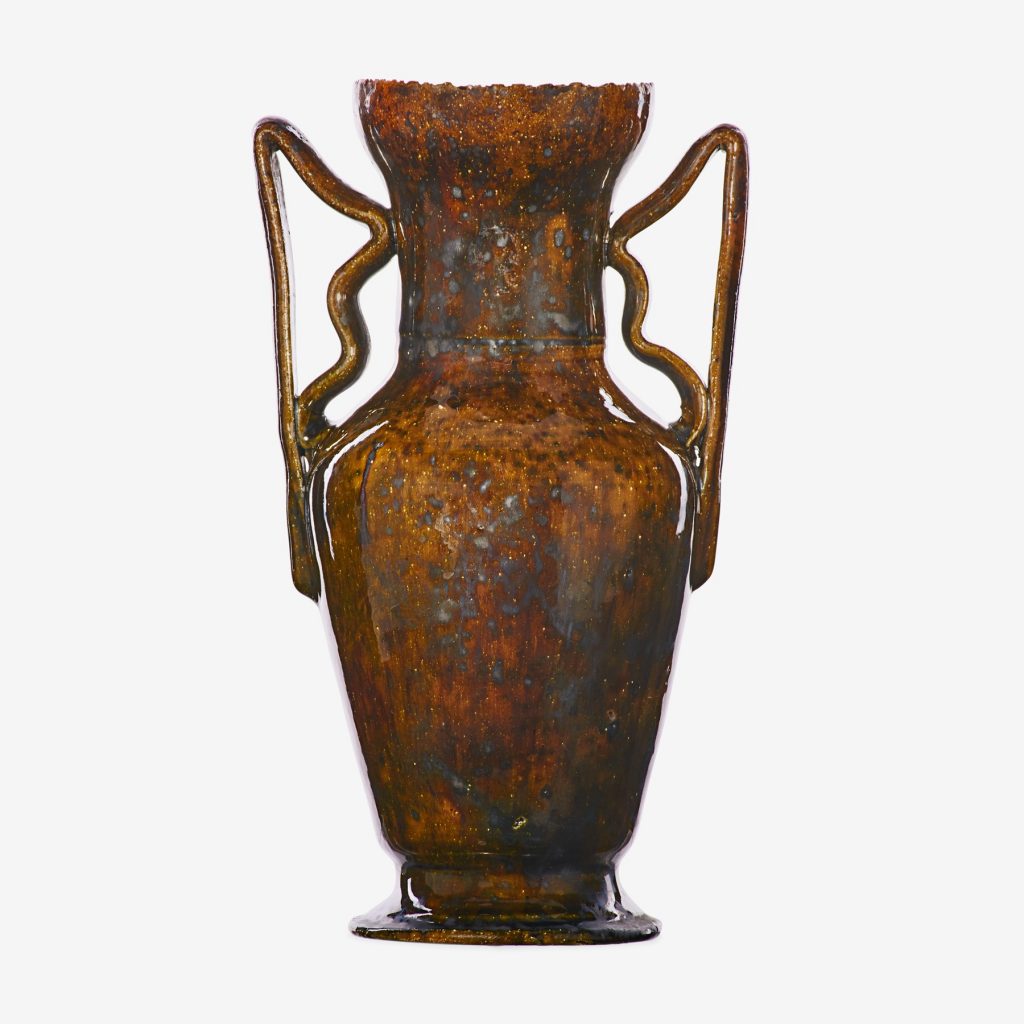
SOLD! Kenneth Nolan’s Songs: Yesterdays Fetched (Scroll Down to See) Also! Happy Birthday to The Hot Bid

Kenneth Noland's Songs: Yesterdays, a large 1985 acrylic on canvas, features a large chevron at the top of the canvas, pointing down. It's colored in bands of silver, black, red, and yellow. All four are textured. The pink backdrop is smooth.

Update: Kenneth Noland’s Songs: Yesterdays, a large 1985 acrylic on canvas, sold for $550,000 at LAMA–just over five times its low estimate.

And a special note: Today is the second anniversary of the debut of The Hot Bid. The first post featured LAMA’s Peter Loughrey talking about an Alma Thomas oil on canvas that went on to set an auction record for the artist.

What you see: Songs: Yesterdays, a large 1985 acrylic on canvas from the late Kenneth Noland. Los Angeles Modern Auctions (LAMA) estimates it at $100,000 to $150,000.

The expert: Peter Loughrey, founder of LAMA.

How prolific was Noland? He was very prolific. He quickly became a prominent figure in the Color Field school. Of all the artists who emerged from that movement, he became one of the most celebrated, with the target series in the late 1950s and early 1960s. By 1963, he was fairly well-established.

How often do his works come up at auction? Fairly often. There’s a lot of material out there. It trades hands with good regularity.

Is Songs: Yesterdays a one-off, or part of a series? It’s part of a series from the 1980s, when he returned to the chevron shape. He started it in the 1960s and he revisited it. The [1980s] works were named after songs. I don’t think this one was named after the Beatles song. I think he named it after an older song called Yesterdays. He not only revisited the shape of the icon, but he goes back to his own history, the music of his youth.

Los Angeles Modern Auctions (LAMA), February 17, 2019 Modern Art and Design Auction

Chevrons are a recurring theme in Noland’s work. Is there a ranked order to the popularity of specific themes in his work? Do collectors prefer his circles/targets to his chevrons, for example? If you asked the artist that, he would say “Absolutely not,” but the market has spoken. Circles/targets sell for the most. The chevrons are a very iconic part of his work. If you ranked [the themes] by their price in the market, the place of chevrons seems to be second.

I understand that Noland stained his canvases rather than brushing the color on with paints. Has he done that here? His earliest works, yes, were part of the stained canvases. Many artists were disengaging with the brush after [Jackson] Pollock. In this case, in the 1980s, Noland returned to the brush and palette knife.

How did he produce the texture on the chevrons? Did he use a palette knife? Definitely with a scraping device. A palette knife is typically how an artist would get this type of texture. If not a palette knife, a variation on the palette knife. A trowel, for example.

The pink area doesn’t show any evidence of brush strokes. Do we know what Noland did there? I looked for the technique in anticipation of your call. I didn’t find something that proved how he got it. The pink area is very flat. He’s playing with texture with paint. He contrasts an area where there’s no sign of the artist’s hand to an area with overt sign of the artist’s hand.

Songs: Yesterdays measures 88.5 inches by 69.1 inches. Is that a typical size for Noland? It’s a typical size from the 1980s. His 80s works tend to be fairly robust in scale.

Did Noland name the painting? He would have.

He painted this in 1985 and died in 2010. Is this considered a late work for him? It’s a late period work. I spoke to him in 2008 or 2009 on a very early abstract piece I was selling, and he was very quick to point out that he was busier now than ever. Past his mid-career, he still had a fairly long, strong output. He returned to the circles after the chevrons. It’s interesting that when he returned to the old icons, he returned to the chevrons first.

Los Angeles Modern Auctions (LAMA), February 17, 2019 Modern Art and Design Auction

Has the market for Noland works changed over time? Are there things collectors want now that they didn’t want as much ten years ago? It comes down to supply and demand. Paintings from 1963 are just rarer. There are not many opportunities [to bid], so they tend to sell for much higher. Works from the 1980s are much more available. In the last two or three years large 1980s chevrons have come up on the market. On December 3 in France, one estimated at $70,000 to $90,000 sold for $272,000. It was a chevron that was an almost identical-looking picture, and it was the same size [as this one]. There’s definitely a trend where the prices tend to be going upward. I imagine this last one selling for $272,000 is going to trigger a lot of people to sell, if they’ve been paying attention to the market.

How often have you handled works by Noland? Not very often. This is probably the first major painting I’ve had. I’ve certainly sold a lot of his prints and graphics. I think most of his material has likely surfaced in New York and Washington, D.C. L.A. is not one of the obvious places where people collect his work.

What is it like in person? It’s vibrant. It’s really quite impressive. It’s in flawless condition, which is always nice. It almost vibrates right in front of your eyes. It’s not subtle like some of his chevrons. This is really bold, and pops out.

Are there any details that elude the camera? Not really. The subtlety of the pink area, which we discussed as being devoid of the sign of the artist’s hand, is definitely much more obvious in person. There’s a stark contrast between the purity of the color field and the texture of the stripes of the chevrons.

Los Angeles Modern Auctions (LAMA), February 17, 2019 Modern Art and Design Auction

Why will this painting stick in your memory? I tend to like colorful, bright, optimistic works. It’s sort of who I am. If you look at the chevron work up for sale, it’s one of the brightest and most optimistic. In others, I think the colors tend to be more muted and a little darker.

How to bid: Songs: Yesterdays is lot 197 in the Modern Art & Design Auction at LAMA on February 17, 2019.

How to subscribe to The Hot Bid: Click the trio of dots at the upper right of this page. You can also follow The Hot Bid on Instagram and follow the author on Twitter.

Los Angeles Modern Auctions (LAMA) is on Twitter and Instagram.

Peter Loughrey has appeared on The Hot Bid since the beginning–literally. The blog’s first post was on an Alma Thomas painting that LAMA ultimately sold for a world auction record. He has also discussed works by Jonathan Borofsky and Wendell Castlean exceptional 1969 dune buggy, an Ed Ruscha print that set a world auction record at LAMA, and a hyperrealistic sculpture by Carole Feuerman that ultimately set an auction record for the artist.

Image is courtesy of Los Angeles Modern Auctions.

Would you like to hire Sheila Gibson Stoodley for writing or editing work? Click the word “Menu” at the upper right for contact details.

SOLD! An Ira Hudson Flying Black Duck Sold at Copley Fine Art Auctions For … (Scroll Down to See)

A decorative carving of a flying black duck, made by Ira Hudson in 1947. It faces left, its head in profile. The body is brown and its wings are spread. Its back is to us. A foot peeks out from under the tail.

Update: The Ira Hudson flying black duck sold for $18,000.

What you see: A decorative carving of a flying black duck, made by Ira Hudson in 1947. Copley Fine Art Auctions estimates it at $18,000 to $24,000.

The expert: Colin McNair, decoy specialist for Copley Fine Art Auctions.

The lot notes call Ira Hudson “the South’s greatest waterfowl folk artist of the era.” What makes him so? He appears to be self-taught, and he quickly imparted his own style into his work. He seemed to put a much higher emphasis on his style and sensibility over realism. That direction goes toward what I call whimsical. It’s more toward folk art than realism.

What do you mean when you say “whimsical”? He had a very pure and raw confidence that comes forth in his carvings. He was very efficient in every aspect of his methods. You get a high quality standard throughout his body of work, because he did it so much.

I understand that he did not rely on patterns when carving his decoys. How did that affect his work? A lot of decoy makers use patterns for the side profile and the top profile  [of a duck decoy]. It would make sense that he doesn’t use patterns. He would take a block with a rectangular cross section, turn it 45 degrees, and he’d carve from that. Patterns don’t apply to that approach to carving. In addition, we know he used wood he salvaged from the shore. When you use found material, patterns are a hindrance. And when you’re looking at someone with the confidence he had, you wouldn’t need a pattern. He could chop wood with a hatchet and make it look like a duck. You see the form influenced by the wood he had available.

Does Hudson’s avoidance of patterns make his work more interesting to collectors? Absolutely. His freestyle approach to carving created some incredibly lively, animated forms. You’ll notice with this form that the bird arches to one side. The structure of the bird is turned from tip to tail. It’s a crescent. It’s not realistic, but it’s pleasing and exciting to see, and it’s unique to his work. I don’t think anyone else has decoys with a crescent shape to them.

How often do black ducks appear in his work? He lived on Chincoteague, an island off the eastern shore of Virginia. It’s a prime black duck habitat, and black ducks are great birds to hunt. They’re respected for table fare and sport hunting. Hudson made a good number of black ducks to hunt over. That said, his full size carvings of flying black ducks are exceptionally rare. I’ve never seen another full size flying black duck.

Did Hudson introduce the concept of the flyer–a decoy depicted in the act of flying? I wouldn’t go so far as to say that he originated the flyer. However, it doesn’t appear to take the idea from anyone else, and it was made around the time the first flyers were made in various regions. There’s no one around him we’d expect to be exposed to anything like this. He doesn’t get full credit, but he was a pioneer, especially for his region.

When did he start carving flyers? He started carving during the early 20th century, around 1910 or so. The first flyers started showing up in the 1930s and continued into the 1940s. It’s a natural progression considering that waterfowl laws were changing. A decorative flyer was something a sport hunter could afford and be interested in, whereas a market hunter [someone who hunts ducks to sell as food] would only be interested in the decoy.

How many flyers did Hudson make? For full size flyers in total, I’ve probably seen a few dozen.

The lot notes call this a “rare” flying black duck. What makes it rare? We look at his flyers and say, “Ok, there’s a few dozen flyers out there. Among those, you’re down to a couple of flying black ducks.” Others represented are mergansers and mallards. It’s one of the only black duck flyers.

This bird cannot be used as a duck decoy. You can’t hunt with it. It’s purely decorative. Was Hudson among the earliest creators to carve ducks that are purely decorative, or did the changing waterfowl laws nudge him in that direction? This bird is made purely as decorative rather than a decoy. His son [Delbert] painted it exactly how he would paint a decoy. Its purpose was to attract an affluent buyer to decorate a cabin with it. I would say Hudson is in sync with the top makers around the country in the era in starting to do more with decoratives. He was following market trends.

Did he carve this bird in a single piece, or is it assembled from multiple pieces? With this bird, the body is made from one piece of wood. The wings are attached, as are the head and neck. The feet are separate pieces which attach. There are six pieces in a typical flyer as opposed to two pieces in a standard decoy.

He carved the decoy from balsa wood. Is that why he needed to create six pieces? Using multiple pieces of wood for a complex form works for a couple of reasons. One, it minimizes waste. Two, you have to consider the strength of the wood, which comes from the direction of its grain. It’s projecting in different directions, so you have to have the grain aligned in the wood or you’ll have weak points that are going to break. The reason he used balsa is it’s a nice, soft, very easy material to carve. Balsa is not as good for decoys because they wear quickly. On decoratives, it’s far less important, because they’re not taking wear. Wall hangers are lighter weight to reduce the chance of it falling off the wall.

Is it possible to know why Hudson made this? Does the fact that this is one of two known flying black ducks imply this one might have been commissioned? Or might he have made it for his own pleasure? Almost certainly, he would have made it for sale, and to generate income to support his family. We can’t get too deep into the pure reasoning, but he would make anything that would sell. He made clothespins during the war, when there were rations on things. This was made during a time of demand for decorative waterfowl, and he was more than capable of the job.

His son, Delbert, painted this decoy. Do we know when his children started taking on significant roles in the production of decoys? Reportedly, all of his children were involved with production at one time or another. [Hudson had nine.] Delbert and Norman went on to be very competent carvers in their own right. You have to look at Hudson’s work as his workshop. Hudson decoys would have been a joint effort. We judge each bird on its merits.

This flyer dates to 1947, two years before Hudson died. Do collectors prefer any specific time of his career? I’d say this carving is a testament to the high level of quality he maintained over the course of decades. Because of that quality standard, there’s no preference for an era of carving. The date of a carving is less important than its individual qualities.

What’s its condition? Its paint is in ideal original condition. It has one small repair to a wingtip.

It’s made from balsa wood. Would that make it more vulnerable to condition issues? It is, but because it’s a decoy for decorative purposes, it would have had an easy life hanging on a wall.

Would it have been made as a one-off, or would it have been one of a flock of flying black ducks that would hang on a wall together? It would have been made as a single object.

Why will it stick in your memory? First of all, the rarity. A flying black duck stands out. And it has the quality I like to see in any Hudson carving, including a plump body, a fine head carving, a dynamic pose, and exceptional scratch feather paint.

How to bid: The Ira Hudson flying black duck is lot 171 in the 2019 Winter Sale at Copley Fine Art Auctions on February 16, 2019 in Charleston, South Carolina.

How to subscribe to The Hot BidClick the trio of dots at the upper right of this page. You can also follow The Hot Bid on Instagram and follow the author on Twitter.

Image is courtesy of Copley Fine Art Auctions.

Colin McNair appeared on The Hot Bid last year, talking about an Elmer Crowell preening black duck decoy that ultimately sold for $600,000.

Quack!

Would you like to hire Sheila Gibson Stoodley for writing or editing work? Click the word “Menu” at the upper right for contact details.

SOLD! Swann Sold That 1927 Josephine Baker Movie Poster For (Scroll Down to See)

A 1927 Swedish movie poster for Josephine Baker's silent film The Siren of the Tropics. It depicts her smiling directly at the viewer, wearing a scanty costume of strategically placed strings of pearls. She also wears pearl arm cuffs, elaborate pearl earrings. A large fan of red feathers, evidently attached to her back, spreads behind her.

Update: The 1927 Josephine Baker poster commanded $9,750.

What you see: A 1927 Swedish movie poster for Josephine Baker’s silent film The Siren of the Tropics. Swann Galleries estimates it at $12,000 to $18,000.

The expert: Nicholas Lowry, director of Swann Galleries.

This poster image is based on a color photograph from an interior page of a Folies Bergère program. How common was it to base poster graphics on photos in the late 1920s? Is this unusual? Good question. I don’t know the answer to that. Some posters were photographic. I’m not sure I know of others, but the fact that it’s unusual doesn’t make it important.

Can we tell by looking how the poster artist sized up the photograph? Did they just blow up the photo, or did they trace it or draw it? It has been enlarged, to be sure. I assume it would have been hand-drawn, but I’m not sure about that at all.

The original photo was in color. Did the poster artist change the colors, or are these the same colors in the Folies Bergère program photograph? The colors are basically the same. It’s not like they were changed from red to blue. The only change was to cover up her immodesty.

It’s interesting that the poster artist went with the same colors seen in the picture, rather than brighter colors that are more suited to the poster medium. I think the poster attracts attention very well without bright colors. Forget the fact that she’s scantily clad–it’s an incredible getup. And it’s a great portrait of her.

M38503-2 001

The movie the poster advertises, The Siren of the Tropics, had its world premiere in Stockholm. Do we know why the premiere was held there rather than, say, Paris? I haven’t found anything about that anywhere. But there was a Swedish fascination with Josephine Baker. They were transfixed by her. All of Europe was transfixed by her to some degree.

It’s an odd choice of venue for a Josephine Baker film debut. I couldn’t agree more. I do think the fact that the image is from the Folies Bergère program and not from the film–I think it must have been done quickly. Maybe that’s why they used an image that already existed. The show from the Folies Bergère has nothing to do with the movie. I don’t think she wears the pearls and feathers costume in the film.

The poster artist definitely altered the picture when translating it into a poster. What, exactly, was added? Her nipples [are covered], and four strands of pearls emanating from each of her pasties have been added. [You can see the original photo at this link.]

M38503-2 001

It looks like whoever added the pasties and pearls for the poster version did a good job. Is the touch-up work more obvious in person? It took a while to make the realization that [the original] is not covered up. Certainly, the work is good. Seamlessly done. It looks like how it was meant to be.

And this is the only copy of the poster that has come to auction? It has been seen before, but it has never come up for sale before. Given how popular Josephine Baker is, and that it was a world premiere of a film, you’d think more copies would surface, but none have come to market.

Baker isn’t shown topless, but the poster is still pretty risqué. Where would this have been displayed in Sweden in 1927? Presumably, it was hung up all over Sweden. That doesn’t explain why so few have surfaced. [They would have] posted them wherever they could to get the maximum effect from the advertising.

M38503-2 001

And some of them, certainly, would have been stolen by fans… Stolen, peeled off, maybe a remainder was not posted. It’s a sexy image, even if you don’t like it. I do think it’s eye-catching. She has a very becoming smile, and she’s staring right at you. A fetching pose, an improbable costume. People walking down the street would think, “WTF is that?” She was topless in the Folies Bergère program, but that’s a lot less public than a poster siding.

How did the poster come to you? Through the inventory of a dealer who passed away. I think it was purchased in the last five years.

You’ve given it a condition grade of B. Collectors would prefer a higher grade, but does that matter when a poster is unique? It’s not a situation where you can sit back and wait for another to come along. There’s no indication there’s another one out there. They have to be forgiving.

How did you arrive at the estimate? It’s based on sales of other Josephine Baker posters. Baker is one of the most sought-after music hall performers of her time. Like Chaplin and the Titanic, her name really transcends her genre. She was a black woman making her name performing half-naked in France. That could not happen in America. From a racial point of view, it’s astounding. And it was incredible for a black woman to appear in a movie. Not only appear in it, but star in it.

Does the silent film the poster advertises survive? Clips are online. The film was panned, but it’s certainly around.

M38503-2 001

How does this Josephine Baker poster measure up to other posters that feature her? It’s a great depiction of her. We’ve sold several Josephine Baker posters over the years. Some sell for $25,000 to $45,000. This one combines scarcity, an appealing image, and a performer who is remembered and sought after in the collectors’ market. For example, two years ago, we had the French version of Siren of the Tropics poster. It didn’t actually sell. If you looked at it, you couldn’t tell it was Josephine Baker. In 2010, we sold a Danish poster for her film Princess Tam Tam for $9,000.

Are there other Josephine Baker posters from her lifetime that are based on photos? There’s one from the end of her career that’s very horrible and very common, which sells for $600 on a good day. It’s not a good comparison. None of the others are photographic.

M38503-2 001

Why will this poster stick in your memory? Several reasons. It’s a sexy image. It really is a rare Josephine Baker piece. It’s a very good poster, because it’s a good likeness of her. And as a poster geek, I appreciate that no others have come up for sale publicly.

How to bid: The Swedish movie poster for Josephine Baker’s 1927 silent film, The Siren of the Tropics, is lot 429 in the Vintage Posters sale at Swann Galleries on February 7, 2019.

How to subscribe to The Hot BidClick the trio of dots at the upper right of this page. You can also follow The Hot Bid on Instagram and follow the author on Twitter.

Swann Galleries is on Instagram and Twitter, and Nicholas Lowry is on Instagram and Twitter as well.

Nicholas Lowry has appeared several times on The Hot Bid. Read past entries in which he  talks about a 1928 Roger Broders poster that later sold for $7,500Swann setting the world auction record for any travel postera 1938 London Transport poster by Man Ray that ultimately sold for $149,000a trio of Mont Blanc posters from 1928, a mid-1930s German travel poster featuring the Hindenburg, a 1968 MoMA poster by Japanese artist Tadanori Yokoo, an I Want You1917 World War I recruiting poster that introduced the modern concept of Uncle Sam, and an Alphonse Mucha poster featuring Sarah Bernhardt.

Image is courtesy of Swann Auction Galleries.

Would you like to hire Sheila Gibson Stoodley for writing or editing work? Click the word “Menu” at the upper right for contact details.

SOLD! A Tall Wally Bird Fetched (Scroll Down to See)

A tall bird tobacco jar, aka a "Wally Bird," by the Martin Brothers, created in London circa 1900. It is slim and compact, with a dark orange beak and a beige, cream, and grey body. It has an expression on its face that seems to say it knows you just committed a huge, embarrassing social error, and you're so ignorant that you have no idea what you just did, and why it marks you as a rube.

Update: The tall Wally Bird tobacco jar sold for $50,000.

What you see: A tall bird tobacco jar, aka a “Wally Bird,” by the Martin Brothers, created in London circa 1900. The head is signed by R.W. (Robert Wallace) Martin, and the base is signed as the Martin Brothers. Rago Auctions estimates it at $40,000 to $60,000.

The expert: David Rago of Rago Arts and Auctions.

Why do people love Wally Birds? What makes them great is they [the Martin Brothers] were world-class modelers, at the top of their game, with an idea no one else had. They’re really expressive creatures, and a lot of fun. It’s like they [the birds] are having a conversation with each other. Expression is so much of what these things are about. They’re pretty snarky. I don’t know of any that are benign.

Are those made between 1880 and 1900 the most desirable? I think so. I’m not a scholar or an academic. I’m hands on. I touch this stuff. What I know is not out of a book. The power alley [for Wally Birds] is from 1883 to 1893. I would peg this bird a little earlier than 1900. I’d say 1895. [After 1900 or so] you can see them start to lose their edge. Maybe after 25 years they [the Martin Brothers] wanted to move on to something else.

What details of this Wally Bird make you think it’s from 1895 and not 1900? I just think he’s a better bird. Better modeling, better detailing, better expression, better gradation of color. He’s tall, and he’s got a lot of character. I think he was made during the prime of their production.

Who was the best modeler among the brothers? I think Robert Wallace was a cut above.

Do Wally Birds with his signature sell for more? I always find it’s better to have “Robert Wallace” on a piece than not. But I’d rather have a great unsigned Wally Bird than a mediocre one with R.W.’s initials on it.

Does height matter with Wally Birds? Do collectors prefer the taller ones? It’s a factor in the price. Birds tend to be seven or eight inches tall. Over one foot, 15 inches, you’ve got a big bird. The vast majority are 10 inches or less.

Do the expressions on the faces of the birds matter? Yes, and being colorful helps. The important things are the expression, the size, and the condition, but it’s not hard to sell a Wally Bird with minor damage.

Were Wally Birds actively collected when they were new, or did that come later? I don’t know that people collected things in 1885. We were still dealing with the early days of the Industrial Revolution.

So it was more like people thought, ‘This is too nice to throw away’? [More like] “I saw a jar that looks like someone I know, I’ll buy it and keep it.”

The Wally Birds were designed to hold pipe tobacco. Were they used that way? I’ve literally handled 200 of these and I haven’t found tobacco in any of them. I think they were called tobacco jars to give them a functional purpose, maybe to appeal to men. Everybody smoked back then. You can’t use a bird, but you can use a tobacco jar. Who knows what the rationale was?

And the Martin Brothers made Wally Birds from 1880 up until 1914? I’ve had pieces dated that late. There’s a thought that some were finished later than that by a son of one of the brothers in the 1930s. The dating might not be clear on the later ones. They tend to be blue and white, and the expressions tend to be shallower.

Do we know how the birds were made? They were sculpted. You can look inside [a Wally Bird] and see the way the clay has been cut back. They gouged the clay out to make the interior. You can see the tooling of the construction.

Are Wally Birds based on real birds? To some extent, yes. But I think the birds they looked at was a departure point for their imaginations.

Do British collectors dominate the field of Wally Birds? Americans have been bringing Wally Birds here for 50 years. I even know Brits who buy them from Americans and sell them back to Americans. I would guess that 75 percent of known Martinware [a term that describes the Wally Birds and other ceramics by the Martin Brothers] is in the U.S.

How often do Wally Birds come up at auction? There’s been a generational change. People who bought in the 1980s are selling off now. I sold Lillian Hoffman’s collection four years ago. Wait ten years, and the people who bought in the Harriman Judd collection sale [at Sotheby’s in January 2001] will sell off.

So they come up every five or ten years or so? Yeah. Even if they [collectors] have to pare down, they don’t put up one Wally Bird. They put up two or three. They sell them in flocks.

What’s it like to hold this Wally Bird in your hand? For a ceramic, it’s hefty. There’s nothing eggshell about Wally Birds, nothing delicate.

What condition is it in? There’s a repair on one of the feathers, and at the very bottom of the clay base, there’s an unevenness to the edge. But it’s an 125-year-old piece of ceramic sculpture.

In your experience, how do collectors display Wally Birds in their homes? They’re displayed how you’d expect a $50,000 piece of clay to be displayed–usually on a shelf, with half a dozen birds side by side. They’re not left on desktops, where they’re too easily knocked over.

You’ve got several pieces of Martinware in this auction, including another Wally Bird in Lot 5 that’s estimated at $30,000 to $50,000. What’s the difference between this bird and that bird? Why is Lot 1 one worth more? Size is a significant factor. Lot 1 is a big bird. Lot 5 is interesting because it’s a friar bird. [Look closely at its head and you’ll see it has a tonsure–a monk’s hairstyle. You can also click on the 360-degree view button at the lower right and spin it to better see the back of its head.] But it’s the nature of the beast–it’s clumsier, it’s not as free-flowing a bird. Both are good birds, but one is one and a half times the size of the other one.

Wally Birds are 80 to 120 years old. Almost no one smokes a pipe anymore. What’s been keeping up the profile of Wally Birds? Was there a big, influential museum show? Is there a collectors’ society that’s active and media-savvy? Several things. Number one is the right number of them were made. With Martinware, there’s enough material out there but not too much–just enough to create and sustain a market. Number two, both sides of the pond are buying this stuff. If it’s supported by collectors in Europe and America, it’s healthy. Number three, they’re really good. World-class ceramics. They’re sculpted, best in the world at the time it was made, and I haven’t seen much to rival it. The quality has held up.

The world auction record for a Wally Bird belongs to an 1889 example that stands just over 14 inches tall and resembles the British prime minister Benjamin Disraeli. It sold in December 2015 in New York for $233,000 against an estimate of $100,000 to $150,000. I realize Rago did not handle that bird, but can you tell me why it did so well? It was a fabulous bird. It was huge, and it was a historic figure from the land where they were made. It was the pinnacle. I don’t know if you get better than [the Wally Birds that resemble] Disraeli and [British prime minister William] Gladstone. Those are the best.

And Americans are just as interested in the Disraeli and Gladstone Wally Birds, even though they depict British political figures? Absolutely. I’m sure they’re in America. If you’re going to buy British pottery, you’re going to buy the best out there.

Why will this Wally Bird stick in your memory? The expression is really good. The quality is top-notch. The condition is excellent. That’s true of most birds I handle. And it’s just big. The production of the larger birds is quite limited. I’d say five percent are this size or bigger. If 250 [a possible rough count for surviving Wally Birds] is accurate, there are 10 to 15 in this range. In a September 2018 auction, I had one that big, and it sold for $112,500. It’s really, really rare to have another that size. I would dare say I have this bird because I sold the other one.

How to bid: The Martin Brothers tall bird tobacco jar is lot 1 in the Early 20th Century Design sale at Rago Auctions on January 19, 2019.

How to subscribe to The Hot BidClick the trio of dots at the upper right of this page. You can also follow The Hot Bid on Instagram and follow the author on Twitter.

Rago Auctions is on Twitter and Instagram.

Alison Davey of AD Antiques in Gloucestershire, England, has devised a way to track Wally Birds without banding their ankles. In 2018, she began creating “passports” for the coveted works. The document, which resembles a British passport, contains a photo of the Wally Bird, its height, its condition, and its known provenance.

Image is courtesy of Rago Auctions.

Would you like to hire Sheila Gibson Stoodley for writing or editing work? Click the word “Menu” at the upper right for contact details.

SOLD! Wanda Gág’s Study for The Poisoned Apple Commanded (Scroll Down to See)

The Poisoned Apple, a study by Wanda Gág [pronounced 'Gahg'] for an illustration in a 1938 edition of Snow White and the Seven Dwarfs.

Update: Wanda Gág’s study for The Poisoned Apple sold for $5,000.

What you see: The Poisoned Apple, a study by Wanda Gág [pronounced ‘Gahg’] for an illustration in a 1938 edition of Snow White and the Seven Dwarfs. Swann Auction Galleries estimates it at $5,000 to $7,000.

The expert: Christine von der Linn, specialist in art books and original illustration at Swann Auction Galleries.

How did this Snow White book project come about? Was it a reaction to the Disney film Snow White and the Seven Dwarfs? It is, it absolutely is. 1937 was the Disney film. While it was popular and became an iconic film, the depiction of the witch frightened children. Because of that, one year later, Anne Carroll Moore, a writer, reviewer, and critic of children’s books and an advocate for children’s libraries, wanted to go back to the original Brothers Grimm and soften some of the elements that Disney portrayed.

How did the 1938 version achieve what Moore wanted? It keeps more of the folkloric charm of the original. You asked if the fact that Gág translated it herself, if it shaped the story–it did. Gág’s father was from Bohemia, and they moved to Minnesota. She grew up with those fairy tales and stories. She understood folklore and fairy tales, and she knew the language. She was able to translate it and come up with a more accurate version of the Brothers Grimm tale.

The study for The Poisoned Apple is far more elaborate than the same scene in the Disney movie. Can you talk about how Wanda Gág approached this scene, and how she chose certain details? In the original Grimm, the queen made four attempts to kill Snow White…

It sounds kind of like the Michael Palin character in A Fish Called Wanda trying to kill the old lady and accidentally killing her dogs instead. Exactly! Exactly. The queen tries her damnedest. She comes to the door as a corset peddler. The dwarfs told Snow White was told she was not supposed to answer the door to anyone. The queen puts her in a corset and ties her in so tightly that she passes out. The dwarfs find her and revive her. Next, she went as a comb vendor. The different attempts to disguise herself are discarded on the floor [the pile of masks and clothes at the left of the illustration]–the peddler didn’t work, the comb didn’t work. She gets her with the poisoned apple. Snow White was hesitant to take it. She had the good sense to be wary. The queen makes the apple half poison and half safe, and takes her bite out of the apple pulp side, the safe side. I love that Gág is showing the recipe, how she created the poisoned apple to give to her stepdaughter. It looks kind of delightful until you look at the elements and realize how dark they really are.

The late 1930s were a time when the notion of “better living through chemistry” wasn’t laughable. Nylon had been invented a few years earlier. Do you think that the positive view of chemical breakthroughs shaped how Gág approached this illustration? The Disney scene has the witch standing over the traditional cauldron, but this scene is half lab, half kitchen. It’s an interesting connection to make, but I’m not sure if I’d 100 percent go there. Domestic science came in the teens. By 1937 and 1938, it was established. You definitely have those elements to it.

How different is the study from the illustration that appears in the book? Not terribly. It takes you a while to realize the differences. The composition is almost identical. In the book version, she defines the elements more. The vapors coming off the apple look more like a corona. It’s interesting to see the subtleties of how she directs the eye.

I don’t have the Brothers Grimm version of Snow White in front of me, and I can’t recall it, but wouldn’t it have been harsher than the Disney version? It was. In the movie, the dwarfs dance around her and love Snow White. It’s symbiotic. In the book, they’re almost like little opportunists:”You can stay here and we will help keep you protected if you become our housekeeper.” They’re in the more classic tradition of dwarfs as mischievous and devious. They’re going to use her services. In the movie, when she falls under the spell, they put her in a glass coffin. In the book, the prince decides to take Snow White to a better resting place and attempts to move her to his castle, and one of his carriers trips. An act of clumsiness dislodges the apple from her throat and wakes her. She and the prince then decide to get married. In dark, grim fashion, the prince reveals to Snow White that the queen tried to murder her. They make the queen wear molten hot dance shoes and in a messed up Circus Maximus scene, they make her dance until she dies and they carry on with the rest of the wedding. Gág kept it. It’s still a violent image, but she kept it.

Is this the first piece of art from the Snow White book to come to auction? I didn’t find any others when I searched the Swann online archives. It is our first Snow White. Her other work does come up. She was a printmaker and a very skilled lithographer. The record-keeping for her work is really erratic. We seem to have the top price for a fine art work by her [an undated print, titled Outside Looking In, which sold in September 2008 for $6,480]. Skinner sold an ink on paper of a cat in a laundry basket in May 2016. That could be the top price for a Wanda Gág illustration.

Where are the rest of Wanda Gág’s illustrations for the Snow White book? The rest reside in the Kerlan collection at the University of Minnesota. Minnesota is where she grew up. A couple of studies have entered the market. The provenance for this piece is it was acquired by a German rare book and manuscripts dealer, Walter Schatzki. He had them and then he sold them in the early 1970s to another dealer, Justin G. Schiller. It went from Schiller to the current owner. That’s one of the reasons why the price is higher. It’s her best-known work outside of Millions of Cats. It’s a crucial scene from the book, and you can’t acquire [the final illustration] because it’s in the Kerlan collection.

What are the odds that The Poisoned Apple will set a new record for Wanda Gág at auction? The estimate straddles the price of Outside Looking In. It might, it might. I’d like to see it set a record. We’re still celebrating the 80th anniversary of the movie and the publication of the book. It’s one of her most important and defining creations. And this is its first time at auction. With enough luck and enough bidders, we’ll see it set a new record.

Why will this Wanda Gág piece stick in your memory? [Laughs] A couple of reasons. I like it because, in general, I love food and fairy tale images. For me, it’s a two-in-one. I’m the vice president of a local farmer’s market. I often deal with farmers and apples. I love any illustration that’s food- and fairy tale-based. I also like that it’s cartoon-like. The dark, thick lines lend that element to it.

How to bid: The study for The Poisoned Apple is lot 22 in Swann Auction Galleries‘s Illustration Art sale on December 6, 2018.

How to subscribe to The Hot BidClick the trio of dots at the upper right of this page. You can also follow The Hot Bid on Instagram and follow the author on Twitter.

Swann Auction Galleries is on Instagram and Twitter.

Image is courtesy of Swann Auction Galleries.

Christine von der Linn has appeared before on The Hot Bid, speaking about an Arthur Rackham illustration of Danaë and the Infant Perseusa Rockwell Kent-illustrated edition of Moby Dick and original Erté artwork for a 1933 Harper’s Bazaar cover.

Would you like to hire Sheila Gibson Stoodley for writing or editing work? Click the word “Menu” at the upper right for contact details.

SOLD! A Maurice Sendak-designed Crocodile Costume from the Opera Goose of Cairo Commanded (Scroll Down to See)

A crocodile costume designed by Maurice Sendak in the 1980s for a production of L'Oca del Cairo (Goose of Cairo), an unfinished opera by Wolfgang Amadeus Mozart.

Update: The Sendak-designed complete crocodile costume for Goose of Cairo sold for $3,750.

What you see: A crocodile costume designed by Maurice Sendak in the 1980s for a production of L’Oca del Cairo (Goose of Cairo), an unfinished opera by Wolfgang Amadeus Mozart. Rago Auctions estimates it at $3,000 to $5,000.

The expert: Justin G. Schiller, a specialist in rare and collectible children’s books. He co-created the corporation that consigned the costume to Rago Auctions.

So, how many operas did Sendak design for? Altogether I believe he did 15 operas and ballets. He began in 1980, with The Magic Flute, and his career went through to 2004 or 2005, with Brundibar. He was very interested in the experience of developing not only the sets and costumes, but trying to make the characters interactive.

Was this character the only crocodile character in Goose of Cairo, or was it one of several crocodiles? I think there was only one involved in the production. This is one of the few Sendak costumes that is complete. The head and feet are the main parts of those costumes. The bodysuits were painted to fit, but the crocodile costume was so specific, they kept everything.

Why is this costume described in the lot heading as being “After Maurice Sendak” rather than designed by Maurice Sendak? Maurice would have done the design on paper. The costume was created by the seamstresses, the people who make the costumes. In some cases, you see Maurice fix up the costume once it’s on the actor or the actress. He did the pictures, they did the physical production.

So he wouldn’t have been involved with making sure the costume was comfortable for the actor to wear? Yes, but if there was any problem with the fitting, he would have been consulted.

What do we know about Sendak’s approach to costume design? He took it very seriously. For example, when he was doing Hansel and Gretel, he went to German forests and studied the landscaping. It took him seven years to create.

Apparently it’s rare for a Sendak costume to survive intact, as this one does. How did it manage to do that? The production for Goose of Cairo was very short-lived. They [the few Goose of Cairo items that were found] were in a separate storage unit. It’s one of only two pieces of the production that survive. The other is a mechanical goose of Cairo that gets wheeled onstage, which Richard Michelson has. Goose of Cairo was never considered a main production, because it was an unfinished opera by Mozart. It’s usually presented as an interlude. It ran for about half an hour, and something else would have come with it. Maybe that’s why there weren’t many costumes.

Why are Sendak-designed costumes so scarce, compared to Sendak-designed sets? Probably because sets get rolled on stage or lowered on stage, and when they’re not on stage, they’re protected. Costumes get handled and used constantly. The condition of the crocodile is unusually good. It’s a simpler costume: bodysuit, head, gloves, foot coverings.

Is this crocodile costume a good representative of his opera costume design work? I would think it’s a very good example. The head is probably papier-mâché molded on top of a helmet so it fits on the head of an actor. From there, they’d build out the rest of the head, the body suit, the painted fabric. Several of the costumes we had would have the names of actors inside them and the names of the production companies.

Is that true here? No. I believe the crocodile had only one actor. When you have multiple figures wearing the same cluster of costumes, like in The Love for Three Oranges, different actors play the roles, and they all need to be fitted. Having names on them makes it much simpler.

And the provenance for this Sendak costume–it went from the New York City Opera to you to Rago Auctions? Yes, exactly. We specialize in Sendak.

How did you come to own the Sendak costume? The New York City Opera decided to sell all [the sets and costumes] they didn’t plan to put into sequence again [in 2013]. We decided to acquire as much as we could from productions they still had examples of.

How many costumes did you acquire? It didn’t seem like a lot. We purchased ten or twelve.

How many complete Sendak-designed costumes survive? I don’t really know. There were a few major ones. There was a fabulous one with a very grand lady who was a pig, and a bear dressed up like a lord, [both] for a different opera, and they went for $4,000 to $6,000 each, as the hammer price [the price before the premium and other fees are applied]. I talked to the collector afterward. She was a very serious collector of opera and theater costumes. It was a unique opportunity to acquire a costume by Sendak.

When Sendak created book illustrations, he worked in two dimensions. When he created opera costumes, he had to think, to some extent, in three dimensions. How did he handle this challenge? Sometimes it’s the costume people, but Maurice’s drawings often show a profile, how it looks from the side. But sets are one thing, costumes are another. The catalog only shows side views of the crocodile head. Head on, it’s fantastic.

What details on the crocodile costume mark it as a Sendak design? Maybe with certain specific styles, you can look at it and say that’s a David Hockney or that’s a Picasso. With Sendak, I would say basically the [sense of] fantasy, of playfulness. His ogress would be friendly, even if the character was not.

What jumped out and me and said “Sendak” was the crocodile’s eyes, and the snout. It certainly was the eyes that got us. They’re wonderful, almost yolk-colored eyes. The snout–most artists would draw it as menacing. Sendak’s snout is friendly instead of menacing, despite all the teeth.

The condition report states that the Sendak costume has “wear commensurate with theatrical use.” What does that mean in this context? It’s got scuffs or scrapes on the bottom of the tail and the foot coverings? That [the language] is mostly so people don’t think it’s brand new. The bodysuit may have a tear in the stitching, but overall, it’s quite good, and very dramatic.

Have you or your gallery partner or anyone at Rago Auctions tried on the Sendak-designed costume? You need a slim body [to wear it]. We told Rago they’d need some kind of body form [to display it and photograph it]. They were able to find a person on staff who could do the pictures. We were surprised and pleased that they were able to do that.

How does the wearer see? There are eyeholes in the neck.

Do you know what size the Sendak-designed costume is? I don’t. Dennis [Dennis David, Schiller’s gallery partner] is suggesting it’s probably more of a medium. Maybe that’s why the crocodile is not looking too hungry.

Is the head attached to the tail, or are they separate pieces? The head is certainly separate. The tail is attached with button snaps to the back of the bodysuit. The gloves are part of the bodysuit. The head, in itself, is very decorative.

What’s the auction record for a Sendak-designed costume? The only auction I know of is from the New York City Opera sale, three costumes that were very elaborate in themselves. We were the underbidder. They were probably from The Love of Three Oranges. Those sold for between $4,000 and $6,000 each.

How to bid: The Sendak-designed costume is lot 1141 in the Curiouser and Curiouser sale at Rago Auctions on December 1, 2018.

How to subscribe to The Hot BidClick the trio of dots at the upper right of this page. You can also follow The Hot Bid on Instagram and follow the author on Twitter.

Rago Auctions is on Twitter and Instagram.

Justin G. Schiller has a website. Two, actually.

Image is courtesy of Rago Auctions.

Would you like to hire Sheila Gibson Stoodley for writing or editing work? Click the word “Menu” at the upper right for contact details.

SOLD! The First TCB Necklace That Elvis Presley Gave Away Sold For… (Scroll Down to See)

A 14k gold necklace with a Taking Care of Business (TCB) logo, given by Elvis Presley to Sonny West circa 1970.

Update: The Taking Care of Business necklace that Elvis Presley gave to Sonny West sold for $38,400.

What you see: A 14k gold necklace with a Taking Care of Business (TCB) logo, given by Elvis Presley to Sonny West circa 1970. Julien’s Auctions estimates it at $30,000 to $50,000.

The expert: Martin Nolan, executive director of Julien’s Auctions.

What was the Memphis Mafia, and how did it serve Elvis Presley? “Memphis Mafia” was the name given to the group of friends and close confidants of Elvis Presley. The media gave them the name “Memphis Mafia” around 1960. Elvis liked the name and it stuck.

Where did the phrase “Taking Care of Business” come from? Elvis’s band was called Taking Care of Business. He always gave away gifts, especially jewelry, and he came up with the idea for an identifying piece of jewelry that he only gave to the Memphis Mafia. There were probably 12 to 20 people [in the group]. Elvis loved Taking Care of Business. It was the logo on his plane. Priscilla was involved with the design of the logo. They were on the plane when a lightning bolt went through it. She got out her sketch pad and came up with Taking Care of Business in a flash.

When did that happen? We don’t know for sure, but we presume it was the late 1950s or early 1960s, probably after he came out of the military.

How was the material and the carat weight chosen? Elvis loved bling, he loved gold. There were some variants on the necklace. The one he gave Doctor Nick [George Nichopoulos, Presley’s personal physician] had diamonds on it. We sold that one for $120,000. The overall look of the 14k gold necklace is probably based on a collaboration with the jeweler in Beverly Hills and what they could do within their budget.

This is believed to be the first Taking Care of Business necklace that Elvis Presley gave out. Does that make it more interesting to collectors? Yes. Collectors love something when it’s original, or the first. TCB went on to be a significant Elvis signature, in a way. Its being the first definitely adds value on auction day.

Why is Sonny West a logical recipient of the first Taking Care of Business necklace? He was Elvis’s bodyguard, responsible for security at his concerts. He was one of the original members of the Memphis Mafia, which was a very close, tight circle. My guess is because he was Elvis’s bodyguard, he was right there when Elvis went to the jewelry shop in Beverly Hills. Because he was right there, and a member of the Memphis Mafia group, he got the first necklace.

Do the Taking Care of Business necklaces always look like this one does, or did the design change over time? They’re not all exactly the same. The TCB logo with the flash remains the same, but the chains change.

How many owners did the necklace have after Sonny West relinquished it? He passed it on to the consigner, who brought it to us. Jeffrey, the consigner, created a video which is on our site of Sonny West taking the necklace off himself and putting it on Jeffrey. The provenance is 100 percent solid. That plays into the value.

How many Taking Care of Business necklaces have you handled, and how many Taking Care of Business necklaces did Elvis give out? Do we know? I think we’ve handled four to sixprobably four, with two coming back to auction again. I don’t know how many there are, but there were somewhere between 12 and 20 people in the Memphis Mafia. Not a huge amount. Maybe 30, max.

Do any period photos exist of Sonny West wearing the TCB necklace and standing alongside Elvis? I presume there would be period photos. He was with Elvis for 16 years, and he was with Elvis a lot. We didn’t license any, but I’m sure there are photos.

How did you arrive at the estimate of $30,000 to $50,000 for the TCB necklace? Obviously we looked at the intrinsic value first. Then we looked at other TCB necklaces we’ve sold. The provenance is so solid because of Sonny West. Then there’s the collectibility of Elvis himself. He has a huge amount of fans out there.

As of October 19, the TCB necklace has its first bid, amounting to $7,500. Does that mean anything? No, it doesn’t mean anything. But we have 55,000 views on this auction already. To have so many so early on, that’s amazing.

What condition is the TCB necklace in? It’s in great condition, given its age and the life it’s had up to now.

Why will this particular TCB necklace stick in your memory? The fact that it was the first one–wow, it was the start of something. The very first one created, for Sonny West, the bodyguard and confidant of Elvis. Within the history of Elvis and the Memphis Mafia, it’s almost like branding, or a tattoo. Taking care of business in a flash was what the Memphis Mafia represented: getting business done. That was what was important to Elvis.

How to bid: The TCB necklace is lot 466 in the Icons and Idols: Rock “N” Roll auction Julien’s will hold in New York on November 9 and 10, 2018.

How to subscribe to The Hot BidClick the trio of dots at the upper right of this page. You can also follow The Hot Bid on Instagram and follow the author on Twitter.

Julien’s Auctions is on Twitter and Instagram.

Image is courtesy of Julien’s Auctions.

Martin Nolan previously spoke to The Hot Bid about a purple Prince-worn tunic that the star donned for a 1998 BET interview, which yielded a famous GIF; a Joseff of Hollywood simulated diamond necklace worn by Hedy Lamarr, Ava Gardner, and several other Hollywood actresses, as well as a once-lost 1962 Gibson acoustic guitar belonging to John Lennon that sold for $2.4 million–a record for any guitar at auction.

Would you like to hire Sheila Gibson Stoodley for writing or editing work? Click the word “Menu” at the upper right for contact details.

Sold! A 1928 Roger Broders Corsica Travel Poster Commanded $7,500

La Place de Calvi. Corse, a 1928 poster by Roger Broders, touting Calvi Beach on the Mediterranean island of Corsica.

Update: The 1928 Roger Broders poster featuring Calvi Beach in Corsica sold for $7,500.

What you see: La Place de Calvi. Corse, a 1928 poster by Roger Broders, touting Calvi Beach on the Mediterranean island of Corsica. Swann Auction Galleries estimates it at $8,000 to $12,000.

The expert: Nicholas Lowry, director of Swann Galleries.

Where was Roger Broders in his career in 1928? Let me give you a little background first. In 2011, we were very lucky at Swann to hold a sale called The Complete Poster Works of Roger Broders–every poster he ever designed. We have handled all his material at the same time. We’re in a good position to have an overview. We arranged the catalog in chronological order, first to last, and we had 100 lots in the auction. This poster was number 49, so, midway in his output, if not his actual career. He was at a stage when his figures take on a lithe, elongated look.

Was this his first poster for this client? Oh, no. PLM was his major client, his primary client. Between two-thirds and three-quarters of his posters were done for them.

A railway company commissioned this Corsica poster from Roger Broders, but there’s no train in it. Why would a railroad want a travel poster that didn’t show a railroad? The railway teamed up with ferry services. You would have booked the ferry through the train company–it was a PLM ticket. PLM was like a travel agency, in that way. This [Corsica] was along their extended route.

M38476-1 004

What makes this Roger Broders image a strong poster design? I see a bright patch of orange in the middle–a beautiful, brightly colored, artistically decorated wrap. If I was passing by this, I would stop because I saw a flash of orange. Then I’d see the pretty lady. The composition is fantastic. The curve of the shore is a Broders design motif. Her body cuts right through it. It’s very eye-catching. And at the time, people wouldn’t have thought this, but it’s an incredible Art Deco image. This is archetypal Art Deco. The coastline is sweeping, the cape is moving, the waves are lapping at the shore.

Was it unusual for Broders to place a woman front-and-center, as he does here? Lot 72 is the same woman seen from the back. There are a handful of other posters where he has figures taking the central place.

I went back and forth between those two posters, lot 71 and lot 72, and settled on this one because I recognized the woman’s feet and legs. They look like the feet and legs of Venus in Botticelli’s Birth of Venus. It’s almost as if he traced them. I don’t see anything mentioned in the lot notes, though. Is Broders quoting that painting?  The tilt of her head is similar, and the elongated neck is similar. There’s no way it’s a coincidence. It’s too accurate. 100 percent, this is a nod to Birth of Venus.

And the Birth of Venus is, technically, a beach scene… It gets better and better. If you look at the bottom of the poster, there are two figures on the left of the woman and one on the right. That’s also like the painting. The figure on the right in the painting is about to shroud Venus with a cloak. In the poster, the woman has a wrap. There’s not a lot of info on Broders, but the Birth of Venus is in Florence, and he did a poster for Florence in 1921. And that’s his style–the elongated style appears in other posters.

Was it typical for him to quote paintings in his posters? Off the top of my head, I’ve never seen a pose in his posters that made me think he was copying an Old Master.

How many of these 1928 Roger Broders Corsica posters have you handled, and what is the auction record? It’s not rare, but it’s not common. At least 23 have been auctioned since 1988. We have had it three times. The first time was in 2011. The auction record is $16,800, set at Poster Auctions International in February 2018.

M38476-1 004

Where does this rank among Broders’s poster designs? Certainly in the top 10 and probably in the top five. Now I’m biased, knowing it was based on the Birth of Venus. I thought it was a great poster before you said that. Now it’s like, wow. It’s because of the composition, the color, the style, and the attitude it broadcasts–summer laziness, aristocratic decadence. It’s certainly how high society lives. There’s no question this is an elegant lady.

What else do you like about this Roger Broders Corsica poster? He has made the landscape realistic. It’s Calvi Beach in Corsica, and it wraps around Corsica. That sweep is not an exaggeration. He has accurately represented the surroundings. It’s a tribute to the level of detail he put into his work. Some posters are really supposed to represent an attitude. This is about a destination, too. Lot 72, the woman with her arms to the sun–that doesn’t tell you anything about where you’re going. There’s a beach, but it’s not the same level as this.

How to bid: The Roger Broders Corsica poster is lot 71 in the Rare & Important Travel Posters sale at Swann Auction Galleries on October 25, 2018.

How to subscribe to The Hot BidClick the trio of dots at the upper right of this page. You can also follow The Hot Bid on Instagram and follow the author on Twitter.

Swann Galleries is on Instagram and Twitter, and Nicholas Lowry is on Instagram and Twitter as well.

Nicholas Lowry has appeared several times on The Hot Bid. Read past entries in which he  talks about Swann setting the world auction record for any travel postera 1938 London Transport poster by Man Ray that ultimately sold for $149,000a trio of Mont Blanc posters from 1928, a mid-1930s German travel poster featuring the Hindenburg, a 1968 MoMA poster by Japanese artist Tadanori Yokoo, an I Want You 1917 World War I recruiting poster that introduced the modern concept of Uncle Sam, and an Alphonse Mucha poster featuring Sarah Bernhardt.

Are you a professional art historian? Here’s the full Swann Auction Galleries catalogue for The Complete Poster Works of Roger Broders. Can you find more instances of Broders quoting a work of art? If you do, tweet it to @SGSwritereditor, @SwannGalleries, and @NichoLowry, along with a WikiCommons image of the work the poster is emulating.

Text is copyright Sheila Gibson Stoodley. Image is courtesy of Swann Auction Galleries.

Would you like to hire Sheila Gibson Stoodley for writing or editing work? Click the word “Menu” at the upper right for contact details.

SOLD! African-American Outsider Artist William Edmondson’s The Crucifixion Commanded $175,000 at Rago

The Crucifixion, a 1930s sculpture by the outsider artist William Edmondson, who was the first African-American to have a solo show at the Museum of Modern Art in Manhattan.

Update: African-American outsider artist William Edmondson’s circa 1930s sculpture, The Crucifixion, sold for $175,000.

What you see: The Crucifixion, a 1930s sculpture by the outsider artist William Edmondson, who was the first African-American to have a solo show at the Museum of Modern Art in Manhattan. Rago Auctions estimates it at $30,000 to $50,000.

The expert: Sebastian Clarke, director of estate services for Rago.

Did African-American outsider artist William Edmondson use a railroad spike as a chisel for most of his artistic career? He did, though to the best of my knowledge, he used smaller, finer chiseling tools as well. He was very much self-taught. I can send you a discovery–the original press release from the 1937 MoMA show, which includes an interview with him. The list of pieces to be shown includes a version of The Crucifixion. He did three or four different versions of The Crucifixion, and we don’t know if this is the one that was in the show, or another example. Of the three or four, one is in the Smithsonian, at least one other is in a private collection, but was exhibited in 2005, one is unknown [its whereabouts are unknown], and one is ours.

How does this version of The Crucifixion compare to the others? The others have more fully formed figures, with pierced areas between the arms and the cross [the arms are separate]. This is more of a relief, with a flat face. What I love about it is it really conveys Edmondson’s work. It’s impossible to identify it as male or female. Of the others, two ore three are male figures wearing loincloths or underpants. This one is completely plain.

William Edmondson preferred limestone. How difficult is it to carve limestone? It’s very, very difficult to carve. What’s fabulous about this is its condition is so good. You can really see the strike marks where he worked the stone. This is almost smooth to the touch in so many areas.

The sculpture measures 15 and a quarter inches high by 10 and a half inches wide by five inches deep. Is that relatively small for an Edmondson? It’s a hair on the smaller side. His animals seem to be a little smaller. His figures got to be 23, 24 inches. Of his Crucifixions, one is 20 inches and another is 26 inches. So it’s definitely smaller for a Crucifixion, but squarely on the average side for pieces he worked.

Earlier you told me, “This work is as close to Edmondson’s original intent as they get.” Could you elaborate? Edmondson’s pieces are extremely symbolic. The scenes are often drawn from his religious beliefs. This Crucifixion is part of that body of work. The surface is just so fantastic. It’s clearly a crucifixion, but it’s up to the viewer to interpret the rest of the thing.

This is William Edmondson’s only crucifixion sculpture to come to auction. How did you put an estimate on it? We’re aware the world auction record for an Edmondson is nearly $1 million, for a wholly different work. The nature of this is cruder and more simplistic. And a crucifixion, in my experience in the art world, sometimes places limitations on value. We want to take that into account.

But it’s not a gory, gruesome crucifixion scene. It’s pretty stylized. And people who collect folk art and outsider art, they know they’re going to encounter pieces with intensely religious themes. True. But the value will be determined by the marketplace. We’ll have to wait and see what happens. I’ve been in the business for 20 years. I’ve never handled an Edmondson before. Whenever they come up for sale, they always far exceed the estimate. We’ll try to replicate that success.

Edmondsons rarely go to auction. Is that because most of them are in institutions, or is it because collectors are reluctant to give them up, or both? Several examples are in institutions, and the ones in collectors’ hands are often promised to institutions. Folk art and outsider art collectors take a lot of pride in their collections. Edmondsons come up so rarely, everybody pays attention.

What’s the world auction record for a work by African-American outsider artist William Edmondson? The Boxer, a circa 1936 piece that sold at Christie’s in January 2016. It had an estimate of $150,000 to $250,000 and it hammered at $785,000. I’d love to see it [The Crucifixion] beat its estimate but I’d be surprised to see it go beyond-beyond. Artnet only has 24 records. It’s a very shallow pool, and none are a crucifixion. They don’t come from a similar period or style, where the features are not very well-defined. What will that do to it? Will it make it more desirable, or less? We’ll have to wait and see.

What is the William Edmondson sculpture like in person? It’s fabulous. It’s so bright and crisp. There’s something magnetic–you’re drawn to it, and the color and the surface are lovely. It looks like it’s never seen the light of day. The chisel marks are so well-defined on the back. There’s something really exceptional about it.

What does it feel like to hold it in your hands? It’s heavy, probably around 40 pounds. It is surprisingly smooth. You can really feel the weight of the piece, the way the figure is defined on the cross. You want to turn it over and look at the back, which is not easy to do, because it weighs so much.

Is that something that collectors look for in a work by African-American outsider artist William Edmondson–chisel marks? Or are they so rare that they can’t afford to quibble if they’re missing? The whole idea behind outsider and folk art is really feeling a connection with the individual who made it, to feel them reflected in the piece. In the chisel marks, you can really see him working on it.

Why will this piece stick in your memory? Probably because I’ll never handle one again. [Laughs.] Edmondsons are something you only hear about, but don’t get to see. For me, personally, my training is in European furniture and decorative art. This is something I’ve grown to appreciate and love. I’ve always been a high-style person. I’ve come to appreciate pieces that are naive in so many ways, but are spectacular. It’s so magnificent.

How to bid: The Crucifixion will be offered in Autobiography of a Hoarder: The Collection of Martin Cohen, Part I, which takes place October 21, 2018 at Rago.

How to subscribe to The Hot BidClick the trio of dots at the upper right of this page. You can also follow The Hot Bid on Instagram and follow the author on Twitter.

Rago Auctions is on Twitter and Instagram.

Text is copyright Sheila Gibson Stoodley. Image is courtesy of Rago Auctions.

Would you like to hire Sheila Gibson Stoodley for writing or editing work? Click the word “Menu” at the upper right for contact details.

RECORD! A Walker Percy-signed First Edition of A Confederacy of Dunces Sold for $5,000

A 1980 first edition copy of A Confederacy of Dunces by John Kennedy Toole, in its dust jacket.

Update: Freeman’s sold the first edition Walker Percy-signed copy of A Confederacy of Dunces for $5,000, setting a new record for the novel at auction.

What you see: A 1980 first edition copy of A Confederacy of Dunces by John Kennedy Toole, in its dust jacket. signed by Walker Percy. Freeman’s estimates it at $3,000 to $5,000.

The expert: Darren Winston, head of the books, maps, and manuscripts department at Freeman’s.

How rare is it to find a first edition of A Confederacy of Dunces in its dust jacket, and how rare is it to find one that’s also signed by Walker Percy, who helped see the book into print and wrote its foreword? It was published in 1980. Since that time, 21 copies have come to auction. Of the 21, only two were signed by Walker Percy. They came up in 2002 and 2009. You could argue that only two copies have come up like ours in the last 38 years. Another interesting fact is the very first copy to come up at auction was in 1986.

Is that unusually quick, to see a book published in 1980 debut on the secondary market six years later? It is unusually quick. It has such an interesting history, and it’s so different from other books like it. It became an instant cult classic. Now it’s even more of a big deal. It sat around from 1969, when Toole killed himself and his mom [Thelma Toole] found the manuscript. She went around trying to get it published. Walker Percy, at the time, was at Loyola [Loyola University of New Orleans]. Toole’s mom got him to read the manuscript, and he made it his duty to get it published. LSU Press published it in 1980.

Yes, let’s hit the point squarely–why is it impossible to find a first-edition of A Confederacy of Dunces signed by the author? Because he died before it was published. He wrote it in 1963 and committed suicide in 1969. 1969 to 1980 was the period in which his mom set about finding a publisher for it.

So, Walker Percy’s signature is the closest thing to an author’s signature that we can get on a first edition of A Confederacy of Dunces? Exactly right. He was sort of the midwife. In the world of book-collecting, the next-best thing is the mom’s signature. Two copies she signed were at auction in 2011 and 2012. Either [signature] is as charming as the other. If she hadn’t picked up the baton, the manuscript wouldn’t have gotten to Walker Percy, and he wouldn’t have done what he did.

Are there any first-edition copies signed by both Thelma Toole and Walker Percy? There are no recorded copies at auction. They might be in the world, but not at auction.

Who is shown on the dust jacket? It’s the protagonist, Ignatius J. Reilly.

If A Confederacy of Dunces came up today as the debut novel of an unknown, dead author, I just can’t picture a modern publishing house green-lighting dust jacket art featuring a fat guy in a deerstalker holding a hot dog in one hand and a sword in the other, even if he is the lead character and he dresses that way. Was this a risky choice, even for a university press in 1980? You could argue that the title, which is from a Jonathan Swift poem, is a mouthful. It’s completely wacky. But maybe part of it was the publisher being a university press. Maybe it had more leeway.

How was the book received in 1980? The initial press run was 2,500. That’s part of its rarity–only 2,500 copies in the first edition, versus 50,000 for The Old Man and the Sea, which was printed 30 years before. Within three years, the unknown, dead author won the 1981 Pulitzer prize for fiction and sold 650,000 copies.

Why does A Confederacy of Dunces hold up almost 40 years after its publication? Certain books–The Catcher in the Rye, To Kill a Mockingbird–come along and upend everything that came before. The Catcher in the Rye was 1951. To Kill a Mockingbird was about 10 years later, and A Confederacy of Dunces was 20 years after that. It was a book that became a touchstone. As a teen, you carried it with you. When you look at it as a collector, young people turn into adults, and when they have money, they want a talisman [of their youth]. When many people want the same talisman, it goes up and up.

This first edition of A Confederacy of Dunces is described as “fine.” What does that mean? “Fine” is a tricky word because any wear marks it as less than fine. This copy looks like it’s unread, which leads to questions about the box. It was made early in the book’s life, and the book has lived in this box. There’s a relief image of Ignatius on the [box’s] cover. Someone went to some trouble to have it made. Thought went into it.

How many different groups of collectors will compete for this first edition of A Confederacy of Dunces? There are many, but people who go after high spots–the biggest and best book by any author–will be interested. People who collect an author’s first book will be interested, as will people who just love the book. If you’re going to splash out, this is the copy you want. Another reason people will go after this book is to trade up to a better copy. Maybe someone has a gorgeous copy with no Walker Percy signature, or a gorgeous copy with no dust jacket–they trade up.

What’s the world auction record for a first edition of A Confederacy of Dunces in its dust jacket? What are the odds of this copy meeting or exceeding that record? The most it’s brought at auction was $4,000, in 2002. I believe that copy was also signed by Walker Percy. That’s a good sign in our case.

Why will this book stick in your memory? Because of the story. There’s a poignancy, a sadness, and a lot of irony to the fact that Toole never saw it published. It was his life’s work, literally and figuratively. Father Time came through for it. It’s on its third generation of readers. Toole published one book, and he’s in the pantheon. That’s cool.

How to bid: The Walker Percy-signed first edition of A Confederacy of Dunces is lot 176 in Freeman’s September 27 Books & Manuscripts auction.

How to subscribe to The Hot BidClick the trio of dots at the upper right of this page. You can also follow The Hot Bid on Instagram and follow the author on Twitter.

Freeman’s is on Twitter and Instagram as well.

Image is courtesy of Freeman’s.

Would you like to hire Sheila Gibson Stoodley for writing or editing work? Click the word “Menu” at the upper right for contact details.

RECORD! A Dale Chihuly Chandelier Sold for $200,000 in 2015

A white, clear, and amber chandelier, measuring ten feet tall, five feet wide, and four feet, eight inches deep, made by Dale Chihuly in 2004.

What you see: A white, clear, and amber chandelier, measuring ten feet tall, five feet wide, and four feet, eight inches deep, made by Dale Chihuly in 2004. Rago Auctions sold it in June 2015 for $200,000 against an estimate of $60,000 to $80,000.

The expert: Suzanne Perrault, partner and co-director of Rago’s 20th and 21st century design department.

How did this Dale Chihuly chandelier come to be? Was it a commission? Is it unique? It is a commission, and it is unique. The chandeliers usually are. These weigh hundreds of pounds, and they’re not technically chandeliers–they’re glass sculptures. Each is unique, but Chihuly has made quite a few of them.

Where was it displayed originally? It was for a residence in New York City. I came to have it because a gentleman who bought the house with the piece in it had a three-year-old son who was terrified of it. He contacted us about selling it.

How did you sell this huge, fragile Dale Chihuly chandelier? Did you bring it to the sale room? We didn’t put it up in the auction house. It’s pretty much the only thing we’ve sold by a photo only. It was available to be seen in situ in New York. We had a banner of it made to scale to hang in the gallery.

Was it tricky to sell it largely on the basis of a photo? Yes and no. There are so many items people buy without seeing in person. A lot of people seem to be comfortable with that. I always encourage people to see things in person, but of the four who saw the chandelier in person, none bought.

Just how fragile is this Dale Chihuly chandelier? The glass in these is considerably thicker than other Chihuly glass. It’s definitely sturdier.

The colors of this chandelier are white, clear, and amber. How did that affect its value? It’s actually white, clear, and gold. It has done considerably better than multicolor ones that have sold subsequently. It’s pretty fancy. It may look a little plainer in the photo than in reality.

Have other Dale Chihuly chandeliers gone to auction? How did they do? Chandeliers are the pieces by Dale Chihuly that bring the most. The closest price was $158,500 at Heritage in Texas in May 2013. Another at Wright didn’t sell.

What condition was this one in? It’s hard to tell, and it’s kind of irrelevant. When the chandelier is designed, it’s always an organic process. There’s no finite number of elements going in. The person putting it up for the original purchaser asks them if they have enough elements, or if they want it fuller.  If the client insists, elements can be replaced by the Chihuly studio.

How many elements does the Dale Chihuly chandelier have? About 700 pieces, and it took about a week to install [in the home of the winning bidder].

What was your role in the auction? I was calling the auction. There was tremendous interest in the lot.

What stands out about the experience of selling it? When the underbidder asked me to go for a half-bid, and I said no.

What’s a half-bid? Bids go up by increments that are codified in the catalog. They go up by a certain amount until we hit a cap. Maybe we’d gotten to $150,000, and maybe he said give me a half-bid when it should have been $10,000. It could have been that. The people who bought the chandelier were very grateful, and it cemented our friendship after that. I hate half-bids. These are lovely items. No one really needs them. They’re luxuries. I don’t think half-bids are fair to other bidders who are willing to go to the full increment. There were many underbidders.

How many bidders were in the hunt? We started with ten, which is a lot for piece at that level. And you should know about the chandelier–it is quite large. There are not a lot of places that can afford [to set aside] that kind of space, and it’s expensive to put up. There’s one company Chihuly recommends and will stand behind [to install his works], and it’s done a ton of them. The company needs to be there many days. It’s a big job, and it’s costly. This is not like buying a sculpture that’s ready to put on a center table. It’s a lot more complicated.

How long do you think the record will stand? I have no idea. There’s quite a few of these Chihuly chandeliers. There’s a spectacular red chandelier in a home in Philadelphia that overlooks the city. It’s right there in the middle of the room, and it goes from the ceiling almost all the way to the floor. It looks like an upside-down Christmas tree. It’s magical. How much would that do? I don’t know. That’s the magic of auctions.

What is this chandelier like in person? It’s lovely. It’s so wonderful because of how they [the winning bidders] set it up. It’s in a four-story house which is industrial and modern, all glass and steel. You walk up the stairs, which curl around this piece. It’s a real show-stopper. It couldn’t look any better. It was meant to be there.

How to subscribe to The Hot BidClick the trio of dots at the upper right of this page. You can also follow The Hot Bid on Instagram and follow the author on Twitter.

Rago Auctions is on Twitter and Instagram.

Image is courtesy of Rago Auctions.

Would you like to hire Sheila Gibson Stoodley for writing or editing work? Click the word “Menu” at the upper right for contact details.

RECORD! An A.M. Cassandre Poster Sold for $162,500–A Record for Any Travel Poster

L.M.S./Best Way, a 1928 poster by Adolphe Mouron (A.M.) Cassandre. Swann Galleries sold it in November 2012 for $162,500, an auction record for any travel poster.

What you see: L.M.S./Best Way, a 1928 poster by Adolphe Mouron (A.M.) Cassandre. Swann Galleries sold it in November 2012 for $162,500, an auction record for any travel poster.

The expert: Nicholas Lowry, director of Swann Galleries.

Cassandre did so many great travel poster designs. Why is this Cassandre poster so sought-after? The easiest way to sum it up is it’s the only poster of his that had a limited edition run. The fewer there are, the more collectors want it.

Cassandre did designs along these lines for two different train company clients, both of whom rejected them. Why did they say no? The story is a little bit murky. In 1927, he did a painting for a French railway that was similar. It was not accepted, and there’s no record as to why. The British railway line [L.M.S] didn’t want it either, so Cassandre printed it in a small run.

That’s quite a move for a poster artist, to print the thing himself. Why did he do it? Because the poster is great. I think he was very, very proud of it.

Why might the train companies have hesitated to go ahead with this design? We’re looking at it with 20/20 historical hindsight, but what we love about it now is it’s a unique view of a train. The train companies might have asked, ‘Dude, where is the train going?’ It could have been too abstract for them.

Why does the Cassandre poster take this unusual square-ish shape? This is the standard size British poster format for the hoardings [billboards] at a British train station. Had the British railway accepted the poster design, they had to be able to use it in their system. The French version, which I’ve only seen as a photo in a book, is quite close to this. You look at them and you could base a game on picking out how they’re different from each other. It’s not at all obvious.

Cassandre printed 50 of these posters. Do we know how many survive? No one has done a census of them, but I’d have to imagine there’s probably ten to 25. Some are in institutions, which will never sell them. There can’t be more than 25 in private hands.

How many of these Cassandre posters have you seen or handled? We’ve only handled one. I have seen three others. A different organization has offered it for sale four times. Twice, it was the same piece.

How did you arrive at the estimate of $70,000 to $100,000 for the Cassandre poster? It came from the fact that in 1990, it sold at auction for $60,500, and in 1997, one sold for $57,500. In the decade and a half since the 1997 sale, there had been more poster auctions. His name was more known, his stock was rising, and his talent was known more.

Cassandre numbered these posters like you would a limited edition print. Was that an unusual practice for 1928? Posters are never numbered. It’s more than unusual, it’s singular. For his Normandie ship, no one knows how many were done, but it was probably in the thousands. This one, because it was privately printed, signed, and numbered, it was more like a Picasso lithograph.

You were the auctioneer that night. What do you remember about selling the Cassandre poster? Without looking anything up, I remember it was not bought by someone who I thought would buy it. We know who the big collectors are, and the big dealers who feed the big collectors. We know whose toes to tickle, and it went to someone else. It was such a rarity that people outside the expected circle were participating. It was bought over the Internet and remains our largest purchase online to date.

Do you remember when you knew you had a record? It’s too long ago to say, but it was clearly a groundbreaking moment both for the artist and for the poster market as a whole. $162,500 is real money. I don’t think I thought this at the time, but it really showed that posters had come of age. It showed how deep the market was.

What factors drove the Cassandre poster to its record price? Rarity, but you can have something that’s rare and ugly. This is rare, and it’s extraordinary, and it’s by Cassandre. It’s a trifecta. Cassandre is still the gold standard for machine age Art Deco design, and this poster is incredibly attractive. It’s great.

How long do you think the record will stand? I don’t think anything else is out there that could challenge it. What you haven’t asked me is what its estimate would be if it came up today. Since 2012, everything has changed. That sale was after the crash in 2008. Now the economy is booming. If the poster came up again, I think the estimate would be $100,000 to $150,000, and I have to think it would sell for substantially more. I’m almost certain that it would set the record again, depending on its condition. The one we sold was not in great condition. It had a grade of B+/ B– not a proud condition grade. If it were in better shape, the estimate might be $120,000 to $180,000.

How to subscribe to The Hot BidClick the trio of dots at the upper right of this page. You can also follow The Hot Bid on Instagram and follow the author on Twitter.

Swann Galleries is on Instagram and Twitter, and Nicholas Lowry is on Instagram and Twitter as well.

Image is courtesy of Swann Auction Galleries.

Nicholas Lowry has appeared several times on The Hot Bid. Read past entries in which he  talks about a 1938 London Transport poster by Man Ray that ultimately sold for $149,000a trio of Mont Blanc posters from 1928, a mid-1930s German travel poster featuring the Hindenburg, a 1968 MoMA poster by Japanese artist Tadanori Yokoo, an I Want You 1917 World War I recruiting poster that introduced the modern concept of Uncle Sam, and an Alphonse Mucha poster featuring Sarah Bernhardt.

Would you like to hire Sheila Gibson Stoodley for writing or editing work? Click the word “Menu” at the upper right for contact details.

RECORD! Astronaut Dave Scott’s Apollo 17 Space-flown Robbins Medal Sells for $68,750 (Updated November 2019)

A space-flown Apollo 17 Robbins medal owned by Dave Scott, commander of Apollo 15 and the seventh man to walk on the moon. RR Auction sold it in September 2016 for $68,750--a record for a Robbins medal.

Update: In July 2019, Neil Armstrong’s 14k gold Apollo 11-flown Robbins medal was offered at Heritage Auctions. It sold for just over $2 million, setting a new record for a Robbins medal.

What you see: A space-flown Apollo 17 Robbins medal owned by Dave Scott, commander of Apollo 15 and the seventh man to walk on the moon. RR Auction sold it in September 2016 for $68,750–a record for a Robbins medal.

The expert: Bobby Livingston, executive vice president at RR Auction.

How did Scott get this Apollo 17 Robbins medal? All astronauts had the opportunity to buy them. Dave Scott bought one for every Apollo mission, starting with Apollo 7. They’re a neat crossover between coin collecting and space flight memorabilia. These were meant for the astronauts–the general public couldn’t buy them. They had the mission logo on the front and their names [the names of the three crew members] struck on the back. They were great commemoratives.

Unlike stamps or flags, which are flat and light, silver medals have heft and weight. How did the Robbins company convince NASA to make room for several dozen medals on its Apollo spacecraft? I’m not familiar with the history of the decision. I do know it was a tradition of NASA to allow certain artifacts to be flown in space. NASA flew Robbins medals into the 1990s. It was a long tradition with the government and the astronauts.

What makes a Robbins medal valuable? Aside from being flown in space, having a letter of authenticity from an astronaut makes them extremely valuable. When Buzz Aldrin writes a letter saying, “I took this Robbins medal to the moon,” that adds value. The chain of custody matters.

If a space-flown Robbins medal lacks a letter of authenticity from an astronaut, is it still valuable? Yes. Each coin has a number stamped on its edge. We know which numbers flew [in space] and which did not. If it flew, it has value. With Dave, when he was on Apollo 15, he requested his to be number 15. Not only did he take a coin, he took a specific number because it related to the mission. I can’t imagine one more valuable.

How did Dave Scott snag the number 15 Robbins medal from the Apollo 17 series? Because he asked for it. Dave is a collector, so he understood what was neat and what made sense. These guys are engineers, they’re numbers guys.

That’s what I mean. There were two other guys on Apollo 15. How did Dave Scott claim the number 15 Apollo 17 Robbins medal for himself? Did he arm-wrestle them for it? Wrong. He was the mission commander. He outranked them. (Laughs)

How often do space-flown Robbins medals come up at auction? They appear at auction consistently, but the supply is limited and the price is going up. They’re becoming more commodified.

I understand the Robbins company struck 14-karat gold Robbins medals. How do they fit in here? They’re rarer and more desirable. They struck three to seven for each mission. All have serial numbers on them, and they were only available to the flight crew. They were made specifically to give to their wives.

Have any of the gold ones come to auction? One from Apollo 13 sold recently. We had one with a diamond in it from Apollo 11. They’re not giant coins–they’re smaller than a silver dollar, maybe a bit smaller. They’re beautiful.

Why are space-flown Apollo 17 medallions considered the most sought-after and difficult to obtain? Is it because of their limited numbers, or is it more than that? Only 80 Apollo 17 Robbins medals were flown. You can’t have a complete set of flown medals without Apollo 17. It was the last mission, and it’s rare. They come up once every couple of years, and we’re actively seeking them out. People are not willing to sell them.

This space-flown Robbins medal has a third-party grade of MS67. Did the high grade drive the medal’s record price? It was in great condition, but I don’t know if the grade made a difference to the person who bought it. He needed it for his collection.

Dave Scott is still alive. Could you talk about what prompted him to consign back in September 2016? Why did he sell the space-flown Robbins medal then? Most of the astronauts donated lots of material to universities, and a lot gave things to their children and grandchildren. There’s stuff left over that their families don’t want, and they want to get it into the hands of people who would want them. Dave Scott cares a lot. He’s got things that went to the moon, he’s in his eighties, and he’s a collector. He will write a whole dissertation about what it [a given piece he owned during his NASA career] meant. These things will be lost unless they’re documented and put in the hands of people. On a side note, Alan Shepard lived in Derry, New Hampshire. His family had a garage sale. Someone bought a bureau for $50, and in it was a letter he wrote to his parents, talking about being considered for the Mercury 7 selection program. We sold it for $106,000. These astronauts–if things are not documented and curated, they’ll be put on the curb, like [those countless mothers who infamously threw out their kids’] baseball cards. It happens! (Laughs)

What was the previous record for a space-flown Robbins medal? Was it an Apollo 11? We sold an Apollo 11 for $56,000. It was an interesting one, owned by a nephew of Neil Armstrong, but it wasn’t the previous record. In May 2013, we sold Gene Cernan’s Apollo 17 Robbins medal for $61,000. The Apollo 17, because it’s rarest, sold for more.

The September 2016 auction took place entirely online. When did you know you had a record for a space-flown Robbins medal? We realized it that night, and we put a press release out right away. We’re very proud every time we set a record.

How long do you think the record for a space-flown Robbins medal will stand? I don’t know, but records are made to be broken. With the 50th anniversary of Apollo 11 coming up, we may see a lot of excitement in the space collectibles market. The attention is going to be intense. I wouldn’t be surprised if we break the record in a year or two.

What else could challenge it? Maybe Neil Armstrong’s 14-karat gold Robbins medal?  I don’t know if that’s ever going to come to market. If it did, it would have a pretty high estimate. It would be incredibly valuable, and it would break the record.

How to subscribe to The Hot Bid: Click the trio of dots at the upper right of this page. You can also follow The Hot Bid on Instagram and follow the author on Twitter.

Image is courtesy of RR Auction.

Livingston spoke to The Hot Bid in 2017 about a ring that Clyde Barrow made in prison to give to his girlfriend, Bonnie Parker.

Would you like to hire Sheila Gibson Stoodley for writing or editing work? Click the word “Menu” at the upper right for contact details.

SOLD! A Louis Tavelli Tryptic Sells at Rago for (Scroll Down to See)

2214

Update: The Louis Tavelli tryptic sold for $5,625–a new auction record for the artist.

What you see: Untitled (hunters and bulls), a 1991 tryptic by Louis Tavelli. Rago Auctions estimates it at $4,000 to $6,000.

Who was Louis Tavelli? He was an American musician and abstract expressionist whose art career spanned six decades. Born in Williamstown, Massachusetts, which is home to Williams College and the Clark museum of art, he mostly lived there and in Woodstock, New York throughout his life. Tavelli’s earlier works were influenced by music, but a 1983 trip to Spain with his chamber music group changed him forever. He took a side trip to Altamira, a cave decorated with paintings that are at least 15,000 years old, and after that, his artworks reflected the effect that the ancient, unnamed cave paintings had on him. Tavelli sometimes staged one-man gallery shows and participated in museum shows, but it’s unclear if he ever had steady gallery representation. He died in 2010, at the age of 96.

This Louis Tavelli tryptic is monumental–each of the three panels measures 59 1/2 by 36 inches. Did Tavelli normally work at that scale? “He did like to work big like this,” says Arlen Sam Brown, design specialist at Rago. “He created art his whole life, and it morphed into a graffiti-like style. His earlier works paid homage to music. But there was definitely a switch, a change, and he went a little more Basquiat-like.”

This Louis Tavelli tryptic belongs to his Indigenous Peoples Series of works, which he started after viewing prehistoric cave paintings in Altamira, Spain. Are all of the pieces from the series as large? And how many pieces are in the series? “He did do other pieces that were large, but they’re not all on that scale. He did works on paper as well,” she says, noting that there are at least 60 to 70 works in the series.

It seems like Louis Tavelli didn’t concern himself with promoting or selling his work. The earliest auction result for him is in 2011, a year after his death. Was he only discovered as an artist after he died? “He had local showings, and he did exhibit his work, but he remained regional. It was not shared publicly until he passed away,” she said, noting that his output is still being cataloged. “What’s exciting about this work is it came to market in a strong capacity. We’ve had the good fortune to roll his work out on a stronger scale, and we’ve had good results.”

Rago set the world auction record for Louis Tavelli in June 2017 with an untitled, undated mixed media collage on paper that sold for $4,063 against an estimate of $800 to $1,200. Was that work also part of his Indigenous Peoples Series? And what are the odds that Untitled (hunters and bulls) will set a new auction record for the artist? She says the mixed-media collage is from the same thematic series, and says there’s a “strong likelihood” that the tryptic will break the record.

Untitled (hunters and bulls) is estimated at $4,000 to $6,000. Did its large size have any influence on its estimate? “Its size informs the estimate, but it’s not what made the decision,” she says. “We had a discussion with [the consigner,] whose perception was, ‘It’s three times the size, so it should be three times the estimate.’ That’s not the case… We truly believe in being very grounded in our estimations. We believe in basing them on auction results. While Tavelli is being well-received, we maintain our integrity. He’s a relatively unknown artist. I’m not sure if you’d call him an emerging artist. You don’t need to be young to be emerging.”

Where do you think the market for Louis Tavelli works is going? “I think the notion that it’s still being shaped is very accurate,” she says. “It’s limitless because it’s fresh. I’ve been pleased and surprised by the reactions to each sale. Tavelli is getting more attention with each one, which is cool.”

Why will this Louis Tavelli work stick in your memory? “It stops you in your tracks, no question,” she says. “It’s a pretty intense piece. The people are almost stick figure-like. It’s almost like a cave drawing.”

How to bid: Untitled (hunters and bulls) is lot 2214 in Remix: Contemporary + Classic, a sale taking place at Rago Auctions on April 7, 2018.

How to subscribe to The Hot BidClick the trio of dots at the upper right of this page. You can also follow The Hot Bid on Instagram and follow the author on Twitter.

Rago Auctions is on Twitter and Instagram.

Image is courtesy of Rago Auctions.

Louis Tavelli has a website.

Would you like to hire Sheila Gibson Stoodley for writing or editing work? Click the word “Menu” at the upper right for contact details.

Thank You For Being a Friend! Rue McClanahan’s Golden Girls Letterman Jacket Could Command $4,500 at Potter & Potter

A circa 1980s wool, leather, and nylon Golden Girls letterman jacket, size L, personalized for Rue McClanahan. It's one of four; the other three went to her co-stars on the beloved sitcom. It comes with a Certificate of Authenticity (COA) from McClanahan's estate.

What you see: A circa 1980s wool, leather, and nylon Golden Girls letterman jacket, size L, personalized for Rue McClanahan. It’s one of four; the other three went to her co-stars on the beloved sitcom. It comes with a Certificate of Authenticity (COA) from McClanahan’s estate. Potter & Potter estimates it at $2,500 to $4,500.

Do we know why this Golden Girls letterman jacket was commissioned? “We don’t,” says Gabe Fajuri, president of Potter & Potter. “But they were generally made as 100th episode gifts, or after a season ended, or to mark an anniversary. We don’t know when she would have gotten this.”

Are there any pictures of McClanahan wearing this jacket, or any pictures of all four Golden Girls leads wearing their jackets? “We weren’t able to find any,” he says. “There are other clothing lots in the auction where we have photos of McClanahan wearing the clothes, but not for this one.”

Have any of the other three Golden Girls letterman jackets appeared at auction? We don’t know, but the consigner bought several McClanahan pieces directly from the estate of the actress, who died in 2010 at the age of 76. The jacket is the marquee item among 27 McClanahan lots in the Potter & Potter auction.

McClanahan’s Golden Girls jacket is described as being in “fine” condition. What does that mean? “Almost unworn. It looks almost new,” he says.

How did you arrive at the estimate of $2,500 to $4,500? “It’s a combination of market expertise and researching similar celebrity costumes and clothes, and looking at demand for the person,” he says.”The consigner thinks it’s worth a lot more. We’ll see on auction day.”

Have you tried it on? He laughs heartily and says, “No!”

Why will this jacket stick in your memory? “We’ve had movie star clothes and costumes, but not a letterman jacket,” he says. “It’s a high-quality thing. They didn’t order it from a cheap catalog. They obviously went to the trouble to make it very attractive.”

How to bid: Rue McClanahan’s Golden Girls letterman jacket is lot 616 in Potter & Potter‘s Entertainment Memorabilia auction, scheduled for April 7, 2018.

How to subscribe to The Hot BidClick the trio of dots at the upper right of this page. You can also follow The Hot Bid on Instagram and follow the author on Twitter.

Follow Potter & Potter on Instagram and Twitter.

Text is copyright Sheila Gibson Stoodley. Image is courtesy of Potter & Potter.

Would you like to hire Sheila Gibson Stoodley for writing or editing work? Click the word “Menu” at the upper right for contact details.

A Tattooed Man P.T. Barnum Sideshow Poster Sold for $8,610 at Potter & Potter

An 1876 poster advertising the P. T. Barnum attraction, 'Captain Costentenus, The Greek Albanian, Tattooed from Head to Foot.'

Update: The 1876 P.T. Barnum sideshow poster advertising  ‘Captain Costentenus, The Greek Albanian, Tattooed from Head to Foot,’ sold for $8,610.

What you see: An 1876 poster advertising the P. T. Barnum attraction, ‘Captain Costentenus, The Greek Albanian, Tattooed from Head to Foot.’ Potter & Potter estimates it at $4,000 to $5,000.

We live in a world where the barista who takes your coffee order has an amazing sleeve. Just how weird was a tattooed man in the late 19th century? “Well, he was exhibited in a sideshow with Siamese twins, the bearded lady, and midgets. This was not an everyday occurrence,” says Gabe Fajuri, president of Potter & Potter. “I’m not an expert on tattoo history, but I’d say he’s one of the most famous [tattooed men].”

Would women have been allowed to see Captain Costentenus? Would he have appeared under a sideshow tent, or at Barnum’s dime museum, or both? And would he have just sat there and given his spiel, or did he do tricks as well? Yes, both, and his drawing power as a fully tattooed man was strong enough that he’d have only had to sit there, as exposed as decency would allow, and tell his story. “He would have had a little speech that he would give, a short lecture, real or imaginary, on his background, to stir up the imaginations of the people who were viewing him,” he says. “I think he retired wealthy.”

The tattooed man P.T. Barnum sideshow poster says Captain Costentenus’s appearance was changed “…in Chinese tartary as punishment for engaging in rebellion against the king.” That’s crap, right? Not true? “We’ll say he took liberties with the truth,” Fajuri says, adding, “I could see tattoos being used as punishment, certainly if they’re on the face. There might be a grain of truth in there, in the same way that the first person Barnum exhibited was old, but not 175 years old.”

Did Captain Costentenus set the template for what tattooed people in sideshows should look like? “No. They generally did not have their faces done,” he says. “Even today, that’s pretty extreme.”

But if his face is tattooed, why does Captain Costentenus also have a full, bushy beard? “I don’t know!” he says, laughing. “Maybe it’s a cultural thing. He’s Albanian.”

Did P.T. Barnum invent or popularize tattooed people as sideshow attractions? “Barnum had a lot of people working for him, and a lot of people copied him,” Fajuri says. “He set the standard for all these kinds of showmen.”

Just how rare is this tattooed man P.T. Barnum sideshow poster? “Two months ago, Swann sold one. I don’t think it had an imprint [that says ‘P.T. Barnum’] at the top. It got $6,750 on an estimate of $800 to $1,200, Until I saw the one at Swann, I thought this might be the only one. It may be the only one with the Barnum imprint,” he says, adding, “It was custom made for this performer. Stock posters were a thing, but this a portrait of this person, custom made for them.”

Does the P.T. Barnum name add to the poster’s value? “Sure. It’s like the name ‘sterling’ on silver. He’s the guy who’s the godfather of all of this. Let’s hope it adds a premium,” he says. “No one has ever sold one [a Captain Costentenus poster] with the Barnum name on it. I don’t think it’s going to hurt it.”

And it was already bound to do well regardless, because there’s an eager contingent that collects vintage images of tattooed people… “Yes. You assess correctly. Those people are very actively interested in the subject,” he says. “Let’s hope that makes it a cross-collectible.”

What else makes this tattooed man P.T. Barnum sideshow poster memorable? “We’ve sold a lot of weird things over the years, and we’ve never had anything like it,” Fajuri says. “In a business where we sell odd and unusual things, this is in the top twenty, top twenty-five things we’ve offered.”

How to bid: The tattooed man P.T. Barnum sideshow poster is lot 346 in the Circus-Sideshow-Wild West auction at Potter & Potter on November 18.

How to subscribe to The Hot BidClick the trio of dots at the upper right of this page. You can also follow The Hot Bid on Instagram and follow the author on Twitter.

Follow Potter & Potter on Instagram and Twitter.

Image is courtesy of Potter & Potter.

Would you like to hire Sheila Gibson Stoodley for writing or editing work? Click the word “Menu” at the upper right for contact details.
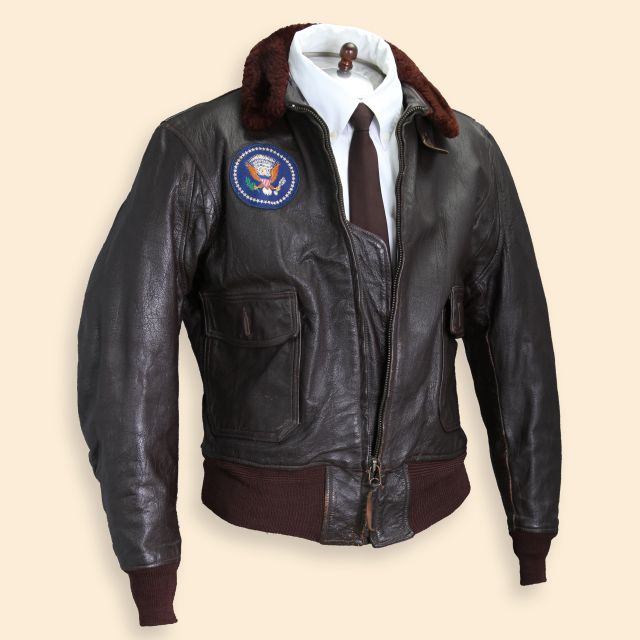
SOLD! A Sarah Stone Watercolor of Parrots Sold For More Than $18,000 at Dreweatts

Four Parrots on a Branch, a watercolor painted by Sarah Stone in 1789 or 1790.

Update: Sarah Stone’s Four Parrots on a Branch sold for £14,000, or about $18,400.

What you see: Four Parrots on a Branch, a watercolor painted by Sarah Stone in 1789 or 1790. Dreweatt’s estimates it at £1,000 to £1,500 ($1,300 to $2,000).

Who was Sarah Stone? She was an English natural history painter and illustrator who was active in the 18th century. Taught by her father, who made his living painting fans, she came to the attention of Sir Ashton Lever, a wealthy Englishman who liked collecting natural history specimens and who displayed his collection to the public. Lever hired Stone before she was out of her teens. She ultimately created around 1,000 artworks based on his collection, and about 900 survive. Many of Stone’s illustrations represent the first depictions of various species, making them significant to science and history. The Royal Academy of Arts invited her to exhibit on three different occasions. After marrying John Langdale Smith in 1789, her output slowed, and she seems to have stopped after 1806, when Lever’s collection was sold. She died in 1844 at the age of 82.

How rare were female natural history artists in the 18th century? Was Sarah Stone pretty much it? “There were good, talented amateur artists, but it was very rare to be a professional artist,” says James Harvey, a salesperson at Mallett Antiques, which consigned the watercolor. “She was rare but not unique.”

What types of parrots are pictured in the Sarah Stone watercolor? At the top is an Australian King parrot; below it is a Black-headed Caique, an Indonesian red-cheeked parrot, and an African grey parrot. Lever’s collection of taxidermied specimens included all four birds. Presumably, Stone looked at them when she created this watercolor.

And this charming little gathering of these four parrots could never happen in the wild, yes? “It was a concept in the sense that the artist enjoyed painting subjects from nature, and she used artistic license to make the painting appealing,” he says. “It’s more about observation, about looking at the forms and the colors and making things look aesthetically pleasing.”

Just how talented did Sarah Stone have to be to look at a group of dead, stuffed birds and turn them into this watercolor? “The birds are very, very vivid, very lively. That’s the difference between a good animal painter and a poor one. These birds are very realistic, but they’ve got character,” he says, adding, “It’s a standout. It’s decorative, but has tremendous presence to it. That’s what makes it so appealing.”

Normally Sarah Stone limited her focus to one subject per artwork. Do we know why she bent her rules here? “Sadly not. It’d be interesting to know why,” he says. While we have no background on the work and why Stone might have made it, Harvey and his colleagues speculate that it might have been meant for presentation: “It has that feel. It’s very well-observed. It might have been an exhibition piece, a presentation piece, perhaps even a piece for teaching purposes.”

Sarah Stone’s works have sold for six-figure sums at auction. How did you arrive at the estimate for Four Parrots on a Branch? “It’s a difficult one in that the market for watercolors is not as strong as it used to be,” he says. “If we get one or two collectors in Australia interested, it could do more.”

What else makes this Sarah Stone watercolor special? “It has all the elements you want–good artist, good condition, nice picture,” he says. “The subject matter is very charming, and from an academic angle, she’s a lady artist who worked in relative obscurity. If there’s any justice in the world, it should do well and create a good price.”

How to bid: Four Parrots on a Branch is lot 167 in Mallett: Taking Stock, an auction scheduled for November 8 at Dreweatts in Berkshire, England.

How to subscribe to The Hot BidClick the trio of dots at the upper right of this page. You can also follow The Hot Bid on Instagram and follow the author on Twitter.

Dreweatts is on Twitter. Mallett Antiques is on Instagram.

Image is courtesy of Mallett Antiques.

*If I can work in a slightly obscure Monty Python reference, why yes, I AM going to do it.

Would you like to hire Sheila Gibson Stoodley for writing or editing work? Click the word “Menu” at the upper right for contact details.
SOLD! A 1930s German Travel Poster Sold for $6,000

A Pleasant Trip to Germany, a travel poster created circa 1935 by Jupp Wiertz.

Update: The Jupp Wiertz circa 1935 travel poster featuring the Hindenburg sold for $6,000.

What you see: A Pleasant Trip to Germany, a 1930s German travel poster created circa 1935 by Jupp Wiertz. Swann estimates its at $4,000 to $6,000.

Who was Jupp Wiertz? He was a German graphic designer, and unfortunately, we don’t know much more about him. He was based in Berlin, and he created several travel and fashion-themed posters. He died in 1939, when he would have been 57 or 58.

So we have three different forms of transportation (a zeppelin, an airplane, and an ocean liner) and three different destinations (Germany, New York City, and Rio) loaded into this 1930s German travel poster. Why? “This is propaganda–Germany controlling the skies and the seas, flaunting its technology and bragging about its place in the modern world,” says Nicholas Lowry, director of Swann Galleries. “It’s a very effective ad, in that sense.”

How do we know that the zeppelin pictured on the 1930s German travel poster is the Hindenburg? “You can tell by the position of the cockpit,” he says. “On the Graf Zeppelin, it’s all the way forward. On the Hindenburg, its three-quarters of the way down [the body of the airship].”

Do vintage travel posters that feature zeppelins bring a premium? “Zeppelins bring a premium. Swastikas bring whatever is the opposite of a premium,” Lowry says, adding that the most popular zeppelin travel poster was also done by Wiertz. It shows the Hindenburg readying to hitch itself to the docking mast atop the Empire State Building, which is ablaze with golden sunlight. Swann has sold the poster for as much as $15,600.

What else makes this 1930s German travel poster special? “It’s the peak of Art Deco. Though the ship is unrecognizable, the Art Deco style is very recognizable,” he says. “Plus the ghostly outline  of the cityscapes–it’s really a masterful job. It’s fun to have something from the golden age of travel and fun to have something from the very short timespan when zeppelins were operating. They were as captivating to the world’s imagination as the Titanic was in its time.”

How to bid: A Pleasant Trip to Germany is lot 151 in the Rare & Important Travel Posters sale at Swann Auction Galleries on October 26, 2017.

How to subscribe to The Hot BidClick the trio of dots at the upper right of this page. You can also follow The Hot Bid on Instagram and follow the author on Twitter.

Swann Galleries is on Instagram and Twitter, and Nicholas Lowry is on Instagram and Twitter as well.

Text is copyright Sheila Gibson Stoodley. Image is courtesy of Swann Auction Galleries.

Would you like to hire Sheila Gibson Stoodley for writing or editing work? Click the word “Menu” at the upper right for contact details.
SOLD! A Russian Silver Rooster Cup Fetched $33,800

A Russian silver and champlevé-enamel cockerel-form (aka rooster-form) covered presentation cup, made in St. Petersburg in the late 19th century.

Update: The Russian silver and champlevé-enamel cockerel-form covered presentation cup sold for $33,800.

What you see: A Russian silver and champlevé-enamel cockerel-form (aka rooster-form) covered presentation cup, made in St. Petersburg in the late 19th century. Freeman’s estimates it at $30,000 to $50,000.

This Russian silver rooster cup is believed to be a wedding gift. Why would a rooster be an appropriate motif for a couple who are getting married? “The rooster symbolizes a new day, and it symbolizes good news. That’s why it’s an appropriate wedding gift,” says Nicholas B.A. Nicholson, who leads the English and Continental furniture and decorative arts department for Freeman’s, which covers silver. He adds, “It’s a tradition of the family [who owned it] that it was a wedding gift. We stop short of saying it was a wedding gift because we don’t have a letter saying that, but we have no reason to disagree.”

Silversmith Alexander Nikolaevich Sokolov designed the Russian silver rooster cup, and the lot notes say it is “likely derived” from an illustration in a popular Russian book from the time, Antiquities of the Russian State. Was Sokolov trying to evoke the medieval-style illustration? “He’s making as realistic a cockerel as he can given the design of medieval Russian works,” he says.

What’s up with the rooster’s tail? It’s a good example of what Nicholson means when he talks about Sokolov balancing realism against the medieval sensibility of the book’s illustrations: “The tail devolves from natural feathers, to braided feathers in a strapwork pattern, to strapwork on the tail–an amazing deconstruction.”

Did Sokolov’s workshop do other rooster-shaped presentation cups? “He did others earlier, but they were not as fully evolved as this one,” Nicholson says. “We don’t know how many he made, but it was clearly a form he liked.”

It’s a presentation cup, so you’re not really supposed to drink from it. But if you wanted to, how would you do it? See the broad band around the top of the rooster’s body? The hinge is in there. The head and neck of the silver bird tilts backwards, and the comb rests on its tail.

This Russian silver rooster cup is fresh to market, directly from the descendants of the people who received it. How unusual is that? “Many things that have been sold were confiscated by the Russian government,” he says. “This was brought over by the family and preserved through the generations to be offered at auction for the first time.”

What else makes the Russian silver rooster cup special? “It’s such an extraordinary piece of silver,” he says. “We have lots of good silver in this sale, and they all have their own stories, but this piece… the story makes it exceptional. So many Russian objects are just stolen. It transferred from an old Russian family [that became] a Russian emigre family and [then became] an American family of Russian descent, who wants it to go to a collector who understands its value.”

How to bid: The Russian silver rooster cup is lot 9 in the Silver & Russian Works of Art auction at Freeman’s on October 17, 2017.

How to subscribe to The Hot BidClick the trio of dots at the upper right of this page. You can also follow The Hot Bid on Instagram and follow the author on Twitter.

Freeman’s is on Twitter and Instagram as well.

Image is courtesy of Freeman’s.

Would you like to hire Sheila Gibson Stoodley for writing or editing work? Click the word “Menu” at the upper right for contact details.

SOLD! The Original I Dream of Jeannie Prop Bottle Sells for $34,375

The original prop bottle from the NBC sitcom I Dream of Jeannie (1965-1970). It's hand-painted and stands 14 inches tall.

Update: The original I Dream of Jeannie prop bottle sold for $34,375.

What you see: The original prop bottle from the NBC sitcom I Dream of Jeannie (1965-1970). It’s hand-painted and stands 14 inches tall. Julien’s estimates it at $40,000 to $60,000.

How do we know this is the original prop bottle from I Dream of JeannieIt comes directly to Julien’s from the estate of Gene Nelson, who directed six episodes of the show’s first season, including the pilot, titled The Lady in the Bottle. At some point, Nelson obtained a letter of authenticity from Barbara Eden, who played the title character, Jeannie. Nelson died in 1996. Eden will turn 86 in August.

Did Gene Nelson create the I Dream of Jeannie bottle? Nelson has the strongest claim on its origin story. He was hunting for something that didn’t look like Aladdin’s lamp, spotted a Jim Beam decanter in a liquor store window, snapped it up, and handed it over to the folks in the prop department, who peeled the labels off the glass and decorated it with paint. “There’s something unique in the fact that he saw this,” says Darren Julien, founder and CEO of Julien’s Auctions. “He was scouting around, found the bottle, and had the vision to paint it. He was a good visionary.”

Was it used on the set? Almost certainly, but coming up with a precise photo match is tough, given that the prop bottles were painted to look identical. But according to Julien, the animators would have referenced photos of this bottle when creating the opening credit sequence, and it’s safe to say it was shown in the early episodes that Gene Nelson directed. He left I Dream of Jeannie after repeated clashes with Larry Hagman, who played astronaut Tony Nelson on the show.

How rare is the original I Dream of Jeannie prop bottle? “It’s very rare. We have not handled one before. Not many survive, and nobody back then would have saved anything like that,” says Julien, adding, “It’s the Holy Grail of the series to have. It’s what the show is about. Provenance is king, and it has such a solid history. It’s an iconic piece that’s going to sell for a lot more than our estimate.”

So, does it come with Barbara Eden? No, but it does include the letter of authentication that she wrote for Gene Nelson. The bottle’s interior is also unfurnished and long since emptied of its whiskey. And neither Julien’s nor The Hot Bid is responsible for the I Dream of Jeannie theme song getting stuck in your head.

Damn you! #SorryNotSorry

How to bid: The original I Dream of Jeannie prop bottle is lot 486 in the Property from the Estate of Patrick Swayze and Hollywood Legends 2017 auction on April 28 at Julien’s.

How to subscribe to The Hot BidClick the trio of dots at the upper right of this page. You can also follow The Hot Bid on Instagram and follow the author on Twitter.

Julien’s is also on Twitter and Instagram.

Image is courtesy of Julien’s Auctions.

Da DA dadadadada Da DA dadadadada Da DA dadadadadada. BadadaDA!

Would you like to hire Sheila Gibson Stoodley for writing or editing work? Click the word “Menu” at the upper right for contact details.

RECORD! An Edward S. Curtis Portrait of Oglala Lakota Leader Red Cloud Sells for $32,500 at Swann

M35025-26 001

What you see: Red Cloud, Oglala, a platinum print by Edward S. Curtis, who took the photograph in 1905. Offered at Swann Auction Galleries in April 2017, it sold for $32,500 against an estimate of $6,000 to $9,000. It set an auction record for this particular Red Cloud image by Curtis.

Who was Edward S. Curtis? He was an American photographer who spent much of his life recording the cultures and people of Native American tribal communities for a sprawling multi-year project. Dubbed The North American Indian and backed by financier J.P. Morgan, it was designed to comprise 20 volumes and 1,500 photographs. He ultimately produced 222 complete sets of a planned 500. Curtis died in 1952 at the age of 84.

Who was Red Cloud? He was one of the finest, most skilled leaders that the Oglala Lakota community ever had. He made war on American forces between 1866 and 1868, killing 81 in the largest battle of what came to be called Red Cloud’s War. After signing the Treaty of Fort Laramie in 1868, his people moved to a reservation. Red Cloud sat for more than 100 photographs during his life. He died in 1909 at the age of 86 or 87.

This is an amazing portrait. It looks like it could have been shot last week. “I think that’s where Edward Curtis’s sensibility comes into play,” says Daile Kaplan, director of the photographs and photo books department at Swann. “You feel the gravitas. It’s a poignant image of Red Cloud, taken later on life. These figures [Red Cloud and his Native American peers] were leaders, were warriors. The severity of the situation of Native American people was written on their faces.”

Did Edward Curtis develop and finish this platinum print on his own, without assistants? “Exactly, and he’s a consummate technician,” she says. “Not only does he pre-visualize and compose in rather magisterial ways, because of his familiarity in the dark room, he was exceptional in crafting prints.”

The humanity of Red Cloud really comes through. “I think the size of the image and the august nature of the figure–you can’t walk away from it,” she says. “This was part of Curtis’s genius. It was his passion to engage with his subjects. That’s why they [his photographs] are so powerful today.”

Did treating his subjects as human beings make Edward Curtis’s photographs controversial in his time? “They were very controversial,” Kaplan says. “There was not a lot of empathy for native people. There was a tremendous fear of anyone who is other, not unlike today.”

How often does this Red Cloud portrait photograph comes up at auction? “This is the first one that’s been at auction not only at Swann, but in a while,” she says. “Its rarity, its condition, and the context of its provenance all figured prominently in why it performed so well.”

Were you surprised by how well it did? “Yes, we were very pleasantly surprised. Clearly, this image is one for which there was a tremendous response, and a tremendous response across the board from dealers, collectors, and curators. In the sale, we offered a platinum print of Geronimo, estimated at $20,000 to $30,000, and at a similar size. It sold for $22,000. This image surpassed the image of Geronimo. It illustrates that a figure like Red Cloud is on a par with other names of Native American leadership.”

Why did the Red Cloud portrait photograph perform so strongly? “I think that with a platinum print of this size, the notion is that they are rarer than many people anticipate, and that this material is not going to become available again,” she says. “It’s odd that the platinum Geronimo didn’t perform at the same level, but the image of Red Cloud is clearly rarer.”

M35025-26 001

What else makes this Red Cloud portrait photograph so powerful? “When an artist has an opportunity to stand before someone who is august, you have to step into their power,” she says. “The image of Red Cloud almost commemorates the meeting of two great minds, and two great visions.”

How to subscribe to The Hot BidClick the trio of dots at the upper right of this page. You can also follow The Hot Bid on Instagram and follow the author on Twitter.

You can follow Swann Auction Galleries on Twitter and Instagram.

Image is courtesy of Swann Auction Galleries.

Would you like to hire Sheila Gibson Stoodley for writing or editing work? Click the word “Menu” at the upper right for contact details.